
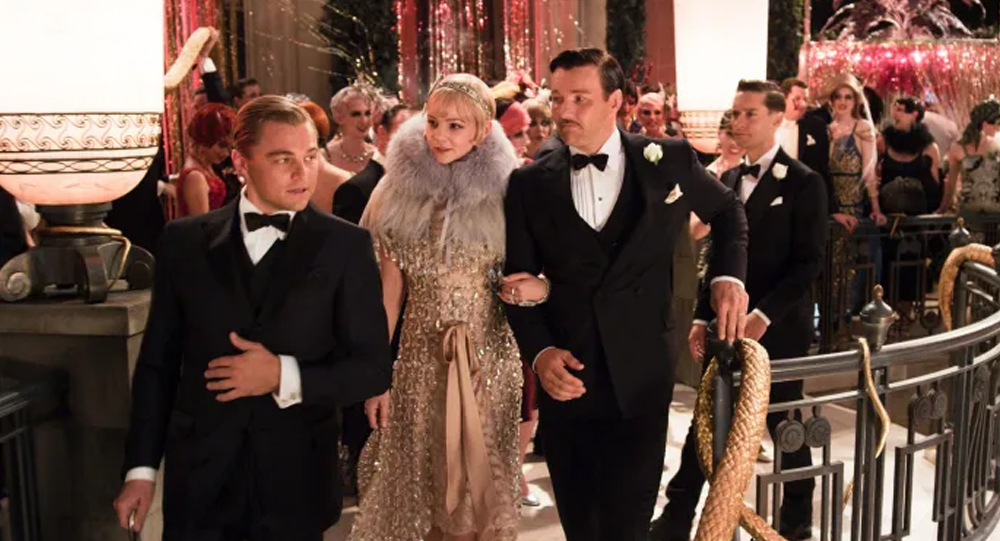
The 1920s weren’t just another decade—they were a cultural explosion. Jazz filled smoky clubs, women gained new freedoms, and fashion took a daring leap into modernity. Gone were the rigid corsets and floor-sweeping gowns of the previous era. In their place came short hemlines, loose silhouettes, and a newfound love for self-expression through clothing.
This shift wasn’t just about aesthetics—it reflected the changing role of women in society. The flapper, with her bobbed hair, knee-length dress, and rebellious attitude, became the symbol of a generation that refused to be confined by old norms. And while a century has passed, the style DNA of the 1920s is still woven into the fabrics of today’s fashion industry.
The Flapper Silhouette Lives On
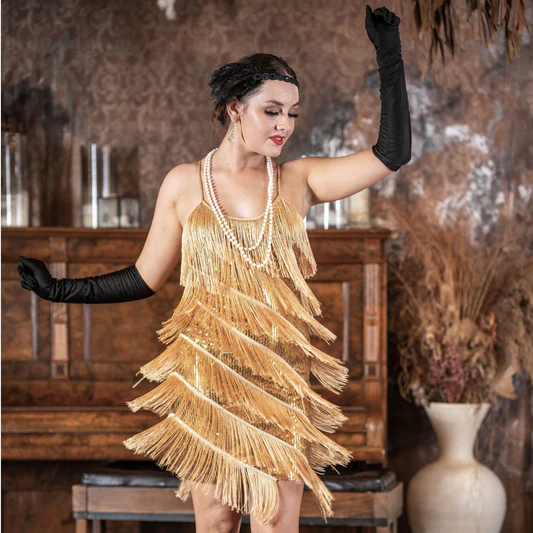
The most iconic contribution of the 1920s to fashion was the flapper dress—straight, sleeveless, and designed for movement. These dresses were made for dancing the Charleston, often adorned with fringe, beads, or sequins that shimmered under the glow of nightclub lights.
Modern fashion continues to borrow from this relaxed, free-flowing silhouette. Drop-waist dresses, loose-fit tunics, and slip dresses all trace their lineage back to the Jazz Age. Even red carpet gowns by designers like Ralph Lauren and Gucci occasionally revive the flapper’s effortless elegance—proof that this silhouette never truly went out of style.
Accessories That Defined—and Still Define—An Era
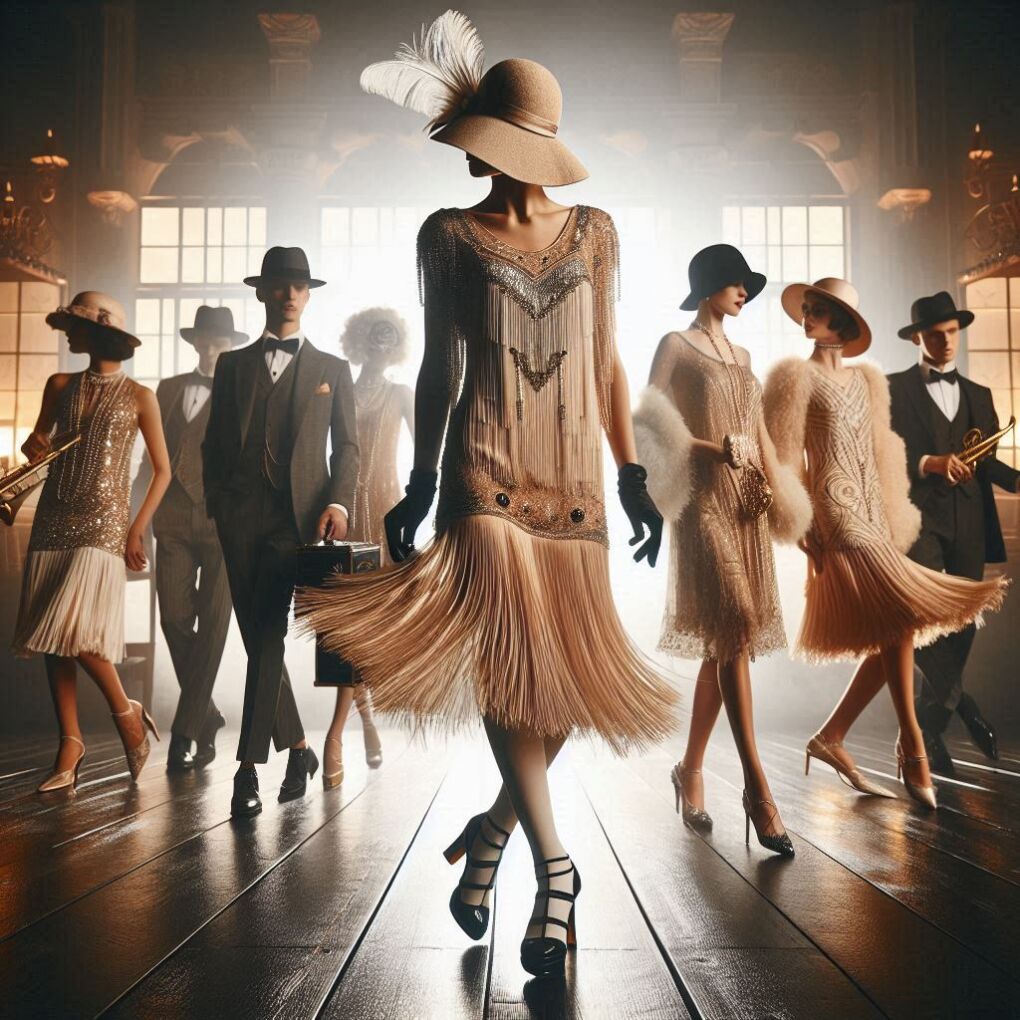
If you picture a woman from the 1920s, she’s likely wearing a cloche hat pulled low over her eyes, strings of pearls around her neck, and perhaps a feathered headband for a touch of drama. Accessories weren’t just finishing touches—they were statements of personality.
Today, the cloche hat has seen revivals on runways and in winter collections from brands like Prada and Lanvin. Layered necklaces, another flapper favorite, are still a staple in bohemian and high-fashion looks. Even the trend of bold headpieces at events like the Met Gala owes something to the daring accessorizing spirit of the 1920s.
Menswear’s 1920s Revival
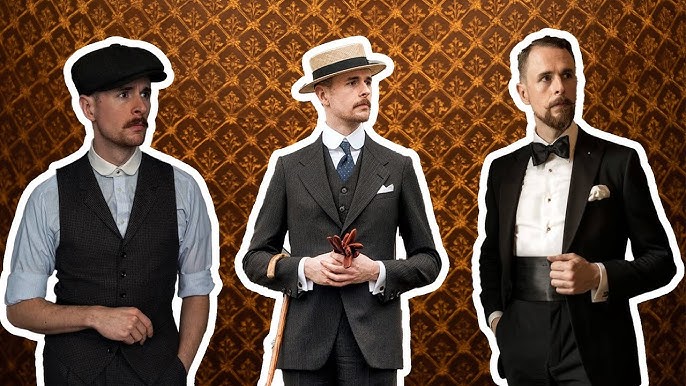
While women’s fashion tends to get most of the spotlight, the 1920s also redefined menswear. Wide-legged trousers, double-breasted suits, and fedoras became the uniform of sophisticated men. The “Gatsby look” combined luxury fabrics with sharp tailoring, creating a timeless masculine elegance.
In modern fashion, you can see these influences in everything from Zara’s wide-legged trousers to Tom Ford’s retro-inspired tuxedos. Even casual streetwear sometimes nods to the 1920s with vintage suspenders or newsboy caps making a comeback.
Art Deco’s Lasting Impact on Design
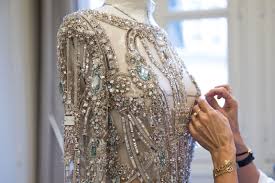
The visual style of the 1920s wasn’t limited to clothing—it was part of a larger cultural movement called Art Deco. This design style embraced geometric patterns, metallic finishes, and rich, bold colors. In fashion, Art Deco translated into beaded dresses with symmetrical designs, embroidered coats, and jewel-toned accessories.
Today, Art Deco influence is visible in modern jewelry, luxury handbags, and evening gowns. Designers like Elie Saab and Marchesa often incorporate intricate beading and structured shapes that could easily be mistaken for vintage 1920s couture. Even graphic design in fashion branding sometimes pulls directly from Art Deco typography and motifs.
Comfort as a Fashion Statement
One of the most underrated legacies of the 1920s is the prioritization of comfort. The decade marked a break from restrictive clothing, introducing soft fabrics, loose fits, and practical cuts. Women could dance, walk, and socialize without feeling trapped in their attire.
Fast-forward to today’s athleisure and oversized trends, and you’ll see the same philosophy: clothing that allows movement while still making a style statement. Just like the flappers, modern consumers want clothes that feel as good as they look.
How Hollywood Keeps the 1920s Alive
Hollywood has played a massive role in keeping 1920s fashion relevant. Films like The Great Gatsby (both the 1974 and 2013 versions) and Chicago have reintroduced Jazz Age style to new generations. Costume designers often put their own spin on historical accuracy, making these looks fresh while retaining their vintage charm.
This on-screen influence often trickles down into mainstream fashion. After the 2013 Gatsby film, for example, retailers reported a spike in sales of sequin dresses, feather accessories, and vintage-style jewelry.
Streetwear Meets the Jazz Age
It may sound surprising, but even streetwear borrows elements from the 1920s. Oversized coats, tailored wide-leg pants, and bold patterned shirts have all been reimagined for modern urban fashion. Brands like Gucci and Louis Vuitton have merged 1920s elegance with casual wear, proving that timeless style can evolve without losing its roots.
Why 1920s Fashion Will Never Truly Disappear
The reason 1920s fashion still resonates is simple—it was the first truly modern style movement. It embraced individuality, broke traditions, and celebrated the joy of living. These are values that remain at the heart of fashion today.
As trends come and go, the influence of the 1920s continues to weave through clothing racks and catwalks. Whether it’s a fringed evening gown, a beaded clutch, or a perfectly tailored suit, the Jazz Age spirit lives on.
Final Thought:
Fashion is cyclical, but some decades leave a deeper mark than others. The 1920s didn’t just change how people dressed—it changed how they lived. And a hundred years later, we’re still dancing to that beat, even if the Charleston has been replaced by TikTok trends.


Max Headroom Incident: America’s Creepiest TV Hack
In 1987 a man hijacked a television station during an episode of Dr. Who and wore a Max Headroom mask and uttered nonsense, and he still hasn’t been caught
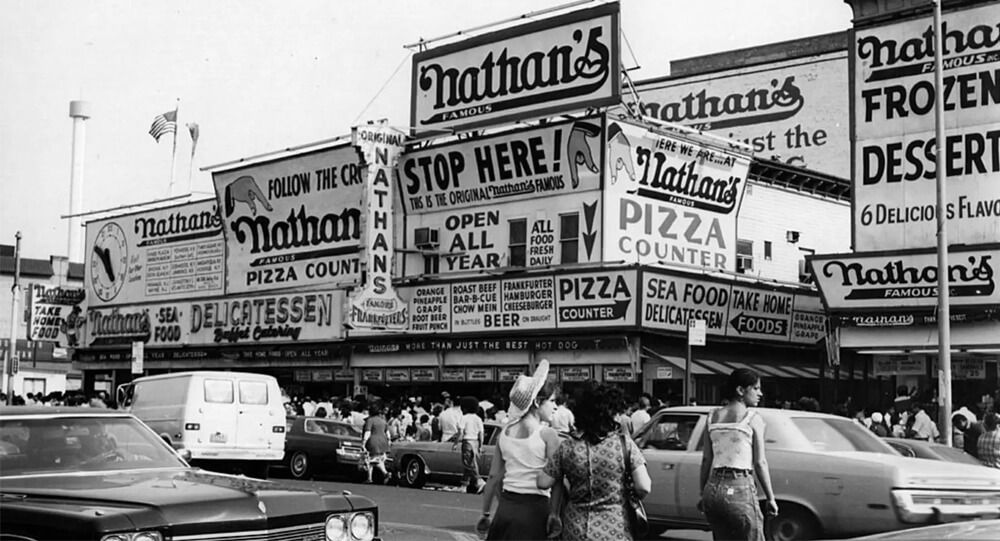
Nathan's Famous Doctor Stunt
When Nathan's Famous Hot Dogs first opened in 1916, the owner hired people to dress as doctors and eat hot dogs outside his shop, to convince people his hot dogs were healthy.
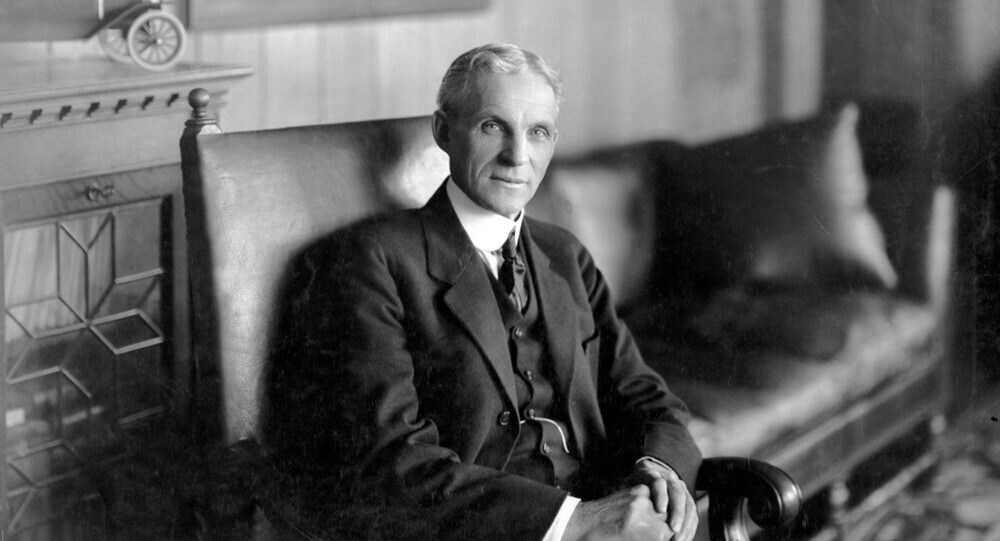
Henry Ford, The man popularizing the concept of the weekend off
Henry Ford was the first Industrial Giant to give his employees both Saturday and Sunday off in the hope of encouraging more leisurely use of automobiles and thus popularizing the concept of the "weekend."
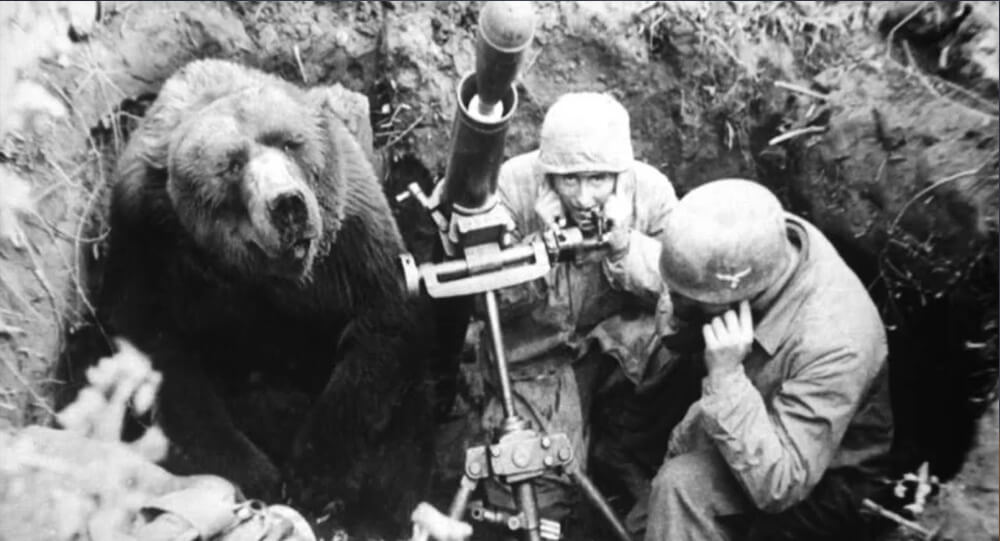
The 440-pound bear named Wojtek and his World War II battle against the Nazis
Polish troops raised an orphaned bear cub during WWII. He enjoyed drinking beer, and was trained to salute. He became officially enlisted as a member of the forces, and helped carry artillery during battle.
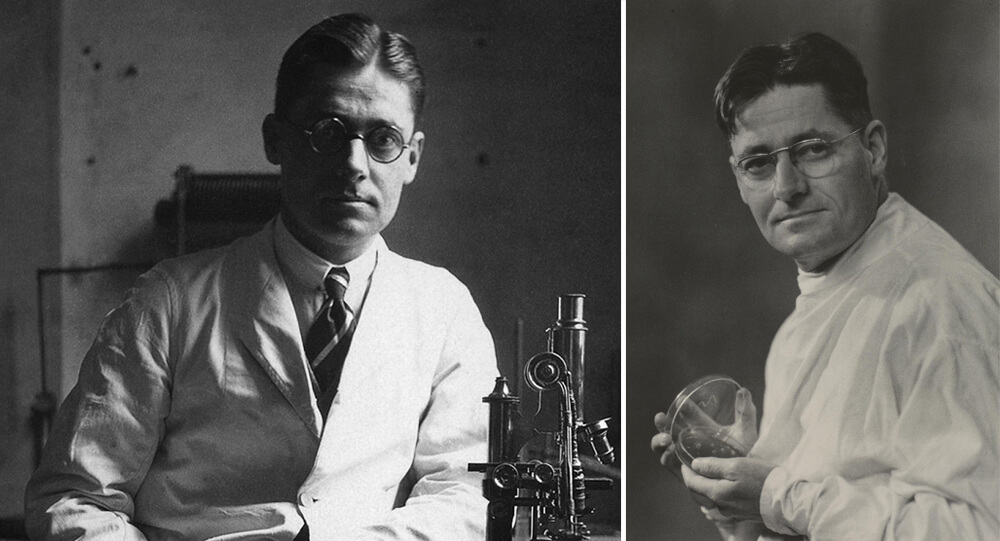
How did Howard Florey discover penicillin
Penicillin was discovered by Alexander Fleming, but he never attempted to turn it into an antibiotic. It wasn't until ten years later that Howard Florey discovered Fleming's obscure paper and understood the mold's potential. Up to 200 million lives may have been saved as a result of Florey's work.

Man's Blood Helped Save Millions of Babies
Australian blood donor James Harrison has been one of our most impressive and valued donors, having donated for 60 years. Know his story, how he was a pioneer of our Anti-D program, and why this matters.
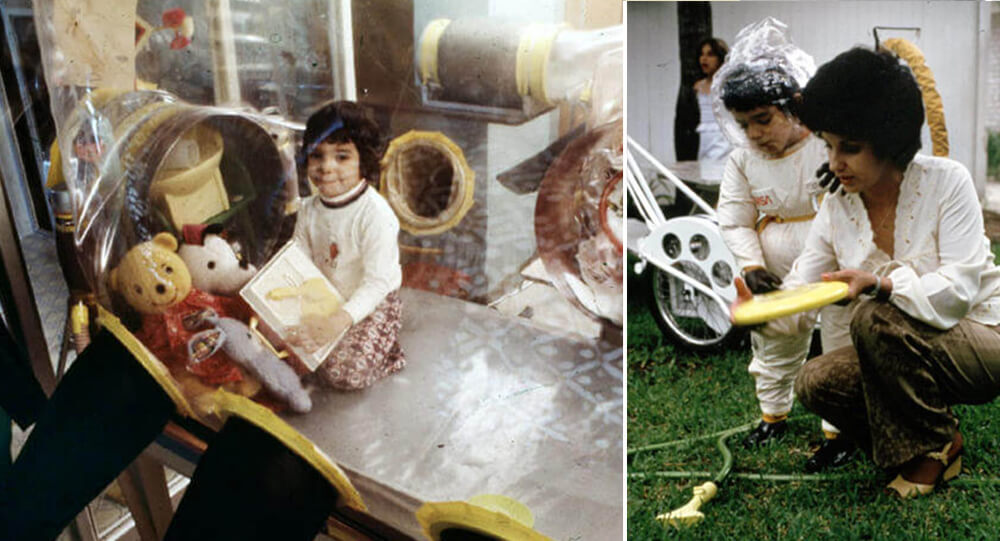
The touching story of David Vetter (bubble boy), the 'boy who lived in a bubble
David Vetter lived his whole 12 years in sterile “bubble”. He was “outside” for 20 second after being removed from his mother’s womb. He never touched any human.
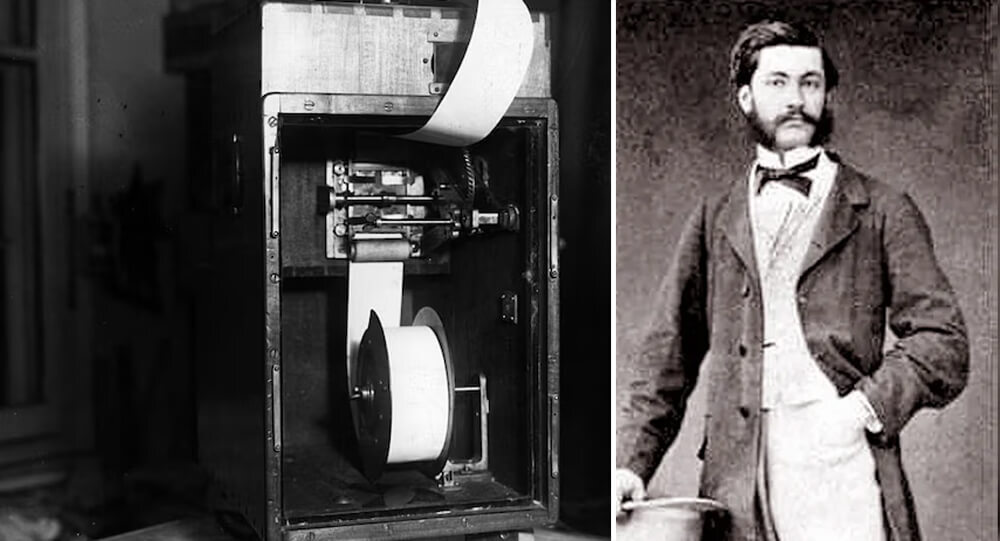
Louis Le Prince Invented the motion picture camera, and then he mysteriously disappeared
Louis Le Prince, the inventor of motion pictures, vanished without a trace in 1890. Thomas Edison quickly claimed the title of "first and sole inventor of cinema," even taking Le Prince's son to court to dispute it. A few years later, the son also dies under mysterious circumstances.
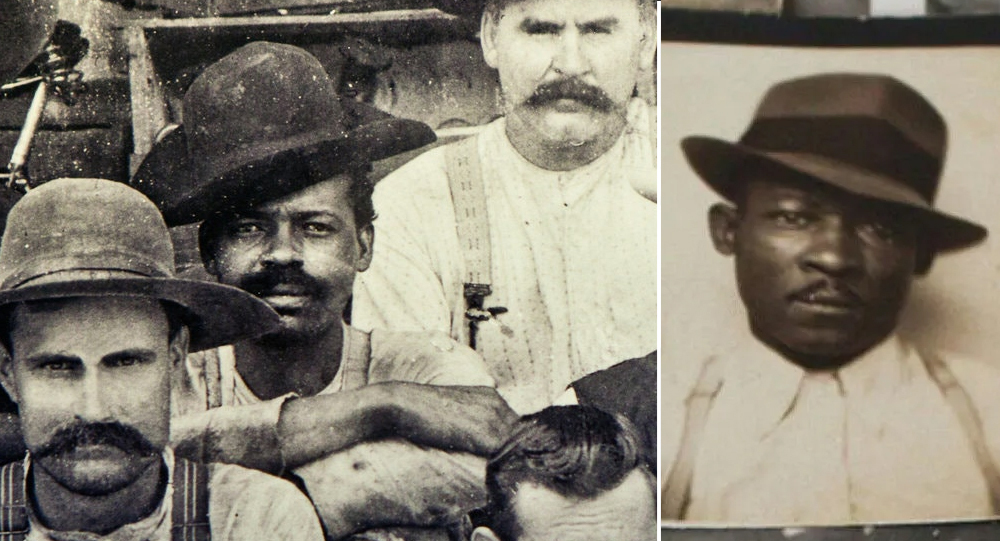
Nearest Green, America's first known Black master distiller
Nathan "Nearest" Green was an African-American head stiller who is now more frequently referred to as a master distiller. He was renowned for imparting his distilling knowledge to Jack Daniel, the creator of Jack Daniel's Tennessee whiskey distiller, after Jack Daniel was freed from slavery following the American Civil War.

Archaeologists Uncover 2,000-Year-Old Amazonian Cities Using Lidar Technology
Deep in the Ecuadorian Amazon, archaeologists have uncovered an ancient network of urban settlements once inhabited by the Upano people about 2,000 years ago. Using cutting-edge lidar technology, these discoveries reveal a highly organized society featuring sophisticated agricultural systems, drainage canals, and extensive road networks. This transformative find challenges long-held assumptions about ancient Amazonian societies and sheds light on a complex civilization thriving in one of the world’s most biodiverse regions.
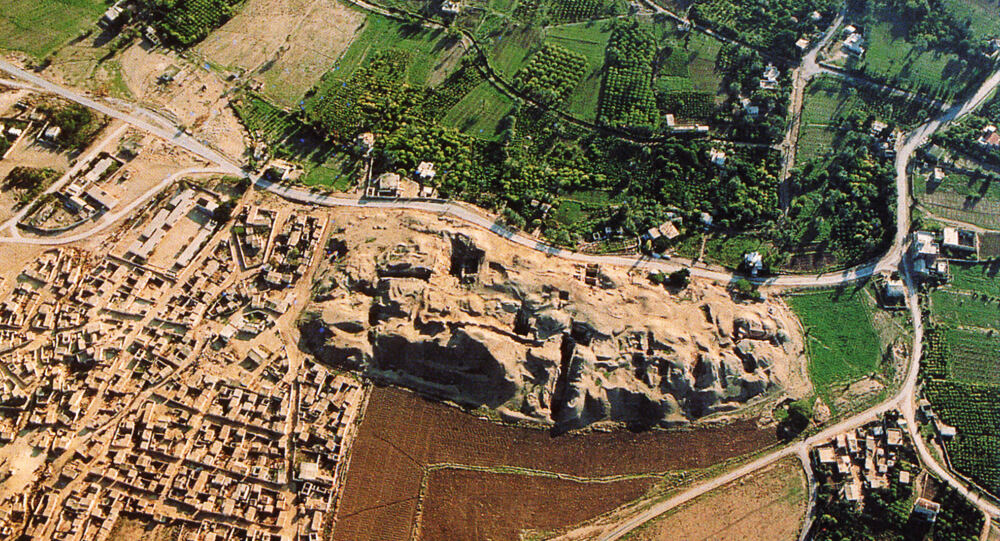
Ancient Jericho: The First Walled City In History
The ancient city of Jericho is the world's oldest walled city, with evidence of stone fortifications dating back nearly 9000 years.
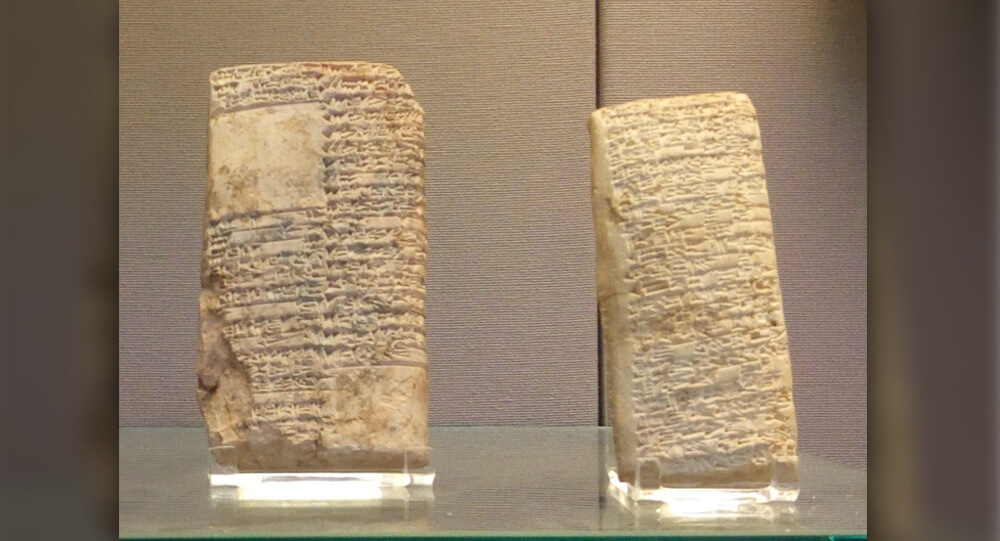
Ea-Nasir: world's oldest written customer complaint
This clay tablet, written in cuneiform, is the oldest known written customer complaint about the delivery of poor quality copper ingots. Originally from ancient Babylon, the tablet dates back to 1750 BCE, and it was written by a customer named Nanni to a merchant named Ea-Nasir. It is currently housed in the British Museum.
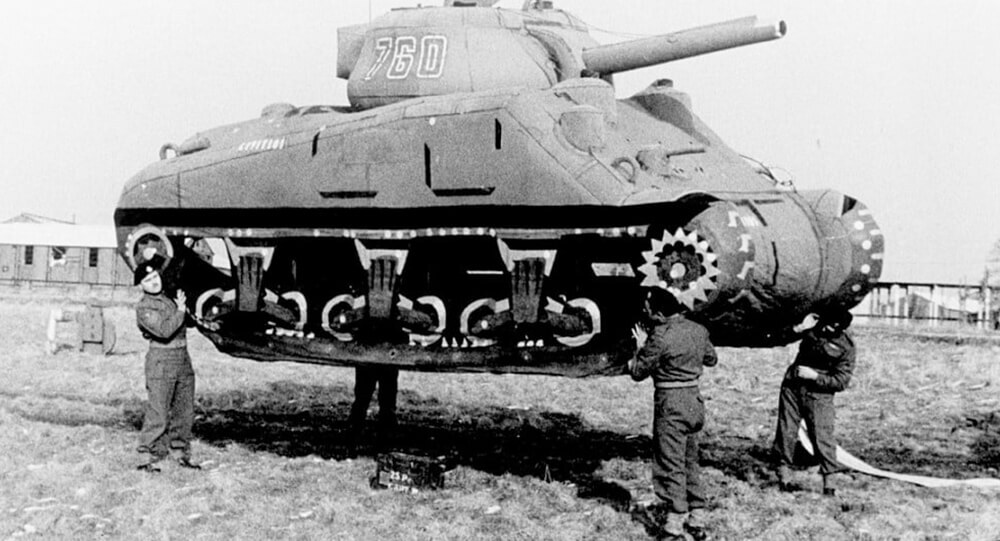
What exactly was the US's 'Ghost Army' during WWII?
During WW2, there was a special unit of men dubbed the ‘Ghost Army’. The unit was made of artists, creative and engineers and their job was to create deception about the enemy. From inflatable tanks to phony convoys to scripted conversations in bars intended to spread disinformation, they used all possible tricks to fool the enemy.

Poto And Cabengo: The Secret Language Of Twins
Poto and Cabengo, as the two girls called each other, communicated in their own language. The twins were ignored by their parents and secluded from the outside world because their father felt they were developmentally retarded, and their unique language evolved as a result of that neglect.
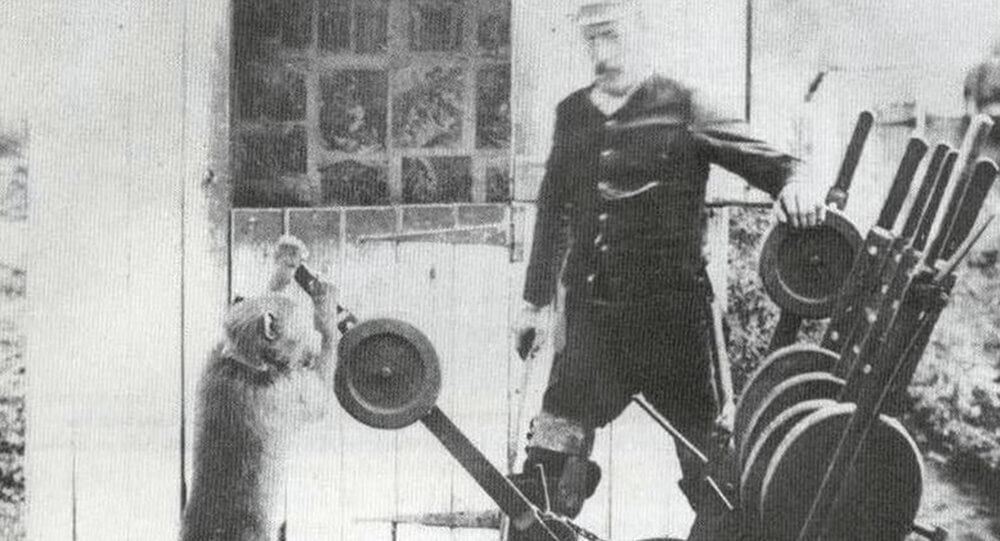
Jack the Baboon operated a railroad, earned a living, and never made a mistake
A baboon worked as a signalman for the railroad in the late 1800s. He never made a mistake and worked for the railroad until the day he died.
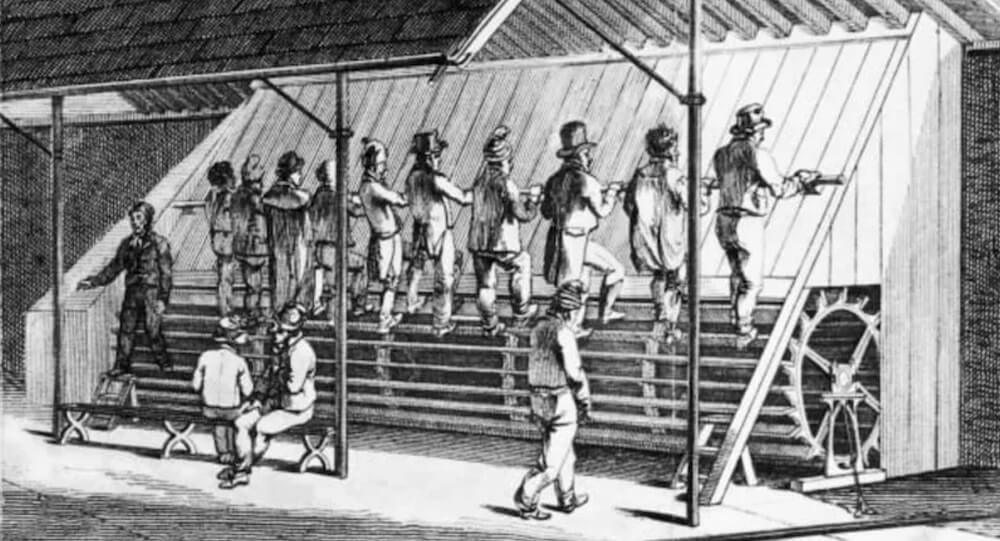
History of Treadmill, punishment for prisoners
Treadmills were originally a punishment used to harness human power on a giant wheel used to grind grains, hence the name "treadmill." The History of Treadmill

Irena Sendler: woman who rescued Jews during holocaust
Irene Sendler was the Zegota resistance group's head of the children's department. She risked her life to smuggle children out of the Warsaw ghetto, place them with Polish families or orphanages, give each child a new identity, and keep records so that they could be returned to their families. In 1943, the Gestapo arrested and sentenced her to death, but she was rescued by Zegota.

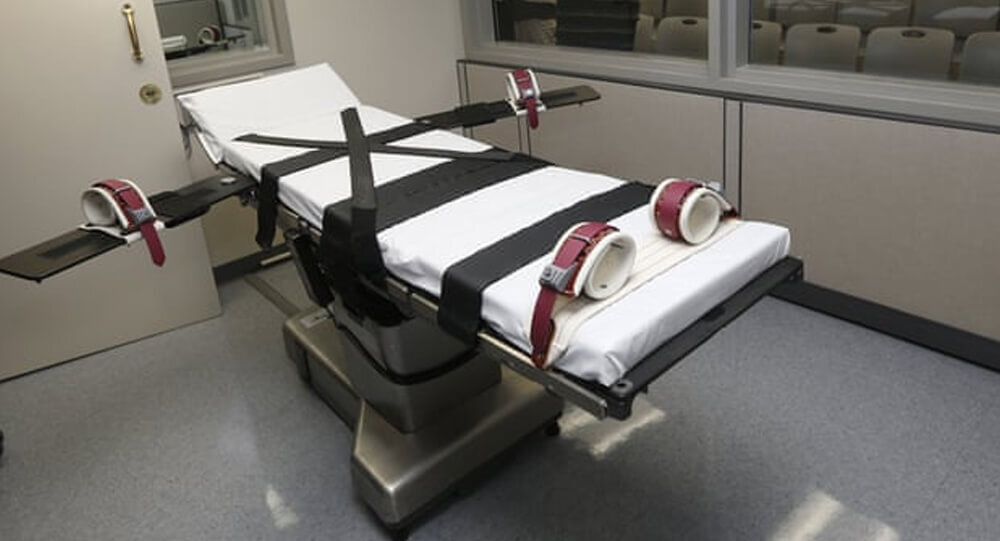
Iranian inmate dies from happiness after finding out he will not be executed
An Iranian man who was convicted of murder reportedly died from happiness after learning that his death sentence was being commuted.
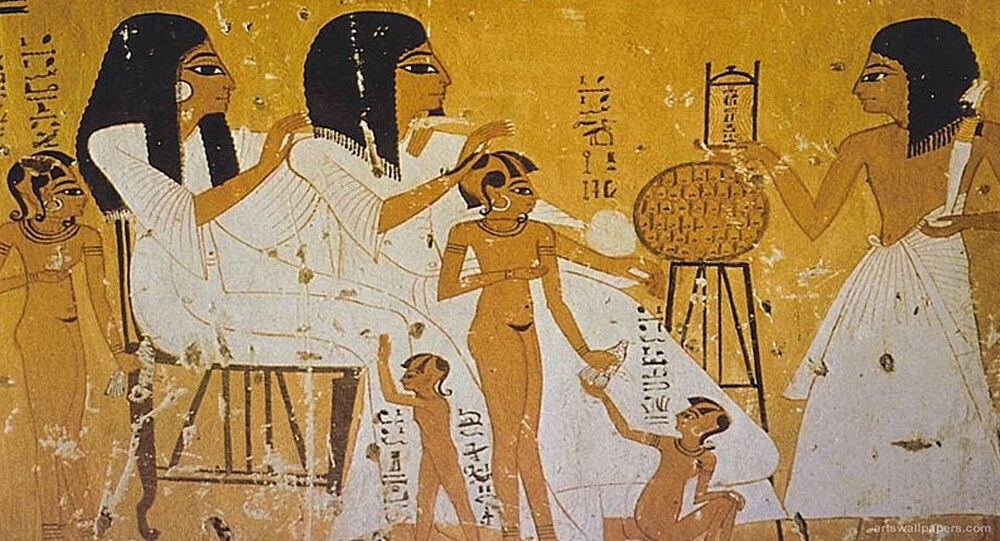
Ancient Egyptians Had Pregnancy Tests Over 3500 Years Ago
The ancient Egyptians used a pregnancy test that involved potentially pregnant women peeing on barley and wheat seeds. Plant growth indicated pregnancy: barley for a boy and wheat for a girl. Later tests revealed that pregnant women's urine causes plant growth 70% of the time, whereas non-pregnant women's urine does not.

The Day an Israeli F-15 Landed with One Wing: Zivi Nedivi’s Unbelievable Mid-Air Survival
Discover the astonishing true story of Israeli pilot Zivi Nedivi, who safely landed an F-15 after a mid-air collision tore off its entire right wing. Learn how skill, quick thinking, and the F-15’s unique design turned a disaster into a legendary feat in aviation history
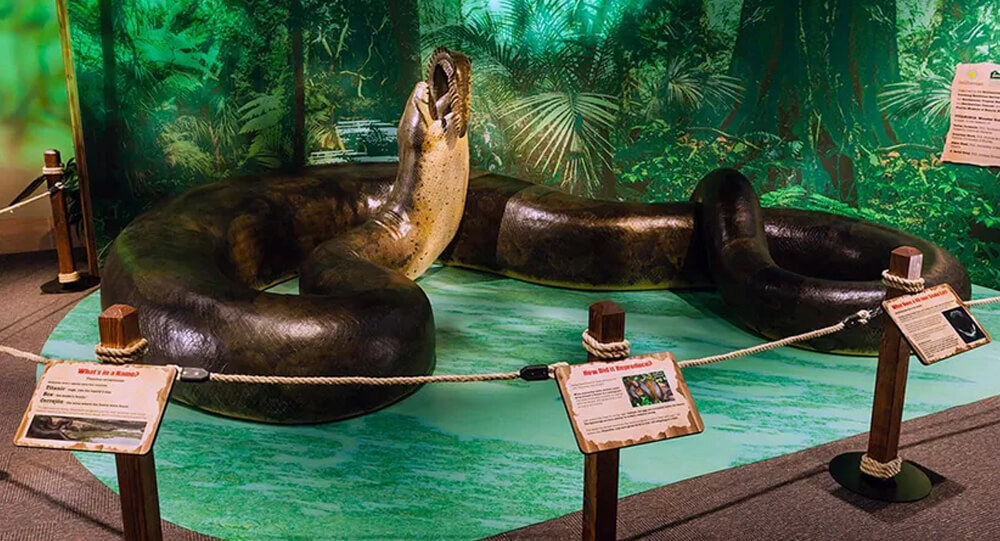
Titanoboa cerrejonensis, fossils of the world’s largest species of snake
In 2009 in a coal mine of Columbia, scientists discovered fossils of the world’s largest species of snake. The species is called “Titanoboa cerrejonensis,“and it is from around 60 million years ago. It would have had measured about 48 feet long and weighed about 2,500 pounds
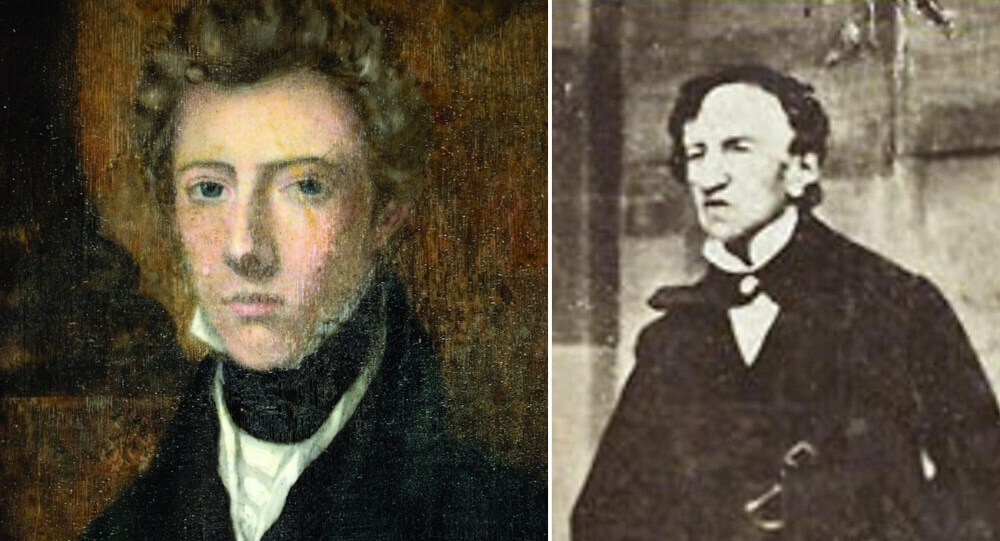
The mysterious secret of Dr James Barry
Before women were allowed to enroll in medical school, Margaret Ann Bulkley studied medicine and assumed the identity of Dr. James Barry for 56 years while dressing as a man. After 46 years of service as an army doctor officer, her secret was not made public until after her death in 1865.

1972 Andes Plane Crash Survivor recall the terrifying Struggles to Stay Alive
On October 13, 1972, a plane carrying a rugby team from Uruguay crashed in the Andes between Chile and Argentina. The survivors were in brutal conditions - high altitude, bitter cold, and the lack of food—and faced the most terrible choice—eating the frozen flesh of their dead friends or starving to death themselves.
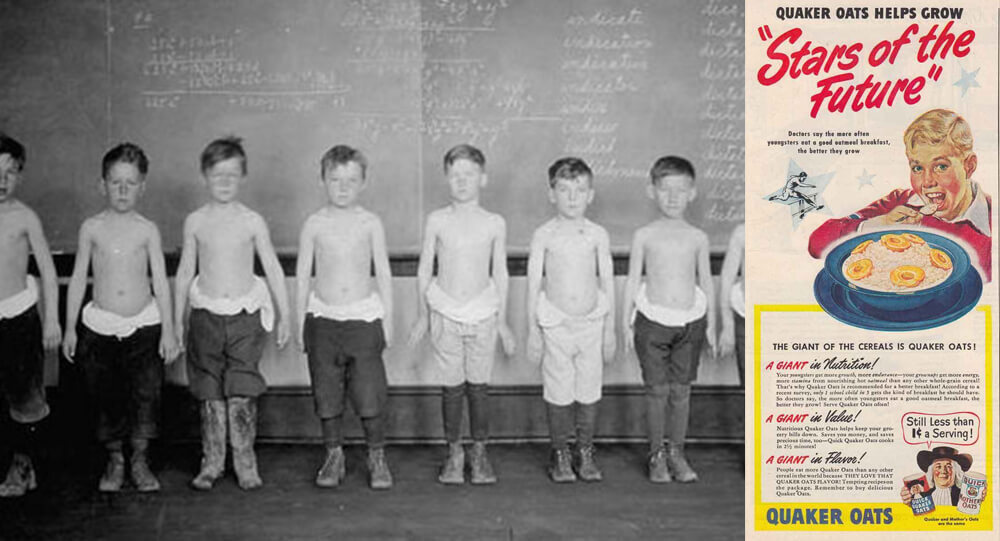
Quaker Oats Fed Children with Radioactive Oatmeal
In the 1940s and 1950s, Quaker Oats and MIT conducted experiments on radioactive iron and calcium-containing cereal. The diet was part of a study to see if the nutrients in Quaker oatmeal traveled throughout the body. In January 1998, a $1.85 million settlement was reached for 30 victims who came forward.
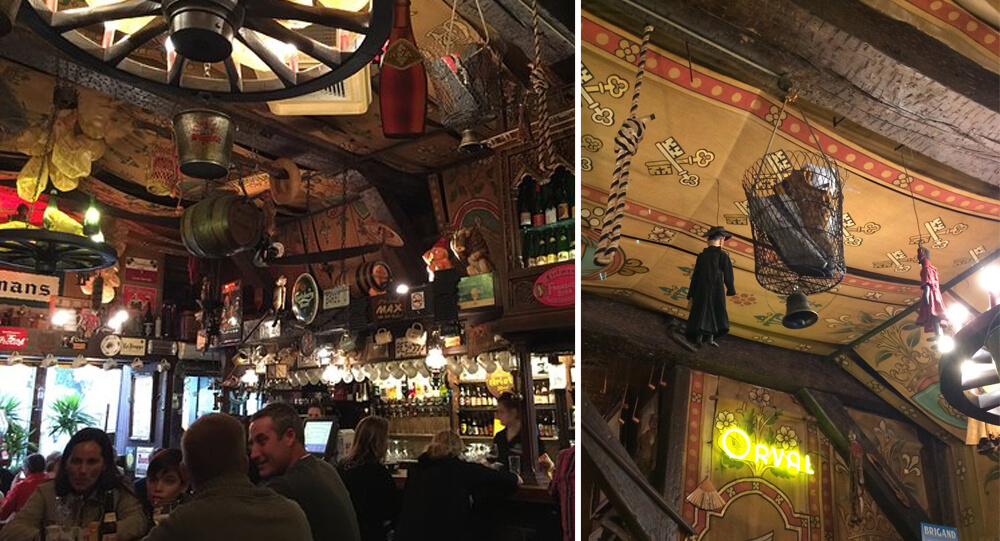
Why This Belgian Bar Makes You Trade Your Shoe for a Beer
To prevent tourists from stealing their beer glasses, some bars in Belgium require people to hand over one of their shoes as a deposit which is then put in a basket and hung from the ceiling. These shoe baskets have also become an attraction.