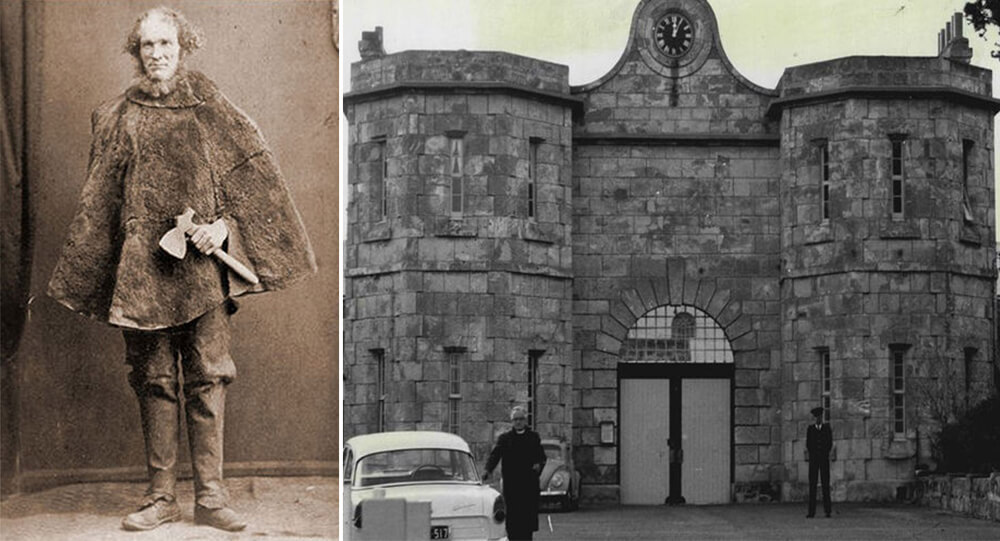

Moondyne Joe: The story of Australia's most notorious prison escapee
When Joseph Johns was arrested by police after his fourth attempted escape, Fremantle Prison authorities are doing everything they can to keep him locked up.
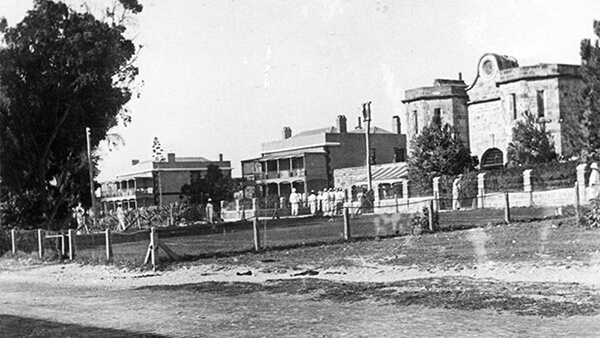
He was imprisoned in a stone-walled cell with jarrah sleepers, and he was only allowed out to break rocks in the prison yard under strict supervision.
“If you get out again, I’ll forgive you,” Western Australia’s governor John Hampton told Johns mockingly.
And yet, Johns did, for the fifth time, escape from prison.
This is the story of Australia’s most prolific prison escapee.
Joseph Johns wasn’t very good at crime for a career criminal.
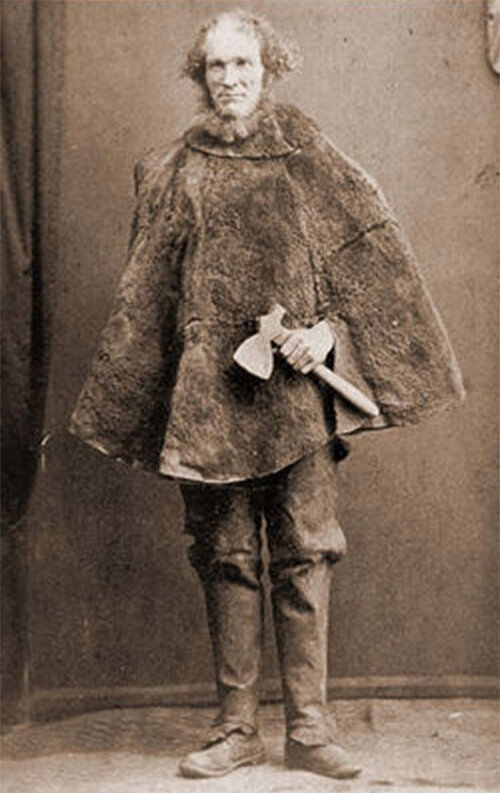
The British national was arrested by police in 1848 after stealing three loaves of bread, several kinds of cheese, and some bacon from a home in Chepstow, Wales.
Three months in prison is a typical sentence for such a crime. However, Johns enraged the judge and received a ten-year sentence of penal servitude.
He was transported to Western Australia after four years on a prison hulk and given a ticket of leave upon arrival.
He relocated to Moondyne, a region of the Darling Range known to local Aboriginal tribes as Moondyne, and adopted the alias Moondyne Joe, which he would keep for the rest of his life.
He was granted his ticket of leave in 1853, after five years as a convict, and went to work as a stock trapper.
In 1861, however, Johns was arrested for stealing a horse and a brand new saddle and bridle that belonged to the local magistrate.
He was put in jail for another four years before being released for a short time.
Escape spree
But it was a crime he insisted he was innocent of that set in motion a long career of eluding justice.
He was convicted of killing an ox in 1865 and sentenced to ten years in prison.
Johns escaped after only a week in custody and spent several weeks on the run before being caught.
His sentence was lengthened by another 12 months.
In July of the following year, he tried unsuccessfully to flee, only to return a month later.
Johns was caught quickly and sentenced to another five years in prison, including two years of hard labor.
‘If you get out again, I’ll forgive you’
Authorities in Western Australia were extremely focused on preventing him from escaping again.
He was placed in a specially constructed cell that was so heavily reinforced that escape was thought to be impossible.
He was kept chained to a ring on the floor while in the cell.
He wasn’t even allowed to leave Fremantle Prison for his daily exercise. He was instead given a pile of rocks and a sledgehammer, with the expectation that he would crush them into smaller stones.
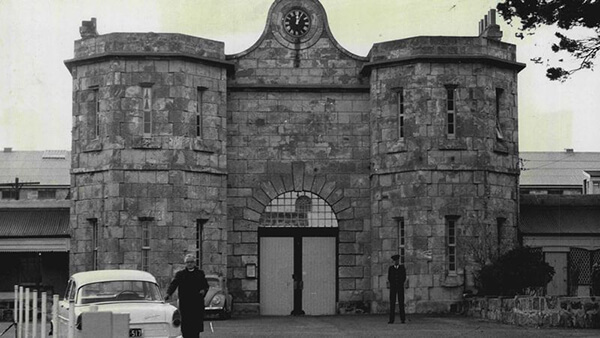
Governor John Hampton was so sure of himself that he told Johns, “If you get out again, I’ll forgive you.”
So, every day, he would break rocks in the prison’s backyard, with his back to the high walls, under the watchful eye of guards.
Then one day, at 5 p.m., Johns vanished.
The escape
It was a brilliantly brazen and straightforward escape.
The pile of rocks Johns had been hammering had grown to a significant height over the course of a few days.
So much so that Johns was largely obscured by the pile from a certain angle.
Johns would stop hammering at the rocks and start hammering at the prison wall when the guards weren’t looking.
And he made a big enough hole to slip through at some point during the day.
He then proceeded to walk through the adjacent superintendent’s house, through an unlocked side gate, and into the nearby bushland.
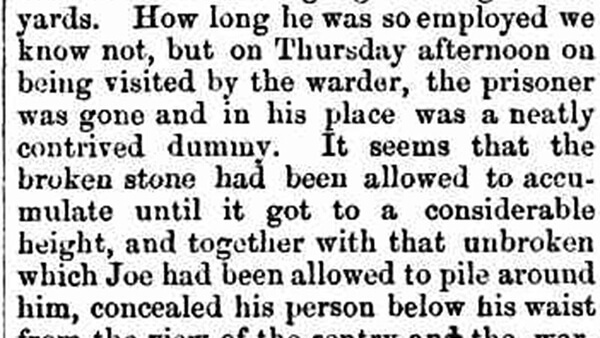
A simple dummy made by Johns had fooled the guards.
He stood his hammer upright and fashioned a pair of shoulders out of umbrella wire. He then donned his own jacket and cap on the dummy.
It works well as a decoy from a distance.
It would take two years for him to be apprehended.
Months in irons
He was caught after two years on the run due to bad luck.
In February 1869, he broke into a Swan Valley winery. Unknown to him, police were on the lookout for a drowned man nearby.
Before being caught, Johns ran into the arms of surprised police officers while fleeing from the winery’s owner.
He served another four years in prison, the majority of which was spent in chains.
His final attempt to flee was destroyed when he was caught making a key and file in a carpentry workshop. He threw the evidence over the prison wall when he was caught.
Charges against him had to be dropped when the key and file could not be found on the other side.
Final freedom
In 1873, Johns was granted his freedom, and he married a woman half his age and settled in Perth.
He was discovered wandering the streets as an elderly man in 1900, and was deemed “of unsound mind.”
He was committed to a medical facility for treatment.
The institution was housed in the same building as a former convict depot, where he had been imprisoned when he was younger.
Despite having dementia, Johns managed to flee the institution three times before being arrested and imprisoned in Fremantle Prison for evading legal custody.
He died in a Fremantle asylum later that year.
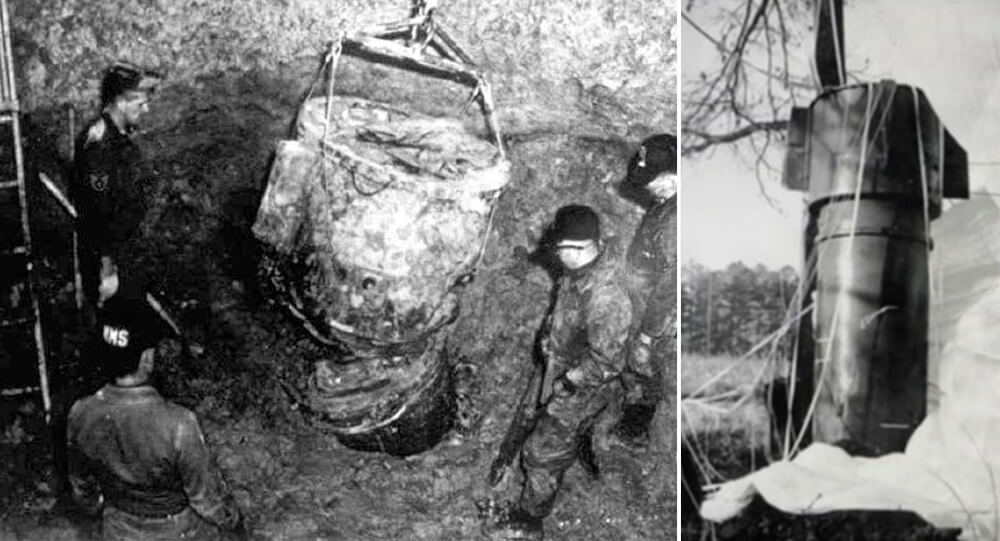
Nuclear bomb accidentally dropped on North Carolina in 196
4 January 1961: The 4241st Strategic Wing's Boeing B-52G-95-BW Stratofortress, serial number 58-0187, was on a 24-hour airborne alert mission off the United States' Atlantic Coast.

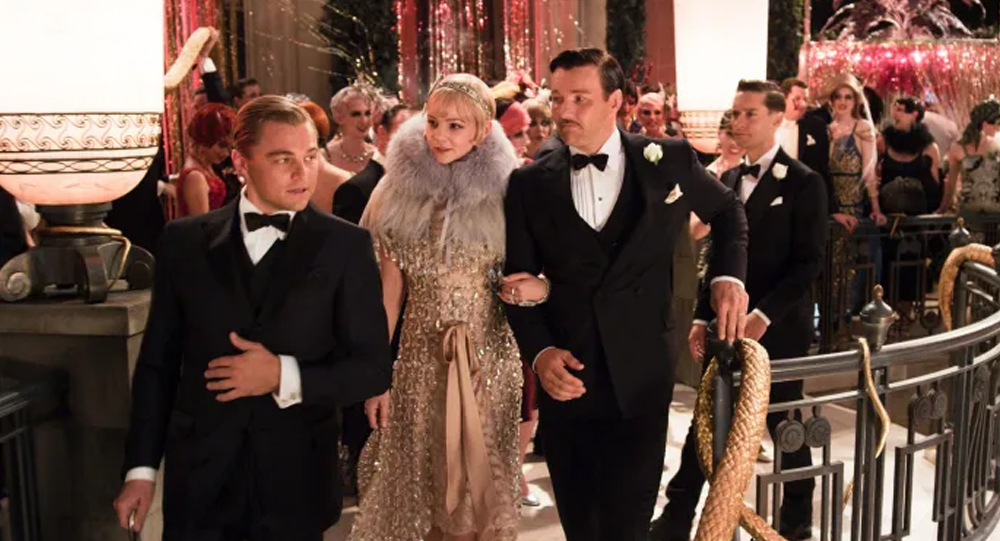
From Flapper to Fashion Week: How 1920s Style Still Shapes Modern Trends
The roaring 1920s revolutionized fashion, introducing bold styles, daring cuts, and a spirit of freedom that still inspires today’s wardrobes. From flapper dresses to statement accessories, here’s how the Jazz Age lives on in modern fashion.
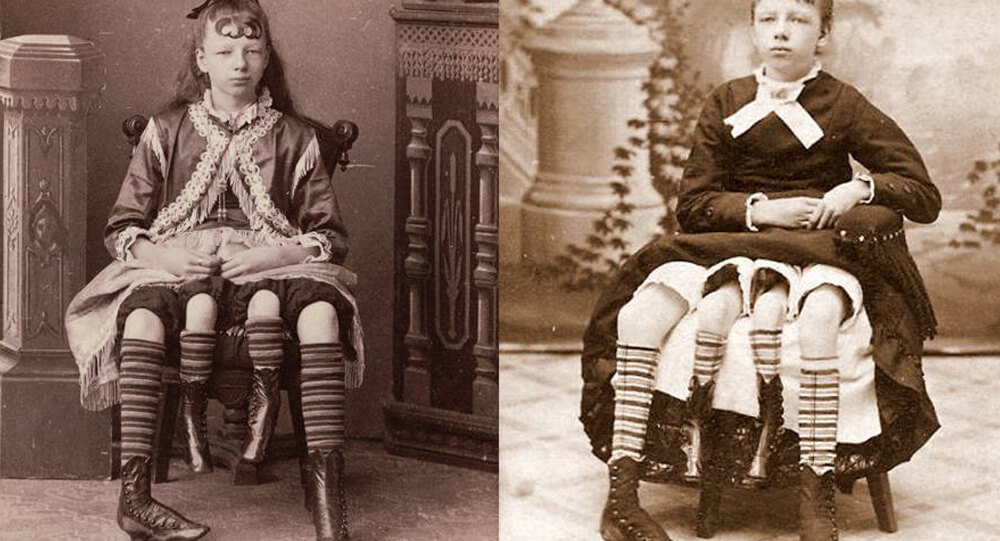
The true story of Josephine Myrtle Corbin, the lady born with four legs and two private parts
Josephine Myrtle Corbin, an American sideshow performer born in 1868, had a rare condition known as dipygus, which caused her to have four legs, each smaller inner leg paired with one of her outer legs. Corbin joined the sideshow circuit, captivating audiences as the "Four-Legged Girl from Texas."

The Littlest Skyscraper: How J.D. McMahon’s 480-Inch Con Fooled Investors in 1919
In 1919, J.D. McMahon convinced investors to fund a 480-foot skyscraper, but he labeled the plans as 480 inches, building a 40-foot structure instead. After taking $200,000, he won in court since the plans matched what he built.
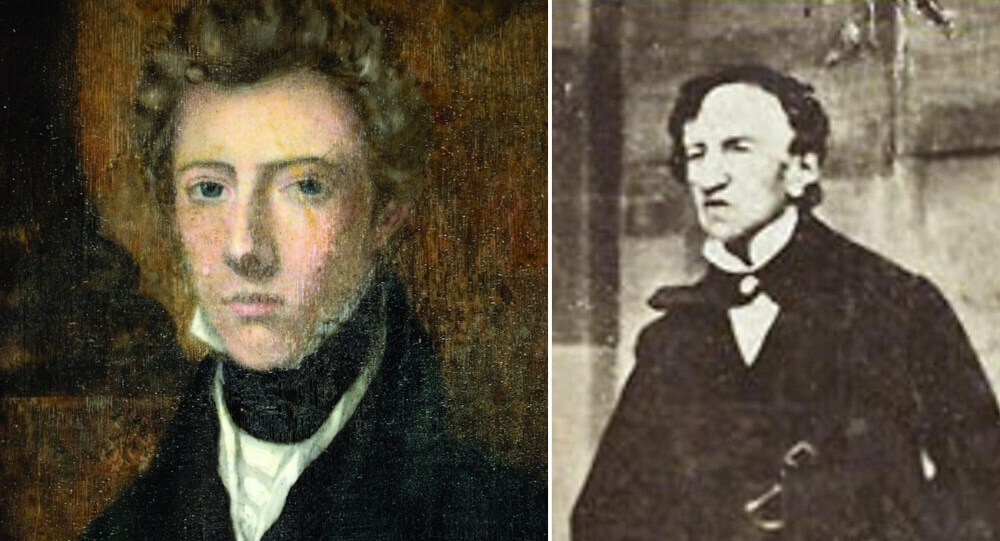
The mysterious secret of Dr James Barry
Before women were allowed to enroll in medical school, Margaret Ann Bulkley studied medicine and assumed the identity of Dr. James Barry for 56 years while dressing as a man. After 46 years of service as an army doctor officer, her secret was not made public until after her death in 1865.
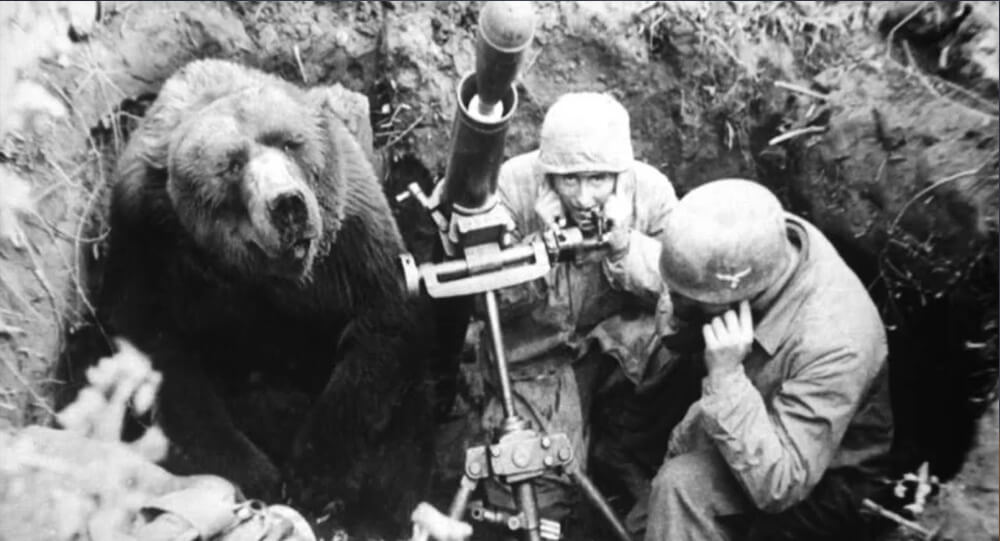
The 440-pound bear named Wojtek and his World War II battle against the Nazis
Polish troops raised an orphaned bear cub during WWII. He enjoyed drinking beer, and was trained to salute. He became officially enlisted as a member of the forces, and helped carry artillery during battle.
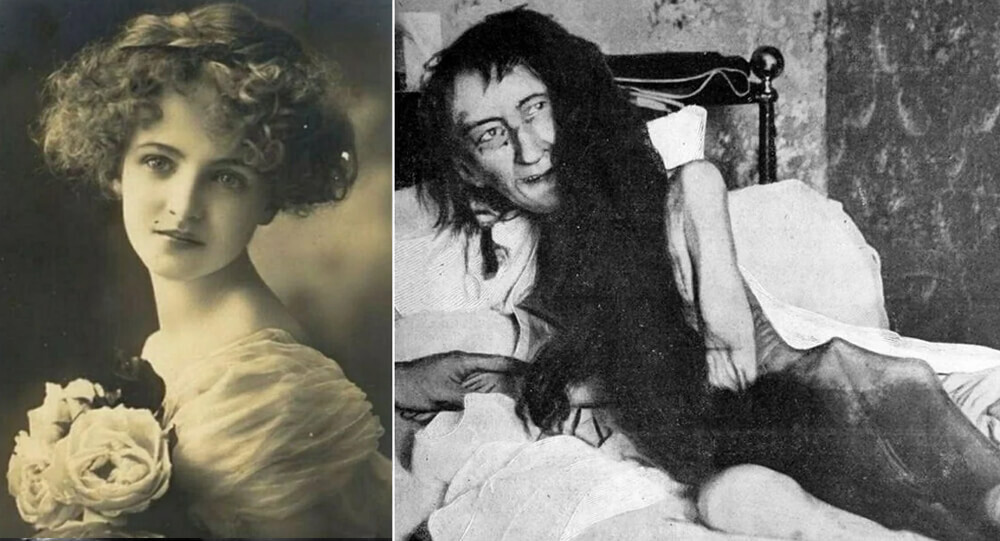
Blanche Monnier: Imprisoned For 25 Years For Falling in Love
Blanche Monnier, she was a French woman noted for her beauty, she wished to marry an old lawyer that her mother disapproved of, so she locked her in a small dark room in her attic for 25 years.
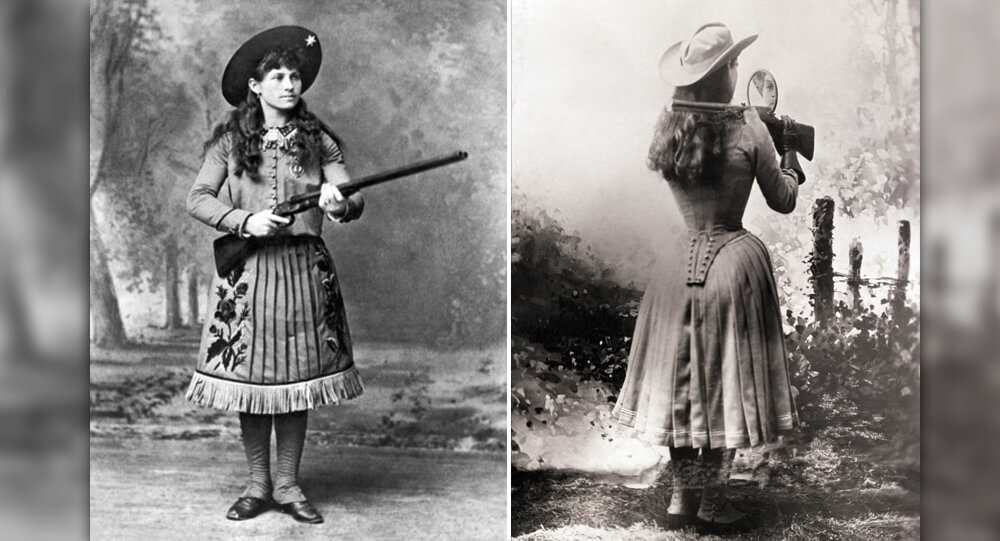
The true story of Annie Oakley, legendary sharpshooter
Anne Oakley was such a good shooter that she could split a playing card help edge-on, hit dimes thrown into the air, shoot cigarette from her husband's lips, and pierce a playing card thrown into the air before it hit the ground.
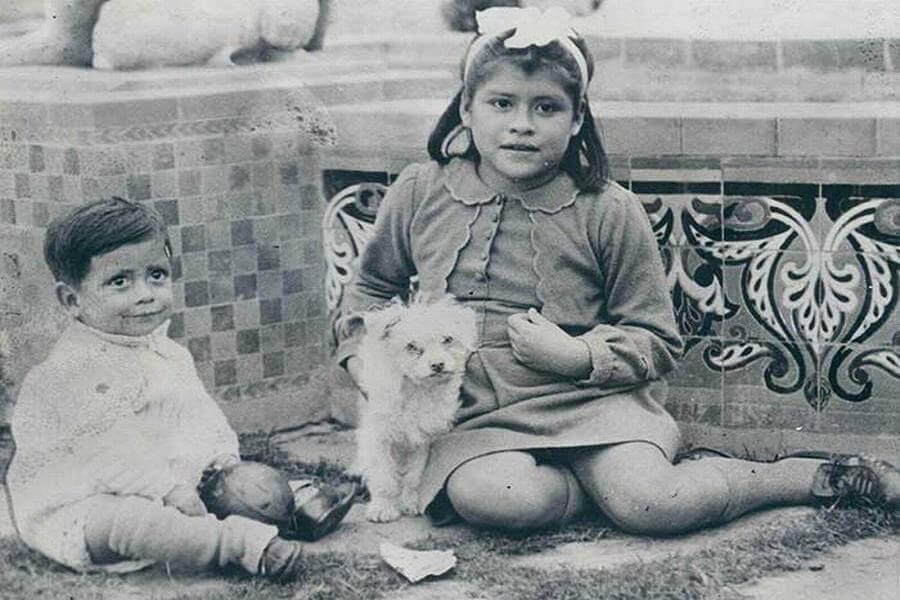
story of the youngest mother in the world at age of five - Lina Medina
Lina Medina, a five-year-old Peruvian girl, became the youngest mother in history in 1939 when she gave birth to a boy.

During the 1996 Olympic bombing, Richard Jewell falsely accused of committing the crime after saving dozens of people
Richard Jewell, an American security guard, discovered a bomb during the 1996 Olympic Games in Atlanta and assisted in the evacuation, but was later wrongfully accused and faced public scrutiny. He was cleared, but it had a lasting impact on him until his death in 2007 at the age of 44.
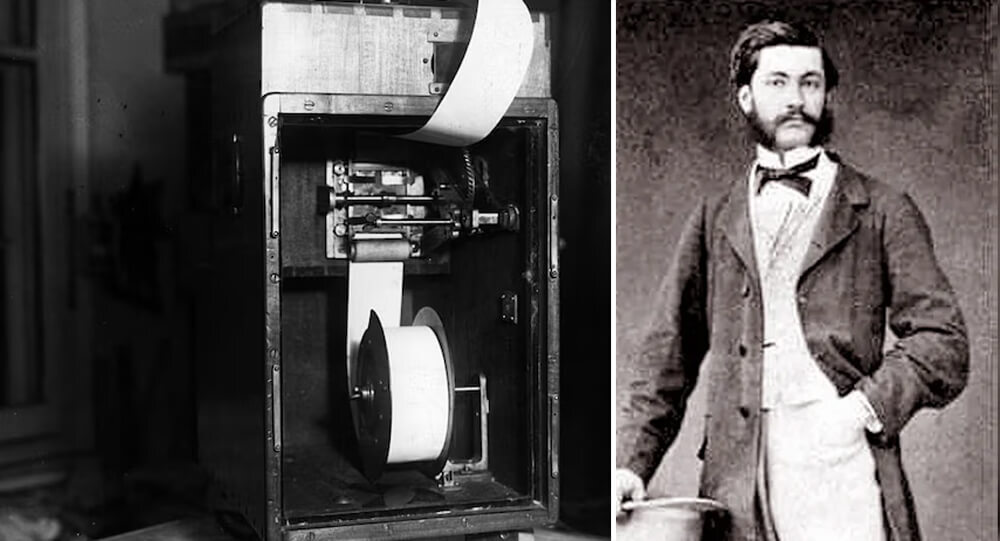
Louis Le Prince Invented the motion picture camera, and then he mysteriously disappeared
Louis Le Prince, the inventor of motion pictures, vanished without a trace in 1890. Thomas Edison quickly claimed the title of "first and sole inventor of cinema," even taking Le Prince's son to court to dispute it. A few years later, the son also dies under mysterious circumstances.
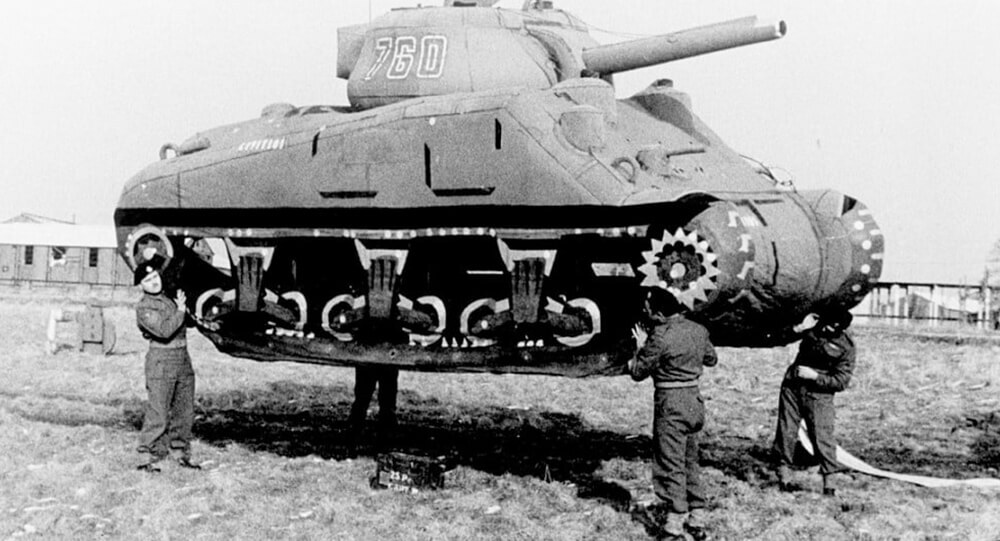
What exactly was the US's 'Ghost Army' during WWII?
During WW2, there was a special unit of men dubbed the ‘Ghost Army’. The unit was made of artists, creative and engineers and their job was to create deception about the enemy. From inflatable tanks to phony convoys to scripted conversations in bars intended to spread disinformation, they used all possible tricks to fool the enemy.
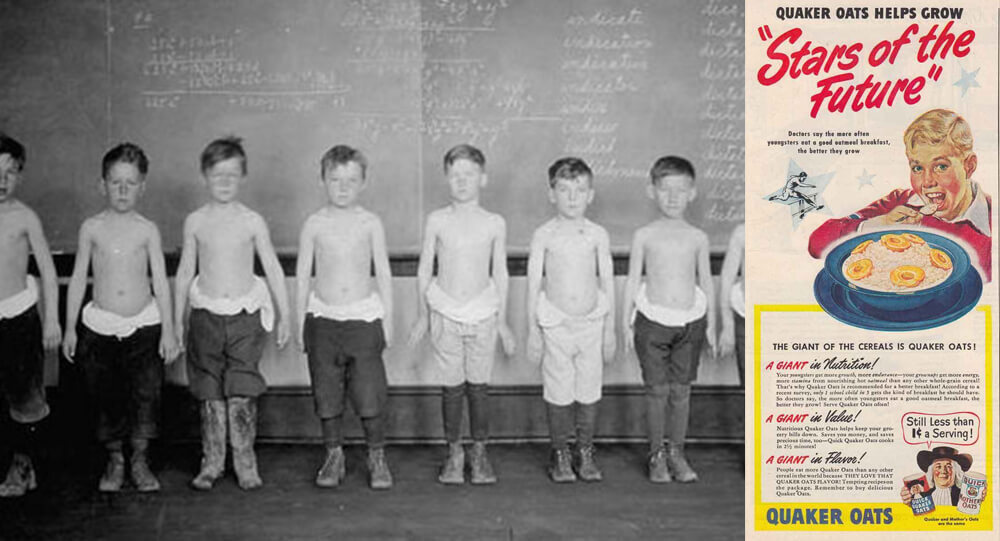
Quaker Oats Fed Children with Radioactive Oatmeal
In the 1940s and 1950s, Quaker Oats and MIT conducted experiments on radioactive iron and calcium-containing cereal. The diet was part of a study to see if the nutrients in Quaker oatmeal traveled throughout the body. In January 1998, a $1.85 million settlement was reached for 30 victims who came forward.
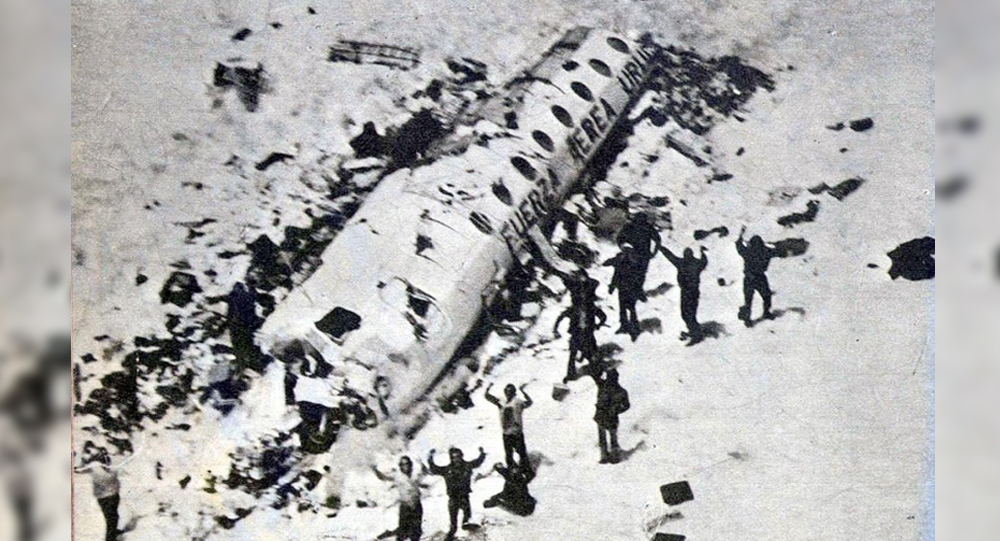
1972 Andes Plane Crash Survivor recall the terrifying Struggles to Stay Alive
On October 13, 1972, a plane carrying a rugby team from Uruguay crashed in the Andes between Chile and Argentina. The survivors were in brutal conditions - high altitude, bitter cold, and the lack of food—and faced the most terrible choice—eating the frozen flesh of their dead friends or starving to death themselves.

Archaeologists Uncover 2,000-Year-Old Amazonian Cities Using Lidar Technology
Deep in the Ecuadorian Amazon, archaeologists have uncovered an ancient network of urban settlements once inhabited by the Upano people about 2,000 years ago. Using cutting-edge lidar technology, these discoveries reveal a highly organized society featuring sophisticated agricultural systems, drainage canals, and extensive road networks. This transformative find challenges long-held assumptions about ancient Amazonian societies and sheds light on a complex civilization thriving in one of the world’s most biodiverse regions.
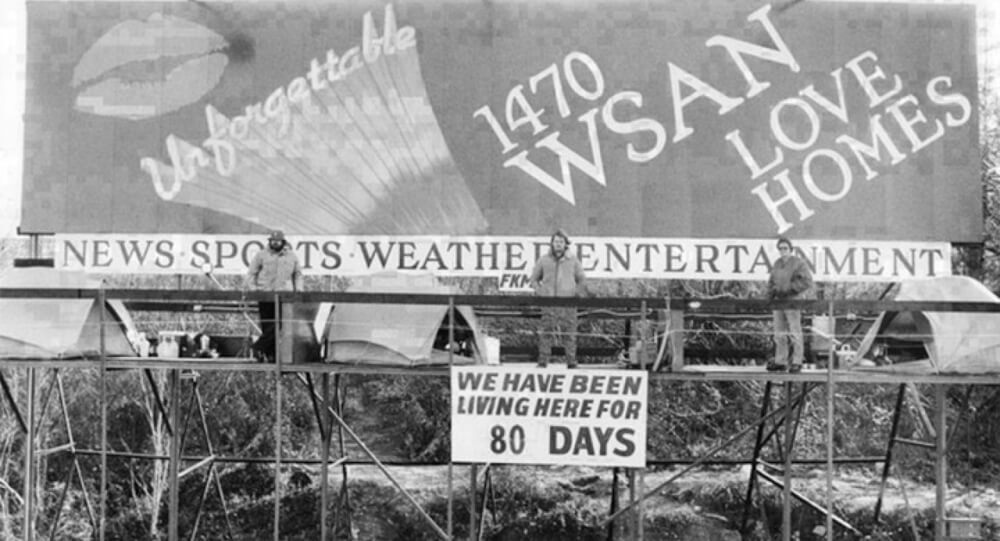
3 men lived on top of a billboard in tents for almost 9 months
From 1982-1983, three men in Allentown PA competed in a radio contest in which they lived on top of a billboard in tents. Whoever stayed up longest would win a house. Due to economic pressure from the recession, none of the contestants wanted to give up, so the contest lasted almost 9 months.


Philippines, the largest supplier of Nurses in the World
Philippines is the world’s largest supplier of nurses, supplying roughly 25% of all overseas nurses worldwide.

The incredible story of a plane that lost its roof in mid-flight and the light signal that saved 94 lives.
On April 28, 1988, Aloha Airlines flight 243 was on the way to Honolulu from Hilo when a huge portion of the upper part of the fuselage blew off the airplane.
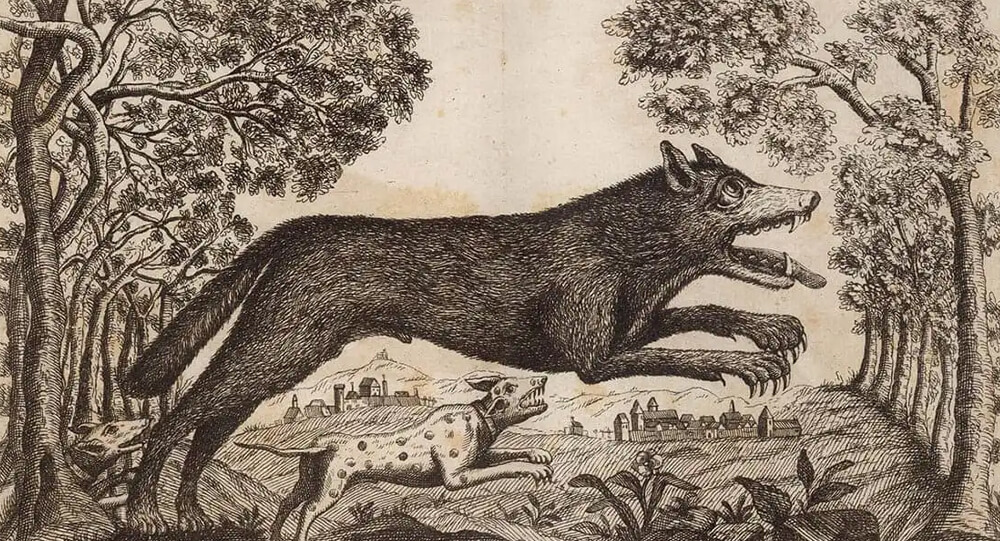
What Was the Beast of Gévaudan?
Between 1764 and 1767, a mysterious animal called the Beast of Gévaudan terrorized the French village called Gévaudan. It attacked and killed about 100 adults and children. While most believe it was a wolf, some say it may have been a wolf-dog hybrid, hyena or even a lion, but without any genetic evidence, the beast will remain a mystery forever.
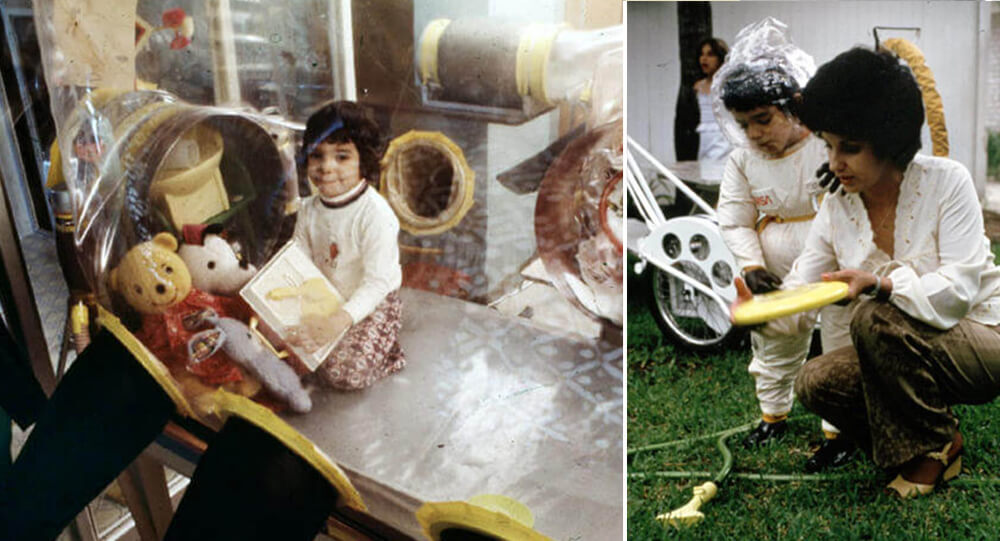
The touching story of David Vetter (bubble boy), the 'boy who lived in a bubble
David Vetter lived his whole 12 years in sterile “bubble”. He was “outside” for 20 second after being removed from his mother’s womb. He never touched any human.

Man's Blood Helped Save Millions of Babies
Australian blood donor James Harrison has been one of our most impressive and valued donors, having donated for 60 years. Know his story, how he was a pioneer of our Anti-D program, and why this matters.
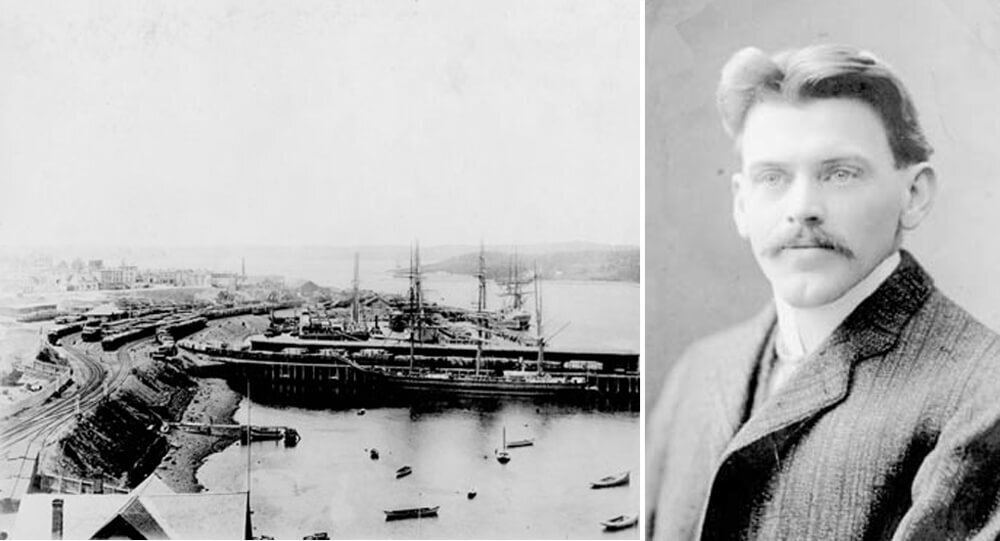
Vince Coleman, a railway dispatcher, sacrificed his own life
Vince Coleman, a railway dispatcher, sacrificed his life in order to warn an incoming train of an imminent explosion. His telegraph said “Hold up the train. Ammunition ship afire in harbor making for Pier 6 and will explode. Guess this will be my last message. Good-bye, boys.” He saved 300 lives.
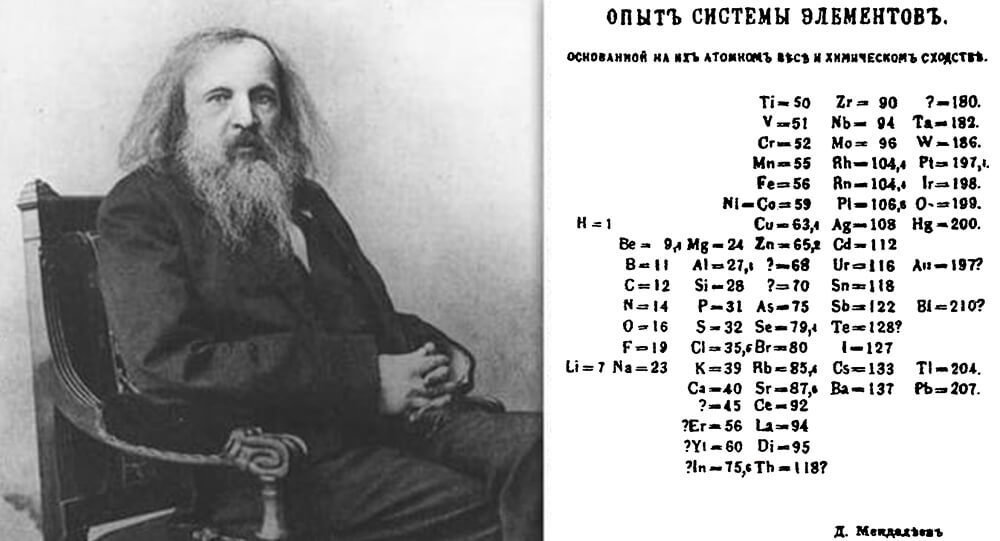
How Dmitri Mendeleev Developed the periodic table of the elements
1850 Dmitri Mendeleev walked almost a thousand miles to Moscow so he could apply for the University of Moscow. Although he was not accepted, he walked to St. Petersburg where he was accepted, And with that education, he developed the the periodic table of the elements
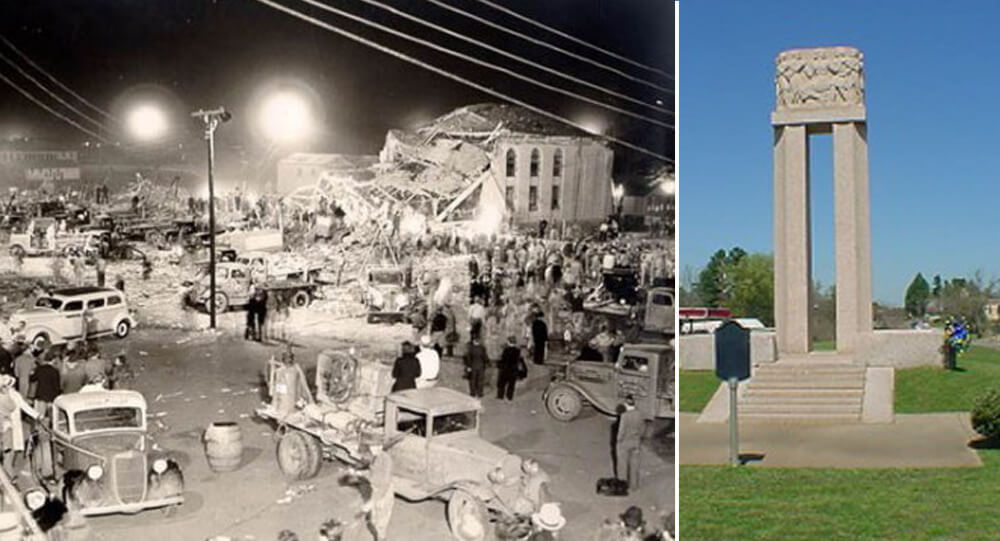
New London School Explosion, Deadliest school disaster which killed almost 300 children and teachers
In 1937, a gas leak in the basement at the local school in New London, Texas caused a massive explosion which killed almost 300 children and teachers, the deadliest school disaster in US history. Adolf Hitler even sent his condolences by telegram.

How Sleep Deprivation Was Once Used as Torture
Sleep deprivation, long before modern interrogation techniques, was considered a “clean” and effective form of torture—leaving no physical scars, yet breaking minds with haunting silence. Victims endured days and nights without rest, leading to vivid hallucinations, disorientation, and psychological torment. This article traces the dark history of sleep deprivation as a weapon, examines the science behind its effects on the brain, and shines a light on the painful balance between human endurance and cruelty in the annals of coercion.