
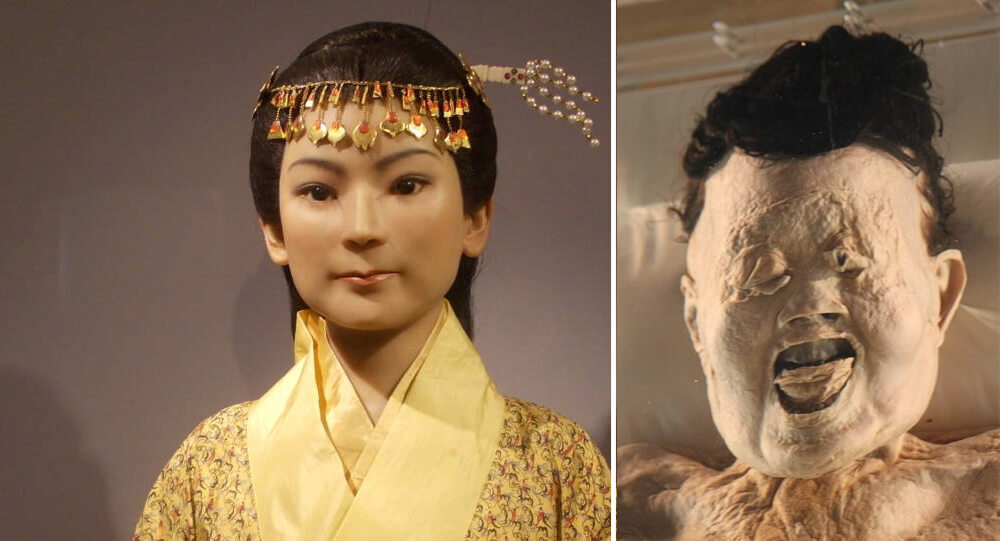
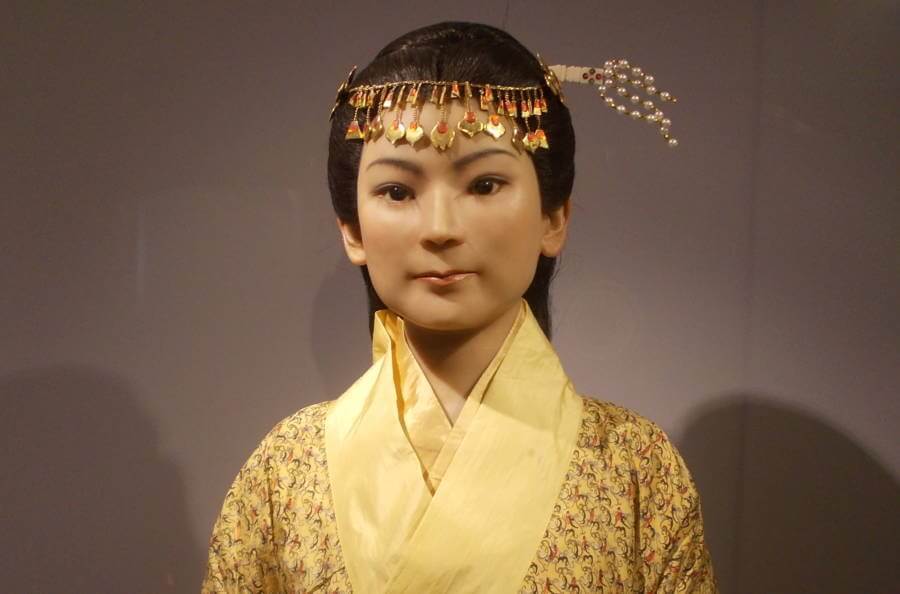
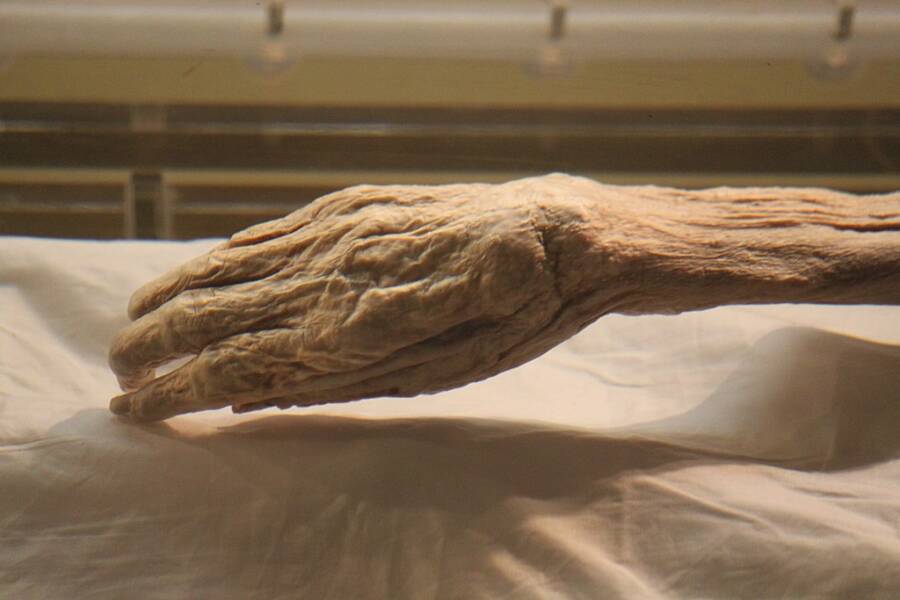
Xin Zhui, also known as Lady Dai, is a mummified woman from China’s Han dynasty (206 BC-220 AD) who is still soft to the touch, has natural hair, and has ligaments that still bend, much like a living person. She is more than 2,000 years old. She is regarded as the most expertly preserved human mummy in recorded history. This is her incredible tale.
The Shocking Discovery Of Xin Zhui, The “Lady Dai” Mummy
When workers were excavating close to an air raid shelter outside of Changsha in 1971, they almost literally stumbled upon Xin Zhui’s enormous tomb. More than 1,000 priceless artifacts, including make-up, toiletries, hundreds of pieces of lacquerware, and 162 carved wooden figures that represented her staff of servants, were kept in her funnel-shaped crypt. Even a meal was prepared for Xin Zhui to eat in the afterlife.
While the intricate structure was impressive and had remained intact for almost two thousand years, what really astounded researchers was Xin Zhui’s physical state.
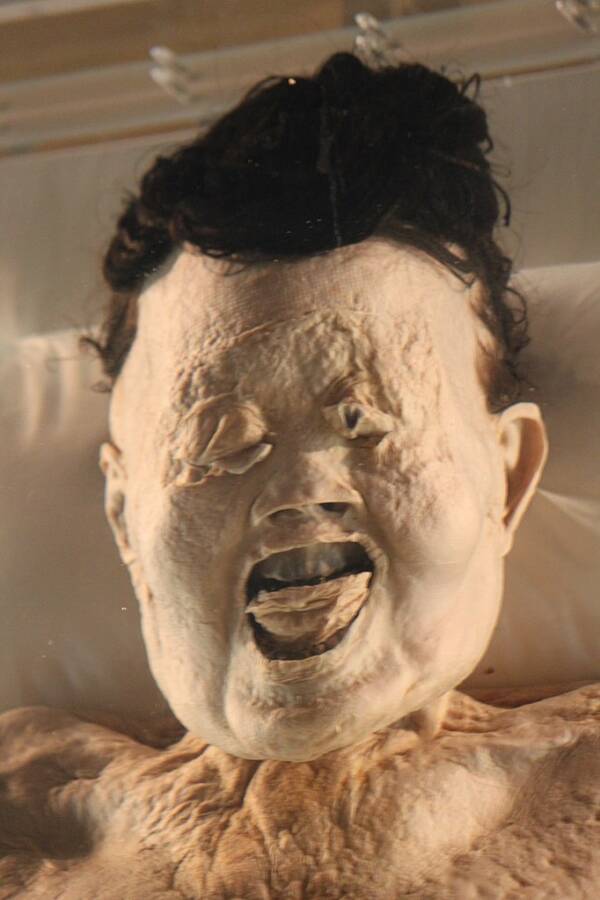
When she was discovered, it was discovered that she had retained the skin of a living person, which was still supple and elastic to the touch. Her original hair, including that on her head and inside of her nostrils, as well as her eyebrows and eyelashes, were discovered to be in tact.
Baffled Researchers Begin Studying The World’s Best-Preserved Mummy
She died in 163 BC, so scientists were able to perform an autopsy, during which they found that her 2,000-year-old body was in comparable condition to someone who had just passed away.
But as soon as the oxygen in the air touched Xin Zhui’s body, her preserved corpse was compromised, and she started to deteriorate. As a result, the pictures of Xin Zhui that we currently possess do not do its initial discovery justice.
Researchers also discovered that she had all of her organs, and that type-A blood was still present in her veins. Her official cause of death—a heart attack—was revealed by the presence of clots in these veins.
Gallstones, high cholesterol, high blood pressure, and liver disease were among the additional illnesses that were discovered throughout Xin Zhui’s body.
Pathologists even discovered 138 undigested melon seeds in Lady Dai’s stomach and intestines while examining her. It was safe to assume that the melon was her final meal, consumed just before the heart attack that ultimately claimed her life, as such seeds typically take an hour to digest.
How Is Xin Zhui’s Lady Dai Mummy So Well-Preserved?
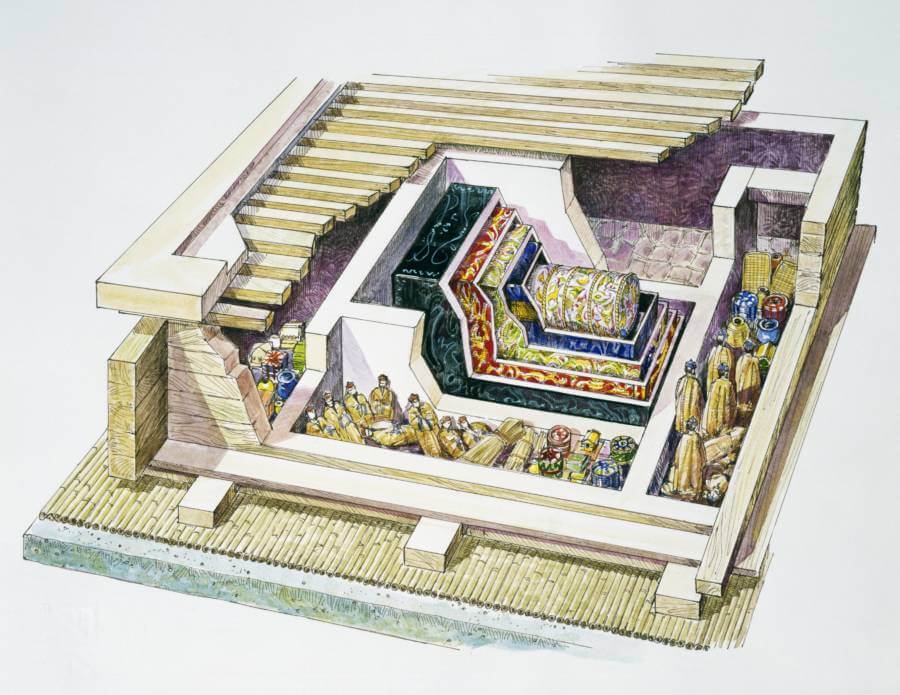
Researchers give credit to Lady Dai’s elaborate and airtight tomb. Xin Zhui was buried almost 40 feet underground, inside the smallest of four pine box coffins, each one set inside the other (imagine a Matryoshka set, where the dead body of an ancient Chinese mummy is revealed once you reach the smallest doll).
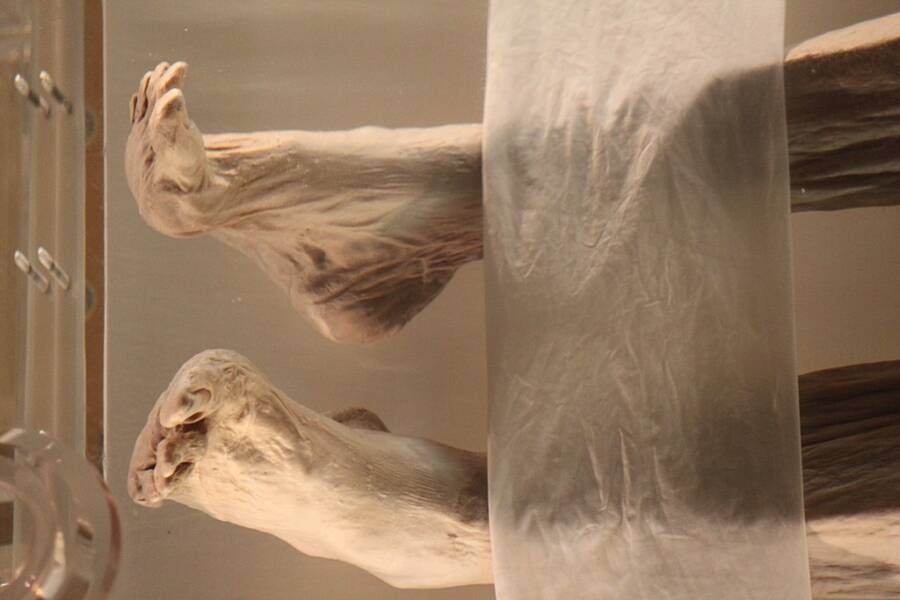
Her body was discovered in 21 gallons of a “unknown liquid” that was tested and found to be mildly acidic and contain traces of magnesium while being wrapped in twenty layers of silk fabric.
Her eternal chamber was sealed with clay and packed with moisture-absorbing charcoal to keep out oxygen and bacteria that cause decay. A thick layer of paste-like soil covered the floor. After that, three more feet of clay were used to seal the top, keeping water from entering the building.
The search for immortality

The ancient Chinese had a fascination with the afterlife.
It was crucial for them to keep the body as intact as possible in order to enter the underworld.
After she passed away, the body of Xin Zhui was cleaned with wine and flagrant water, both of which have antibacterial properties that prevent the body from decomposing.
Twenty layers of clothing were tightly layered around the body. The corpse was buried in an airtight casket. A second airtight coffin was then placed inside the coffin. There were four coffins surrounding one another.
The Xin Zhui’s coffins were the equivalent of a Russian nesting doll.
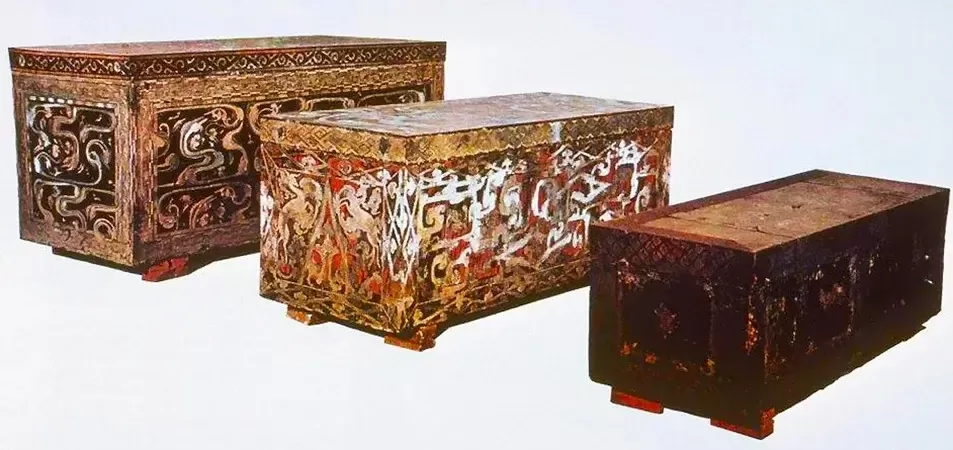
The coffin was buried 12 meters (40 feet) underground, in a place with a constant, cool temperature. A layer of white clay and charcoal that was 3 feet thick (1 meter) served as the coffin’s protective covering.
The body was discovered floating in an unidentified translucent liquid by the scientists when they opened the innermost coffin.
Scientists were unable to determine what kind of liquid it was; all they knew about it was that it was acidic. However, the scientists who touched the substance endured months of hand rashes.
Who Was Xin Zhui Before She Became The Mummy We Know Today?
In contrast to her burial and death, we know relatively little about Xin Zhui’s life.
Li Cang (the Marquis of Dai), a prominent Han official, was married to Lady Dai, who passed away at the young age of 50 due to her penchant for excess. Her fatal cardiac arrest was thought to have been caused by a lifetime of obesity, a lack of exercise, and a lavish and too much diet.
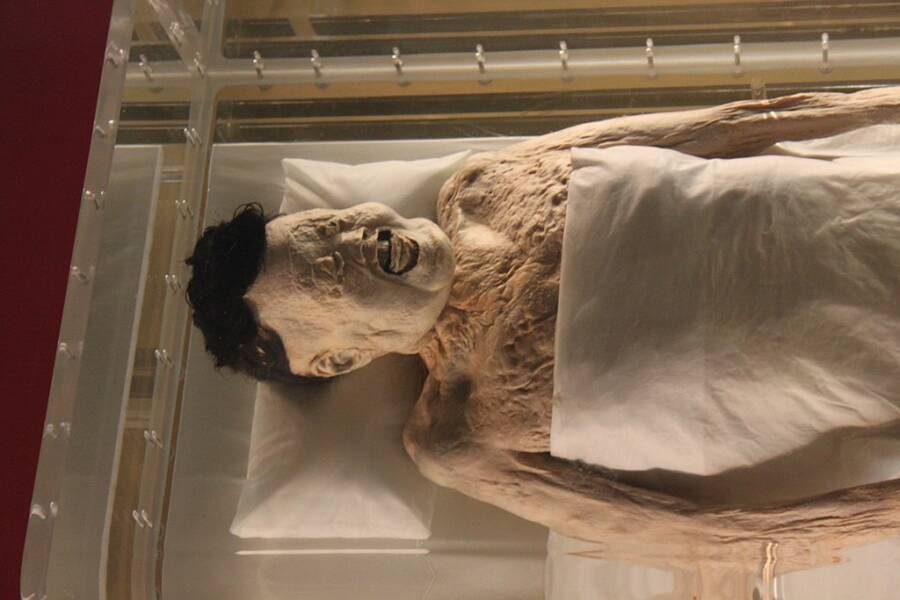
She may still have the best-preserved corpse in history, though. The primary subject of their research into corpse preservation is Xin Zhui, who is currently kept in the Hunan Provincial Museum.

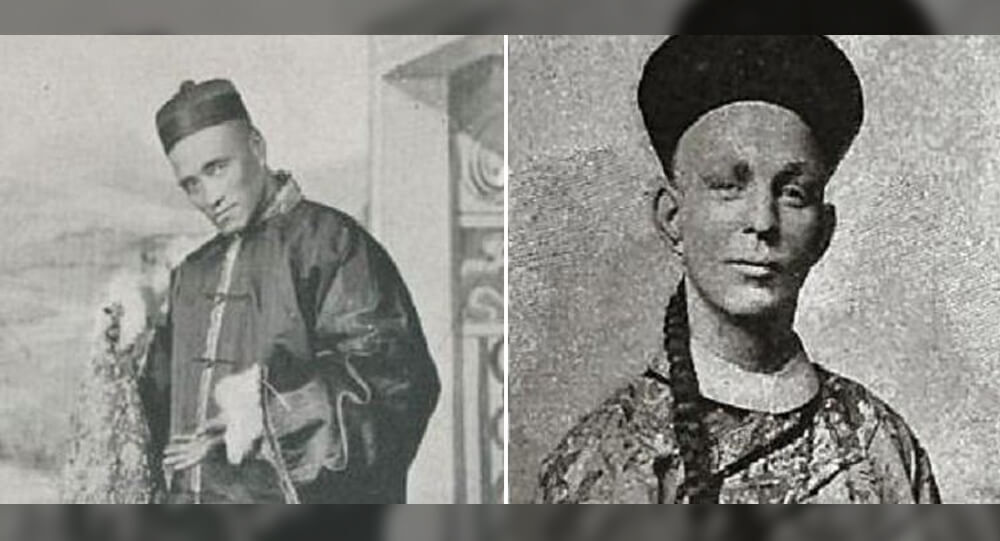
The Bizarre (And Magical) Duel Between Chung Ling Soo And Ching Ling Foo
Ching Ling Foo and Chung Ling Soo were two magicians from the early 20th century who were bitter rivals. While Ching Ling Foo was genuinely Chinese, Chung Ling Soo was actually a New Yorker named William Robinson.

Sylvan Goldman: The Visionary Who Revolutionized Shopping with the Cart
The inventor of shopping carts, Sylvan Goldman, had to hire several male and female models to push carts around in his store, demonstrate their utility, and explain their use to other customers, due to not catching on initially.

Remembering the 1945 Empire State Building Disaster: When a Plane Met Skyscraper
An airplane crashed into the Empire State Building in 1945. Among other damage, plane parts severed the cables of an elevator and the woman inside fell over 70 stories. She lived and holds the world record for the longest survived elevator fall.
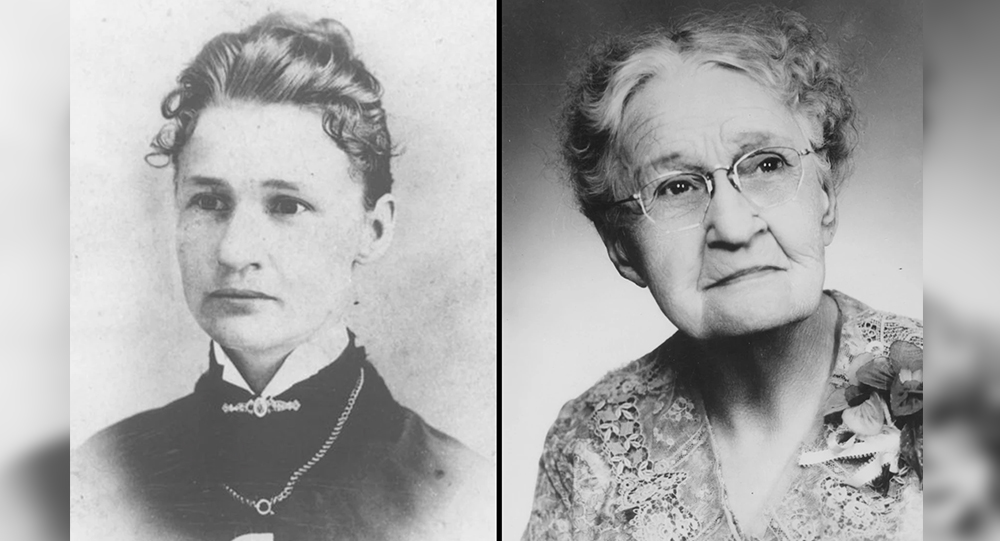
Susanna Salter: The Trailblazing Story of America’s First Female Mayor
In 1887, Susanna Salter became the first female mayor in the United States, elected in Argonia, Kansas. Her nomination was initially a prank by men opposing women in politics. However, she won by a landslide and served effectively, inspiring the women’s suffrage movement and breaking barriers for women in leadership.

Terry Fox, a 21-year-old one-legged cancer patient who ran 143 days before dying
Terry Fox was a 21-year-old one-legged cancer patient who ran 3,339 miles across Canada in 143 days before dying.
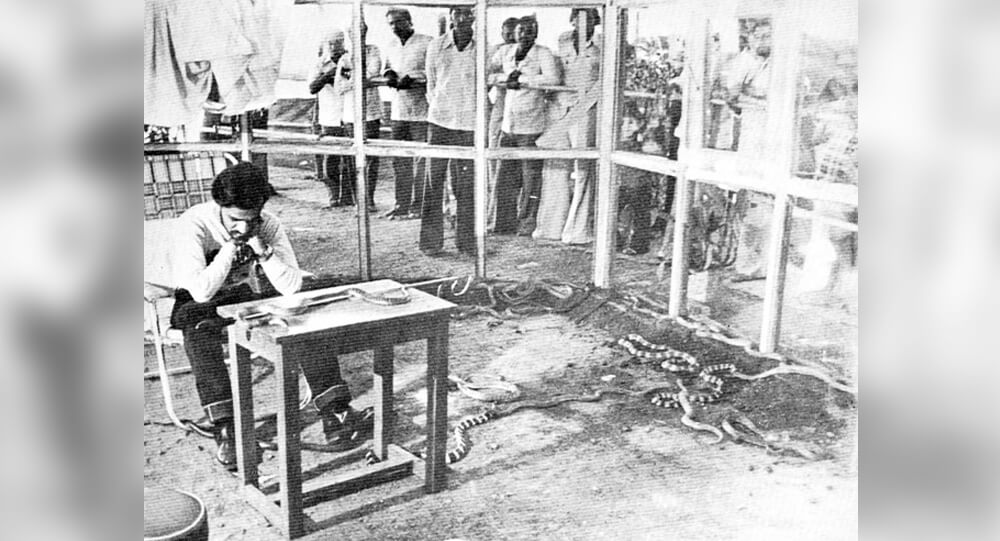
The story of a man who spent 72 hours with 72 venomous snakes to prove they only bite when provoked
In the 1980s, an Indian man spent 72 hours in a glass cabin with 72 snakes, some of which were extremely venomous. His aim was to prove that snakes only attack when provoked. Remarkably, he was not bitten once in those 72 hours and even set a Guinness World Record in the process.

Archaeologists Uncover 2,000-Year-Old Amazonian Cities Using Lidar Technology
Deep in the Ecuadorian Amazon, archaeologists have uncovered an ancient network of urban settlements once inhabited by the Upano people about 2,000 years ago. Using cutting-edge lidar technology, these discoveries reveal a highly organized society featuring sophisticated agricultural systems, drainage canals, and extensive road networks. This transformative find challenges long-held assumptions about ancient Amazonian societies and sheds light on a complex civilization thriving in one of the world’s most biodiverse regions.
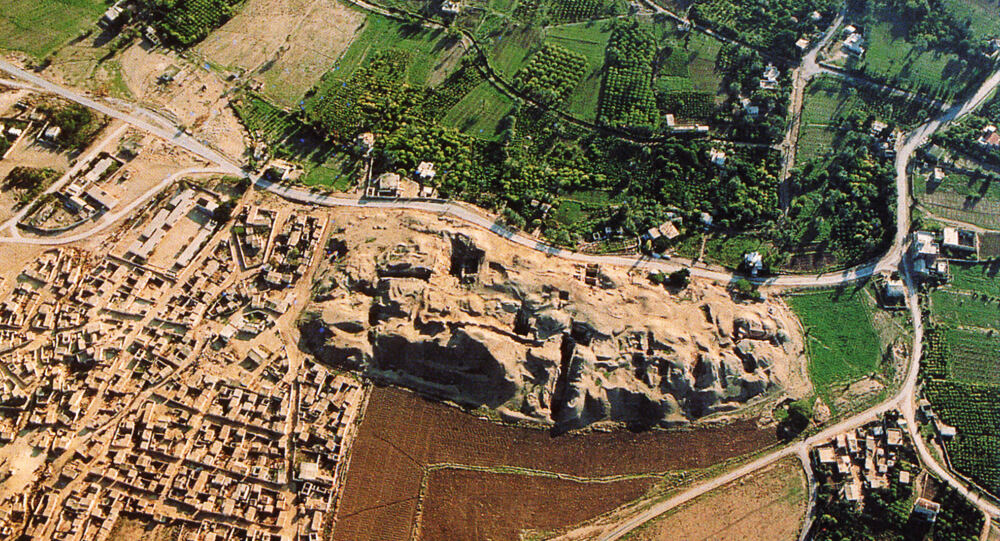
Ancient Jericho: The First Walled City In History
The ancient city of Jericho is the world's oldest walled city, with evidence of stone fortifications dating back nearly 9000 years.

Medals of Friendship: The Enduring Olympic Story of 1936
At the 1936 Summer Olympics, two Japanese pole vaulters named Sueo Oe and Shuhei Nishida tied for second, but they declined to compete against each other. As a result, Nishida was awarded the silver medal and Oe won a bronze medal. Upon returning to Japan, the athletes had their medals cut in half and spliced together to create new "friendship medals," which were half silver and half bronze.

June and Jennifer Gibbons The silent twin who Only Spoke to Each Other
Identical twins June and Jennifer Gibbons were born on 11 April 1963 at a military hospital in Aden, Yemen where their father worked as part of the Royal Air Force.
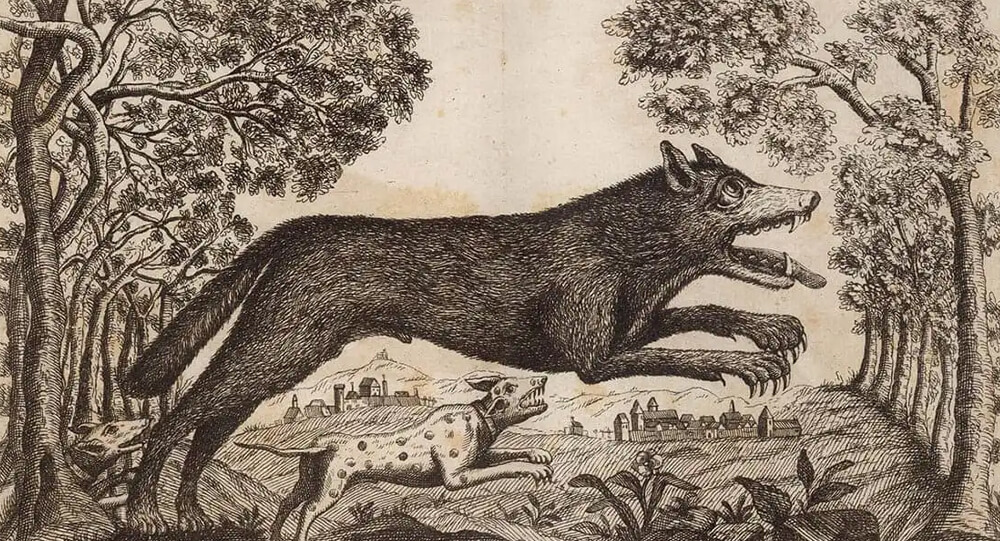
What Was the Beast of Gévaudan?
Between 1764 and 1767, a mysterious animal called the Beast of Gévaudan terrorized the French village called Gévaudan. It attacked and killed about 100 adults and children. While most believe it was a wolf, some say it may have been a wolf-dog hybrid, hyena or even a lion, but without any genetic evidence, the beast will remain a mystery forever.


Mario Segale, Developer Who Inspired Nintendo to Name Super Mario
Super Mario is named after real-life businessman Mario Segale, who was renting out a warehouse to Nintendo. After Nintendo fell far behind on rent, Segale did not evict them but gave them a second chance to come up with the money. Nintendo succeeded and named their main character after him.
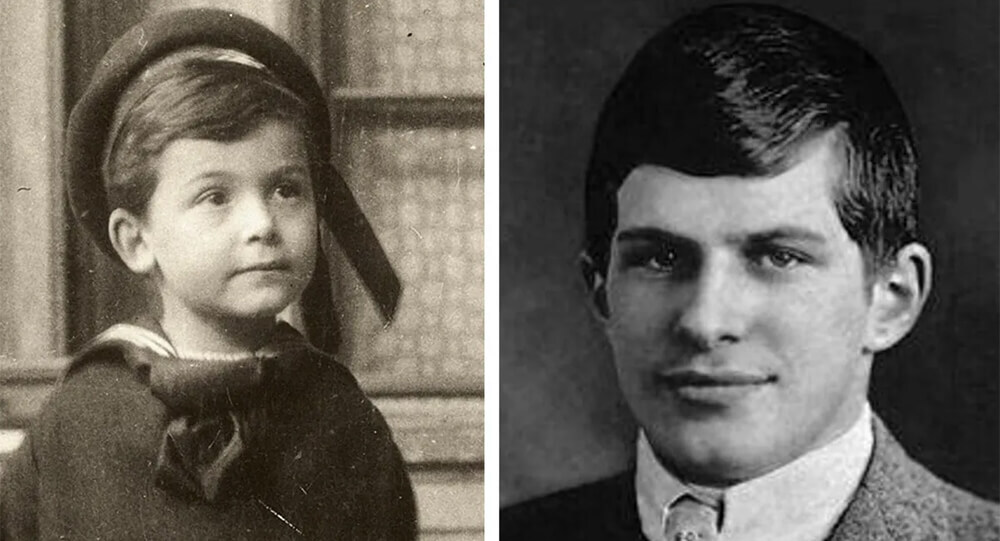
William James Sidis: The smartest person yet forgotten by people
William James Sidis, who was only 11 years old when he enrolled in Hardvard, finished his primary and secondary schooling in less than a year. He knew eight foreign languages by the age of eight and even invented his own language, "vedergood."
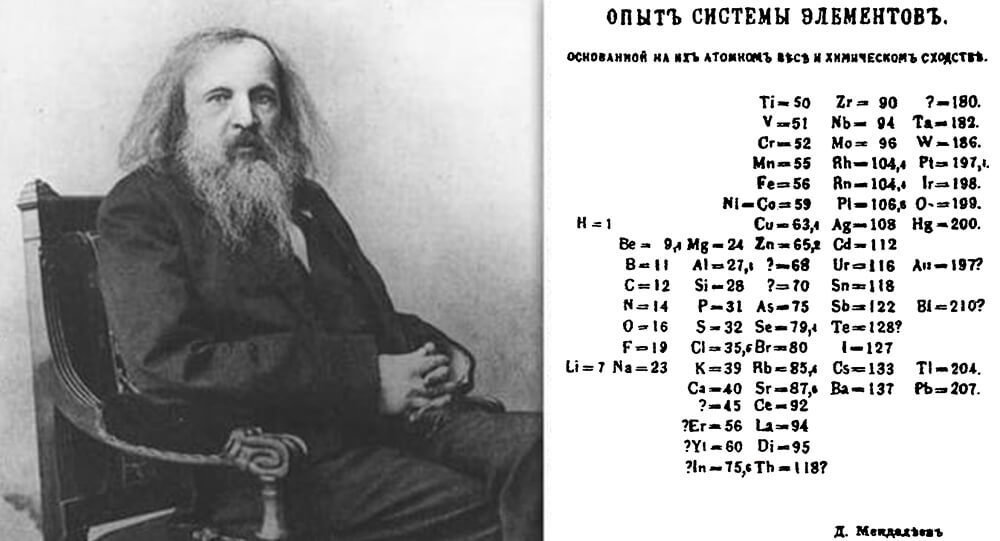
How Dmitri Mendeleev Developed the periodic table of the elements
1850 Dmitri Mendeleev walked almost a thousand miles to Moscow so he could apply for the University of Moscow. Although he was not accepted, he walked to St. Petersburg where he was accepted, And with that education, he developed the the periodic table of the elements
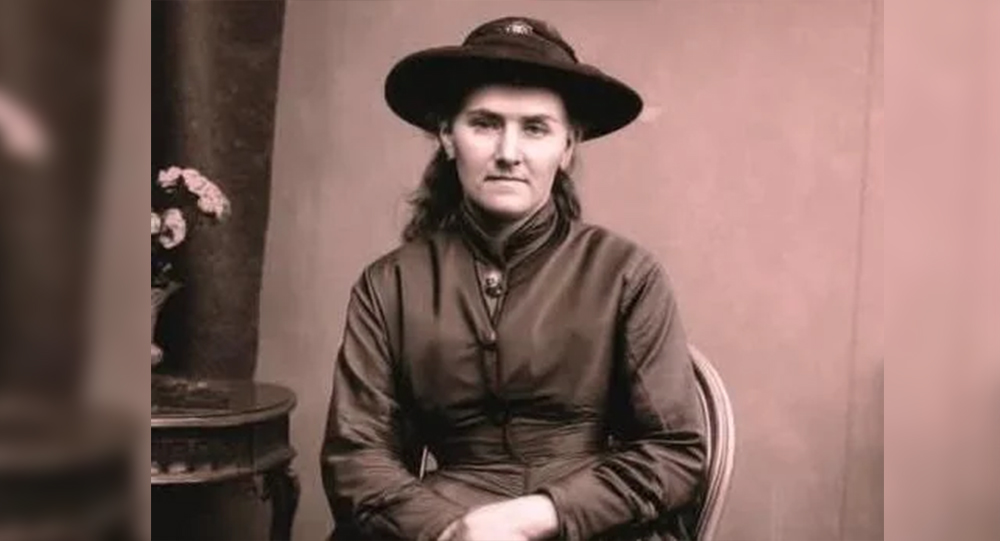
Why Comedians Failed to Make Sober Sue Laugh in the Early 1900s
In the bustling vaudeville scene of early 20th century New York, a mysterious performer known as "Sober Sue" captured public imagination not for jokes or songs, but for her unshakable stoicism—she never smiled or laughed. A local theater even offered a tempting reward of $1,000 to anyone who could make her laugh, drawing crowds and famous comedians eager to claim the prize. Despite countless hilarious attempts, Sue remained expressionless, a mystery that baffled performers and audiences until it was revealed that she suffered from facial paralysis, explaining her unchanging demeanor.

story of the youngest mother in the world at age of five - Lina Medina
Lina Medina, a five-year-old Peruvian girl, became the youngest mother in history in 1939 when she gave birth to a boy.

Iranian inmate dies from happiness after finding out he will not be executed
An Iranian man who was convicted of murder reportedly died from happiness after learning that his death sentence was being commuted.

The Baltic Way: the longest unbroken human chain in history
On August 23, 1989, about 2 million people from Latvia, Estonia, and Lithuania formed a human chain that united all 3 countries to show the world their desire to escape the Soviet Union and the communism that brought only suffering and poverty. This power stretched 600 km.
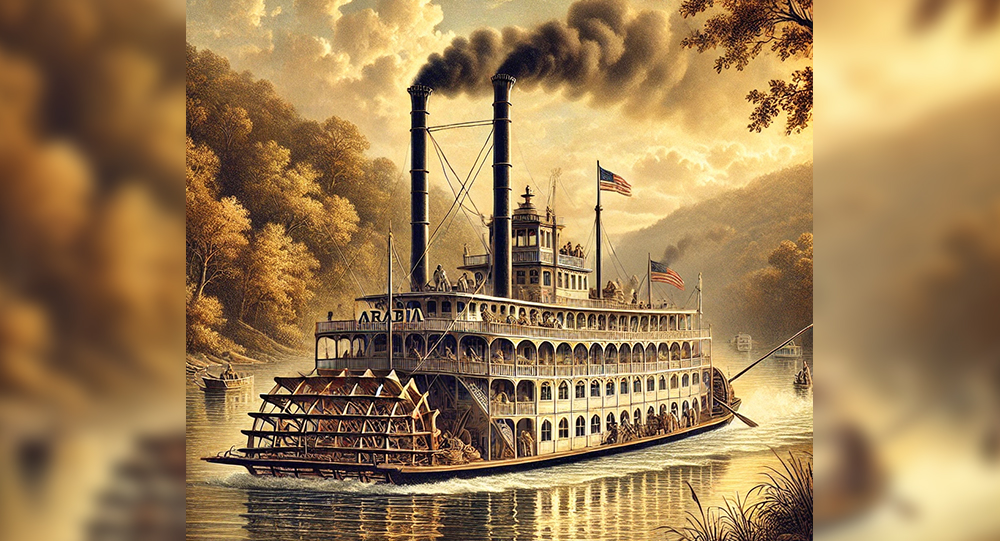
The Arabia Steamboat: Unearthing a 19th Century Time Capsule from the Missouri River
The Arabia was a steamboat that sank in the Missouri River in 1856. Over time, the river shifted 800 meters to the east, eventually turning the site of the sinking into a field. The steamboat remained under 45 feet of slit and topsoil until 1988, when it was excavated. The mud, as it turned out, was such a great preserver that most of the artifacts on board were found to be intact. They even found jars of preserved apples that were still edible!
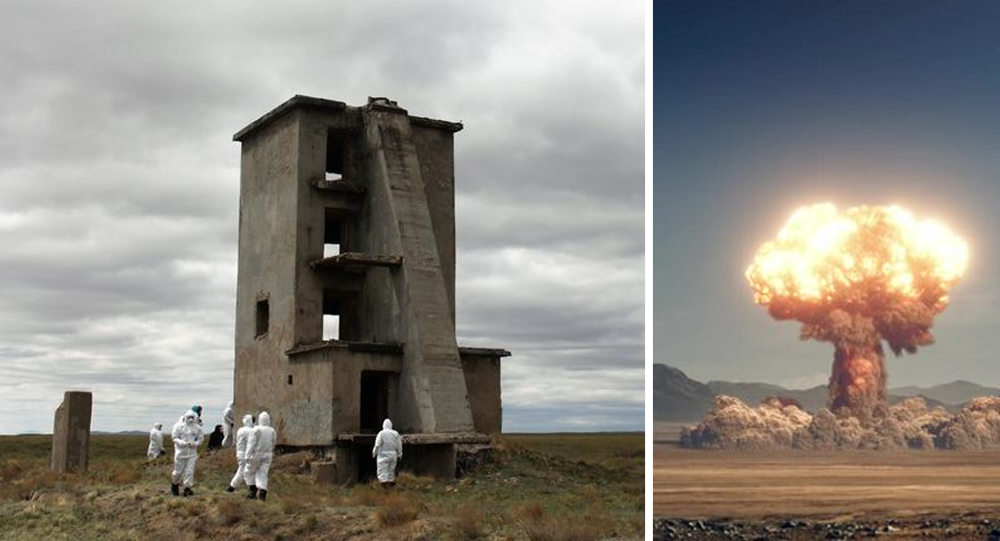
The Forgotten Story of Semipalatinsk and the Soviet Nuclear Experiments
Between 1949 and 1989, the Semipalatinsk Test Site in Kazakhstan became the primary location for Soviet nuclear weapons tests, exposing millions of unsuspecting villagers to radioactive fallout. Known as the “Polygon of Suffering,” this remote desert witnessed 456 nuclear detonations that caused widespread health crises, birth defects, and generational genetic damage. This article narrates the chilling legacy of Semipalatinsk, unveiling the human cost of Cold War arms development and the ongoing struggle for healing and recognition in Kazakhstan.
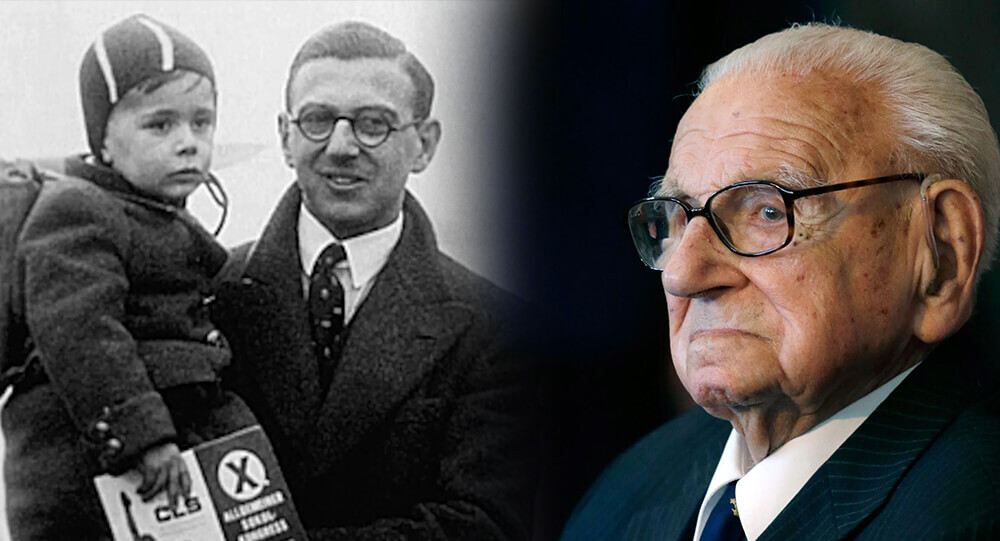
Nicholas Winton ‘British Schindler’: Man who rescued 669 Czech children from Nazis
A man named Nicholas Winton saved 669 kids during WWII and lived almost all his life without letting people know.

The Day an Israeli F-15 Landed with One Wing: Zivi Nedivi’s Unbelievable Mid-Air Survival
Discover the astonishing true story of Israeli pilot Zivi Nedivi, who safely landed an F-15 after a mid-air collision tore off its entire right wing. Learn how skill, quick thinking, and the F-15’s unique design turned a disaster into a legendary feat in aviation history
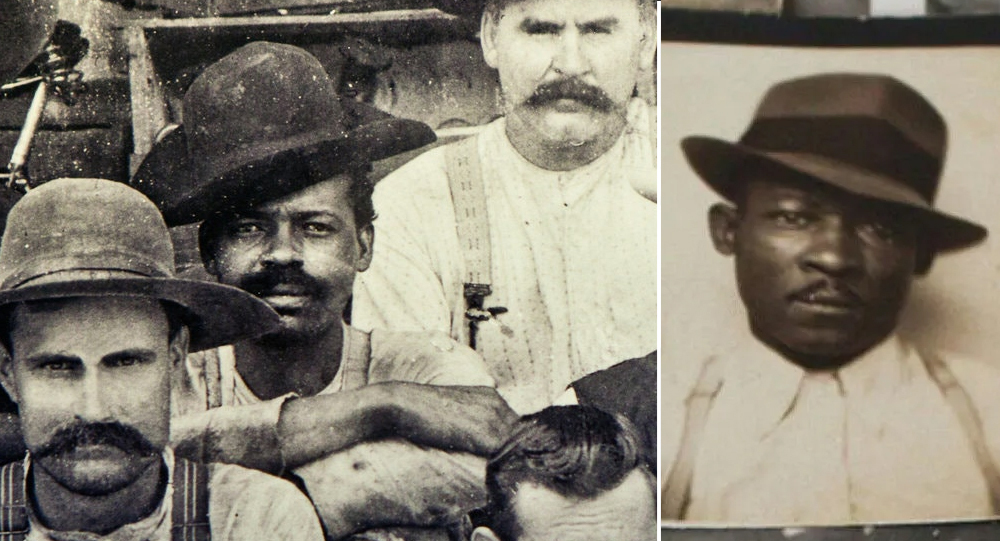
Nearest Green, America's first known Black master distiller
Nathan "Nearest" Green was an African-American head stiller who is now more frequently referred to as a master distiller. He was renowned for imparting his distilling knowledge to Jack Daniel, the creator of Jack Daniel's Tennessee whiskey distiller, after Jack Daniel was freed from slavery following the American Civil War.
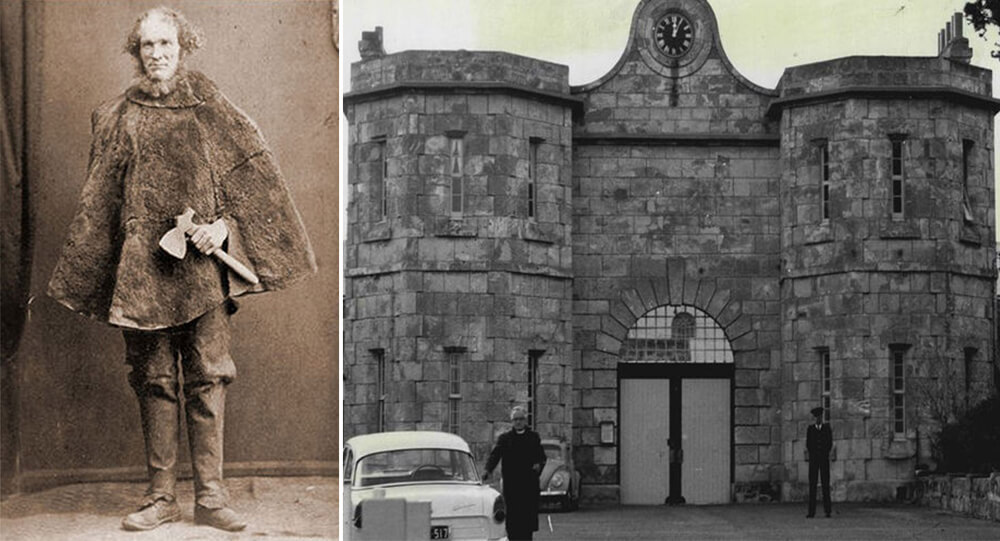
Moondyne Joe: The story of Australia's most notorious prison escapee
A man named Joseph Bolitho Johns (A.K.A Moondyne Joe) broke out of Australian prisons so many times that the police were compelled to build a special cell just for him. He escaped from that as well.

The 440-pound bear named Wojtek and his World War II battle against the Nazis
Polish troops raised an orphaned bear cub during WWII. He enjoyed drinking beer, and was trained to salute. He became officially enlisted as a member of the forces, and helped carry artillery during battle.