

Born in Salt Lake City, Utah in 1951, Kim Peek entered the world with significant neurological differences. His head was abnormally large, and he faced developmental delays—he didn’t walk until he was four years old, and even then with an unusual sideways gait. He had trouble with simple motor skills such as buttoning shirts and struggled with self-care tasks.
Despite these challenges, Peek exhibited remarkable abilities from a very young age. Before he was two, he began memorizing texts verbatim and showed an incredible facility for recalling vast amounts of information. His parents quickly realized that while he needed support for daily living, his mind operated on a profoundly different level.
The Uncanny Ability to Read Two Pages at Once
One of Peek’s most astonishing talents was his ability to read two pages simultaneously—scanning the left page with his left eye and the right page with his right eye. This split-screen reading technique allowed him to process information at an extraordinary speed.
Using this method, he could read and remember an entire book in about an hour—an ability that defies standard human cognitive limits. He retained virtually every detail, from the text itself to charts, numbers, and complex information, like dates, sports statistics, and historical facts.
Peek’s memory extended beyond verbal information. He could recall every street, place, and distance on maps, and effortlessly connected data from different domains such as literature, history, and music.
Megasavant Syndrome
Kim Peek’s condition is referred to as savant syndrome, where extraordinary abilities coexist with developmental disabilities. Peek was considered a “megasavant,” meaning his skills spanned multiple disciplines rather than being restricted to one specialty like many other savants.
He excelled in languages, history, music, and calendar calculations—he could tell you the day of the week any person was born or significant events occurred, down to the very detail many people overlook. Despite exceptional talents, his IQ averaged at about 87, showing that traditional cognitive assessments did not capture the full extent of his abilities.
Peek also experienced difficulties with social cues and abstract thinking, a contrast that highlighted the complexities of human brain function.
The Meeting That Made Him Famous: The Inspiration for Rain Man
In 1984, screenwriter Barry Morrow met Kim Peek in Texas. Fascinated by Peek’s extraordinary talents and unique personality, Morrow decided to create a film inspired by him. The result was Rain Man, released in 1988, starring Dustin Hoffman as Raymond Babbitt, a character inspired by Peek but distinct in diagnosis and traits.
Hoffman spent time with Peek to portray the character authentically, noting Peek’s calm demeanor and brilliance. When Hoffman and Peek met, Hoffman famously said, “I may be the star of the movie, but you are the heavens that inspired it.”
The film won four Academy Awards and brought attention to savant syndrome and autism spectrum conditions, although Peek himself was eventually thought to have FG syndrome—a different developmental disorder.
Life After Fame
After Rain Man, Kim Peek became a respected figure in educating the public about savant syndrome and disabilities. He toured extensively with his father Fran, sharing his talents and encouraging tolerance and understanding.
Peek demonstrated his incredible memory through public appearances, stunning audiences with calendar calculations, trivia, music knowledge, and literary recall. He was featured in documentaries and scientific studies, including work by NASA observing the effects of space travel on the brain.
Peek’s legacy continues to inspire scientists, artists, educators, and families around the world, pushing for broader recognition of cognitive diversity and potential.
Fascinating Trivia About Kim Peek
- Kim Peek memorized the contents of nearly 12,000 books, including the entire Bible.
- He could tell you on which day of the week any date from centuries past occurred, and even the headline news around that date.
- Despite his gifts, Peek struggled with motor skills like dressing and shaving due to brain abnormalities involving the cerebellum.
- He was dubbed a “megasavant” because his abilities spanned 15 different fields.
- Peek’s brain lacked a corpus callosum, the bridge between brain hemispheres, which may underlie his unique processing abilities.
- Peek’s father discovered his talents fully only after noticing how flawlessly he could recall detailed information, including predicting the splashdown location of the Skylab space station.
- Peek received an honorary Oscar statuette from Barry Morrow, which he carried with pride and shared on his tours.
- Peek’s memory skills defy typical IQ assessments, showing that intelligence is multi-dimensional.
Understanding the Science Behind Peek’s Talent
Kim Peek’s astounding abilities have intrigued neuroscientists investigating how the brain processes and stores information. His lack of a corpus callosum—a thick band of nerve fibers connecting the brain’s hemispheres—meant his two hemispheres worked more independently than usual.
This unusual brain wiring may have contributed to enhanced memory and the ability to recall vast amounts of detail. Additionally, Peek’s brain showed compensations in other regions, possibly increasing his capacity to absorb and store information visually and verbally.
His case challenges conventional views of intelligence and cognition, highlighting the brain’s plasticity and the diverse ways human minds can function.
Celebrating a Unique Mind
Kim Peek’s story is one of remarkable human diversity, showcasing how abilities and challenges can coexist in extraordinary ways. His life inspired a beloved film, educated millions, and broadened our understanding of cognition.
His ability to memorize thousands of books, read two pages at once, and recall seemingly infinite facts invites us to reconsider what the human mind is capable of when nurtured and understood.
Sharing this story honors Kim Peek’s legacy and encourages appreciation for all forms of intelligence and talent, reminding us of the power of perseverance, love, and curiosity.
Sources & Further Reading:
- Wikipedia: Kim Peek (2004)
- NPR: Man Who Inspired Rain Man Dies at 58 (2009)
- Applied Behavior Analysis Edu: 5 Mind-Blowing Things Kim Peek Could Do (2022)
- Psychology Today: Kim Peek, the Real Rain Man (2012)
- The Autism Therapist: Get to Know the Real Rain Man (2025)


Bruce Campbell converted a Boeing 727-200 into a home
In 1999, a man bought a Boeing 727-200 for $100,000 and uses it as his house, then spent another $120,000 moving it from the Hillsboro airport and setting it up on his undeveloped property.


The 1814 London beer flood
In 1814, there was a beer flood in London when a tank containing more than 300,000 gallons ruptured in which 8 people drowned.

The story of a boy who claims to be on Mars: Boriska Kipriyanovich
Boriska Kipriyanovich, who lives in Volgograd, Russia, claims he lived on Mars before being resurrected on Earth on a mission to redeem humanity. What we know about him is as follows:

Sandy Island: The Phantom Island That Fooled Maps and Google Earth for Centuries
Sandy Island, charted since 1774, was long considered a phantom island in the Coral Sea. Despite appearing on maps and Google Earth, it was "undiscovered" by scientists in 2012, revealing only deep ocean instead of land. The island's existence was likely a cartographic error or a misidentified pumice raft.
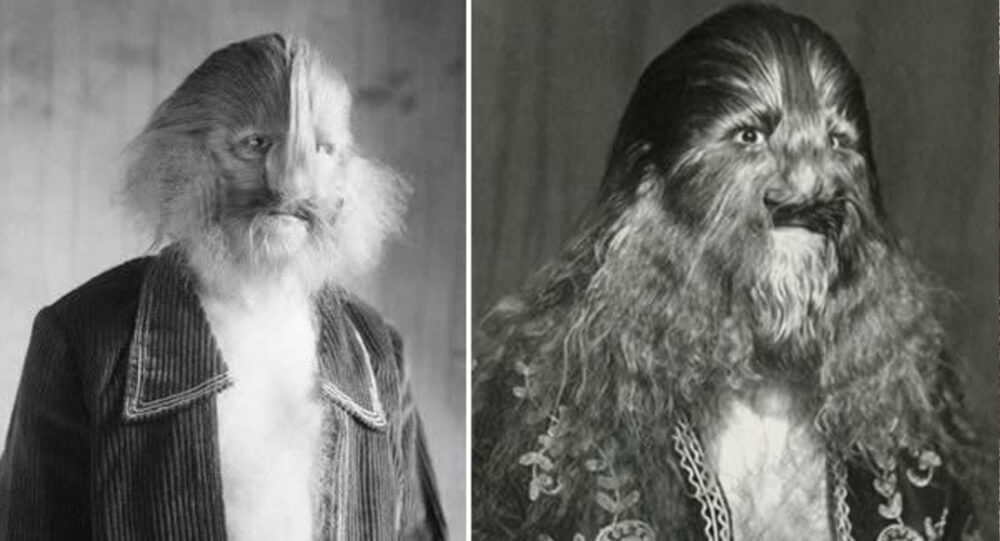
The story of Lionel the Lion-Faced Man, Stephan Bibrowski
Stephen Bibrowski, also known as Lionel the Lion-faced Man, was a well-known sideshow entertainer. His entire body was covered in long hair, giving him the appearance of a lion; this was most likely due to a rare condition known as hypertrichosis. Lionel traveled to the United States in 1901 and began performing with the Barnum and Bailey Circus.
![Mysterious ghost ship found with mummified captain inside [SOLVED]](https://weeklyrecess.com/wp-content/uploads/2024/07/Solved-Mysterious-ghost-ship-with-mummified-captain-cover.jpg)
Mysterious ghost ship found with mummified captain inside [SOLVED]
German captain had been sailing the world for 20 years. It was unknown when or how he died or how long the ghost ship had been adrift

The Real-Life Sleeping Beauty: A Girl with Hypersomnia Syndrome
An Indonesian 17-year old teenager Siti Raisa Miranda or Echa, has a rare medical condition formally called Kleine-Levin syndrome (KLS) where she can sleep for days and weeks without being woken up. Echa was only 13 when she first slept for a week. She’s now 17, and her parents still need to feed her and change her clothes when she experiences the deep levels of grogginess.

Belgian Woman Banned from Zoo After 4-Year Affair with Chimpanzee
A Belgian woman was banned from the zoo after having an affair with a chimp.

Japan’s Chicken-Flavored Ice Cream: The Bold Fusion of Sweet Vanilla and Real Grilled Chicken
A Japanese company once created chicken-flavored ice cream using real grilled chicken bits mixed into vanilla. It combined sweet and savory in a way few dared try, but it drew curiosity from foodies seeking extreme culinary experiences.

San Pedro prison in La Paz, Bolivia: community inside prison
Bolivia’s largest prison has a society within itself and no guards inside the walls. Inmates elect their own leaders, make their own laws, get jobs to pay for their cell’s rent, and can even live with their families.

June and Jennifer Gibbons The silent twin who Only Spoke to Each Other
Identical twins June and Jennifer Gibbons were born on 11 April 1963 at a military hospital in Aden, Yemen where their father worked as part of the Royal Air Force.
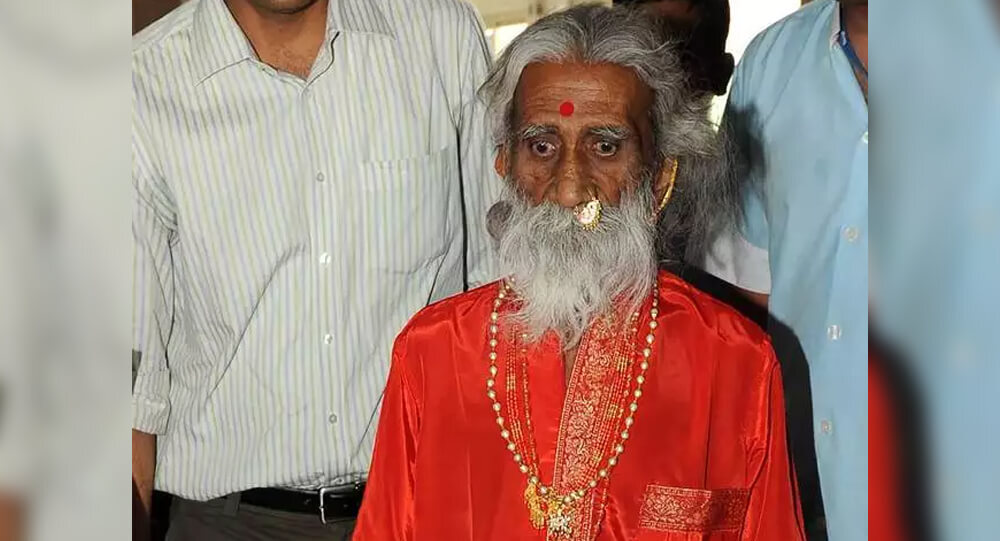
This Yogi Spent 76 Years Without Eating or Drinking Anything and Confirmed by
Prahlad Jani, the starving monk who lived 76 Years without food and water.

Jack the Baboon operated a railroad, earned a living, and never made a mistake
A baboon worked as a signalman for the railroad in the late 1800s. He never made a mistake and worked for the railroad until the day he died.

Story of Peng Shuilin: Man with only half a body
We have a habit of whining in our daily lives. We never seem to be pleased with the things we have in life. "I want to be skinny," fat people say, "I want to be fat," slim people say. Poor people aspire to be wealthy, and wealthy people are never satisfied with their status. Everywhere we go, we're whining. Can you image how a man would want to live if he didn't have any legs or bums at all?

In Pakistan, this banyan tree has been arrested since 1898
In Pakistan, a tree has been arrested and chained since 1898. When a British officer who was drunk assumed it was leaving its place, it was arrested. The tree, which is presently located on the grounds of the Pakistan Army's Landi Kotal cantonment, continues to attract visitors and locals everywhere.

Vakil Batirshin’s Story: How Radiation Exposure Caused Severe Lymph Node Swelling
This is Vakil Batirshin, a man whose severe swelling from enlarged lymph nodes was reportedly caused by radioactive exposure. His condition highlights the devastating and long-term health effects radiation can inflict on the human body—often surfacing years after initial contact. Cases like his underscore the importance of nuclear safety and medical support.

Thousands of Rare "Ice Eggs" Blanket Finnish Beach in Spectacular Natural Phenomenon
Thousands of ice balls recently covered a beach in Finland, a rare phenomenon caused by wind and waves sculpting pieces of ice into smooth spheres. These "ice eggs" can vary in size from chicken eggs to soccer balls and have also been spotted in other cold regions globally.
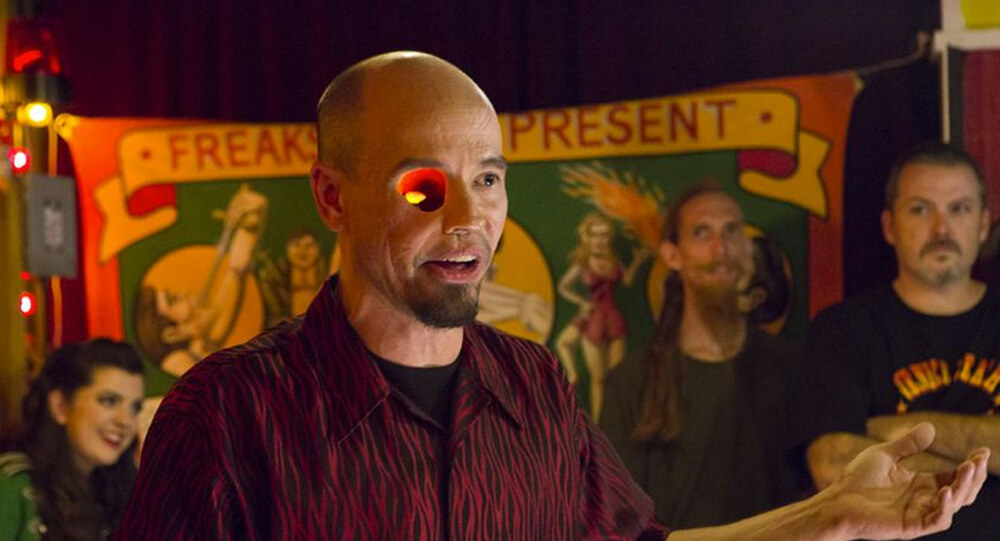
Inspirational Journey of Billy Owen From Cancer Patient to Zombie Actor
A man called Billy Owen lost an eye and half of his face to cancer and used it to start a career as a zombie actor.

Mystery SOLVED: blood Rain in India
The dissemination of spores of microalgae has been identified as the origin of the 'Blood Rain' phenomena, according to a new study by Indian and Austrian experts. Since 1896, reports of intermittent red-colored rain in portions of Kerala and Sri Lanka have been coming in. The most recent one occurred in 2013 over Kerala.

Mill Ends Park, the Smallest Park in the World
Portland, Oregon is home to the tiniest park in the world, a two-foot-diameter circle. Mill End Park is the name of this park.

This Thai Wedding Tradition Happens 40 Feet Underwater
Each year in Trang, Thailand, dozens of couples participate in an underwater wedding ceremony while scuba diving in full gear. The ritual symbolizes deep love and has become a quirky tourist attraction held around Valentine’s Day.

When the Sky Rained Fish: An Unbelievable Encounter Above Alaska
A small Alaskan plane was hit by a fish falling from the sky. It had been dropped by an eagle that misjudged its grip. The plane was unharmed, but it made the news as possibly the weirdest bird strike ever.

Mom Cries After Seeing Her Deceased Daughter in Virtual Reality
Jang Ji-Sung lost her 7-year-old daughter to haemochromatosis in 2017, a rare disorder in which the body absorbs too much iron. The two reunited through the use of virtual reality technology.

The Miracle Baby: Nigerian Couple in the UK Welcomes a Rare Blonde, Blue-Eyed Child
A black, Nigerian couple living in the U.K. gave birth to a white, blonde, blue-eyed baby that they call the "miracle baby."

The Incredible Story of Martin Laurello, The Sideshow Performer With The Revolving Head
Martin Laurello was also known as 'The human owl'. He was born with the ability to turn his head a full 180 degree.