
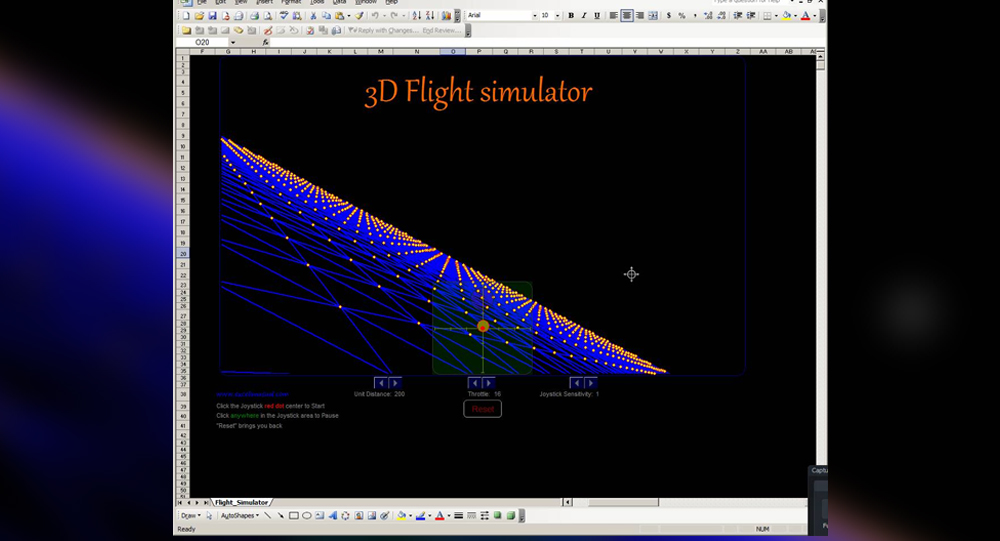
In the late 1990s, Microsoft Excel 97 was a powerhouse productivity tool shaping the workplace, known primarily for its ability to manage numbers, create charts, and automate calculations. However, beneath its professional surface lay an extraordinary secret—a hidden flight simulator game cleverly disguised inside the software.
This wasn’t a typical Easter egg joke or a simple graphic. The flight simulator in Excel 97 functioned as a complete 3D game, fully interactive and surprisingly complex, running entirely within the ancient spreadsheet environment. For many users, discovering this hidden gem was a flight experience unlike any other.
How the Flight Simulator Was Conceived and Hidden
The hidden flight simulator came from the creativity of a Microsoft developer, known internally as John Walker, who was inspired by earlier flight sims and an affinity for pushing Excel’s capabilities beyond expectations. Using only the available spreadsheet macros, VBA (Visual Basic for Applications), and ingenious use of graphical tricks with cells and formulas, Walker built a rudimentary but fully playable simulatio
The game allowed a player to “fly” a plane through a flat spreadsheet “sky,” maneuvering via keyboard inputs to avoid obstacles, change altitude, and test navigation skills. The clever use of Excel cells displayed the runway and sky, giving the impression of altitude and distance despite the program’s 2D spreadsheet layout.
Installing the game wasn’t an obvious reveal—users needed to follow a specific series of commands or open hidden worksheets to unlock the flight simulator, maintaining its mystique and enhancing its allure.
Gameplay Mechanics and User Experience
Flying inside Excel 97 was a novel experience. Players used arrow keys to direct a pixelated triangular “plane” above an abstracted landscape made up of grids. Controls included adjusting plane pitch and direction, simulating the feel of flight dynamics within tight technical constraints.
Despite Excel’s limitations, the game featured wind effects, altitude adjustments, and a simple scoring system rewarding smooth landings and obstacle avoidance. Compared to modern flight sims, it was basic, but the experience of piloting imagined skies through cells fascinated both tech enthusiasts and casual users alike.
The game exemplified how software could contain hidden surprises that sparked curiosity, stepping away from dry, business-focused image equation tools to playful interactive entertainment.
Why the Flight Simulator Easter Egg Matters Today
Though Microsoft discontinued Excel’s Easter eggs in subsequent versions for security reasons, the Excel 97 flight simulator remains a beloved legend in software folklore. It reflects a time when software engineers inserted personality and fun into their work, challenging norms around productivity software.
This hidden gem also reminds us that innovation often blooms in unlikely places—with creative skill and technical resourcefulness turning routine tools into portals of wonder and exploration.
Fascinating Trivia About the Excel 97 Flight Simulator
- The flight simulator was accessible only in the Windows version of Excel 97; Mac users missed out.
- This was not an officially advertised feature but rather an internal joke and gift from developers to users.
- Excel’s VBA macro language was pivotal in creating the game’s interactive elements, showcasing early scripting power in office software.
- The plane’s design is a simple triangle icon, making the software interface function dually as a game viewport and tool.
- Similar secret games existed in other Microsoft products, including hidden pinball and racing games, but Excel’s flight sim is unique for its complexity.
- Discovery stories often involve users stumbling on the game by accident or following obscure online instructions published years after release.
- The game contributed to the broader cultural phenomenon of software Easter eggs, celebrated by programmers and users alike.
Final Thoughts: Flying High on Hidden Pixels and Software Ingenuity
The Excel 97 flight simulator game teaches us that even the most serious, number-crunching applications can hold secrets that delight and engage. It’s a testament to the creativity inside the tech community and a cherished piece of software history that redefined what an office program could be.
Whether you’re a flight sim enthusiast, a Microsoft nostalgist, or a lover of digital Easter eggs, the tale of Excel’s sky-high secret offers a fascinating glimpse into the playful artistry behind everyday software.
If this journey through the hidden skies of Excel 97 inspired you, share it to celebrate the quirky brilliance of software creators and the enduring culture of hidden digital treasures.
Sources & Further Reading:
- BBC News Archive: Software Easter Eggs and their Legacy
- Smithsonian Magazine: Hidden Games in Microsoft Office
- Tech Insider: The Secret Flight Simulator inside Excel 97
- Microsoft Developer Stories: VBA and Office Easter Eggs
- Reddit and User Forums: Discovering the Excel Flight Simulator
These sources provide deeper insights into the technical, historical, and cultural significance of the Excel 97 flight simulator and software Easter eggs in general.


Why Do Spiders Rain From the Sky? The Strange Ballooning Phenomenon
Every now and then, people around the world are amazed—and sometimes disturbed—to see thousands of tiny spiderlings floating down from the sky, seemingly raining on the earth below. This eerie spectacle is the result of a curious and fascinating behavior called ballooning, in which spiders use silk threads as invisible parachutes to catch the wind and fly. Recent scientific discoveries reveal that spiders can even harness Earth’s electric fields to take off without wind, making their aerial journeys feel almost supernatural. This article explores the science, mystery, and wonder behind the ballooning phenomenon.

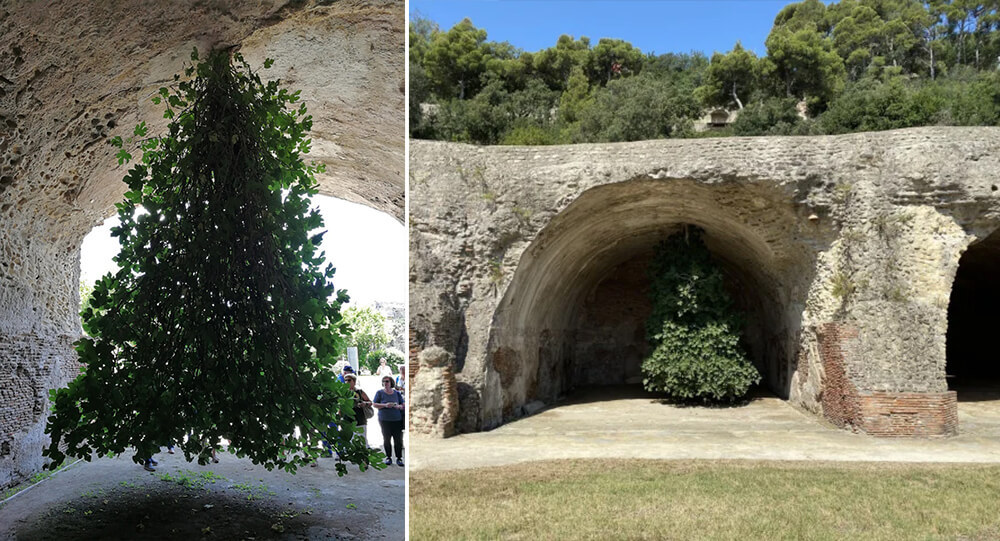
Upside-Down Fig Tree From The Roof Of An Ancient Ruin in Italy
There is an upside-down fig tree in Bacoli, Italy. No one is quite sure how the fig tree ended up there or how it survived, but year after year, it continues to grow downwards and bear figs.

Mystery SOLVED: blood Rain in India
The dissemination of spores of microalgae has been identified as the origin of the 'Blood Rain' phenomena, according to a new study by Indian and Austrian experts. Since 1896, reports of intermittent red-colored rain in portions of Kerala and Sri Lanka have been coming in. The most recent one occurred in 2013 over Kerala.

Atomic Tourism: In the 1950s, nuclear tests in Las Vegas served as a draw for tourists
Between 1950 and 1960, Las Vegas offered “Atomic Tourism” in which guests could watch atomic bombs being tested in the desert as a form of entertainment.
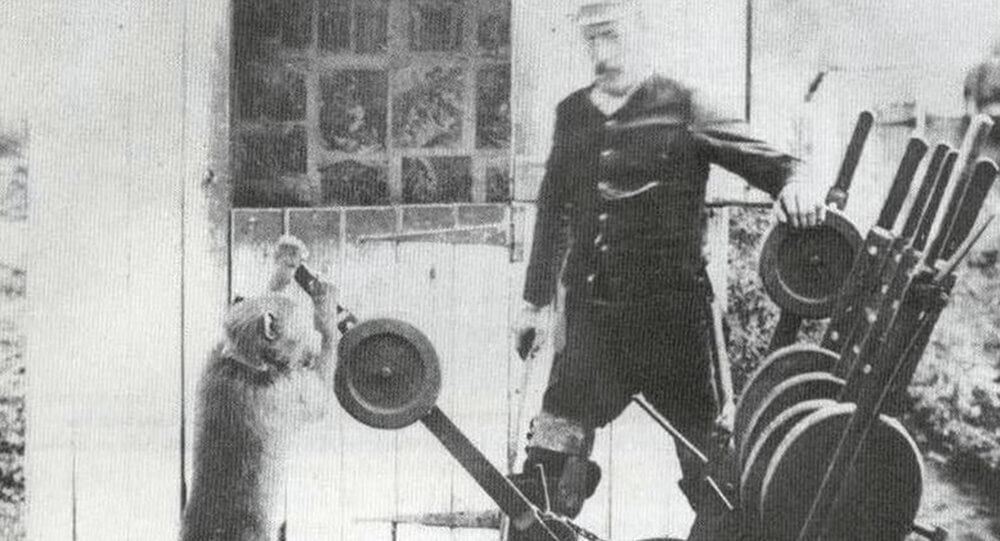
Jack the Baboon operated a railroad, earned a living, and never made a mistake
A baboon worked as a signalman for the railroad in the late 1800s. He never made a mistake and worked for the railroad until the day he died.

How a Man Fooled Florida with Fake Penguin Tracks for 10 Years
In 1948, Florida’s Clearwater Beach was the stage for one of the longest-running and most peculiar hoaxes in American folklore. Giant three-toed footprints appeared mysteriously in the sand, sparking rumor and fascination about a 15-foot-tall penguin roaming the shores. For a decade, locals and visitors alike speculated and scanned for the elusive creature, never realizing the truth: these tracks were made by a man wearing 30-pound lead shoes designed to imitate an enormous penguin's footprint. This article uncovers the details of this elaborate prank and its lasting legacy in Florida’s cryptic history.

Belgian Woman Banned from Zoo After 4-Year Affair with Chimpanzee
A Belgian woman was banned from the zoo after having an affair with a chimp.

Inspirational Journey of Billy Owen From Cancer Patient to Zombie Actor
A man called Billy Owen lost an eye and half of his face to cancer and used it to start a career as a zombie actor.

Bruce Campbell converted a Boeing 727-200 into a home
In 1999, a man bought a Boeing 727-200 for $100,000 and uses it as his house, then spent another $120,000 moving it from the Hillsboro airport and setting it up on his undeveloped property.

Lucy and Maria The Biracial Twin Sisters with Rare Black and White Skin Colours
Lucy and Maria Aylmer are twins, but they have a hard time to convincing people. Even though they have mixed-raced parents, their mom was still shocked when the midwife handed her babies she’d expected to look alike, but were complete opposite.

The story of a boy who claims to be on Mars: Boriska Kipriyanovich
Boriska Kipriyanovich, who lives in Volgograd, Russia, claims he lived on Mars before being resurrected on Earth on a mission to redeem humanity. What we know about him is as follows:

In 1954, an Extraterrestrial Bruiser Shocked This Alabama Woman.
In the year 1954, a grapefruit sized meteorite crashed through the roof of a farm house in Alabama, bounced off a large wooden console radio and hit Ann Hodges while she was napping on her couch. This was the first confirmed case of a person to be hit by a meteorite.

Brazilian gang leader attempts to escape from Rio de Janeiro prison by dressing up as his daughter
In 2019, a Brazilian gang leader tried to escape from prison by dressing up as his daughter when she visited him behind bars and walking out of the penitentiary's main door in her place.
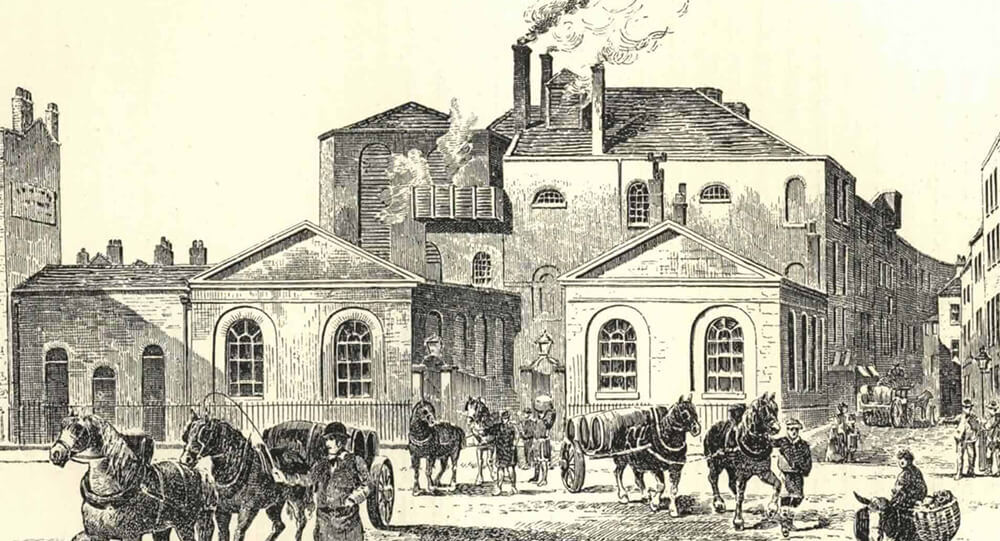
The 1814 London beer flood
In 1814, there was a beer flood in London when a tank containing more than 300,000 gallons ruptured in which 8 people drowned.
![Mysterious ghost ship found with mummified captain inside [SOLVED]](https://weeklyrecess.com/wp-content/uploads/2024/07/Solved-Mysterious-ghost-ship-with-mummified-captain-cover.jpg)
Mysterious ghost ship found with mummified captain inside [SOLVED]
German captain had been sailing the world for 20 years. It was unknown when or how he died or how long the ghost ship had been adrift
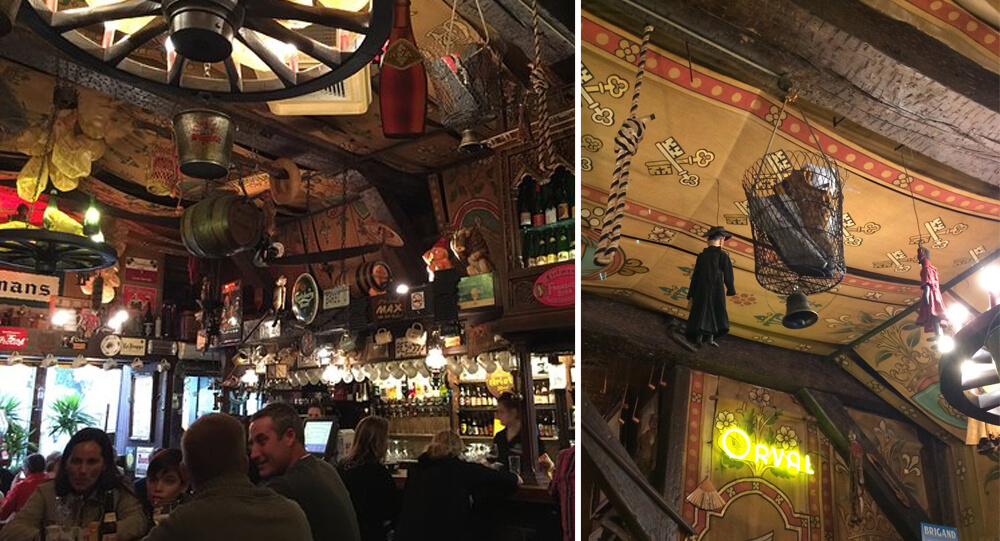
Why This Belgian Bar Makes You Trade Your Shoe for a Beer
To prevent tourists from stealing their beer glasses, some bars in Belgium require people to hand over one of their shoes as a deposit which is then put in a basket and hung from the ceiling. These shoe baskets have also become an attraction.

The Incredible Story of Martin Laurello, The Sideshow Performer With The Revolving Head
Martin Laurello was also known as 'The human owl'. He was born with the ability to turn his head a full 180 degree.

Japan’s Chicken-Flavored Ice Cream: The Bold Fusion of Sweet Vanilla and Real Grilled Chicken
A Japanese company once created chicken-flavored ice cream using real grilled chicken bits mixed into vanilla. It combined sweet and savory in a way few dared try, but it drew curiosity from foodies seeking extreme culinary experiences.

How a Canadian Man Traded a Red Paperclip for a Two-Story Farmhouse
In 2005, Canadian blogger and entrepreneur Kyle MacDonald embarked on an extraordinary journey that captured the world’s imagination. Starting with nothing more than a single red paperclip, Kyle pursued a year-long chain of strategic trades that escalated from small, quirky items to a two-story farmhouse in a small town in Saskatchewan. What began as a playful social experiment became a legendary story of creativity, perseverance, and the power of barter in the digital age.

Poland's Krzywy: The Mysteries of the Crooked trees
In Poland, there is a forest with 400 crooked trees that have a 90-degree bend at the base of their trunks. Despite of numerous possibilities, the real reason and how it evolved remain a mystery.
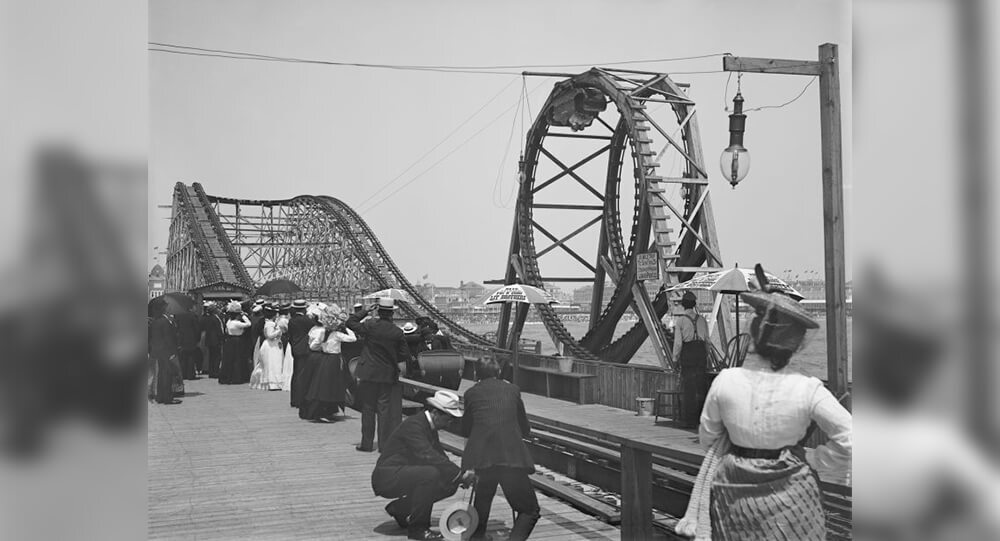
Roller Coasters were First Invented to Distract People from sin
Roller coasters were invented to distract Americans from sin. In the 1880s, hosiery businessman LaMarcus Thompson didn’t like that Americans were going to places like saloons and brothels and created the first roller coaster on Coney Island to persuade them to go there instead.

Recipient of suicide victim's heart kills himself 12 years later
In 1995, Sonny Graham received a transplanted heart from a suicide victim. He then committed suicide in the very same manner as the donor.

A woman finds her ex-boyfriend living in her attic 12 years after they broke up
Most people have heard of "things that go bump in the night," but for one South Carolina lady, that "thing" was her ex-boyfriend, whom she discovered living in her attic more than 12 years after they broke up.

Brazilian Man with Rare ‘Upside Down’ Condition Becomes Successful Accountant and Speaker
Born in Brazil with the rare and debilitating condition congenital arthrogryposis, which caused his head to be positioned upside down, this man was once written off by doctors who urged his mother to let him starve. Defying grim predictions, he overcame immense challenges to become a successful accountant and a powerful international motivational speaker, inspiring millions worldwide.

The Astonishing Case of Sanju Bhagat: Living with a Twin Inside Him for 36 Years
Sanju Bhagat, an Indian farmer, lived with an undiagnosed parasitic twin inside his abdomen for 36 years. In 1999, doctors discovered the twin during surgery. This rare condition, fetus in fetu, occurs when a malformed twin is absorbed during pregnancy, surviving within the host sibling's body.