

The last thing you’d expect to see nestled in a clearing in an Oregonian forest is a Boeing 727. It’s not always a plane crash that leaves an airplane in the middle of the forest. Campbell converted an airplane into his home, and the interior is quite special. The article was first published on July 5, 2003. Electrical engineer Bruce Campell, 64, has always had a very imaginative vision. He transformed a large plot of land and an old airplane into the most extraordinary house ever. He thinks that even after they are retired, airplanes can still be used in a variety of ways. To build the one-of-a-kind home on Earth, he used his imagination, an old airplane, and a good piece of land.
In contrast to the stereotype of the typical American home, Campbell has chosen a more daring strategy. Rusty Campbell was drawn to this plane’s iconic design and decided to take on the challenge of turning it into a home. A dreamer and an engineer living in a three-engine commercial airplane home tucked away in the dense forest outside of Portland. Campbell thinks that after tidal waves have destroyed homes, retired aircraft can be used as affordable housing and as airtight, floating shelters.
The Campbells’ dreams came true when they had a retired Boeing 727 transformed into a cabin in the woods. They had to remove the plane’s wings in order to transport it. He replaced the wings after the aircraft arrived at its destination.

The coolest trick may be the transparent floor
Every child’s dream house, Campbell’s airplane has plenty of places to climb and crawl. They have to use the original fold-down stairwell from the airplane to get into Bruce Campbell’s Boeing residence. The room is cozy but by no means claustrophobic at 1,066 interior square feet; when configured as a large studio, it feels spacious enough.
The coolest trick may be the transparent floor. The original was torn out and replaced with translucent panels, allowing visitors to see the super structure’s ribs and controlling cables running from the cockpit to the wings and tail. There is a shoe rack with many pairs of slippers for visitors. He prefers people to wear socks and slippers inside the aircraft to keep it clean. He only wears slippers and socks to move inside his house. It’s like a kid’s playground that you can live in. Campbell wanted to live a cost-effective life and paid attention to the most vital component of his aircraft: space.
The transparent floor might be the coolest trick. Visitors can now see the superstructure’s ribs and the control cables that run from the cockpit to the wings and tail thanks to the original’s destruction and replacement with transparent panels. For guests, there is a shoe rack with numerous pairs of slippers. To keep the plane clean, he prefers that passengers enter wearing socks and slippers. He only wears socks and slippers when he is inside his home. You could live in a playground, if you like. In order to live frugally, Campbell focused on the most important aspect of his craft: space.

Original bathrooms back online
He also restored one of the original bathrooms, though it currently only has a temporary shower.
Since the majority of new PVC water pipe is apparently produced using a lead-based catalyst, which, according to what I’ve read, leaves some lead in the polymer, I’d prefer to stay away from it. Although I am aware that the levels are very low, polyethylene seems to me to be a much better option in terms of toxics. The only drawback I can see is that it is not as widely available as PVC. But rather than using the PVC I already have, I want to be patient and try to find some 1′′ or 1.25′′ polyethylene pipe for the new underground water line. To avoid ingesting phthalates, which are an inherent component of soft PVCs and do leach out, I’ll replace any soft PVC as soon as I can locate it and in any case before drinking from it. All of the aircraft’s new internal water pipe will be made of polyethylene.
Bruce is living a simple life inside the plane despite the fact that it has plenty of room. He uses a microwave and toaster to cook and sleeps on a futon. He makes a lot of improvised equipment and primarily consumes cereal and canned food. Two functional restrooms are also on board, but the shower is the coolest feature. Near the plane’s tail is where it is constructed.
Even though Campbell had lofty goals that were almost impossible to realize, he persisted and finished building his ideal house at the age of 65. The placement of the trick doors had him smitten, and he loved the way his plane’s rotating knobs and numerous hatches looked. He was incredibly content to live in his house thanks to these special additions.
He purchased the aircraft with every component in top condition and had not given any thought to flying the vehicle. He made the most of the aircraft’s parts and used it for his own joy as well as the joy of Portland’s bustling community despite the fact that it was completely stationary.

Cost
He paid $100,000 for his plane in 1999, then spent an additional $120,000 to move it from the Hillsboro airport and set it up on his undeveloped land.
Duplicate project again in Japan with a Boeing 747

Campbell also intends to replicate his project using a Boeing 747 in Japan. He intends to buy a used 747 and construct a new house in Japan. He feels that changing the world for people and the environment is the purpose of his life. He gets all fired up when he thinks about recycling planes. He is happy to let curious onlookers and tourists stop by and check out his abode, saying, “My goal is to change humanity’s behavior in this little niche.” Additionally, he plans numerous events throughout the year. Additionally, he planned a concert on the grassy area under the wing of his aircraft.



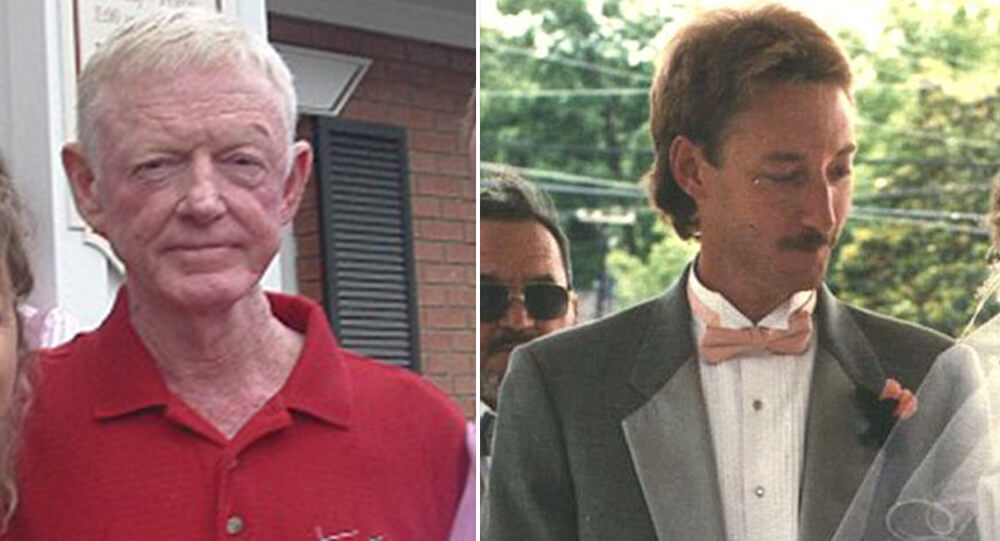
Recipient of suicide victim's heart kills himself 12 years later
In 1995, Sonny Graham received a transplanted heart from a suicide victim. He then committed suicide in the very same manner as the donor.

The “Walking” Palm, tree species can walk up to 65 feet each
This tree species can walk up to 65 feet each year to find the best habitat to live in.
![Mysterious ghost ship found with mummified captain inside [SOLVED]](https://weeklyrecess.com/wp-content/uploads/2024/07/Solved-Mysterious-ghost-ship-with-mummified-captain-cover.jpg)
Mysterious ghost ship found with mummified captain inside [SOLVED]
German captain had been sailing the world for 20 years. It was unknown when or how he died or how long the ghost ship had been adrift
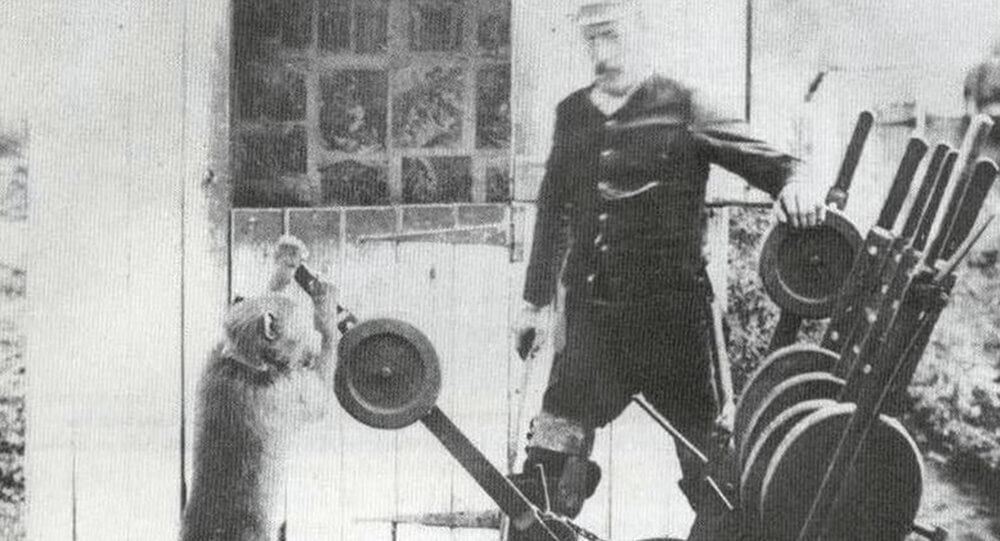
Jack the Baboon operated a railroad, earned a living, and never made a mistake
A baboon worked as a signalman for the railroad in the late 1800s. He never made a mistake and worked for the railroad until the day he died.

The story of The chicken that lived for 18 months without a head
Mike the Headless Chicken was a rooster whose head was accidentally chopped off but miraculously survived. This is due to most of the brain stem being left intact. He was fed using a special tube that delivered food directly into his esophagus. Despite his lack of a head, he lived for 18 months, gaining worldwide fame before ultimately choking on a kernel of corn during one of his tours, in a Motel in Fruita, Colorado.

Preserving Bodies in a Deep Freeze Await Revival
There are currently hundreds of deceased people in the U.S., including baseball legend Ted Williams, whose bodies are frozen in liquid nitrogen in hopes that future technology will be able to revive them.

This Thai Wedding Tradition Happens 40 Feet Underwater
Each year in Trang, Thailand, dozens of couples participate in an underwater wedding ceremony while scuba diving in full gear. The ritual symbolizes deep love and has become a quirky tourist attraction held around Valentine’s Day.

The Bizarre (And Magical) Duel Between Chung Ling Soo And Ching Ling Foo
Ching Ling Foo and Chung Ling Soo were two magicians from the early 20th century who were bitter rivals. While Ching Ling Foo was genuinely Chinese, Chung Ling Soo was actually a New Yorker named William Robinson.

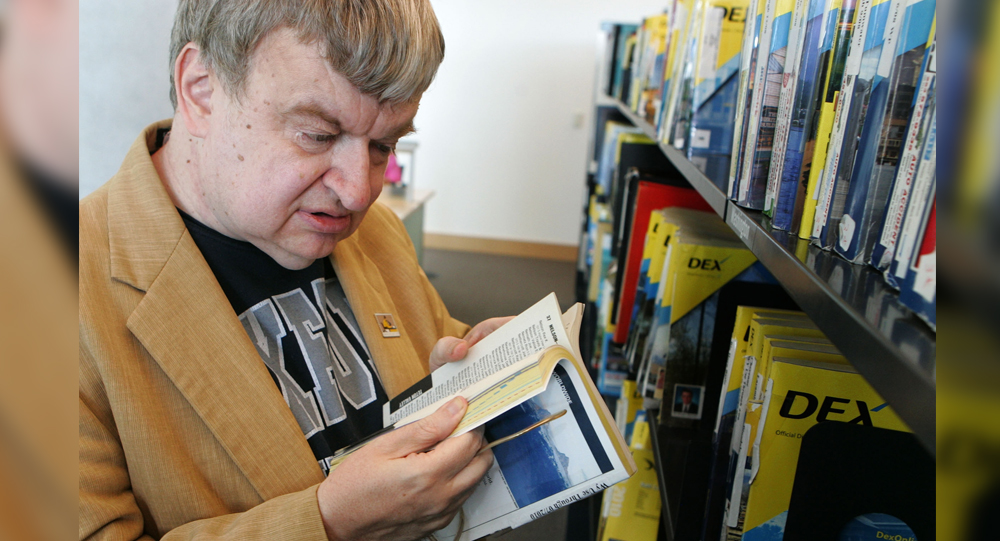
Kim Peek: The Real Rain Man Who Memorized 12,000 Books
Kim Peek wasn’t just a man with an extraordinary memory—he was a megasavant whose astonishing ability to recall the contents of over 12,000 books inspired the iconic character Raymond Babbitt in the film Rain Man. Able to read two pages at once, scanning one with each eye, Peek could memorize an entire book in about an hour. Despite his phenomenal talents, he faced developmental challenges and lived a unique life that changed perceptions about human potential and cognitive diversity. This article explores the remarkable story of Kim Peek, his capabilities, and the legacy he left behind.

In 1954, an Extraterrestrial Bruiser Shocked This Alabama Woman.
In the year 1954, a grapefruit sized meteorite crashed through the roof of a farm house in Alabama, bounced off a large wooden console radio and hit Ann Hodges while she was napping on her couch. This was the first confirmed case of a person to be hit by a meteorite.

The Mystery of Canada's Magical Spotted Lake
Lake Khiluk, the world's most mineralized lake, and one of the most mysterious places on Earth. Each of these spots has a distinct chemical content and is said to cure various diseases.

The Incredible Story of Martin Laurello, The Sideshow Performer With The Revolving Head
Martin Laurello was also known as 'The human owl'. He was born with the ability to turn his head a full 180 degree.

How a Canadian Man Traded a Red Paperclip for a Two-Story Farmhouse
In 2005, Canadian blogger and entrepreneur Kyle MacDonald embarked on an extraordinary journey that captured the world’s imagination. Starting with nothing more than a single red paperclip, Kyle pursued a year-long chain of strategic trades that escalated from small, quirky items to a two-story farmhouse in a small town in Saskatchewan. What began as a playful social experiment became a legendary story of creativity, perseverance, and the power of barter in the digital age.
![[solved] “macaroni mystery”, 500 pounds of pasta dumped in new jersey](https://weeklyrecess.com/wp-content/uploads/2024/05/Macaroni-Mystery-cover.jpg)
[solved] “macaroni mystery”, 500 pounds of pasta dumped in new jersey
In April 2023, Old Bridge, New Jersey, faced a peculiar 'Macaroni Mystery' when 500 pounds of pasta were mysteriously dumped in the woods.

Mystery SOLVED: blood Rain in India
The dissemination of spores of microalgae has been identified as the origin of the 'Blood Rain' phenomena, according to a new study by Indian and Austrian experts. Since 1896, reports of intermittent red-colored rain in portions of Kerala and Sri Lanka have been coming in. The most recent one occurred in 2013 over Kerala.

Mom Cries After Seeing Her Deceased Daughter in Virtual Reality
Jang Ji-Sung lost her 7-year-old daughter to haemochromatosis in 2017, a rare disorder in which the body absorbs too much iron. The two reunited through the use of virtual reality technology.
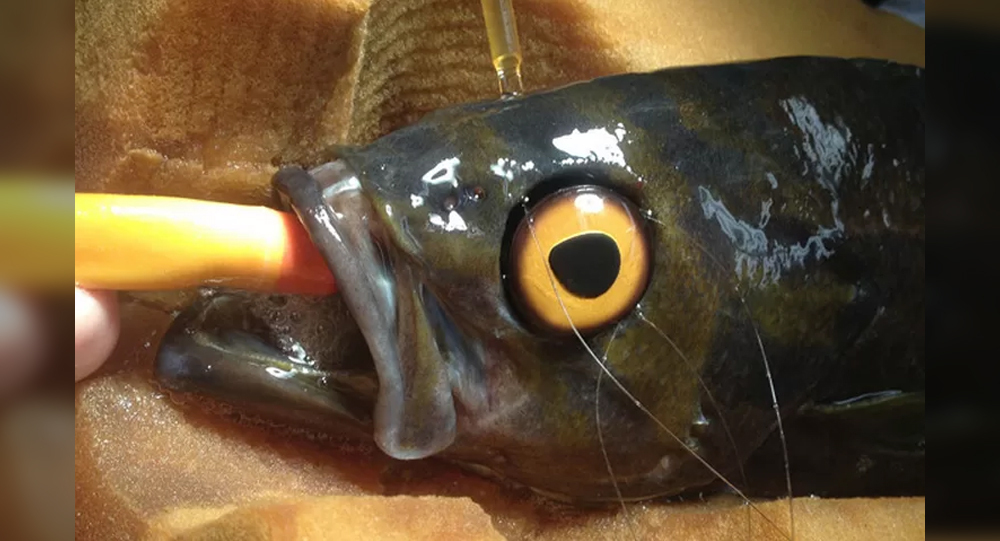
A one-eyed Vancouver fish receives a fake eye so that other fish will not bully him
A fish whose eye was removed due to cataract was bullied by other fish at the Vancouver Aquarium. So the vets fitted the fish with a prosthetic eye to fool the other fishes.

A man who has been suffering from headaches for nearly six months discovers chopsticks lodged in his brain
When it was discovered that a Vietnamese man with headaches and vision problems had chopsticks lodged in his brain, the doctors were almost as surprised as the man himself.
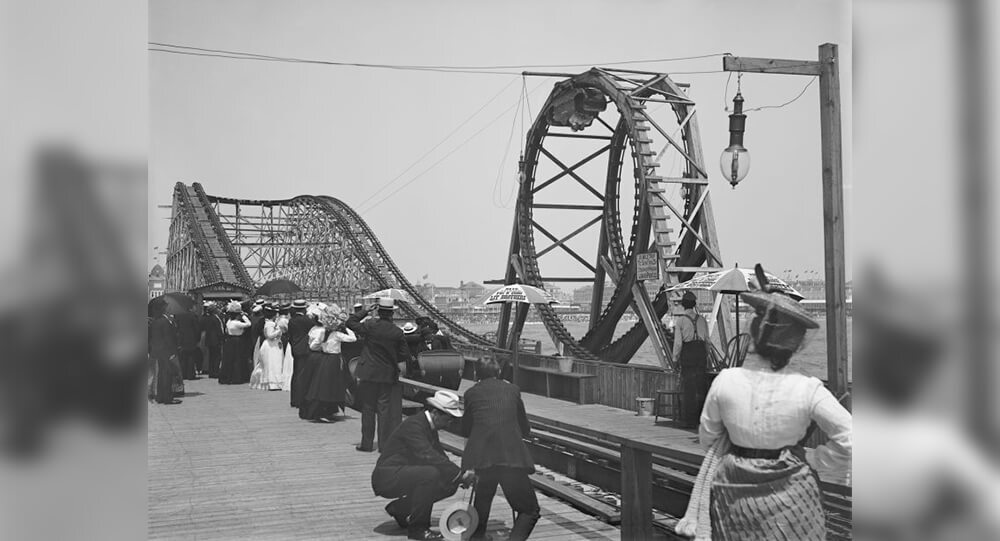
Roller Coasters were First Invented to Distract People from sin
Roller coasters were invented to distract Americans from sin. In the 1880s, hosiery businessman LaMarcus Thompson didn’t like that Americans were going to places like saloons and brothels and created the first roller coaster on Coney Island to persuade them to go there instead.
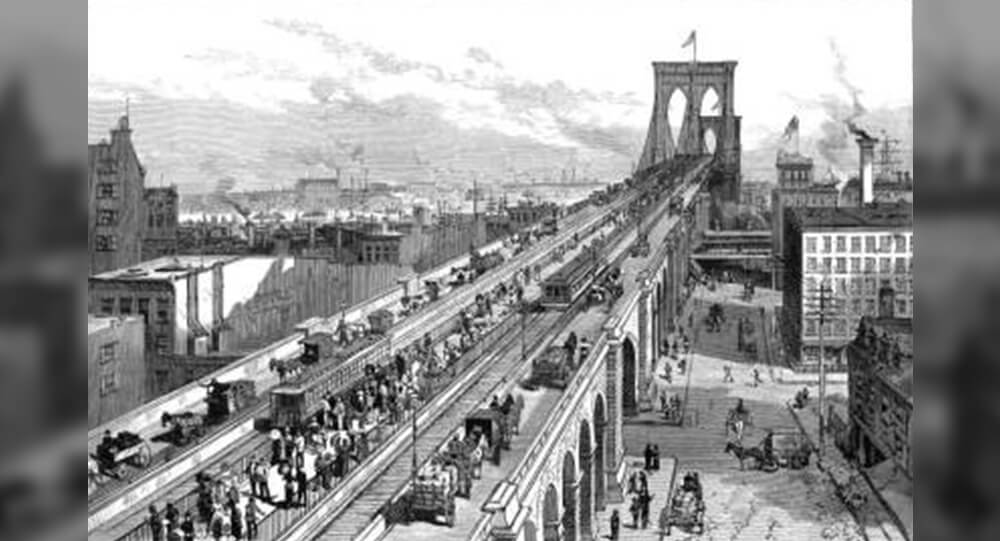
Why the Brooklyn Bridge Was Once Crossed by 17 Camels and 21 Elephants
On May 30, 1883, a rumor that the Brooklyn Bridge was going to collapse caused a stampede, which killed at least at twleve people. To prove the bridge was safe, P.T. Barnum led a parade of 21 elephants over it.

Lucy and Maria The Biracial Twin Sisters with Rare Black and White Skin Colours
Lucy and Maria Aylmer are twins, but they have a hard time to convincing people. Even though they have mixed-raced parents, their mom was still shocked when the midwife handed her babies she’d expected to look alike, but were complete opposite.
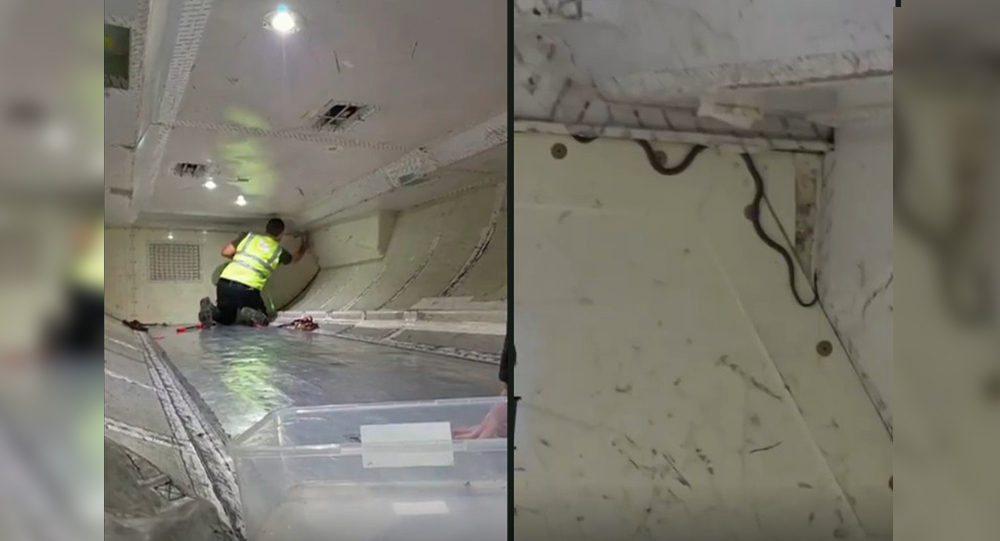
Domestic Flight Delay Caused by Live Snake on Board Leaves Passengers in Shock
A domestic flight was unexpectedly delayed for nearly two hours after a snake was discovered slithering inside the plane’s cargo hold. Thanks to the swift efforts of a professional snake catcher and airline staff, the reptile was safely removed without any harm to passengers, turning a potentially alarming situation into a story of caution and calm.

The Miracle Baby: Nigerian Couple in the UK Welcomes a Rare Blonde, Blue-Eyed Child
A black, Nigerian couple living in the U.K. gave birth to a white, blonde, blue-eyed baby that they call the "miracle baby."

Vakil Batirshin’s Story: How Radiation Exposure Caused Severe Lymph Node Swelling
This is Vakil Batirshin, a man whose severe swelling from enlarged lymph nodes was reportedly caused by radioactive exposure. His condition highlights the devastating and long-term health effects radiation can inflict on the human body—often surfacing years after initial contact. Cases like his underscore the importance of nuclear safety and medical support.

Brazilian Man with Rare ‘Upside Down’ Condition Becomes Successful Accountant and Speaker
Born in Brazil with the rare and debilitating condition congenital arthrogryposis, which caused his head to be positioned upside down, this man was once written off by doctors who urged his mother to let him starve. Defying grim predictions, he overcame immense challenges to become a successful accountant and a powerful international motivational speaker, inspiring millions worldwide.