

At this facility, the Alcor Life Extension Foundation has cryopreserved the heads and bodies of 224 people in the hopes of being revived at a later time. On their website, the non-profit organization Alcor states that their mission is to “restore good health with medical technology in the future” through the preservation of bodies at temperatures below freezing. Liliana Salgado of Reuters writes that the heads and bodies of approximately 100 preserved pets as well as the so-called “patients” of humanity are crammed into cylindrical tanks filled with liquid nitrogen by the foundation.
Some of the patients had terminal illnesses like cancer or ALS, for which there is currently no treatment. According to Reuters, Max More, a former CEO of Alcor and current ambassador and president emeritus of the foundation, advances in medical science and technology cannot prolong the lives of individuals who are close to death.
“We’re saying give them to us instead of just disposing of the patient,” More says to Reuters. “We’re going to keep them stable, prevent them from getting worse, and keep them in place for however long it takes for technology to catch up so they can recover and live on.”
Peter Wilson reported for the New York Times last year that a number of medical and legal professionals have long been dubious about—or even hostile toward—human cryopreservation. Neuroscientist Clive Coen of King’s College London, England, describes cryonics as “a hopeless aspiration that reveals an appalling ignorance of biology” to Laurie Clarke of the MIT Technology Review.
However, according to Alcor’s website, for those who take part, the cryopreservation procedure starts as soon as a person is pronounced legally dead. Their organs are still viable as of right now. Reacting swiftly, the patient is transferred to an ice bath and their blood is replaced with an organ-preserving solution by a cryonics team that has typically been on standby, waiting for their death for up to a week.
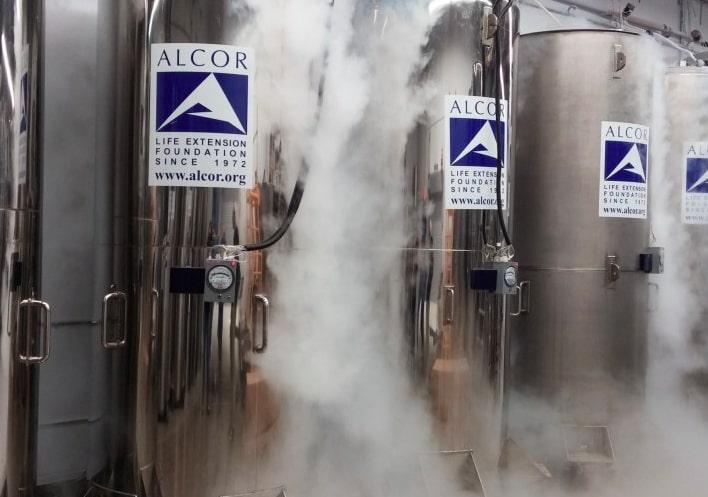
However, according to Alcor’s website, for those who take part, the cryopreservation procedure starts as soon as a person is pronounced legally dead. Their organs are still viable as of right now. Reacting swiftly, the patient is transferred to an ice bath and their blood is replaced with an organ-preserving solution by a cryonics team that has typically been on standby, waiting for their death for up to a week. The team injects cryoprotectants—chemicals that stop ice crystals from forming and damaging organs—into the patient’s circulation as soon as they get to Alcor’s Arizona facility. Alcor uses liquid nitrogen to store the body’s heat after it has been cooled to minus 320.8 degrees Fahrenheit.
The catch is that no cryonics organization is aware of how to restore life to its patients who have been preserved. On its website, Alcor states that a non-profit “confidence revival may be possible.”
Alcor was established in 1972, and in 1976 it successfully cryopreserved a human being. However, nearly ten years earlier, in 1967, psychologist James H. Bedford, then 73 years old, passed away from kidney cancer, making him the first person to ever be frozen in this manner. According to a 1997 article in The New York Times Magazine, Bedford’s body was placed on ice and processed by “experts from the Cryonics Society of California.” Since then, Bedford’s body has been frozen, and it is currently resting in one of Alcor’s tanks.
According to Reuters, two-year-old Matheryn Naovaratpong, a Thai girl with brain cancer, is the youngest patient at Alcor. She was cryopreserved in 2015.
More tells the publication, “She had multiple brain surgeries, and both of her parents were doctors.” Unfortunately, nothing was successful. They thus got in touch with us.
Among the other patients at the facility are baseball Hall of Famer Ted Williams, who passed away in 2002 from complications related to heart disease, and software developer and Bitcoin pioneer Hal Finney, who passed away in 2014 from ALS. According to Reuters, the cost of cryopreservation at Alcor for a full body is at least $200,000, and the cost to preserve a single brain is $80,000.
Related Topic You Might Find Interesting:
- A man who has been suffering from headaches for nearly six months discovers chopsticks lodged in his brain
- Recipient of suicide victim’s heart kills himself 12 years later
- Mom hears son’s heartbeat 3 years after his death when she meets organ recipient
Cryonics proponents are optimistic despite the lack of evidence supporting the efficacy of human cryopreservation, pointing to scientific advancements that allow for the successful cryopreservation and thawing of sperm, embryo, and stem cells, according to the MIT Technology Review. In 2016, researchers at 21st Century Medicine cryopreserved and thawed a rabbit brain without causing structural damage, Aaron Frank wrote for Vice at the time.
However, Coen tells MIT Technology Review that it is “disingenuous” to suggest that these findings could be applied to human cryonics because the structures of the human brain are too complicated for this to be feasible.
According to Reuters, Arthur Caplan, the director of the medical ethics department at New York University’s Grossman School of Medicine, has not seen any mainstream medical experts support cryonics.
Caplan tells Reuters, “This idea of freezing ourselves into the future is pretty science-fiction, and it’s naive.” “Those who specialize in studying the distant future or those with a vested interest in having you pay the money to do it are the only groups… getting excited about the possibility.”


Jack the Baboon operated a railroad, earned a living, and never made a mistake
A baboon worked as a signalman for the railroad in the late 1800s. He never made a mistake and worked for the railroad until the day he died.


Brazilian gang leader attempts to escape from Rio de Janeiro prison by dressing up as his daughter
In 2019, a Brazilian gang leader tried to escape from prison by dressing up as his daughter when she visited him behind bars and walking out of the penitentiary's main door in her place.

Roller Coasters were First Invented to Distract People from sin
Roller coasters were invented to distract Americans from sin. In the 1880s, hosiery businessman LaMarcus Thompson didn’t like that Americans were going to places like saloons and brothels and created the first roller coaster on Coney Island to persuade them to go there instead.

Story of Peng Shuilin: Man with only half a body
We have a habit of whining in our daily lives. We never seem to be pleased with the things we have in life. "I want to be skinny," fat people say, "I want to be fat," slim people say. Poor people aspire to be wealthy, and wealthy people are never satisfied with their status. Everywhere we go, we're whining. Can you image how a man would want to live if he didn't have any legs or bums at all?

Bruce Campbell converted a Boeing 727-200 into a home
In 1999, a man bought a Boeing 727-200 for $100,000 and uses it as his house, then spent another $120,000 moving it from the Hillsboro airport and setting it up on his undeveloped property.
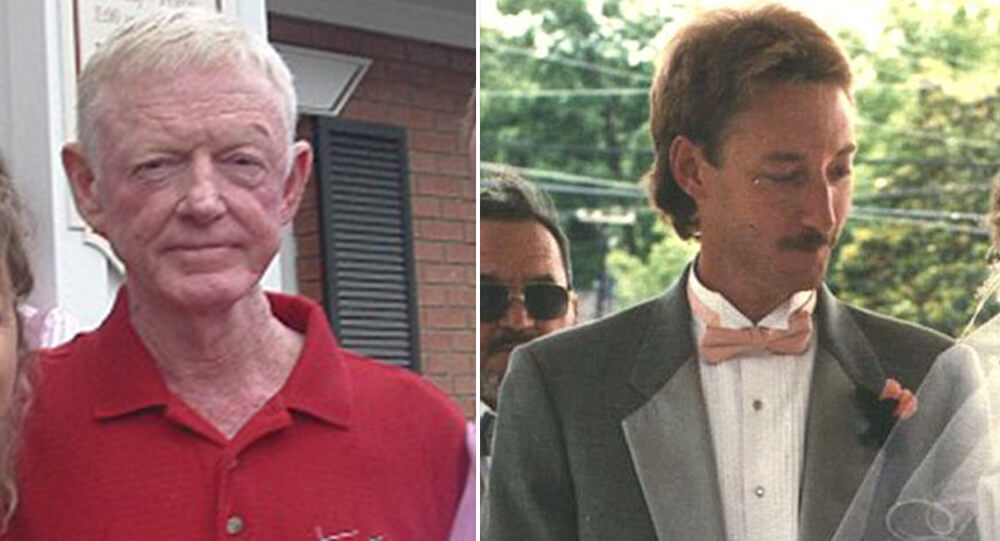
Recipient of suicide victim's heart kills himself 12 years later
In 1995, Sonny Graham received a transplanted heart from a suicide victim. He then committed suicide in the very same manner as the donor.

Pierre Brassau: The chimpanzee painter who deceived the avant-garde world
Abstract paintings by a previously unknown artist “Pierre Brassau” were exhibited at a gallery in Sweden, earning praise for his “powerful brushstrokes” and the “delicacy of a ballet dancer”. None knew that Pierre Brassau was actually a 4 year old chimp from the local zoo.
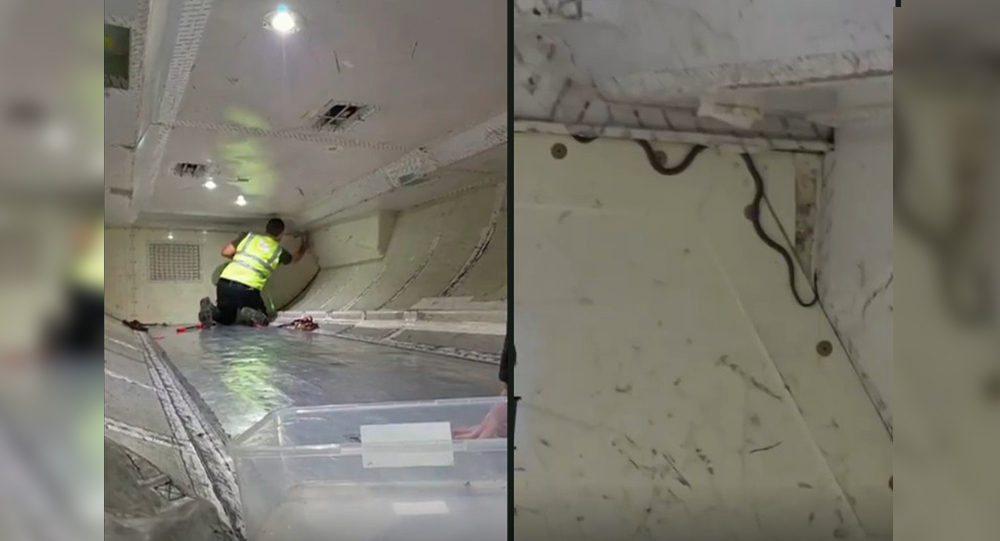
Domestic Flight Delay Caused by Live Snake on Board Leaves Passengers in Shock
A domestic flight was unexpectedly delayed for nearly two hours after a snake was discovered slithering inside the plane’s cargo hold. Thanks to the swift efforts of a professional snake catcher and airline staff, the reptile was safely removed without any harm to passengers, turning a potentially alarming situation into a story of caution and calm.
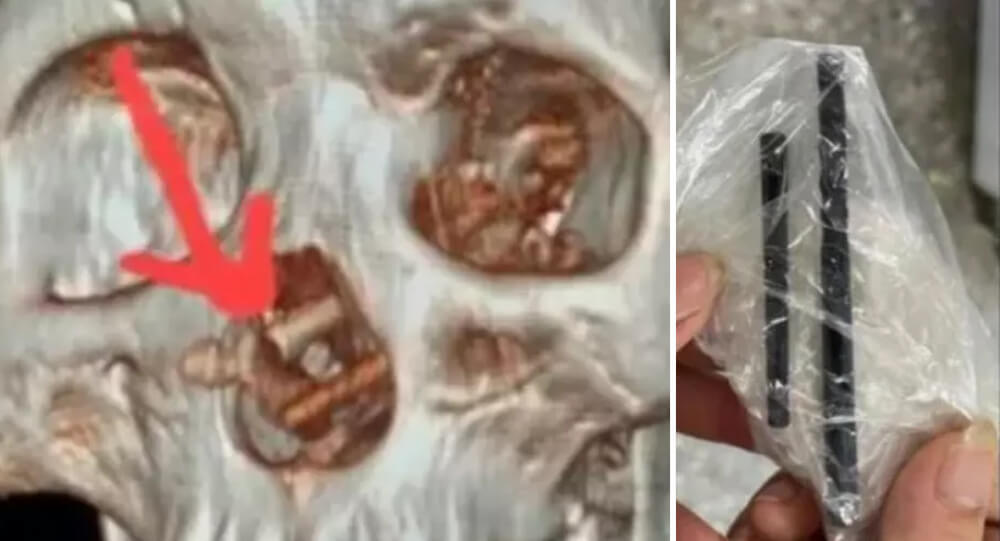
A man who has been suffering from headaches for nearly six months discovers chopsticks lodged in his brain
When it was discovered that a Vietnamese man with headaches and vision problems had chopsticks lodged in his brain, the doctors were almost as surprised as the man himself.

Poto And Cabengo: The Secret Language Of Twins
Poto and Cabengo, as the two girls called each other, communicated in their own language. The twins were ignored by their parents and secluded from the outside world because their father felt they were developmentally retarded, and their unique language evolved as a result of that neglect.
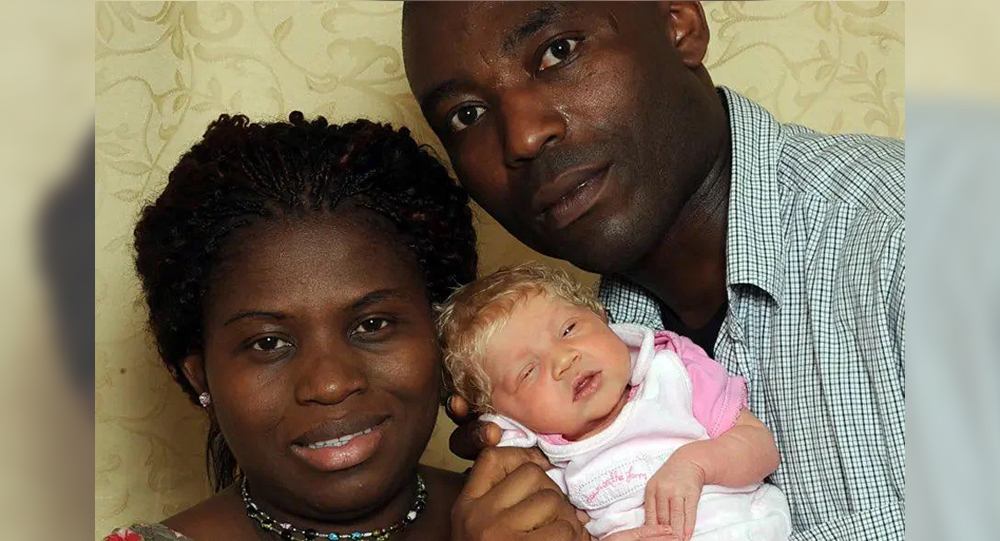
The Miracle Baby: Nigerian Couple in the UK Welcomes a Rare Blonde, Blue-Eyed Child
A black, Nigerian couple living in the U.K. gave birth to a white, blonde, blue-eyed baby that they call the "miracle baby."

Japan’s Chicken-Flavored Ice Cream: The Bold Fusion of Sweet Vanilla and Real Grilled Chicken
A Japanese company once created chicken-flavored ice cream using real grilled chicken bits mixed into vanilla. It combined sweet and savory in a way few dared try, but it drew curiosity from foodies seeking extreme culinary experiences.
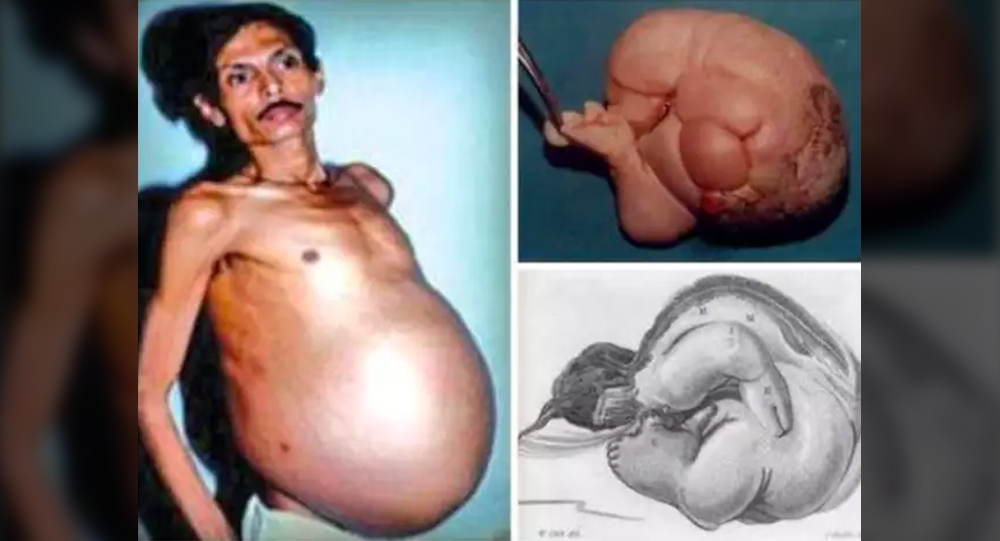
The Astonishing Case of Sanju Bhagat: Living with a Twin Inside Him for 36 Years
Sanju Bhagat, an Indian farmer, lived with an undiagnosed parasitic twin inside his abdomen for 36 years. In 1999, doctors discovered the twin during surgery. This rare condition, fetus in fetu, occurs when a malformed twin is absorbed during pregnancy, surviving within the host sibling's body.
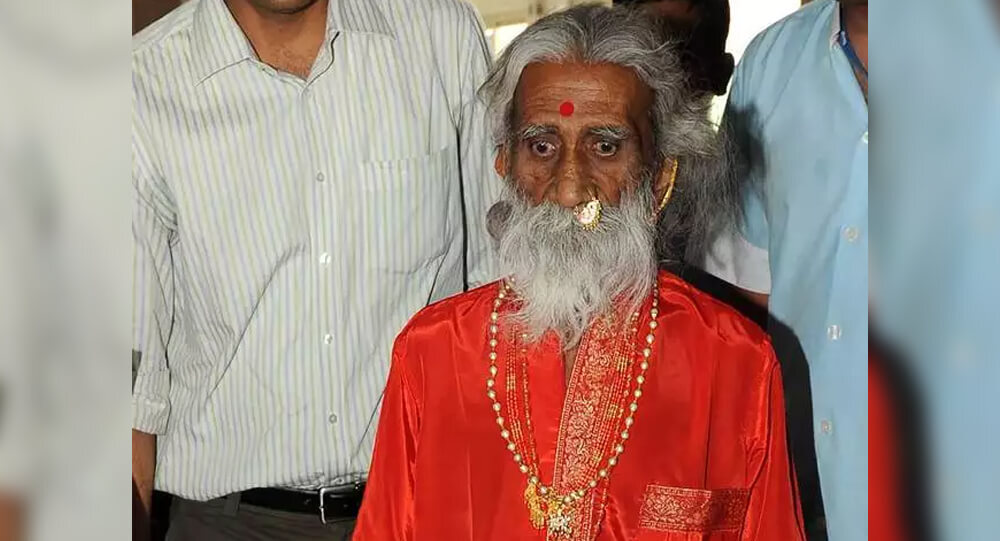
This Yogi Spent 76 Years Without Eating or Drinking Anything and Confirmed by
Prahlad Jani, the starving monk who lived 76 Years without food and water.

Vakil Batirshin’s Story: How Radiation Exposure Caused Severe Lymph Node Swelling
This is Vakil Batirshin, a man whose severe swelling from enlarged lymph nodes was reportedly caused by radioactive exposure. His condition highlights the devastating and long-term health effects radiation can inflict on the human body—often surfacing years after initial contact. Cases like his underscore the importance of nuclear safety and medical support.

Khuk Khi Kai: Thailand’s Infamous “Chicken Poop Prison” and Its Gruesome Legacy
Thailand used to have a prison called "Khuk Khi Kai," or "Chicken poop prison." The first floor of the prison contained prisoners, and the second floor was a large chicken coop. The grated floor ensured that prisoners were constantly subjected to chicken poop.

In Pakistan, this banyan tree has been arrested since 1898
In Pakistan, a tree has been arrested and chained since 1898. When a British officer who was drunk assumed it was leaving its place, it was arrested. The tree, which is presently located on the grounds of the Pakistan Army's Landi Kotal cantonment, continues to attract visitors and locals everywhere.

The true story of Josephine Myrtle Corbin, the lady born with four legs and two private parts
Josephine Myrtle Corbin, an American sideshow performer born in 1868, had a rare condition known as dipygus, which caused her to have four legs, each smaller inner leg paired with one of her outer legs. Corbin joined the sideshow circuit, captivating audiences as the "Four-Legged Girl from Texas."

Upside-Down Fig Tree From The Roof Of An Ancient Ruin in Italy
There is an upside-down fig tree in Bacoli, Italy. No one is quite sure how the fig tree ended up there or how it survived, but year after year, it continues to grow downwards and bear figs.

Why the Brooklyn Bridge Was Once Crossed by 17 Camels and 21 Elephants
On May 30, 1883, a rumor that the Brooklyn Bridge was going to collapse caused a stampede, which killed at least at twleve people. To prove the bridge was safe, P.T. Barnum led a parade of 21 elephants over it.

A woman finds her ex-boyfriend living in her attic 12 years after they broke up
Most people have heard of "things that go bump in the night," but for one South Carolina lady, that "thing" was her ex-boyfriend, whom she discovered living in her attic more than 12 years after they broke up.
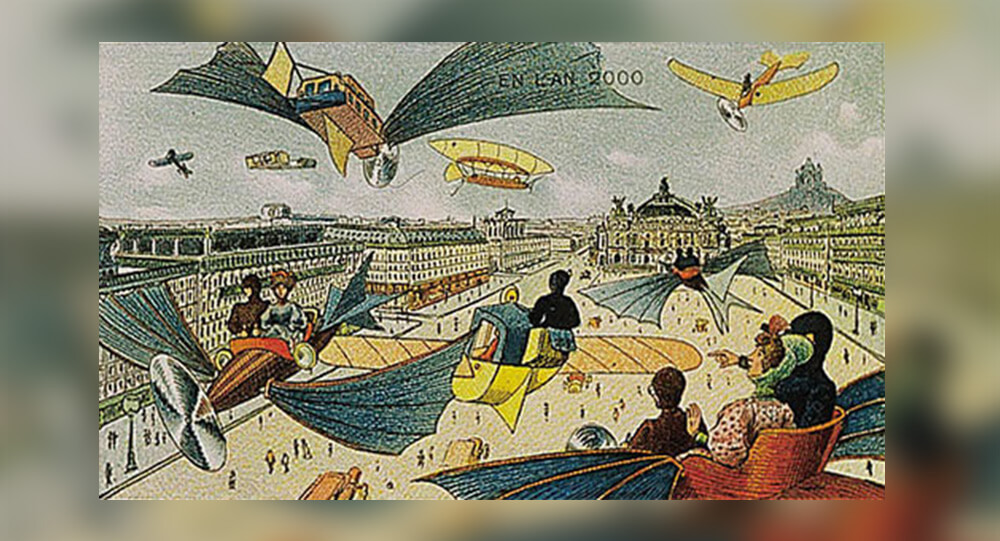
the world from someone predicting 2000 from a guy in 1910
Villemard, a French artist, illustrated how he imagined the future would be in the year 2000 in 1910.

This Thai Wedding Tradition Happens 40 Feet Underwater
Each year in Trang, Thailand, dozens of couples participate in an underwater wedding ceremony while scuba diving in full gear. The ritual symbolizes deep love and has become a quirky tourist attraction held around Valentine’s Day.

Mystery SOLVED: blood Rain in India
The dissemination of spores of microalgae has been identified as the origin of the 'Blood Rain' phenomena, according to a new study by Indian and Austrian experts. Since 1896, reports of intermittent red-colored rain in portions of Kerala and Sri Lanka have been coming in. The most recent one occurred in 2013 over Kerala.

Kim Peek: The Real Rain Man Who Memorized 12,000 Books
Kim Peek wasn’t just a man with an extraordinary memory—he was a megasavant whose astonishing ability to recall the contents of over 12,000 books inspired the iconic character Raymond Babbitt in the film Rain Man. Able to read two pages at once, scanning one with each eye, Peek could memorize an entire book in about an hour. Despite his phenomenal talents, he faced developmental challenges and lived a unique life that changed perceptions about human potential and cognitive diversity. This article explores the remarkable story of Kim Peek, his capabilities, and the legacy he left behind.