

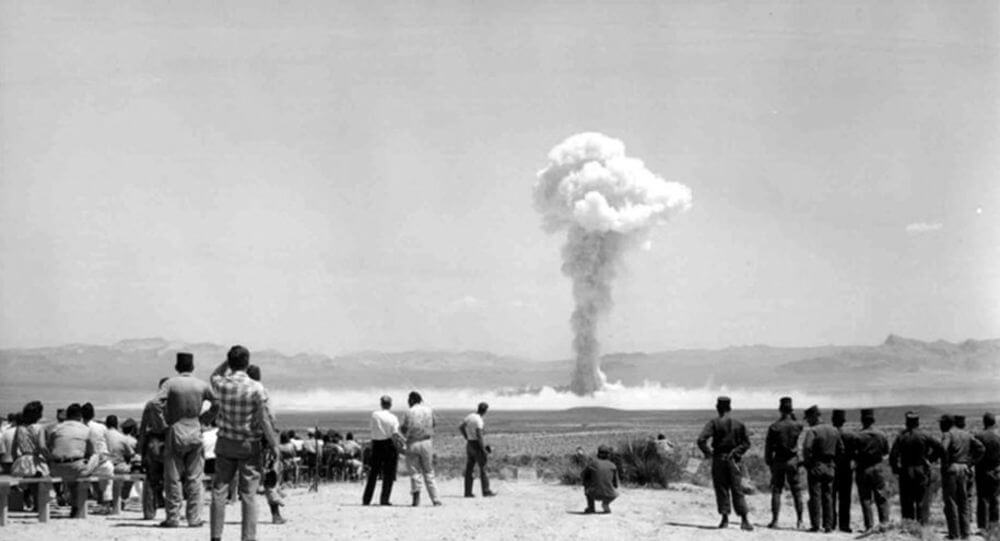

Atomic Tourism: In the 1950s, nuclear tests in Las Vegas served as a draw for tourists
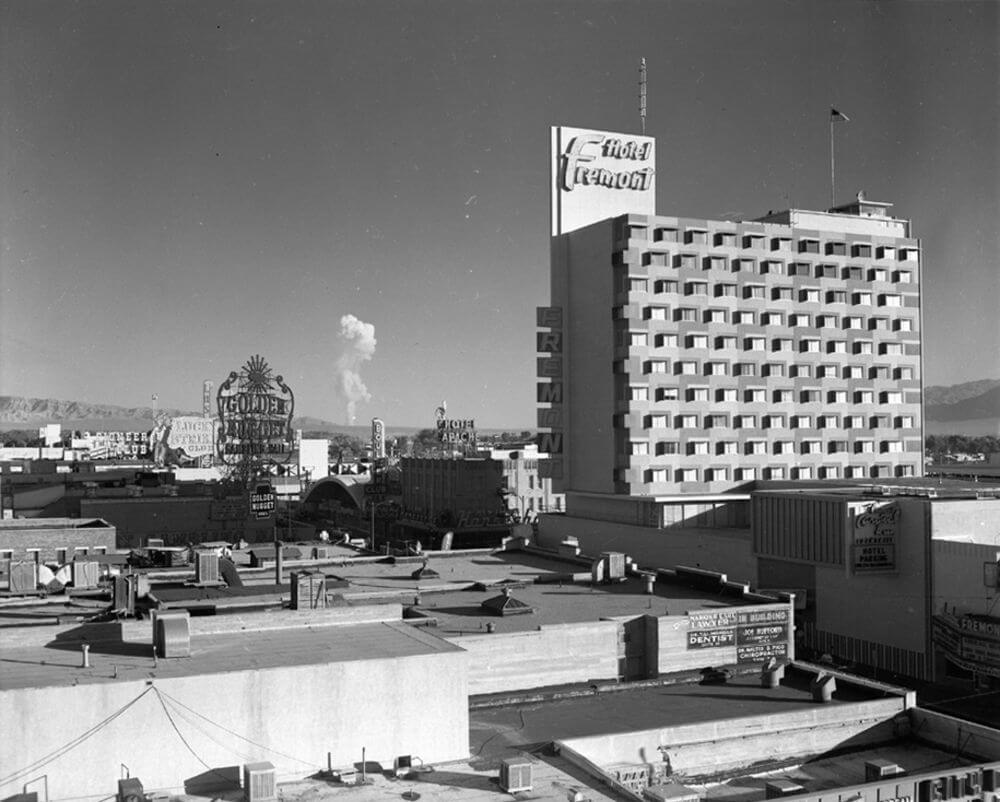
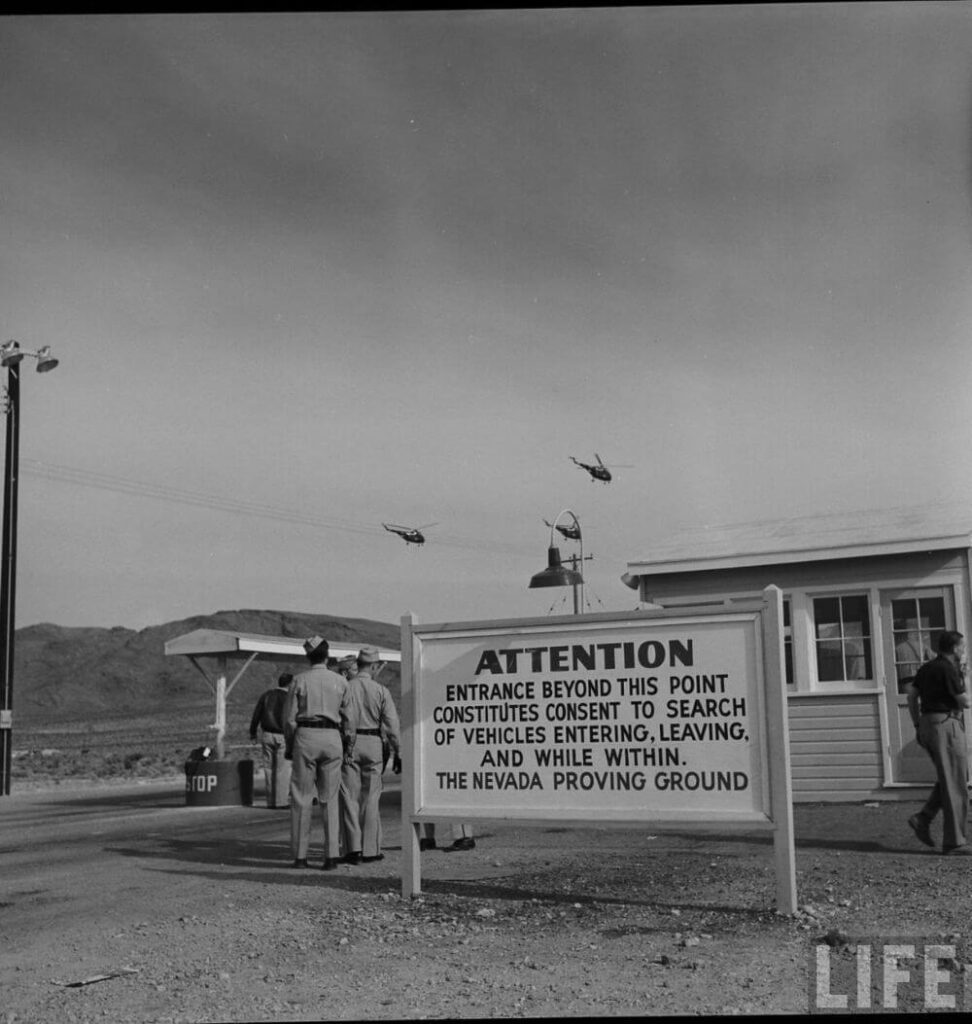
Known as the “city of lights,” Las Vegas was once illuminated by the glow from an atomic explosion that occurred in the Nevada desert. Only 65 miles from Sin City, the US Army started testing nuclear weapons in 1951.
The sky was illuminated by the bombs’ glow at night, and during the day, mushroom clouds could be seen emerging over the horizon.
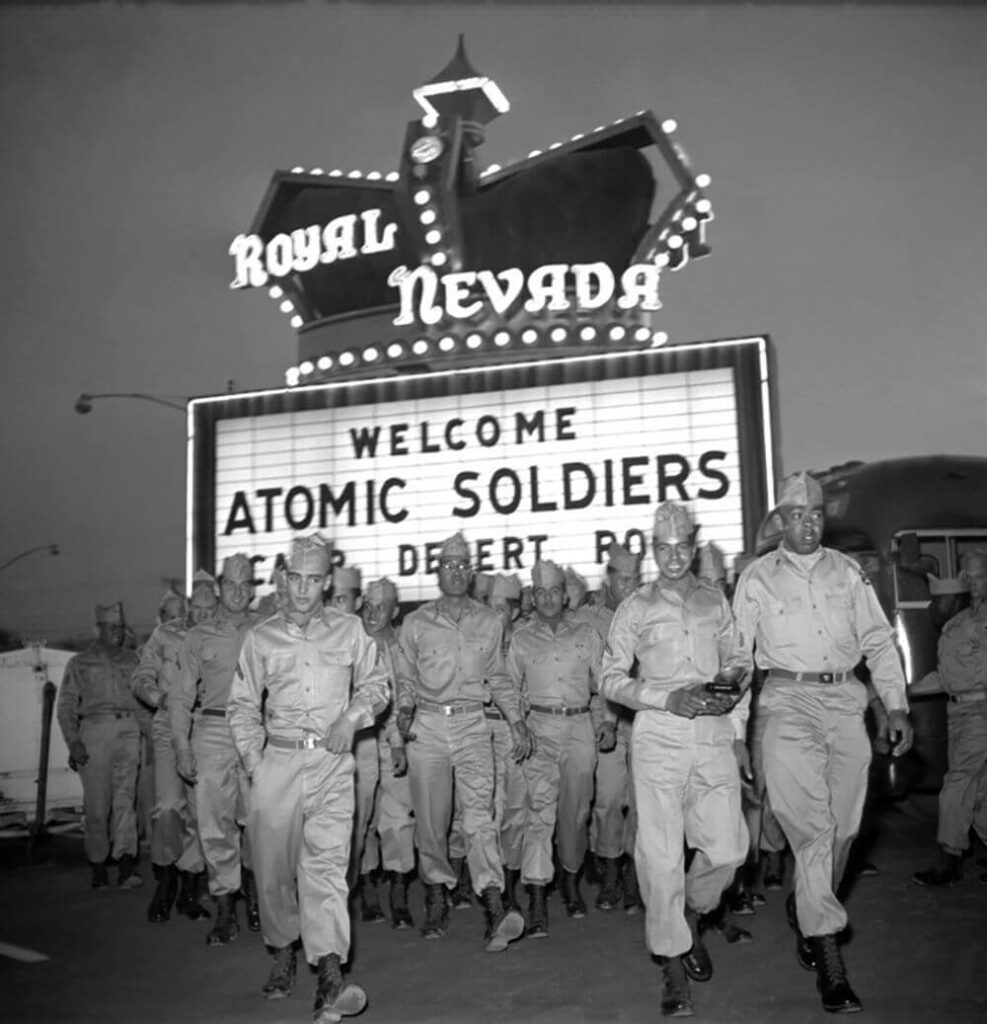
Fear was not the only response in traditional American fashion. A specific group of individuals began to travel to Vegas: Nuclear Tourists.
To understand why Nevada was chosen for nuclear testing, let’s go back in time. The Nevada Yucca Flats were the ideal location for nuclear testing because they were situated in the middle of the American wasteland. First of all, because it was in the middle of a desert, there were very few dangers to the houses nearby.
In addition, the federal government owns more than 87% of Nevada. It boasted plenty of open space, pleasant weather, and well-connected rail systems.
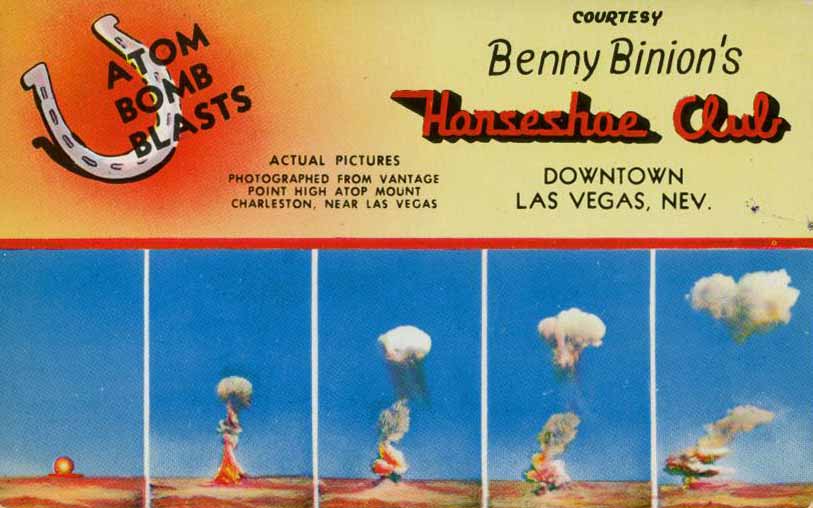
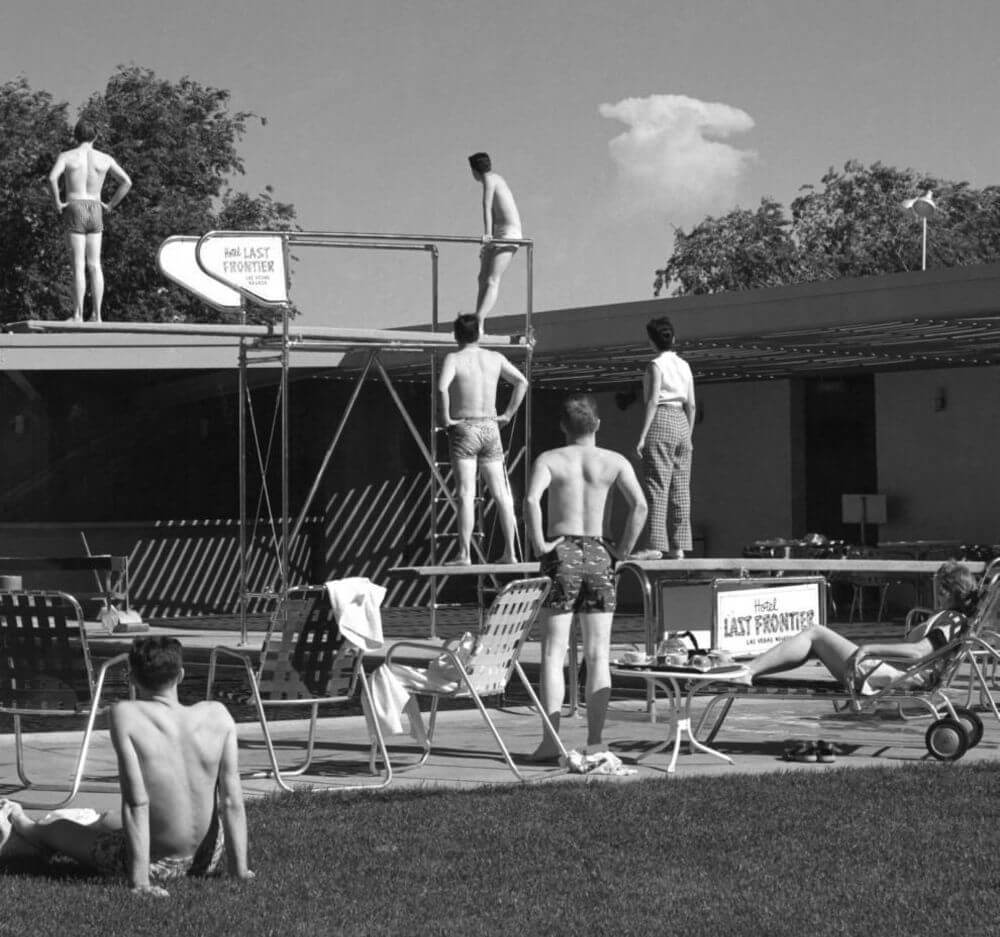
For those who did reside in this area, the nuclear detonations served as a source of spectacles and entertainment. Consequently, Vegas witnessed a surge in the number of visitors from all over the nation who would journey great distances to witness this novel performance.
Not too long after, the 25,000-person city of Las Vegas was transformed into the internationally recognized spectacle of three million people.
As news outlets worldwide jumped on this novel and thrilling development, atomic tourism quickly rose to the top of the headlines. It was even coined as “the non-ancient but nonetheless honorable pastime of atom-bomb watching” by New York Times writers.

Vegas was built from the ground up for showmanship. By hiding the person from all indications of time and place, visitors are urged to appreciate the present and concentrate on what is in front of them.
Their credo is to focus on what’s in front of you. Landowners and business owners started using this idea to their advantage by making these tests into public displays of their own personas.
The times and dates of these tests were publicized beforehand by the Vegas Chamber of Commerce. Months in advance, calendars and announcements from the community would be released, allowing visitors to make plans and take in the sight of the mushroom cloud.
Pictures from these incidents started to appear in news outlets worldwide, and tourists drawn by the thrill of bomb-watching flocked to the area nearest the ground zero.
Many Las Vegas establishments hosted “Dawn Bomb Parties” on the eve of detonations. Starting at midnight, attendees would sip cocktails and sing until the bomb’s flash illuminated the night sky.
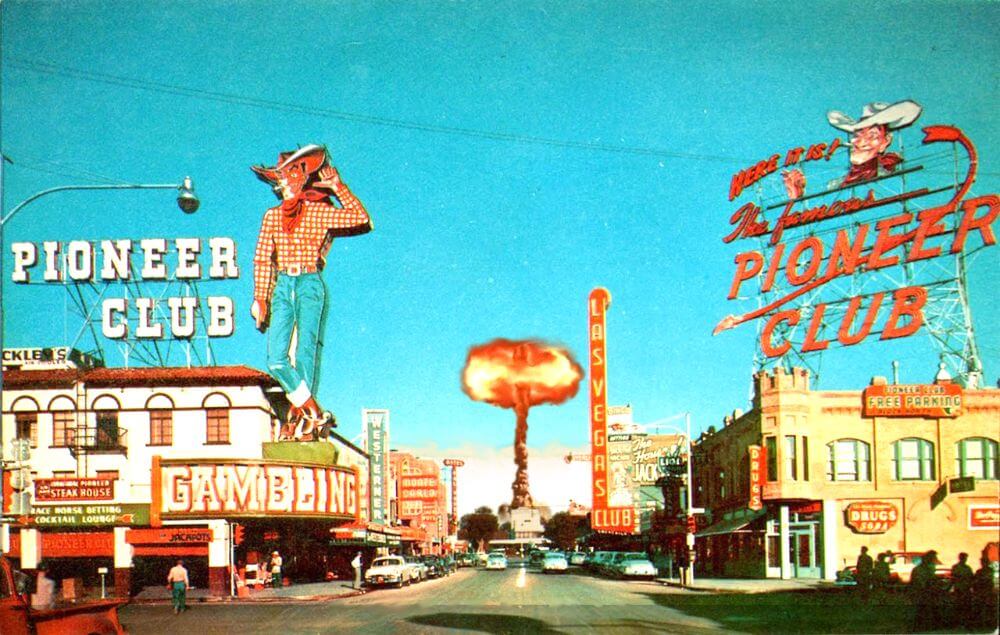
Vegas, however, also profited from the nuclear tests by offering itself as a haven of nostalgia and solace from the surrounding horror, in addition to these parties.
TV, games, and gambling were all diversionary activities that allowed visitors to Vegas to get away from the anxiety that was all around them.
Vegas and the Nevada Testing Site’s Yucca Flats were developed into a variety of tourist destinations. The vast craters that presently mar the desert’s surface are the site’s most striking feature as of right now.
Craters of all sizes and shapes, from smaller surface-level bombs to nuclear warheads, are strewn across the desert floor.
Bilby Crater is a well-known crater that was formed in 1963 during an underground test. The explosion, which produced an aftershock that was felt all the way in Vegas, left a hole 1,800 feet wide (550 meters) and 80 feet (24 meters) deep. It also produced about 249 kilotons of explosive power.
Because of its vastness, Sedan Crater is also well-liked. This crater, which is roughly 1280 feet (1280 meters) wide and 230 feet (70 meters) deep, was created by a 104 kiloton explosion that occurred directly beneath the desert floor.
Approximately 12 million tons of Earth were moved during its passage, in comparison to the effects of a 4.75 earthquake.
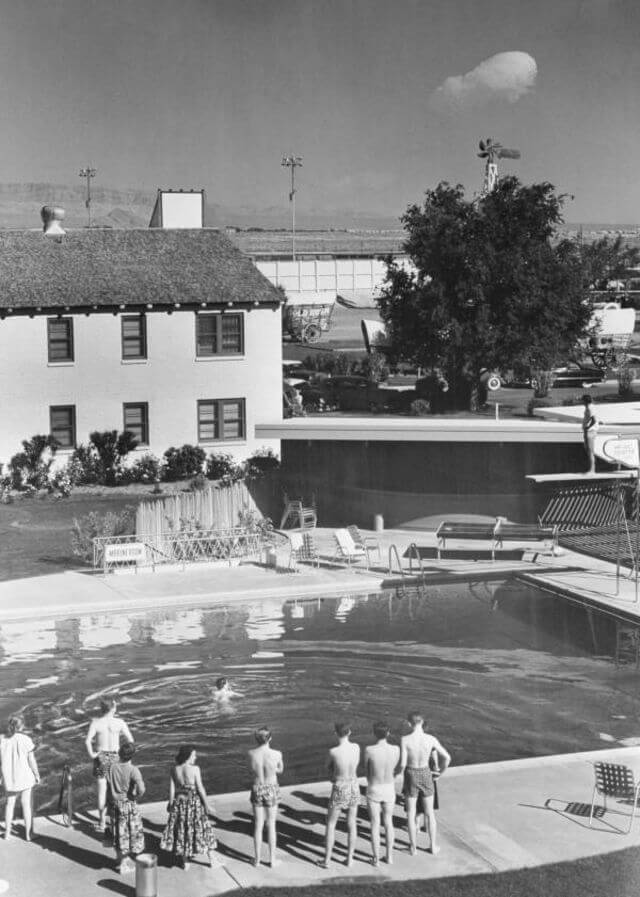
One reporter who saw the explosion and wrote for the Department of State Washington Bulletin said, “You put on the dark goggles, turn your head, and wait for the signal.” The bomb has now been detonated. After the allotted amount of time, you turn to look.
A magnificently brilliant cloud is rising like a massive umbrella. You prepare for the shock wave that comes after an atomic blast.
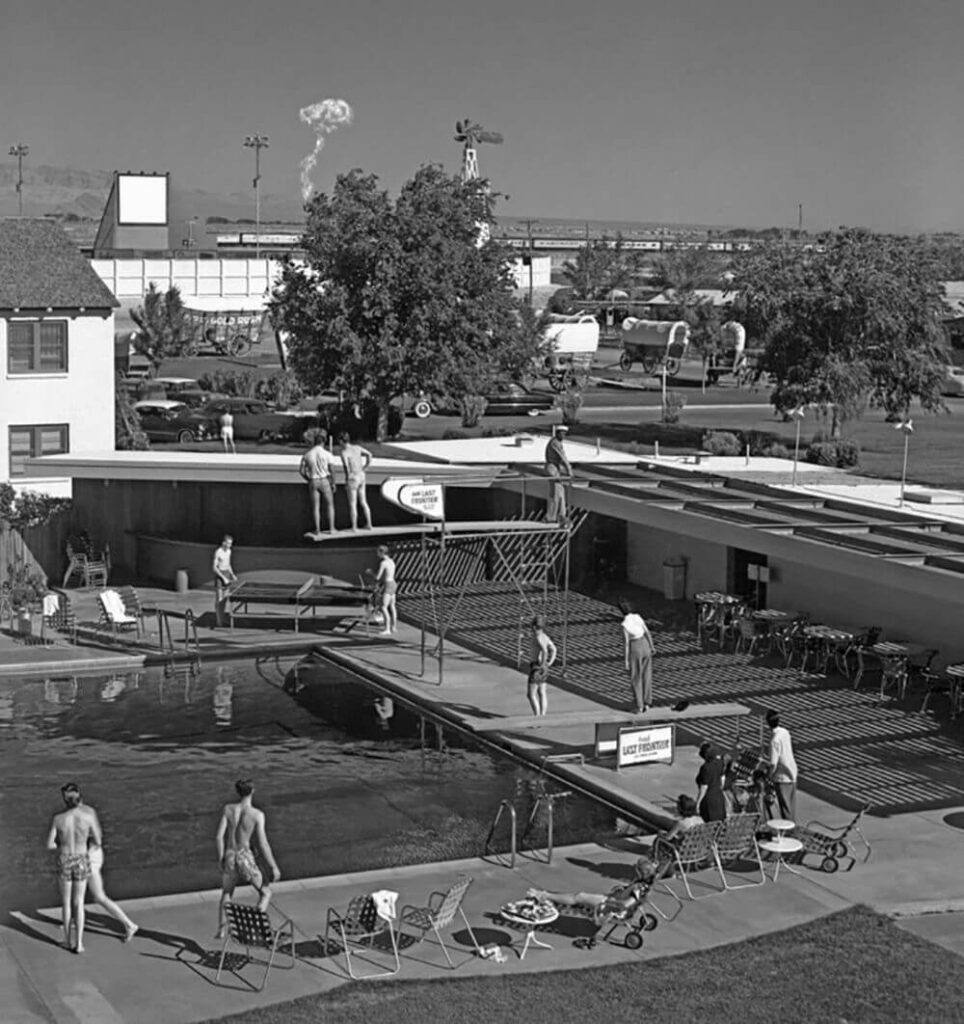
First comes a heat wave, followed by a shock powerful enough to bring down an unprepared man. After what seems like hours, the artificial sunburst disappears.
A total of 235 bombs were detonated over the course of twelve years, or one every three weeks. According to reports, the explosions’ powerful flashes could be seen as far away as Montana.
Scientists planned tests to coincide with weather patterns that blew fallout away from the city, claiming that the radiation’s harmful effects would have subsided and been harmless once the shock waves reached Las Vegas.
But as the tests went on, residents in southern Utah and northeastern Nevada started to complain that their livestock and pets were getting beta particle burns and other illnesses; as a result, in 1963 the site was prohibited from being used for above-ground nuclear testing.
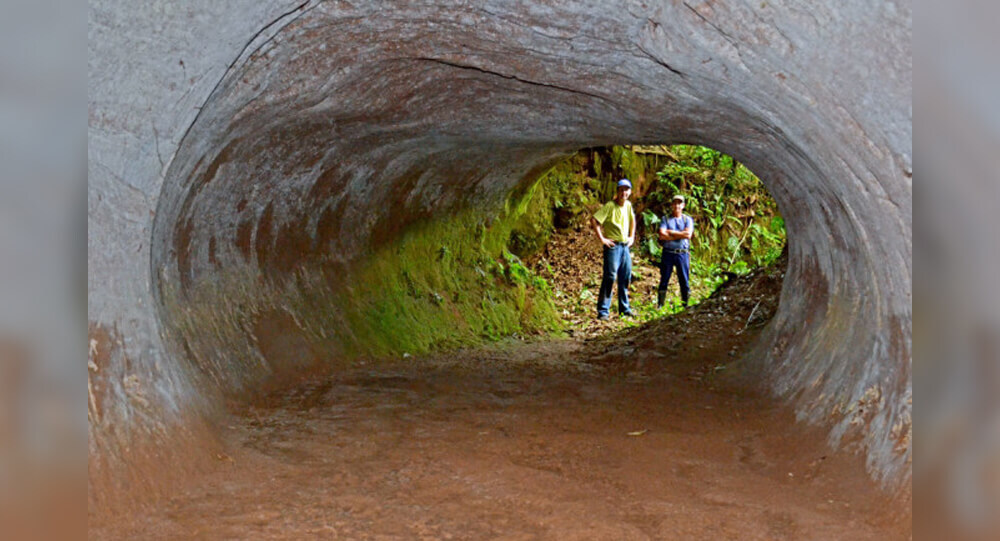
Tunnels Dug by ancient giant sloths, A South American Megafauna
For years, scientists didn’t know what caused mysterious cave networks in South America. In 2010, they learned that the caves were actually tunnels dug by ancient giant sloths
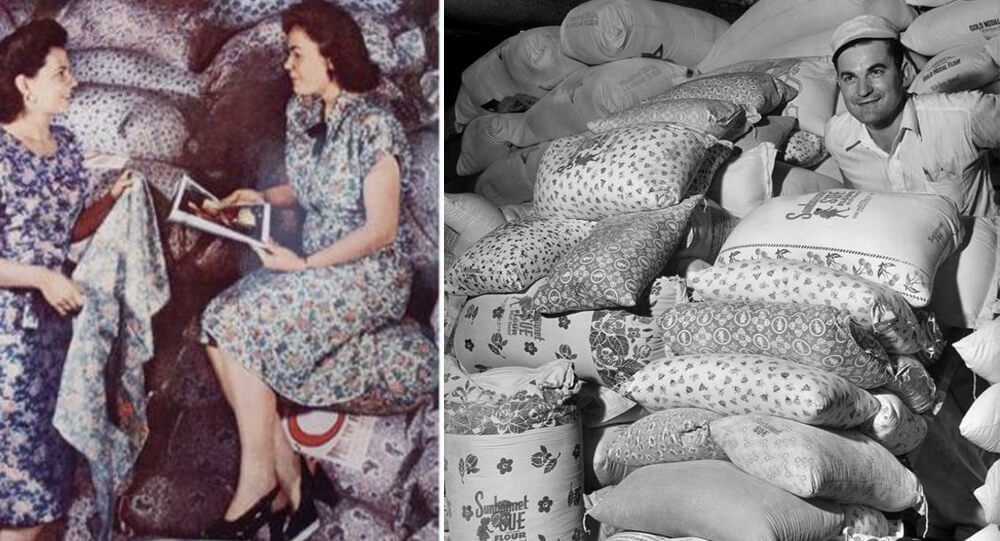
The history of Flour sack clothing fashion
After Kansas mill owners found women reused flour sack materials into apparel in the 1920s and 1930s, they started applying patterned designs to give families with more fashionable patterns and material.
Archaeologists Uncover 2,000-Year-Old Amazonian Cities Using Lidar Technology
Deep in the Ecuadorian Amazon, archaeologists have uncovered an ancient network of urban settlements once inhabited by the Upano people about 2,000 years ago. Using cutting-edge lidar technology, these discoveries reveal a highly organized society featuring sophisticated agricultural systems, drainage canals, and extensive road networks. This transformative find challenges long-held assumptions about ancient Amazonian societies and sheds light on a complex civilization thriving in one of the world’s most biodiverse regions.

Why the Word ‘Pen’ Comes from the Latin ‘Penna’ Meaning Feather
The humble word “pen” carries a rich history rooted in ancient times, derived from the Latin word penna, meaning “feather.” Long before modern pens revolutionized writing, feather quills—especially from geese—were the essential tools of scribes, scholars, and artists. This article journeys through the origins of the pen, its evolution, and fascinating trivia about the timeless connection between feathers and writing.
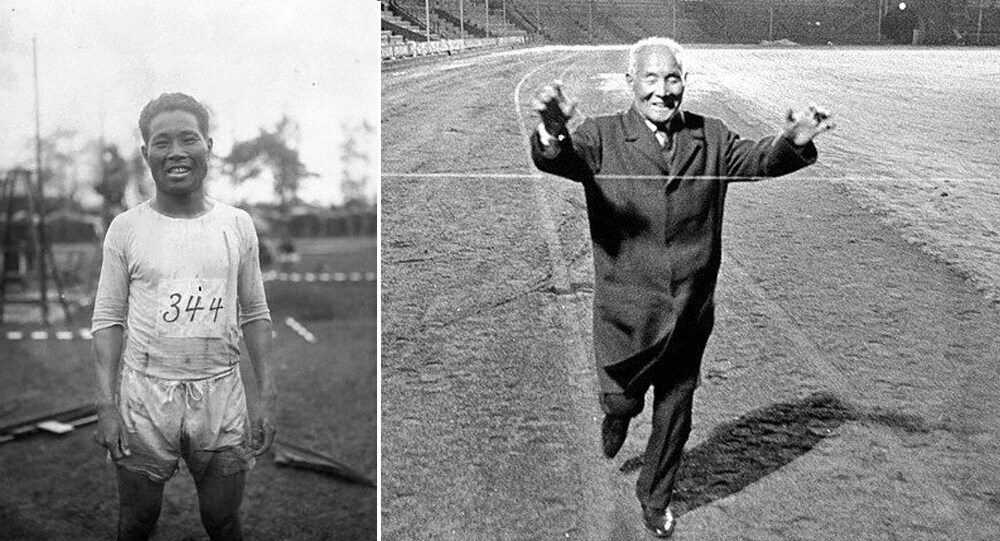
Shizo Kanakuri’s 1912 Olympic Marathon Finished 54 Years
At the 1912 Olympics, a marathon runner quit and went home to Japan without telling officials and was considered a missing person in Sweden for 50 years. In 1966, he was invited to complete the marathon. His time: 54 years, 8 months, 6 days, 5 hours, 32 minutes, and 20.379 seconds.
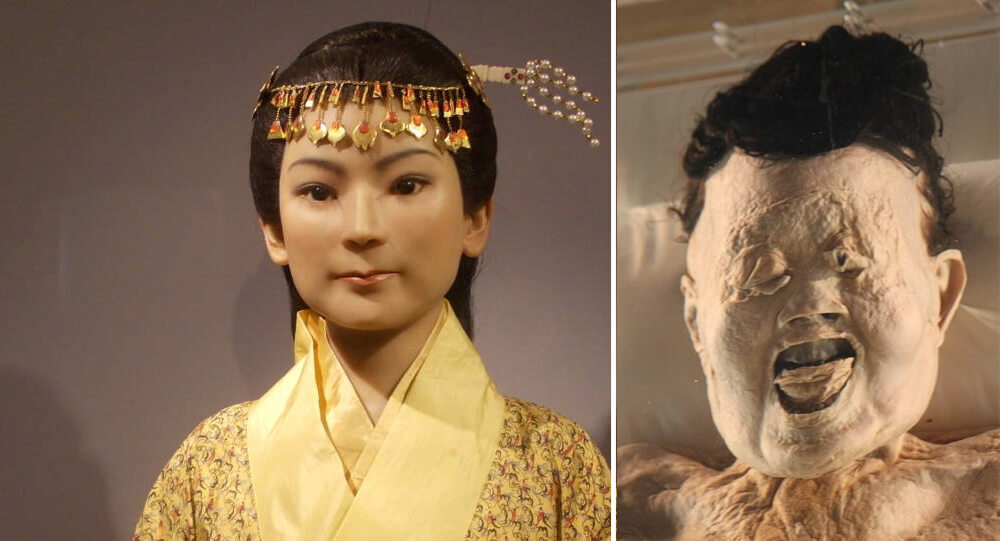
Xin Zhui And The Story Of The Stunningly Intact Lady Dai Mummy
A 2,000-year-old mummy of a Chinese woman, Xin Zhui, also known as “Lady Dai,” was preserved in 21 gallons of an “unknown liquid.” With her original hair, organs, eyebrows, and eyelashes intact, the mummy still has blood in her veins. Her skin and ligaments are soft and as flexible as that of a living person.

Nathan's Famous Doctor Stunt
When Nathan's Famous Hot Dogs first opened in 1916, the owner hired people to dress as doctors and eat hot dogs outside his shop, to convince people his hot dogs were healthy.
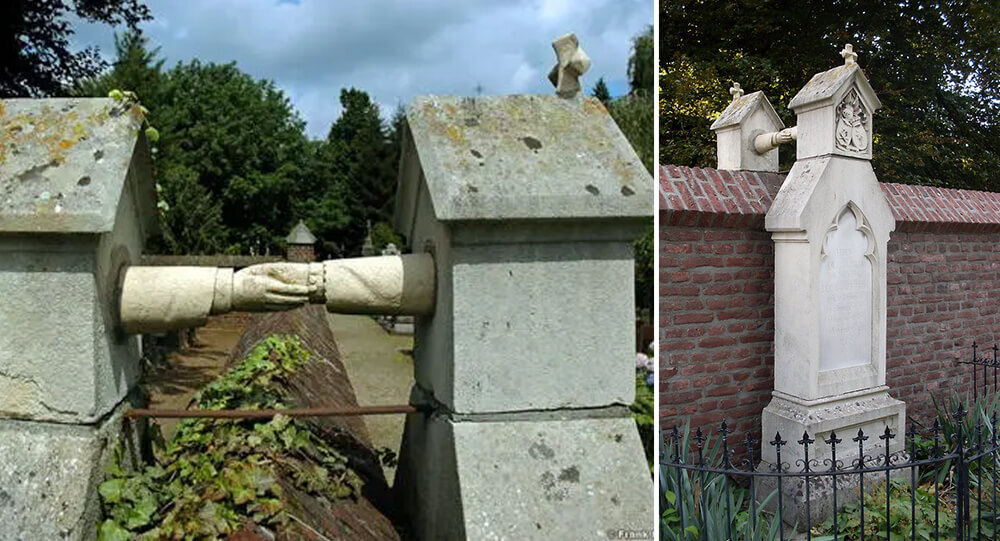
Graves holding hands over wall, A Catholic woman and her Protestant husband grave
A protestant man and a Catholic woman who weren't allowed from being buried together in a graveyard in 19th-century Holland turned their graves into a monument showing them holding hands across the wall separating them.
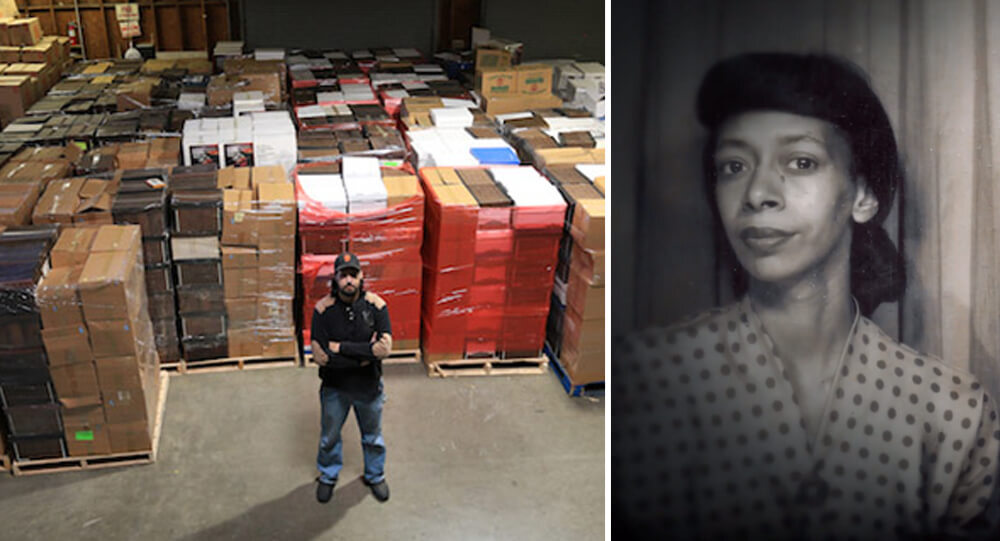
Marion Stokes recorded 30 years of television
Marion Stokes, a Philadelphia woman began taping whatever was on television in 1979 and didn’t stop until her death in 2012. The 71,000 VHS and Betamax tapes she made are the most complete collection preserving this era of TV. They are being digitized by the Internet Archive.
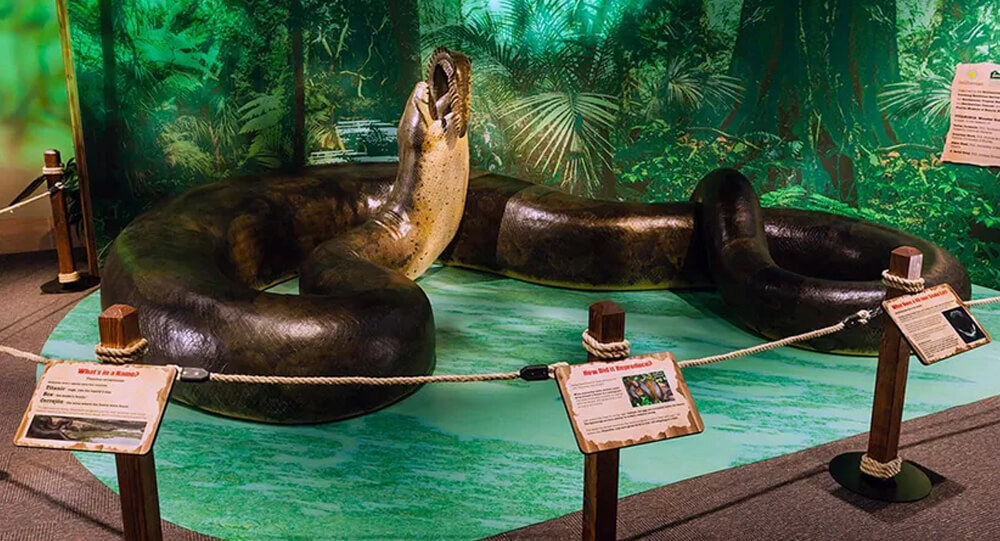
Titanoboa cerrejonensis, fossils of the world’s largest species of snake
In 2009 in a coal mine of Columbia, scientists discovered fossils of the world’s largest species of snake. The species is called “Titanoboa cerrejonensis,“and it is from around 60 million years ago. It would have had measured about 48 feet long and weighed about 2,500 pounds
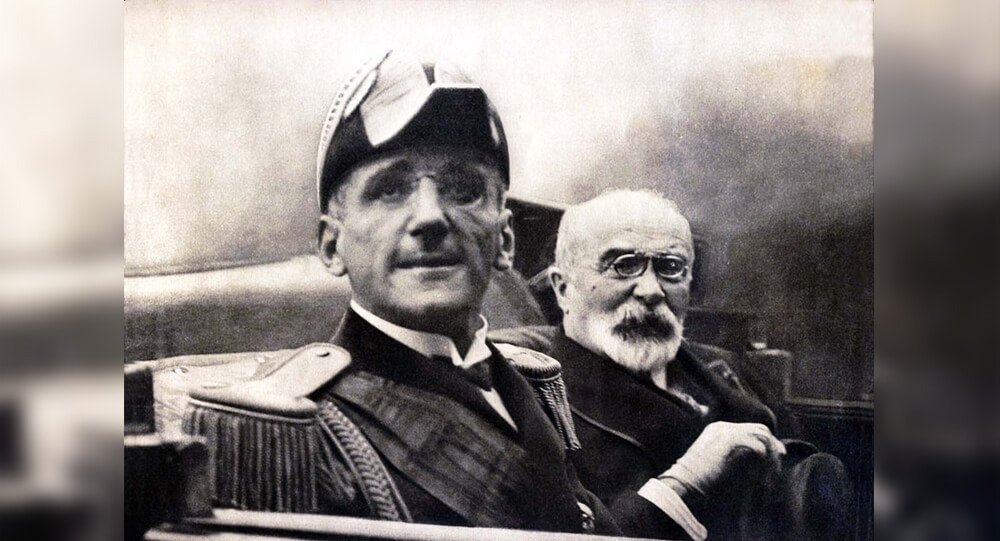
The Assassination Of King Alexander
The assassination of King Alexander of Yugoslavia marked a pivotal moment in the country's history. This article delves into the rise and reign of King Alexander, exploring his early life and ascension to the throne. It also examines the political and social climate in interwar Yugoslavia, setting the stage for the tensions and challenges that ultimately culminated in his tragic assassination. By understanding the context in which this event unfolded, we can better grasp the significance and impact it had on the nation and its future.
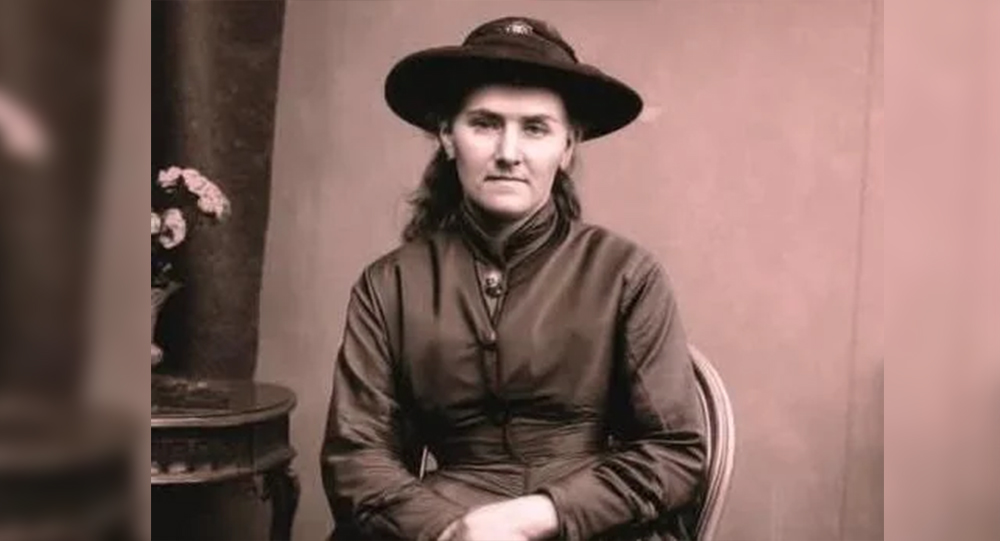
Why Comedians Failed to Make Sober Sue Laugh in the Early 1900s
In the bustling vaudeville scene of early 20th century New York, a mysterious performer known as "Sober Sue" captured public imagination not for jokes or songs, but for her unshakable stoicism—she never smiled or laughed. A local theater even offered a tempting reward of $1,000 to anyone who could make her laugh, drawing crowds and famous comedians eager to claim the prize. Despite countless hilarious attempts, Sue remained expressionless, a mystery that baffled performers and audiences until it was revealed that she suffered from facial paralysis, explaining her unchanging demeanor.
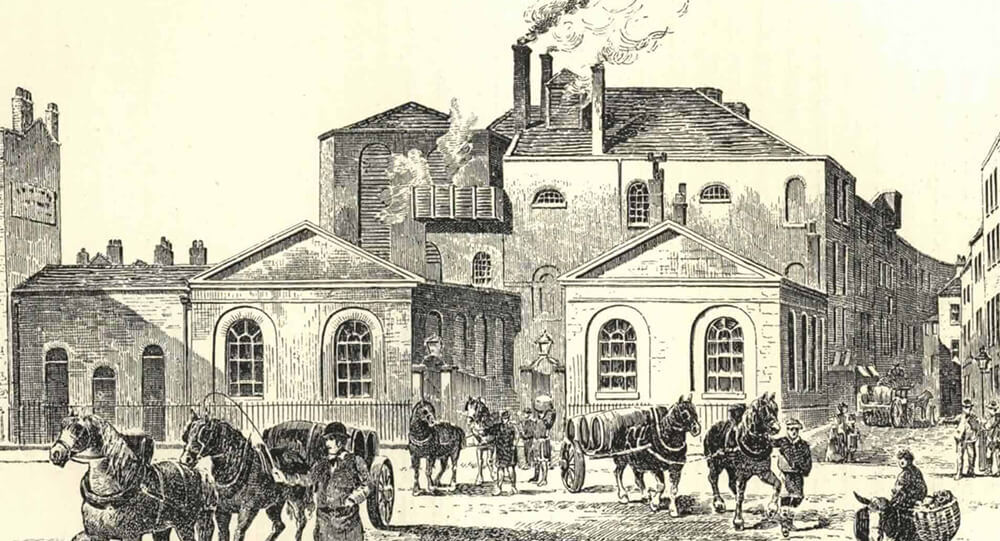
The 1814 London beer flood
In 1814, there was a beer flood in London when a tank containing more than 300,000 gallons ruptured in which 8 people drowned.
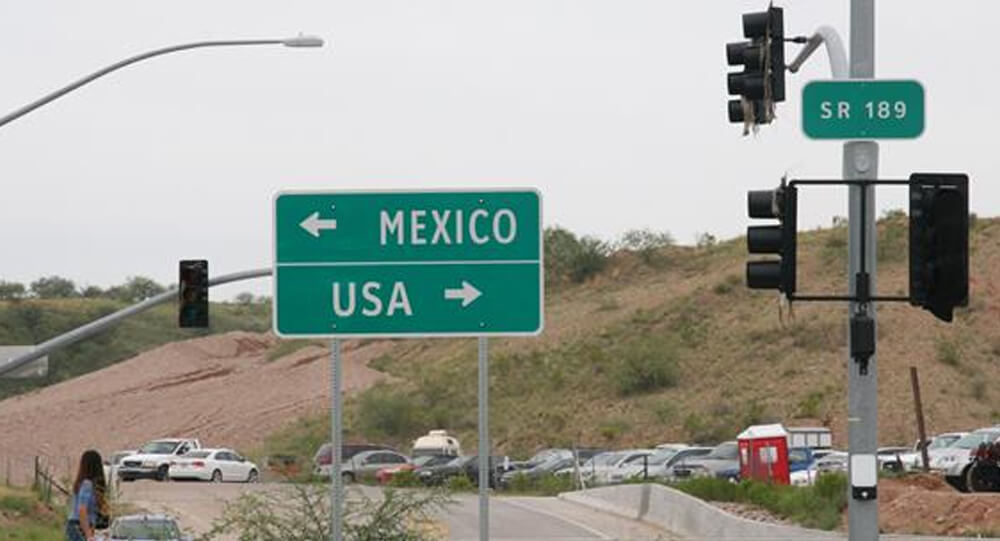
Underground Railroad to Mexico freed thousands of slaves in 1829
Slavery was abolished in Mexico in 1829. Slaves were escaping to Mexico, and slaveholders in the US were aware of this. The US attempted to get Mexico to sign a fugitive slave treaty, which would have required Mexico to send back escaped slaves to the US. But, Mexico refused, arguing that slaves were free as soon as they set foot on Mexican soil.
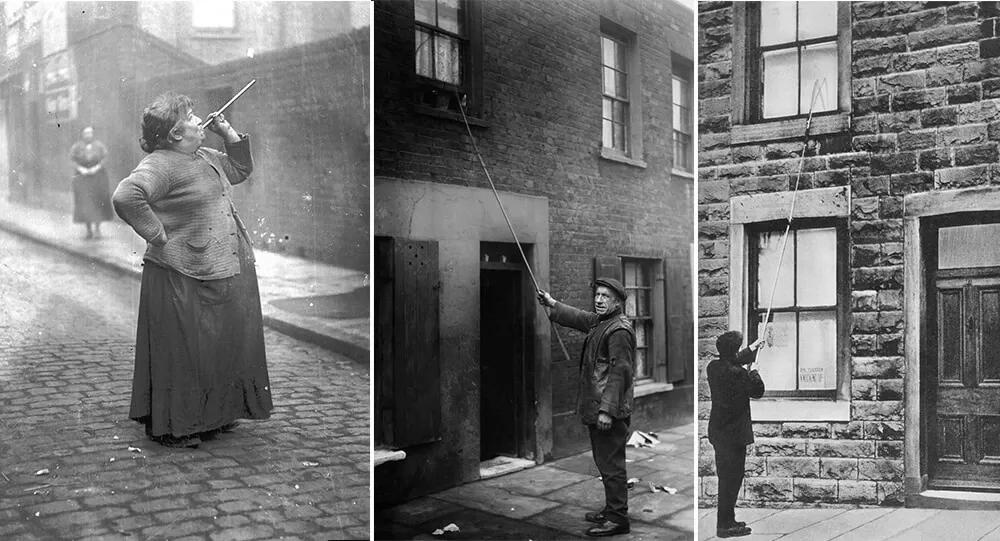
Knockers-up: waking up the Industrial Britain's Workers in 1900-1941
Before alarm clocks were invented, there was a profession called a knocker-up, which involved going from client to client and tapping on their windows (or banging on their doors) with long sticks until they were awake. It lasted into the 1920s.
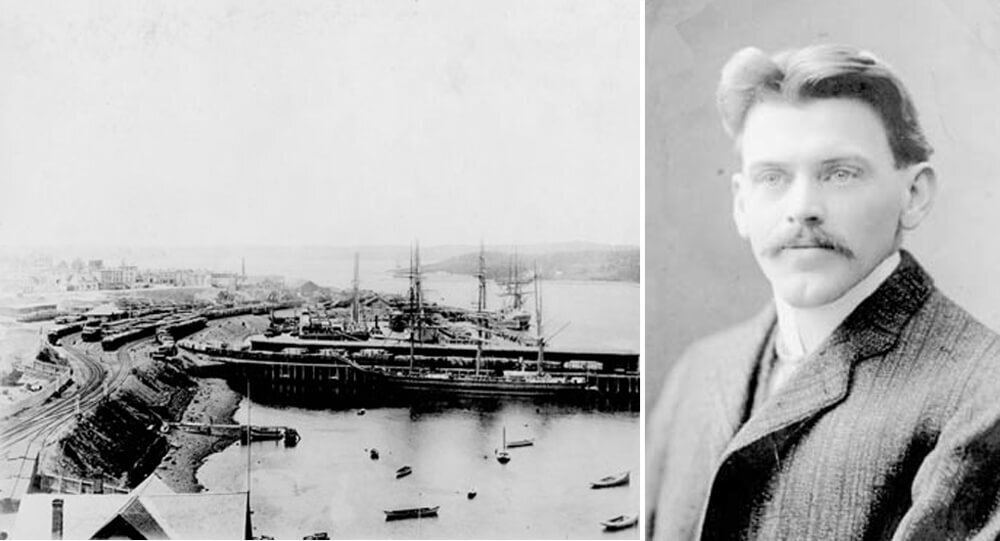
Vince Coleman, a railway dispatcher, sacrificed his own life
Vince Coleman, a railway dispatcher, sacrificed his life in order to warn an incoming train of an imminent explosion. His telegraph said “Hold up the train. Ammunition ship afire in harbor making for Pier 6 and will explode. Guess this will be my last message. Good-bye, boys.” He saved 300 lives.
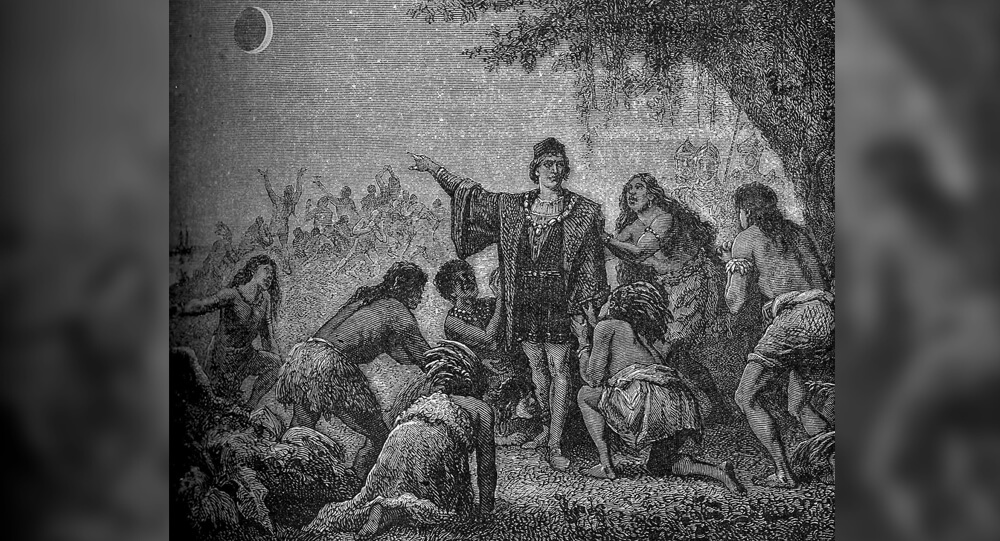
How a Total Lunar Eclipse Saved Christopher Columbus in 1504
In 1504, Christopher Columbus was stranded in Jamaica with natives who refused to give him food. But he knew the date and time of an upcoming lunar eclipse. So he told the natives that his gods were angry at their treatment of him, and would provide a clear sign. Once the eclipse started, the natives raced to give him food and begged for mercy.
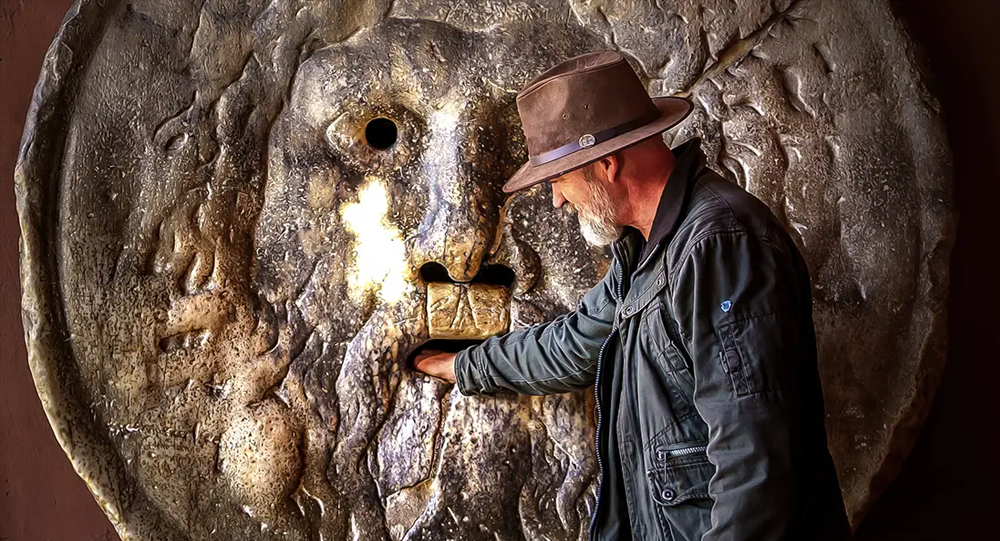
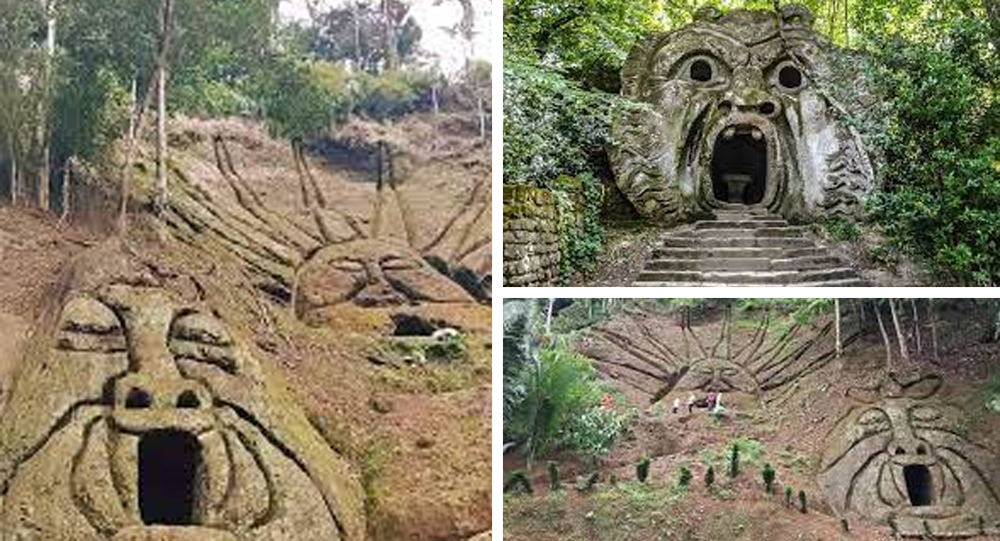
The Mouth of Truth: Ancient Rome’s Legendary "Lie Detector" That Bit Off Hands
Discover the chilling legend of the Mouth of Truth (Bocca della Verità) in Ancient Rome—a massive carved stone face believed to bite off the hand of anyone who lied while inserting their hand into its gaping mouth. Uncover the truth behind its eerie reputation and how this ancient artifact became a symbol of honesty and fear.
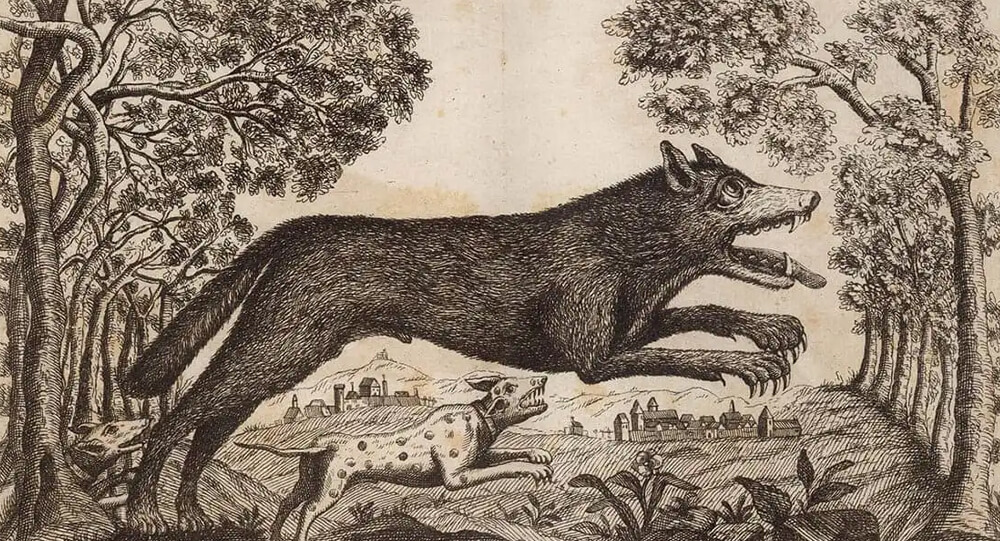
What Was the Beast of Gévaudan?
Between 1764 and 1767, a mysterious animal called the Beast of Gévaudan terrorized the French village called Gévaudan. It attacked and killed about 100 adults and children. While most believe it was a wolf, some say it may have been a wolf-dog hybrid, hyena or even a lion, but without any genetic evidence, the beast will remain a mystery forever.
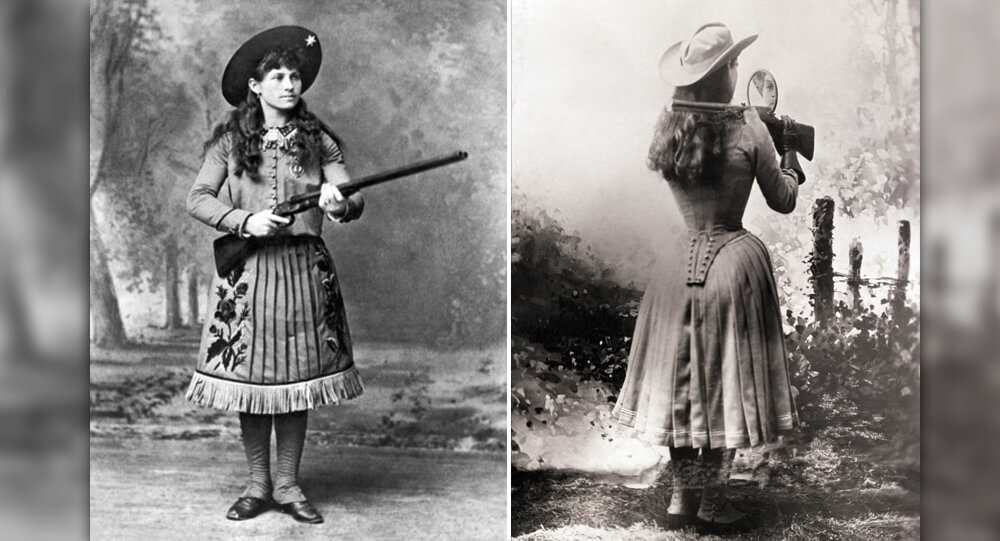
The true story of Annie Oakley, legendary sharpshooter
Anne Oakley was such a good shooter that she could split a playing card help edge-on, hit dimes thrown into the air, shoot cigarette from her husband's lips, and pierce a playing card thrown into the air before it hit the ground.
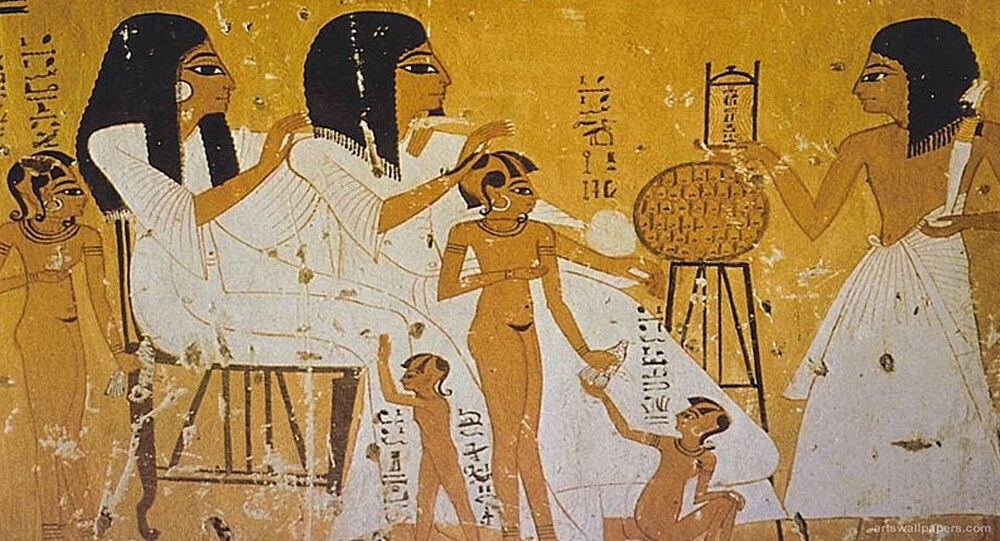
Ancient Egyptians Had Pregnancy Tests Over 3500 Years Ago
The ancient Egyptians used a pregnancy test that involved potentially pregnant women peeing on barley and wheat seeds. Plant growth indicated pregnancy: barley for a boy and wheat for a girl. Later tests revealed that pregnant women's urine causes plant growth 70% of the time, whereas non-pregnant women's urine does not.
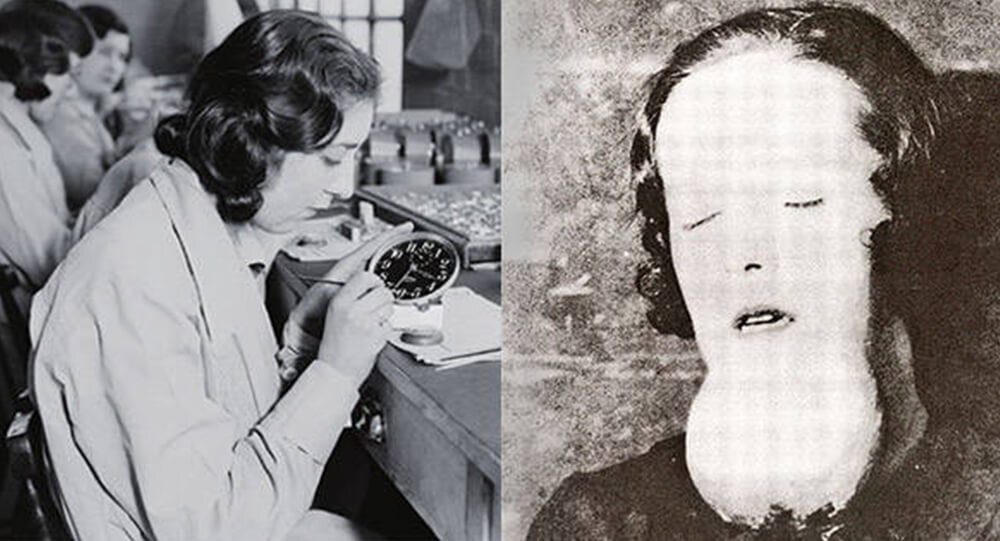
The true story Of The Radium Girls that change US labor laws
Hundreds of young women worked in clock factories during World War I, painting watch dials with luminous radium paint. The company lied about the risk of radiation, claiming there was no danger, which resulted in the death of the young women.
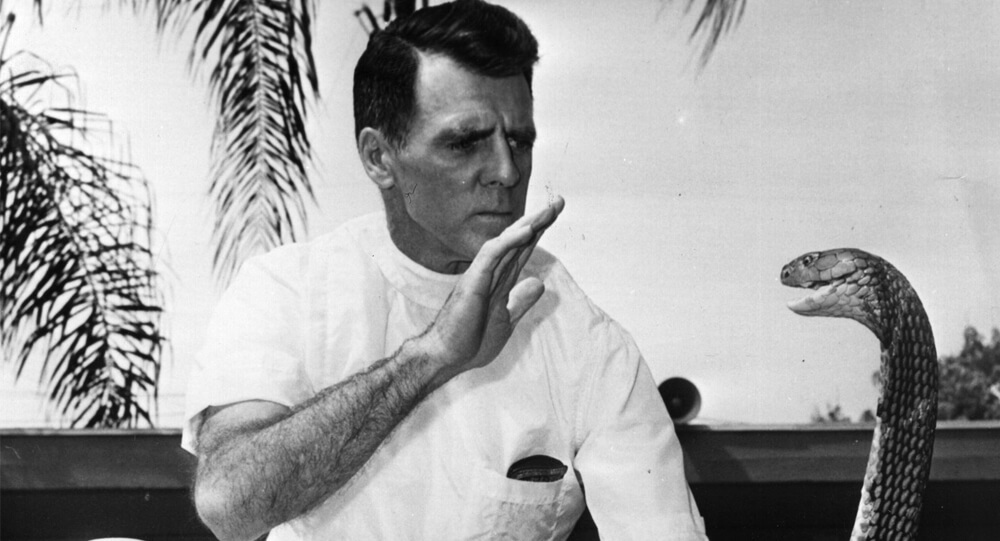
The story of Bill Haast, who lived to be 100 despite his extensive snake venom injections
Bill Haast immunized himself by injecting snake venom into his blood for several years. He holds the Guinness World Record for surviving the most lethal snake bites, having been bitten over 172 times. Bill became known as "Snake Man" around the world and lived for over 100 years.
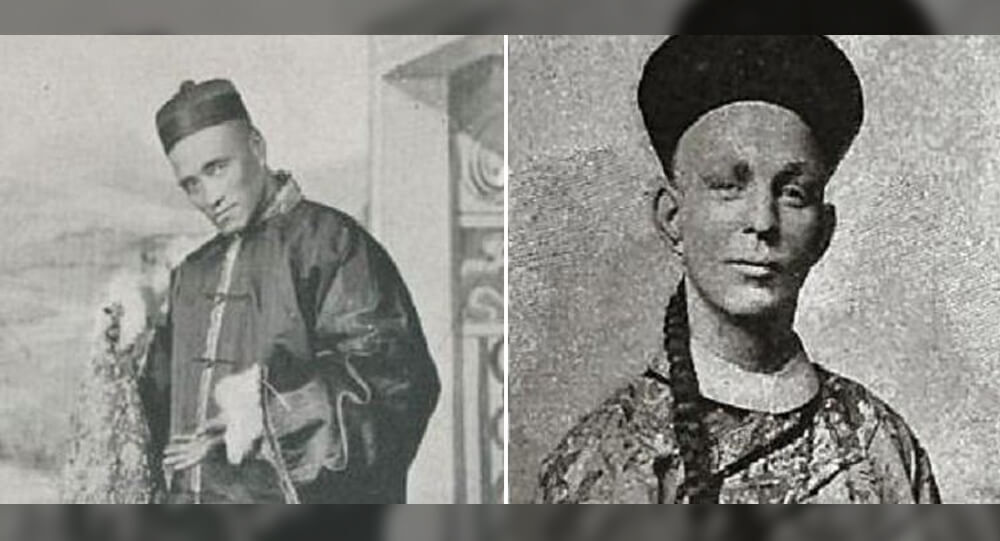
The Bizarre (And Magical) Duel Between Chung Ling Soo And Ching Ling Foo
Ching Ling Foo and Chung Ling Soo were two magicians from the early 20th century who were bitter rivals. While Ching Ling Foo was genuinely Chinese, Chung Ling Soo was actually a New Yorker named William Robinson.
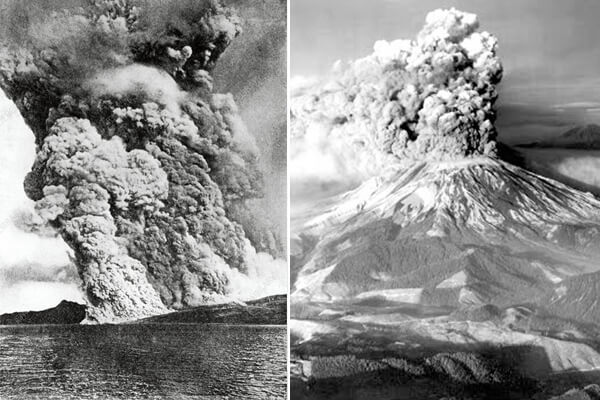
10 world’s most destructive and dangerous volcanic eruptions in history
Volcanic eruptions can devastate cities, change the world's atmosphere, and devastate economic systems. They can create molten lava rivers, mudslides, suffocating ash, and poisonous gases that cause chaos around the world for years. A volcanic explosion's effects can be massive, from its size to its death toll to its economic cost. Here is ten world’s most destructive and dangerous volcanic eruptions in history.