

Sanju Bhagat, a man from Nagpur, India, became an extraordinary case in medical history due to a rare condition known as fetus in fetu. This phenomenon occurs when one twin is absorbed by the other during early pregnancy, leading to one twin developing inside the other like a parasitic entity. Bhagat’s story is not just a medical curiosity but also a reflection of societal perceptions and personal struggles.
The Condition Explained
Fetus in fetu is an extremely rare condition, estimated to occur in about 1 in 500,000 live births. It typically involves one malformed fetus being enclosed within the body of its twin. In Bhagat’s case, he lived for 36 years with his twin growing inside him, which led to a noticeable bulge in his abdomen that earned him the nickname “the pregnant man” among locals
Medical Discovery
Bhagat’s ordeal began when he experienced severe breathing difficulties due to the size of the mass in his abdomen. In June 1999, he was admitted to a hospital where doctors initially suspected a large tumor. However, during surgery, they made a shocking discovery: instead of a tumor, they found a partially formed human being inside him. Dr. Ajay Mehta, who performed the surgery, described the moment as surreal: “To my surprise and horror, I could shake hands with somebody inside”.
The surgical team encountered various body parts including limbs and hair as they removed what turned out to be Bhagat’s twin brother. This discovery was both horrifying and astonishing for the medical professionals involved.
Life After Surgery
After the surgery, Bhagat felt an immense relief as his breathing difficulties disappeared. However, his life had been marked by shame and ridicule due to his condition. For years, he endured teasing from peers who commented on his appearance. Despite the medical miracle that had occurred, Bhagat struggled with the social stigma attached to his unique situation.
The Science Behind Fetus in Fetu
Fetus in fetu occurs very early in twin pregnancies when one fetus envelops the other. The dominant fetus continues to grow while the enveloped fetus survives by leeching nutrients from its sibling through a structure that resembles an umbilical cord. Often, both twins do not survive due to complications arising from sharing a placenta; however, Bhagat’s case was exceptional as he survived alongside his parasitic twin for decades
Conclusion
Sanju Bhagat’s case remains one of the few documented instances of fetus in fetu globally, with fewer than 100 cases recorded in medical literature. His story highlights not only the complexities of human development but also the profound impact such conditions can have on personal identity and social interactions. Today, while Bhagat has returned to leading a normal life, he still faces occasional reminders of his past as “the pregnant man,” illustrating how medical anomalies can intertwine with societal perceptions in unexpected ways

![[solved] “macaroni mystery”, 500 pounds of pasta dumped in new jersey](https://weeklyrecess.com/wp-content/uploads/2024/05/Macaroni-Mystery-cover.jpg)
[solved] “macaroni mystery”, 500 pounds of pasta dumped in new jersey
In April 2023, Old Bridge, New Jersey, faced a peculiar 'Macaroni Mystery' when 500 pounds of pasta were mysteriously dumped in the woods.


The “Walking” Palm, tree species can walk up to 65 feet each
This tree species can walk up to 65 feet each year to find the best habitat to live in.

Why Do Spiders Rain From the Sky? The Strange Ballooning Phenomenon
Every now and then, people around the world are amazed—and sometimes disturbed—to see thousands of tiny spiderlings floating down from the sky, seemingly raining on the earth below. This eerie spectacle is the result of a curious and fascinating behavior called ballooning, in which spiders use silk threads as invisible parachutes to catch the wind and fly. Recent scientific discoveries reveal that spiders can even harness Earth’s electric fields to take off without wind, making their aerial journeys feel almost supernatural. This article explores the science, mystery, and wonder behind the ballooning phenomenon.

The Real-Life Sleeping Beauty: A Girl with Hypersomnia Syndrome
An Indonesian 17-year old teenager Siti Raisa Miranda or Echa, has a rare medical condition formally called Kleine-Levin syndrome (KLS) where she can sleep for days and weeks without being woken up. Echa was only 13 when she first slept for a week. She’s now 17, and her parents still need to feed her and change her clothes when she experiences the deep levels of grogginess.

Mill Ends Park, the Smallest Park in the World
Portland, Oregon is home to the tiniest park in the world, a two-foot-diameter circle. Mill End Park is the name of this park.
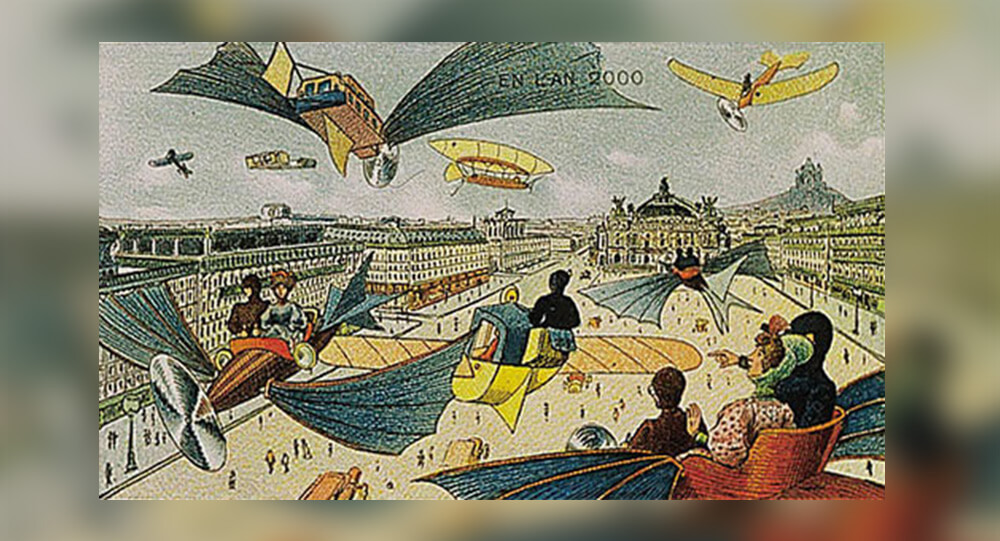
the world from someone predicting 2000 from a guy in 1910
Villemard, a French artist, illustrated how he imagined the future would be in the year 2000 in 1910.

When the Sky Rained Fish: An Unbelievable Encounter Above Alaska
A small Alaskan plane was hit by a fish falling from the sky. It had been dropped by an eagle that misjudged its grip. The plane was unharmed, but it made the news as possibly the weirdest bird strike ever.

The Story of Tsutomu Yamaguchi: The Man Who Survived Both Atomic Bombs
Tsutomu Yamaguchi’s story is one of astonishing survival and resilience. In August 1945, while on a business trip in Hiroshima, he endured the catastrophic atomic bombing and, unbelievably, survived to return to his home city of Nagasaki—only to face a second atomic attack days later. Officially recognized as the only person to survive both bombings, Yamaguchi’s life is a powerful testament to human courage, hope, and the devastating impact of nuclear warfare.

Preserving Bodies in a Deep Freeze Await Revival
There are currently hundreds of deceased people in the U.S., including baseball legend Ted Williams, whose bodies are frozen in liquid nitrogen in hopes that future technology will be able to revive them.

Khuk Khi Kai: Thailand’s Infamous “Chicken Poop Prison” and Its Gruesome Legacy
Thailand used to have a prison called "Khuk Khi Kai," or "Chicken poop prison." The first floor of the prison contained prisoners, and the second floor was a large chicken coop. The grated floor ensured that prisoners were constantly subjected to chicken poop.

A woman finds her ex-boyfriend living in her attic 12 years after they broke up
Most people have heard of "things that go bump in the night," but for one South Carolina lady, that "thing" was her ex-boyfriend, whom she discovered living in her attic more than 12 years after they broke up.

Brazilian Man with Rare ‘Upside Down’ Condition Becomes Successful Accountant and Speaker
Born in Brazil with the rare and debilitating condition congenital arthrogryposis, which caused his head to be positioned upside down, this man was once written off by doctors who urged his mother to let him starve. Defying grim predictions, he overcame immense challenges to become a successful accountant and a powerful international motivational speaker, inspiring millions worldwide.

Vakil Batirshin’s Story: How Radiation Exposure Caused Severe Lymph Node Swelling
This is Vakil Batirshin, a man whose severe swelling from enlarged lymph nodes was reportedly caused by radioactive exposure. His condition highlights the devastating and long-term health effects radiation can inflict on the human body—often surfacing years after initial contact. Cases like his underscore the importance of nuclear safety and medical support.

Thousands of Rare "Ice Eggs" Blanket Finnish Beach in Spectacular Natural Phenomenon
Thousands of ice balls recently covered a beach in Finland, a rare phenomenon caused by wind and waves sculpting pieces of ice into smooth spheres. These "ice eggs" can vary in size from chicken eggs to soccer balls and have also been spotted in other cold regions globally.

June and Jennifer Gibbons The silent twin who Only Spoke to Each Other
Identical twins June and Jennifer Gibbons were born on 11 April 1963 at a military hospital in Aden, Yemen where their father worked as part of the Royal Air Force.

Roller Coasters were First Invented to Distract People from sin
Roller coasters were invented to distract Americans from sin. In the 1880s, hosiery businessman LaMarcus Thompson didn’t like that Americans were going to places like saloons and brothels and created the first roller coaster on Coney Island to persuade them to go there instead.
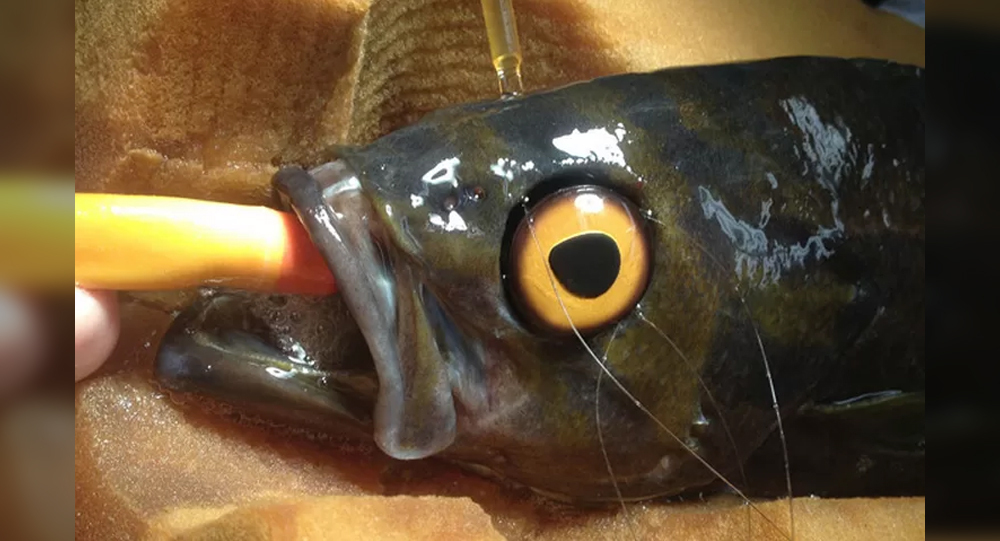
A one-eyed Vancouver fish receives a fake eye so that other fish will not bully him
A fish whose eye was removed due to cataract was bullied by other fish at the Vancouver Aquarium. So the vets fitted the fish with a prosthetic eye to fool the other fishes.

Jack the Baboon operated a railroad, earned a living, and never made a mistake
A baboon worked as a signalman for the railroad in the late 1800s. He never made a mistake and worked for the railroad until the day he died.

The story of The chicken that lived for 18 months without a head
Mike the Headless Chicken was a rooster whose head was accidentally chopped off but miraculously survived. This is due to most of the brain stem being left intact. He was fed using a special tube that delivered food directly into his esophagus. Despite his lack of a head, he lived for 18 months, gaining worldwide fame before ultimately choking on a kernel of corn during one of his tours, in a Motel in Fruita, Colorado.

The story of Bill Haast, who lived to be 100 despite his extensive snake venom injections
Bill Haast immunized himself by injecting snake venom into his blood for several years. He holds the Guinness World Record for surviving the most lethal snake bites, having been bitten over 172 times. Bill became known as "Snake Man" around the world and lived for over 100 years.

The Bizarre (And Magical) Duel Between Chung Ling Soo And Ching Ling Foo
Ching Ling Foo and Chung Ling Soo were two magicians from the early 20th century who were bitter rivals. While Ching Ling Foo was genuinely Chinese, Chung Ling Soo was actually a New Yorker named William Robinson.

Poland's Krzywy: The Mysteries of the Crooked trees
In Poland, there is a forest with 400 crooked trees that have a 90-degree bend at the base of their trunks. Despite of numerous possibilities, the real reason and how it evolved remain a mystery.
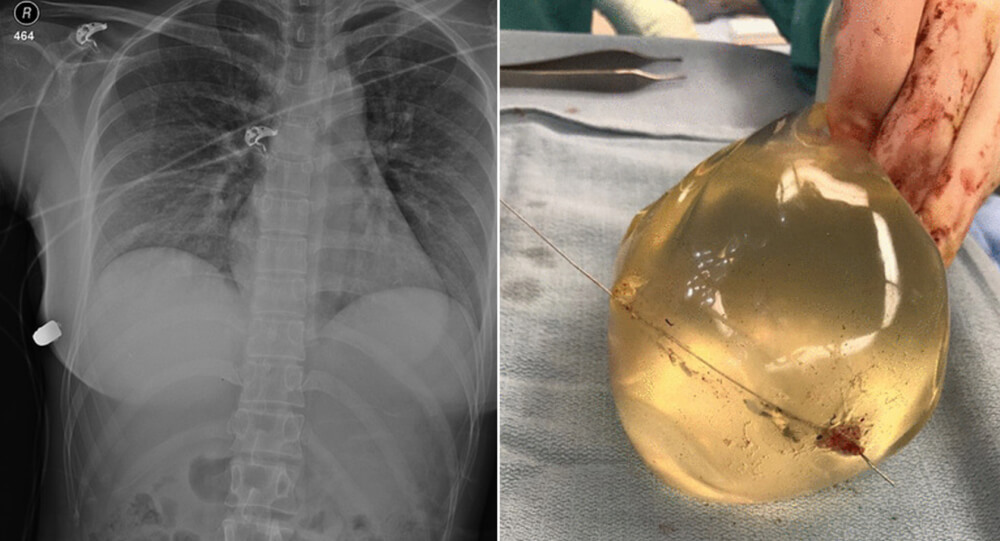
In 2018, a 30-year-old survived a close-range gunshot thanks to silicone implant
In 2018, a 30-year-old woman from Toronto, Canada survived a close-range gunshot thanks to her silicone breast implant. Doctors believe that the implant deflected the bullet away from her vital organs, and her only injury was a fractured rib.

Domestic Flight Delay Caused by Live Snake on Board Leaves Passengers in Shock
A domestic flight was unexpectedly delayed for nearly two hours after a snake was discovered slithering inside the plane’s cargo hold. Thanks to the swift efforts of a professional snake catcher and airline staff, the reptile was safely removed without any harm to passengers, turning a potentially alarming situation into a story of caution and calm.

Chocolate Rain in Switzerland: How a Factory Malfunction Turned Olten Into a Sweet Spectacle
In 2020, chocolate 'rained' from the sky in a town in Switzerland. This incident was caused by a ventilation system malfunction at a chocolate factory in Olten. Strong winds then carried the snow-like cocoa powder and spread it around in the immediate vicinity of the factory, covering cars and other things in chocolate.