

In a remarkable and heartwarming story that has captured the attention of people worldwide, a black Nigerian couple living in the United Kingdom welcomed a baby girl with strikingly unexpected features: blonde hair, blue eyes, and fair skin. Dubbed the “miracle baby” by her family and the media, this infant’s appearance defies common genetic expectations and has sparked curiosity, fascination, and important conversations about genetics, race, and human diversity.
This article delves into the extraordinary story of this family, the science behind such a rare genetic occurrence, and the broader implications for how we understand heredity and identity.
The Story of the Miracle Baby
The Nigerian couple, both with dark skin and African features, were overjoyed when their daughter was born with pale skin, bright blue eyes, and blonde hair. Her appearance was so unexpected that it initially surprised both the parents and healthcare professionals. The baby’s unique features stood in stark contrast to those of her parents and extended family, leading to her affectionate nickname, the “miracle baby.”
The parents have shared their story publicly to celebrate their daughter’s uniqueness and to raise awareness about the complexities of genetics. They emphasize that their daughter is healthy and loved unconditionally, and they hope her story encourages acceptance and understanding of genetic diversity.
How Is This Possible? The Genetics Behind the Miracle
At first glance, a black Nigerian couple having a white, blonde, blue-eyed child might seem impossible. However, the science of genetics reveals that such occurrences, while rare, are entirely plausible.
Recessive Genes and Genetic Variation
Human traits such as hair color, eye color, and skin pigmentation are influenced by multiple genes. Some of these genes are dominant, while others are recessive. Blonde hair and blue eyes are typically recessive traits, meaning that both parents must carry the gene variants for these traits to be expressed in their child.
Even if both parents have dark hair and eyes, they can carry recessive genes for lighter features inherited from distant ancestors. When both parents pass these recessive genes to their child, the child can express these lighter traits.
Genetic Diversity Within African Populations
Africa is the most genetically diverse continent on Earth, with a wide range of genetic variations among its populations. Over millennia, populations have mixed and migrated, resulting in a rich tapestry of genetic traits.
It is possible that the couple’s ancestry includes genetic variants for lighter pigmentation, even if these traits are not visible in the parents themselves. This genetic diversity means that rare combinations can occasionally produce unexpected physical features.
Albinism vs. Natural Variation
While albinism-a genetic condition causing reduced pigmentation-is a known cause of pale skin and light eyes, the couple’s baby does not have albinism. Her pigmentation is natural and healthy, making her case even more unique and fascinating.
Similar Cases Around the World
Though rare, cases of children born with unexpected pigmentation traits to darker-skinned parents have been documented globally:
- In 2017, a South African couple made headlines when they welcomed a blonde-haired, blue-eyed baby, sparking similar discussions about genetics and diversity.
- Other reports from African, Asian, and Latin American countries have documented children with light features born to darker-skinned parents, highlighting the complexity of human genetics.
These cases remind us that human appearance is not always predictable and that genetic diversity can surprise us in beautiful ways.
The Family’s Experience and Public Reaction
The Nigerian couple has embraced their daughter’s unique appearance with pride and joy. They have spoken openly about their happiness and the curiosity their child’s looks have generated.
While some people have expressed surprise or asked questions, the family emphasizes that their daughter is loved unconditionally and that her health and happiness are what matter most. Their openness has helped dispel myths and misconceptions, promoting a message of acceptance and understanding.
The story has resonated with many around the world, inspiring conversations about race, genetics, and identity. It challenges stereotypes and encourages a broader appreciation of human diversity.
The Broader Implications: Rethinking Race and Appearance
This story goes beyond a single family; it challenges common assumptions about race, genetics, and identity. Often, people associate certain physical traits exclusively with specific racial or ethnic groups. However, the “miracle baby” reminds us that:
- Race Is a Social Construct: While race has biological components, it is largely a social and cultural classification. Physical appearance does not always neatly align with racial categories.
- Genetics Are Complex: Human genetics involve many interacting factors, and traits can skip generations or appear unexpectedly.
- Diversity Exists Within Groups: African populations, in particular, have immense genetic diversity, including variations in skin tone, hair texture, and eye color.
- Acceptance Matters: Celebrating genetic uniqueness fosters inclusivity and combats stereotypes.
Fun Facts and Trivia About Human Genetics and Appearance
- Blue Eyes and Genetics: Blue eyes are caused by a mutation in the OCA2 gene, which affects melanin production in the iris. This mutation likely originated thousands of years ago near the Black Sea.
- Origins of Blonde Hair: Blonde hair is most common in Northern Europe but has appeared in various populations worldwide due to genetic mutations.
- Skin Pigmentation: Skin color is influenced by multiple genes that regulate melanin production. Variations in these genes can produce a wide range of skin tones even within families.
- Recessive Genes: People can carry recessive genes for traits they do not visibly express, meaning their children can inherit unexpected features.
- Albinism vs. Natural Variation: Albinism is a genetic condition causing lack of pigment, but natural light pigmentation can occur without any health issues.
What This Story Teaches Us
The birth of a white, blonde, blue-eyed baby to a black Nigerian couple living in the UK is a powerful example of genetic diversity and the wonders of human biology. It challenges preconceived notions about race and appearance, reminding us that genetics can surprise us in beautiful and unexpected ways.
This story encourages us to embrace diversity, question stereotypes, and celebrate the unique traits that make each person special. As science continues to uncover the complexities of our genes, stories like this inspire curiosity, understanding, and a deeper appreciation for the rich tapestry of humanity.
Conclusion
The “miracle baby” born to a Nigerian couple in the UK is more than a rare genetic occurrence; it is a symbol of the complexity and beauty of human diversity. Her story invites us to rethink our assumptions about race and heredity and to celebrate the incredible variations that make each individual unique.
As genetic research advances and our understanding of human biology deepens, stories like this will become more common, reminding us that beneath our skin, we share a common humanity enriched by the extraordinary diversity of our genes.


Mystery SOLVED: blood Rain in India
The dissemination of spores of microalgae has been identified as the origin of the 'Blood Rain' phenomena, according to a new study by Indian and Austrian experts. Since 1896, reports of intermittent red-colored rain in portions of Kerala and Sri Lanka have been coming in. The most recent one occurred in 2013 over Kerala.

Jack the Baboon operated a railroad, earned a living, and never made a mistake
A baboon worked as a signalman for the railroad in the late 1800s. He never made a mistake and worked for the railroad until the day he died.


How a Canadian Man Traded a Red Paperclip for a Two-Story Farmhouse
In 2005, Canadian blogger and entrepreneur Kyle MacDonald embarked on an extraordinary journey that captured the world’s imagination. Starting with nothing more than a single red paperclip, Kyle pursued a year-long chain of strategic trades that escalated from small, quirky items to a two-story farmhouse in a small town in Saskatchewan. What began as a playful social experiment became a legendary story of creativity, perseverance, and the power of barter in the digital age.

Japan’s Chicken-Flavored Ice Cream: The Bold Fusion of Sweet Vanilla and Real Grilled Chicken
A Japanese company once created chicken-flavored ice cream using real grilled chicken bits mixed into vanilla. It combined sweet and savory in a way few dared try, but it drew curiosity from foodies seeking extreme culinary experiences.

The Incredible Story of Martin Laurello, The Sideshow Performer With The Revolving Head
Martin Laurello was also known as 'The human owl'. He was born with the ability to turn his head a full 180 degree.

The story of a boy who claims to be on Mars: Boriska Kipriyanovich
Boriska Kipriyanovich, who lives in Volgograd, Russia, claims he lived on Mars before being resurrected on Earth on a mission to redeem humanity. What we know about him is as follows:
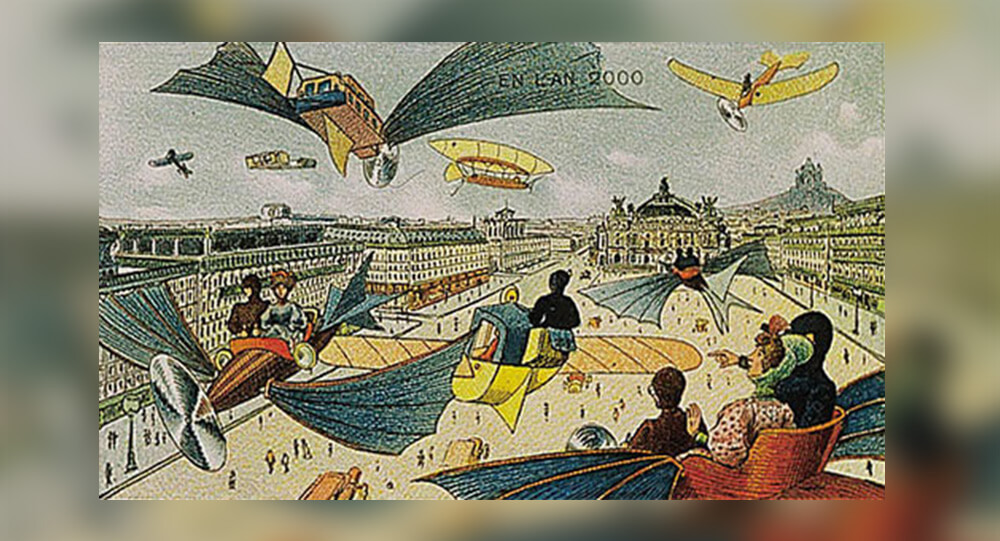
the world from someone predicting 2000 from a guy in 1910
Villemard, a French artist, illustrated how he imagined the future would be in the year 2000 in 1910.

What Caused The Mysterious Patomskiy Crater in Siberia?
Discovered in 1949, the Patomskiy Crater resembles a huge convex cone with a funnel-shaped recess and a rounded hill in the middle, which looks like an eagle’s nest with an egg nestled inside it. The crater’s origin is a mystery that has baffled scientists for decades.

Atomic Tourism: In the 1950s, nuclear tests in Las Vegas served as a draw for tourists
Between 1950 and 1960, Las Vegas offered “Atomic Tourism” in which guests could watch atomic bombs being tested in the desert as a form of entertainment.
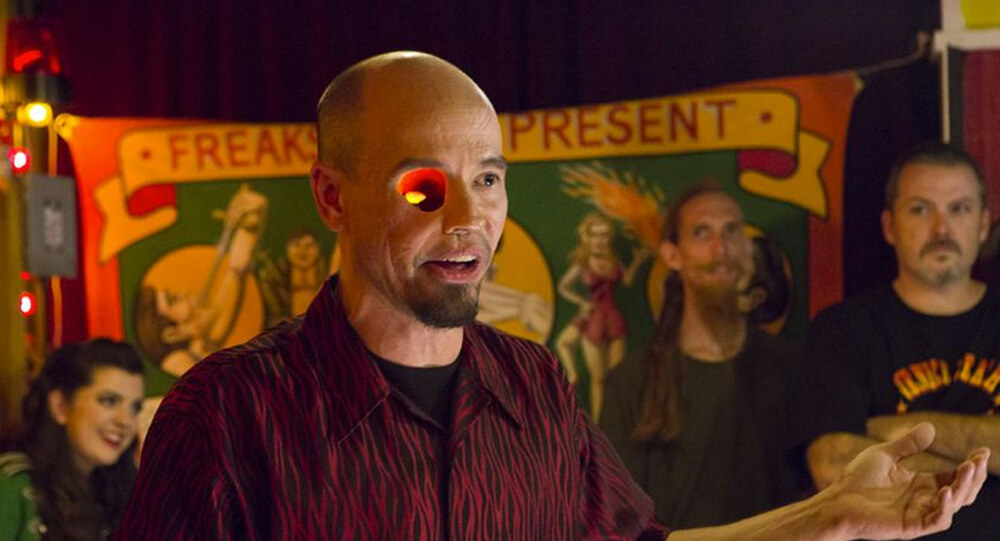
Inspirational Journey of Billy Owen From Cancer Patient to Zombie Actor
A man called Billy Owen lost an eye and half of his face to cancer and used it to start a career as a zombie actor.

Max Headroom Incident: America’s Creepiest TV Hack
In 1987 a man hijacked a television station during an episode of Dr. Who and wore a Max Headroom mask and uttered nonsense, and he still hasn’t been caught

Nevada’s Fly Geyser Is A Surreal Wonder That Looks Like Its On Another Planet
In 1964, an energy company accidentally created Nevada’s Fly Geyser after drilling into a geothermal pocket. Since then, the geyser has been releasing algae-filled scalding water five feet in the air, depositing minerals and forming a cone that sports vibrant hues of green and red.

Khuk Khi Kai: Thailand’s Infamous “Chicken Poop Prison” and Its Gruesome Legacy
Thailand used to have a prison called "Khuk Khi Kai," or "Chicken poop prison." The first floor of the prison contained prisoners, and the second floor was a large chicken coop. The grated floor ensured that prisoners were constantly subjected to chicken poop.

Belgian Woman Banned from Zoo After 4-Year Affair with Chimpanzee
A Belgian woman was banned from the zoo after having an affair with a chimp.
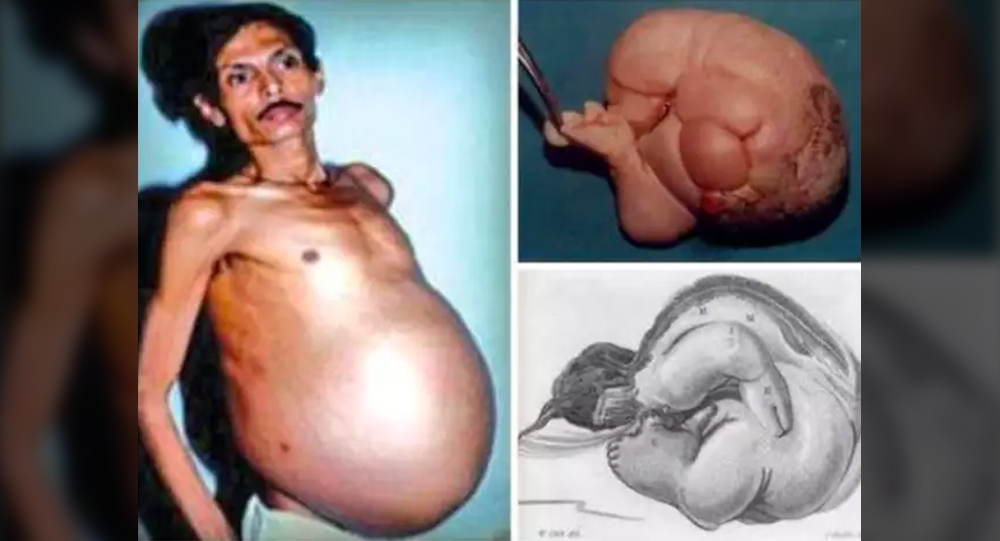
The Astonishing Case of Sanju Bhagat: Living with a Twin Inside Him for 36 Years
Sanju Bhagat, an Indian farmer, lived with an undiagnosed parasitic twin inside his abdomen for 36 years. In 1999, doctors discovered the twin during surgery. This rare condition, fetus in fetu, occurs when a malformed twin is absorbed during pregnancy, surviving within the host sibling's body.

Roller Coasters were First Invented to Distract People from sin
Roller coasters were invented to distract Americans from sin. In the 1880s, hosiery businessman LaMarcus Thompson didn’t like that Americans were going to places like saloons and brothels and created the first roller coaster on Coney Island to persuade them to go there instead.

The Story of Tsutomu Yamaguchi: The Man Who Survived Both Atomic Bombs
Tsutomu Yamaguchi’s story is one of astonishing survival and resilience. In August 1945, while on a business trip in Hiroshima, he endured the catastrophic atomic bombing and, unbelievably, survived to return to his home city of Nagasaki—only to face a second atomic attack days later. Officially recognized as the only person to survive both bombings, Yamaguchi’s life is a powerful testament to human courage, hope, and the devastating impact of nuclear warfare.

Mill Ends Park, the Smallest Park in the World
Portland, Oregon is home to the tiniest park in the world, a two-foot-diameter circle. Mill End Park is the name of this park.
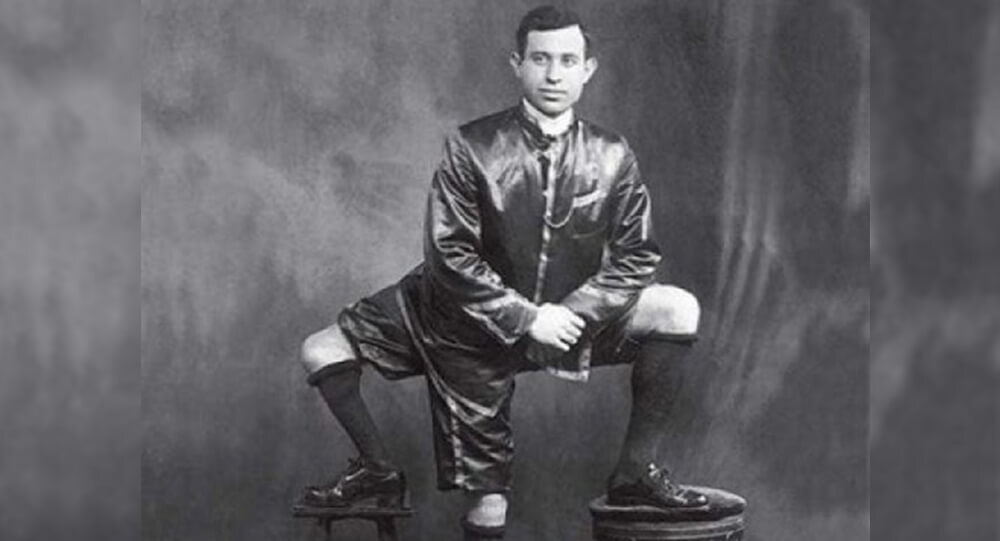
Frank Lentini, The Three-Legged Sideshow Performer
Francesco Lentini was a man with three legs, four feet, sixteen toes, and two sets of functional male genitals. He worked for the circus and lived to be 78 years old.
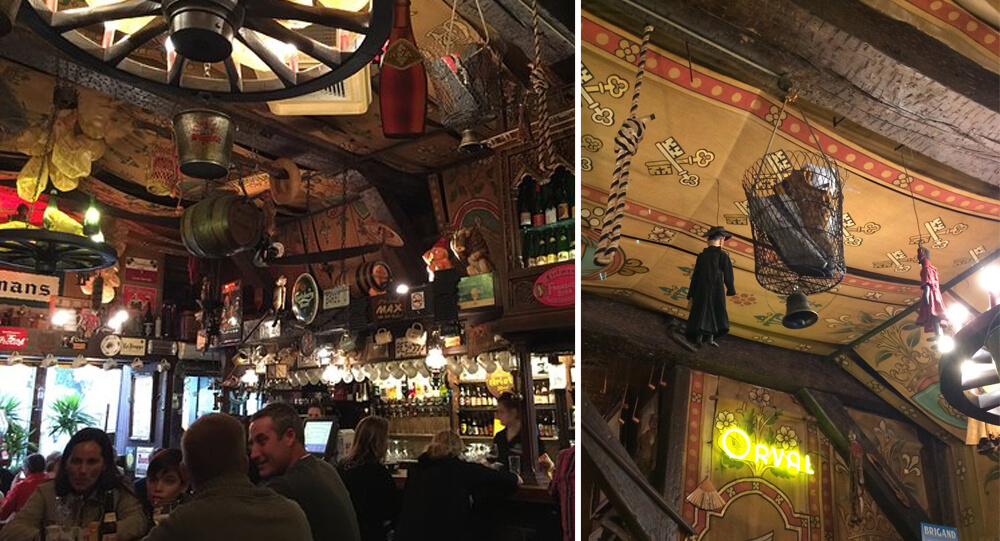
Why This Belgian Bar Makes You Trade Your Shoe for a Beer
To prevent tourists from stealing their beer glasses, some bars in Belgium require people to hand over one of their shoes as a deposit which is then put in a basket and hung from the ceiling. These shoe baskets have also become an attraction.

Lucy and Maria The Biracial Twin Sisters with Rare Black and White Skin Colours
Lucy and Maria Aylmer are twins, but they have a hard time to convincing people. Even though they have mixed-raced parents, their mom was still shocked when the midwife handed her babies she’d expected to look alike, but were complete opposite.

Brazilian Man with Rare ‘Upside Down’ Condition Becomes Successful Accountant and Speaker
Born in Brazil with the rare and debilitating condition congenital arthrogryposis, which caused his head to be positioned upside down, this man was once written off by doctors who urged his mother to let him starve. Defying grim predictions, he overcame immense challenges to become a successful accountant and a powerful international motivational speaker, inspiring millions worldwide.

In 2018, a 30-year-old survived a close-range gunshot thanks to silicone implant
In 2018, a 30-year-old woman from Toronto, Canada survived a close-range gunshot thanks to her silicone breast implant. Doctors believe that the implant deflected the bullet away from her vital organs, and her only injury was a fractured rib.

Brazilian gang leader attempts to escape from Rio de Janeiro prison by dressing up as his daughter
In 2019, a Brazilian gang leader tried to escape from prison by dressing up as his daughter when she visited him behind bars and walking out of the penitentiary's main door in her place.

Domestic Flight Delay Caused by Live Snake on Board Leaves Passengers in Shock
A domestic flight was unexpectedly delayed for nearly two hours after a snake was discovered slithering inside the plane’s cargo hold. Thanks to the swift efforts of a professional snake catcher and airline staff, the reptile was safely removed without any harm to passengers, turning a potentially alarming situation into a story of caution and calm.