
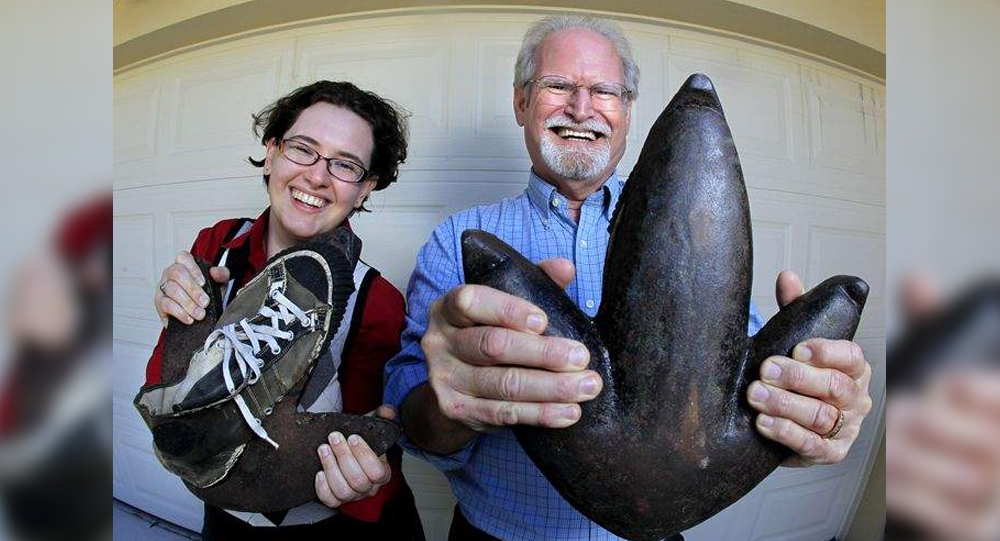
In 1948, beachgoers on Clearwater Beach, Florida, awoke to find something extraordinary: large, three-toed footprints imprinted in the sand. Each print measured about 14 inches long and 11 inches wide, with strides spanning 4 to 6 feet—big enough to fuel wild speculation.
The footprints appeared to emerge from the sea and meander along the shore for several miles, baffling residents and attracting curious visitors. Soon, rumors spread that a gigantic penguin-like creature, standing roughly 15 feet tall, was stalking Florida’s sandy coast.
Witness accounts added layers of intrigue. Some claimed to see a furry, log-like figure with a boar’s head swimming offshore, while students flying over the nearby river reported spotting a giant bird resembling a penguin. The media caught wind of these stories, publishing sensational articles that only intensified public fascination.

The Investigation and the Role of Ivan Terence Sanderson
The police—themselves uncertain how to respond—investigated but ultimately declared that if the tracks were a prank, it was extraordinarily well executed. Over the next decade, more tracks appeared along the beaches and nearby rivers, deepening the mystery.
British biologist Ivan Terence Sanderson, who later became known for his interest in cryptozoology and pseudoscience, took a serious interest in the case. After examining photographs, plaster casts, and interviewing witnesses, Sanderson concluded the tracks showed surprisingly realistic animal behavior: following gentle gradients, avoiding obstacles, and consistently maintaining a natural gait.
Sanderson argued that such precise detail was unlikely for a hoax and favored the theory of an unknown large penguin species. His conclusions helped solidify the legend, making the idea of a prehistoric or mutant penguin haunting Florida’s shores part of local folklore.
Man Behind the Footprints
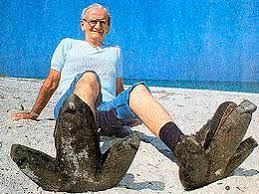
The truth lay hidden for years until 1988, when local Clearwater man Tony Signorini came forward to confess. Alongside his late friend and employer Al Williams, who died in 1969, Signorini admitted to orchestrating the prank.
Inspired by a photograph of fossilized dinosaur tracks in National Geographic, they crafted enormous, three-toed “penguin feet” out of iron weighing about 30 pounds each. The heavy shoes were strapped to tennis shoes, enabling Signorini to tramp along the beach creating the colossal footprints.
The duo would use a small rowboat to reach different parts of the shoreline, where one of them would leap onshore wearing the forged feet and stomp in wide, deliberate strides before returning to the boat. By carefully avoiding witnesses, they extended the prank over a decade, baffling residents and authorities alike.
The Psychology and Cultural Impact of the Hoax
The giant penguin hoax speaks to the human tendency to believe extraordinary explanations when faced with unexplained phenomena, especially when reinforced by eyewitness sightings and media amplification. Despite later confession, many locals still harbor fascination and some skepticism, keeping the legend alive.
The story entered folklore and cryptid lore, inspiring curiosity about Florida’s wildlife, myths, and the power of collective belief. It also triggered scientific interest, prompting studies into how hoaxes can sustain mysterious narratives and impact communities.
Unanswered Questions and Persistent Legends
While Signorini’s confession conclusively explained the footprints, the strange sightings reported during the hoax remain enigmatic. Many suggested the “giant penguin” sighting might be misidentified manatees, large birds, or even fabrications spurred by the footprints’ prominence.
Some believers continue to speculate about unknown creatures, often linking the story to other cryptids or prehistoric animals like the extinct Mega Penguin, which weighed hundreds of pounds and stood over six feet tall—but these remain unrelated geographically and temporally.
Fascinating Trivia About the Giant Penguin Hoax
- The “penguin feet” weighed 30 pounds each and featured three large toes modeled on dinosaur tracks.
- Tony Signorini and Al Williams were inspired by fossil tracks published in a 1940s National Geographic.
- The footprints show remarkable “intelligence” in pathfinding, avoiding bushes and obstacles, lending credibility at the time.
- The hoax was investigated as late as the 1960s and 1970s by both police and amateur cryptozoologists.
- Despite the hoax, reports of strange creatures in the area persisted for years, fueling local superstition.
- Ivan Sanderson’s involvement helped popularize the hoax by arguing against outright forgery.
- The hoax took place during a golden age of cryptozoology interest in the U.S., alongside Bigfoot and Loch Ness Monster stories.
- Tony Signorini became known locally as “The Clearwater Monster” for his infamous prank.
A Tale of Trickery and Belief on Florida’s Shores
The giant penguin hoax remains a compelling story of human creativity, deception, and the power of legend. It illustrates how a cleverly designed prank can blur lines between reality and myth, sparking decades of wonder and speculation.
More than just a prank, it reminds us that communities often embrace mysterious stories as part of their shared identity and history.
If this fascinating episode of Florida folklore and human ingenuity sparked your curiosity, share this article to keep alive the legacy of one of the most creative and enduring hoaxes in American history.
Sources & Further Reading:
- Wikipedia: Giant Penguin Hoax (2025)
- IFLScience: The Giant Penguin Hoax That Fooled Florida (2022)
- Dark Tourism: The Polygon, Semipalatinsk Nuclear Test Site (2024) [for contrast of hoaxes versus history]
- Reddit: Today I Learned – Giant Penguin Tracks Hoax Story
- YouTube: Clearwater Monster Documentary (2025)


Bruce Campbell converted a Boeing 727-200 into a home
In 1999, a man bought a Boeing 727-200 for $100,000 and uses it as his house, then spent another $120,000 moving it from the Hillsboro airport and setting it up on his undeveloped property.

San Pedro prison in La Paz, Bolivia: community inside prison
Bolivia’s largest prison has a society within itself and no guards inside the walls. Inmates elect their own leaders, make their own laws, get jobs to pay for their cell’s rent, and can even live with their families.

Chocolate Rain in Switzerland: How a Factory Malfunction Turned Olten Into a Sweet Spectacle
In 2020, chocolate 'rained' from the sky in a town in Switzerland. This incident was caused by a ventilation system malfunction at a chocolate factory in Olten. Strong winds then carried the snow-like cocoa powder and spread it around in the immediate vicinity of the factory, covering cars and other things in chocolate.

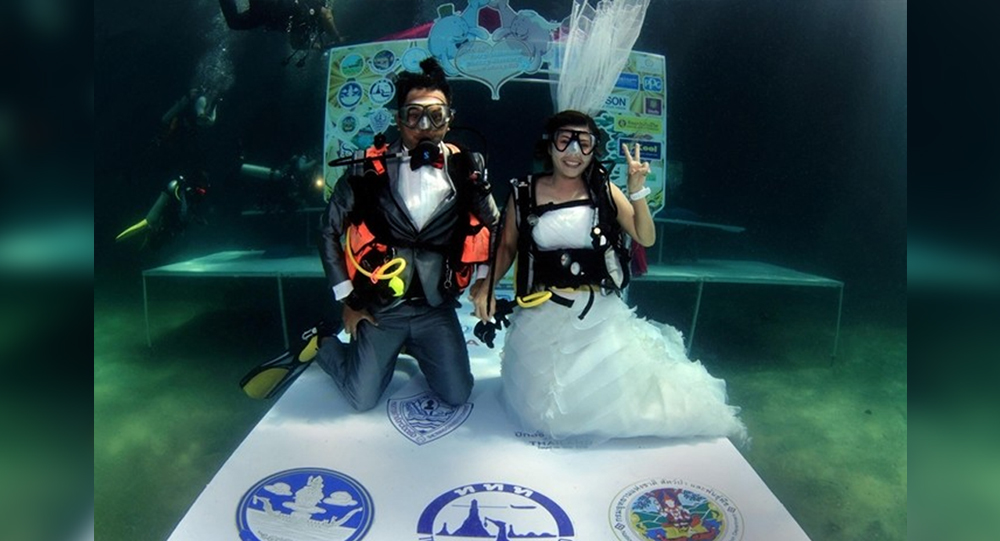
This Thai Wedding Tradition Happens 40 Feet Underwater
Each year in Trang, Thailand, dozens of couples participate in an underwater wedding ceremony while scuba diving in full gear. The ritual symbolizes deep love and has become a quirky tourist attraction held around Valentine’s Day.

Sandy Island: The Phantom Island That Fooled Maps and Google Earth for Centuries
Sandy Island, charted since 1774, was long considered a phantom island in the Coral Sea. Despite appearing on maps and Google Earth, it was "undiscovered" by scientists in 2012, revealing only deep ocean instead of land. The island's existence was likely a cartographic error or a misidentified pumice raft.
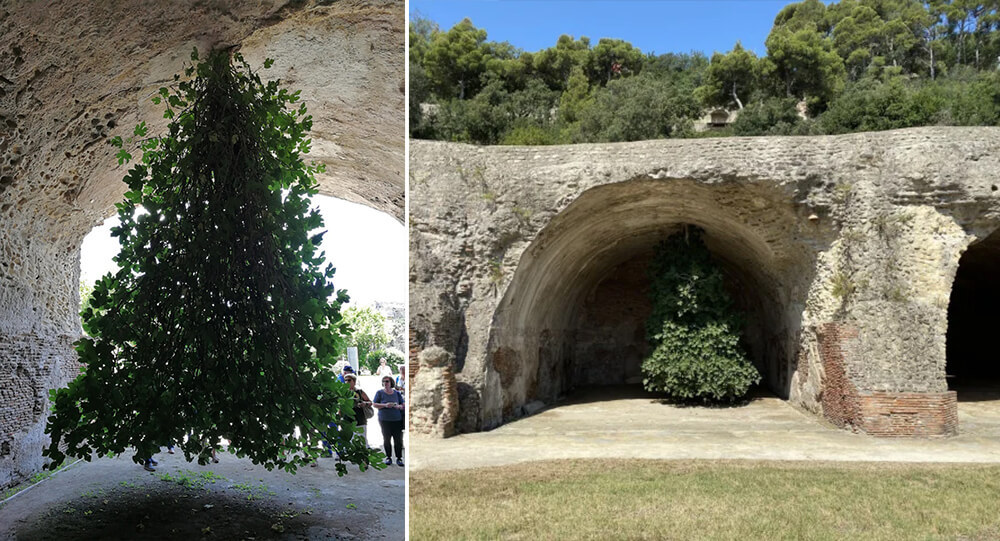
Upside-Down Fig Tree From The Roof Of An Ancient Ruin in Italy
There is an upside-down fig tree in Bacoli, Italy. No one is quite sure how the fig tree ended up there or how it survived, but year after year, it continues to grow downwards and bear figs.
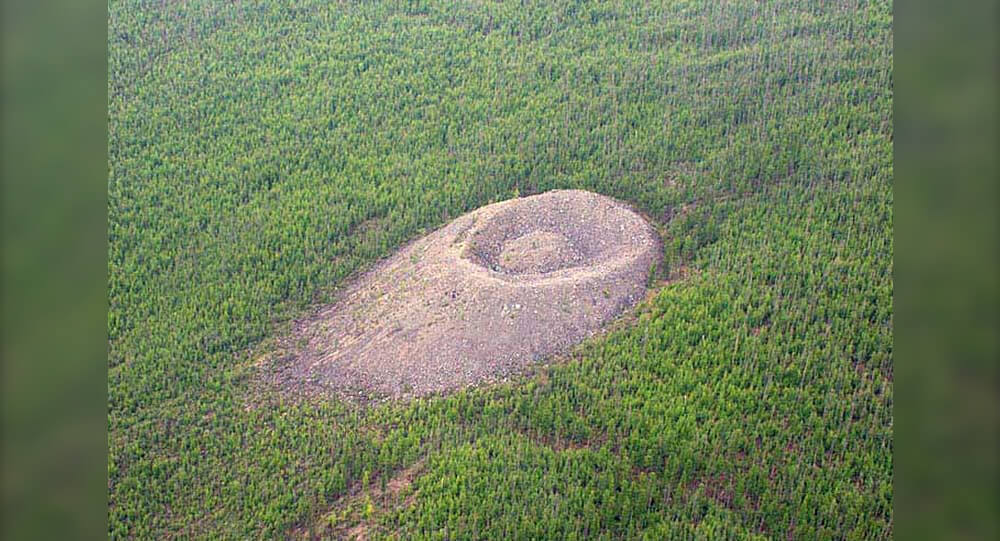
What Caused The Mysterious Patomskiy Crater in Siberia?
Discovered in 1949, the Patomskiy Crater resembles a huge convex cone with a funnel-shaped recess and a rounded hill in the middle, which looks like an eagle’s nest with an egg nestled inside it. The crater’s origin is a mystery that has baffled scientists for decades.

This Yogi Spent 76 Years Without Eating or Drinking Anything and Confirmed by
Prahlad Jani, the starving monk who lived 76 Years without food and water.

The Astonishing Case of Sanju Bhagat: Living with a Twin Inside Him for 36 Years
Sanju Bhagat, an Indian farmer, lived with an undiagnosed parasitic twin inside his abdomen for 36 years. In 1999, doctors discovered the twin during surgery. This rare condition, fetus in fetu, occurs when a malformed twin is absorbed during pregnancy, surviving within the host sibling's body.

Woman's memory reset every two hours after traumatic accident
Riley Horner, an Illinois teenager was accidentally kicked in the head. As a result of the injury, her memory resets every two hours, and she wakes up thinking every day is June 11. Riley keeps detailed notes of events happening throughout the day, and sets an alarm on her phone every two hours to remind her to review them. Riley also keeps a calendar in her room to remind her what day it is? As she wakes up every morning confused, thinking it's still June 11.

Roller Coasters were First Invented to Distract People from sin
Roller coasters were invented to distract Americans from sin. In the 1880s, hosiery businessman LaMarcus Thompson didn’t like that Americans were going to places like saloons and brothels and created the first roller coaster on Coney Island to persuade them to go there instead.

The 1814 London beer flood
In 1814, there was a beer flood in London when a tank containing more than 300,000 gallons ruptured in which 8 people drowned.

Mill Ends Park, the Smallest Park in the World
Portland, Oregon is home to the tiniest park in the world, a two-foot-diameter circle. Mill End Park is the name of this park.
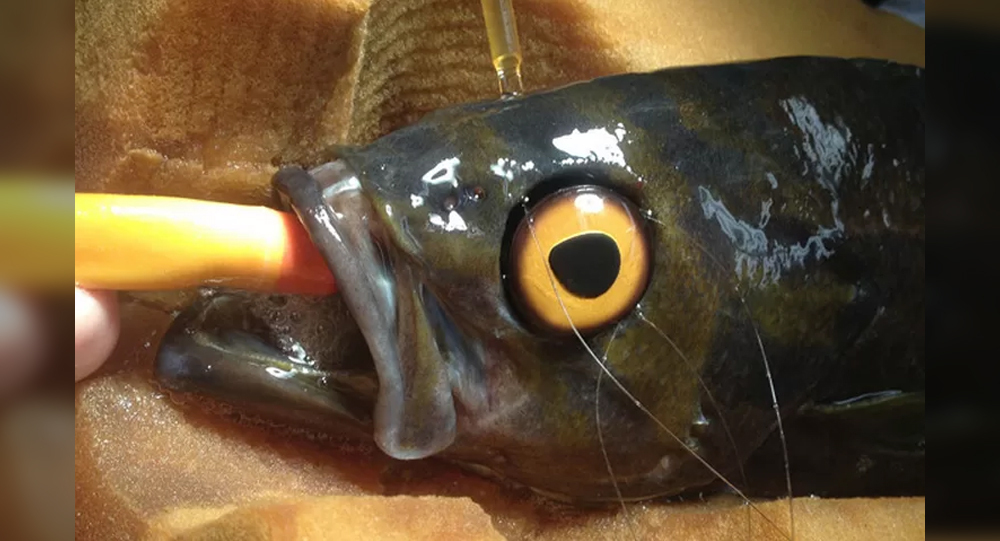
A one-eyed Vancouver fish receives a fake eye so that other fish will not bully him
A fish whose eye was removed due to cataract was bullied by other fish at the Vancouver Aquarium. So the vets fitted the fish with a prosthetic eye to fool the other fishes.

Vakil Batirshin’s Story: How Radiation Exposure Caused Severe Lymph Node Swelling
This is Vakil Batirshin, a man whose severe swelling from enlarged lymph nodes was reportedly caused by radioactive exposure. His condition highlights the devastating and long-term health effects radiation can inflict on the human body—often surfacing years after initial contact. Cases like his underscore the importance of nuclear safety and medical support.
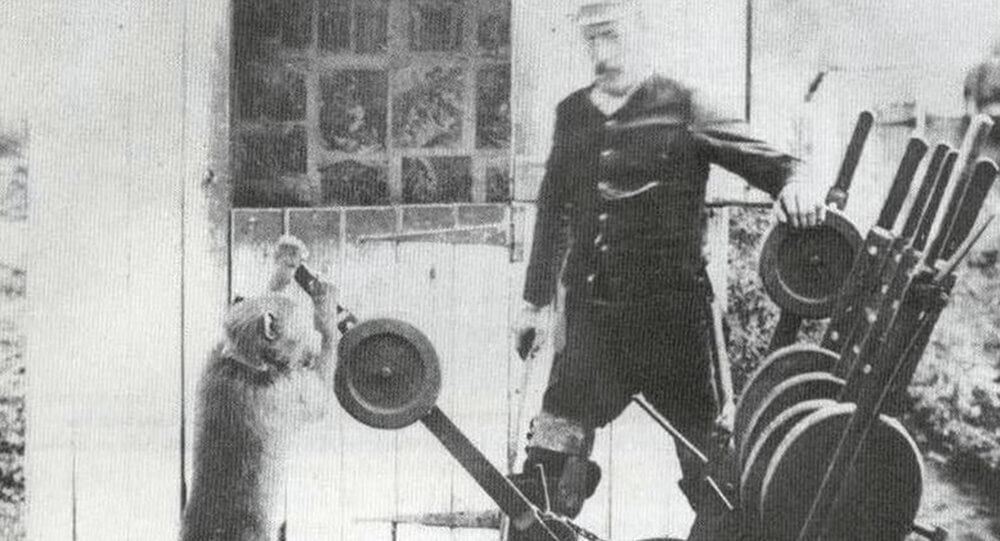
Jack the Baboon operated a railroad, earned a living, and never made a mistake
A baboon worked as a signalman for the railroad in the late 1800s. He never made a mistake and worked for the railroad until the day he died.
![Mysterious ghost ship found with mummified captain inside [SOLVED]](https://weeklyrecess.com/wp-content/uploads/2024/07/Solved-Mysterious-ghost-ship-with-mummified-captain-cover.jpg)
Mysterious ghost ship found with mummified captain inside [SOLVED]
German captain had been sailing the world for 20 years. It was unknown when or how he died or how long the ghost ship had been adrift
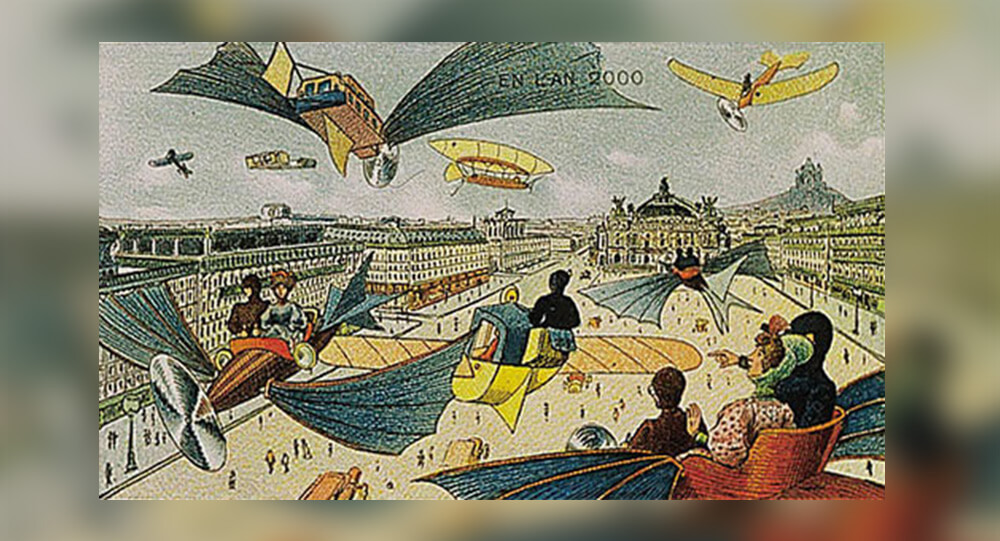
the world from someone predicting 2000 from a guy in 1910
Villemard, a French artist, illustrated how he imagined the future would be in the year 2000 in 1910.
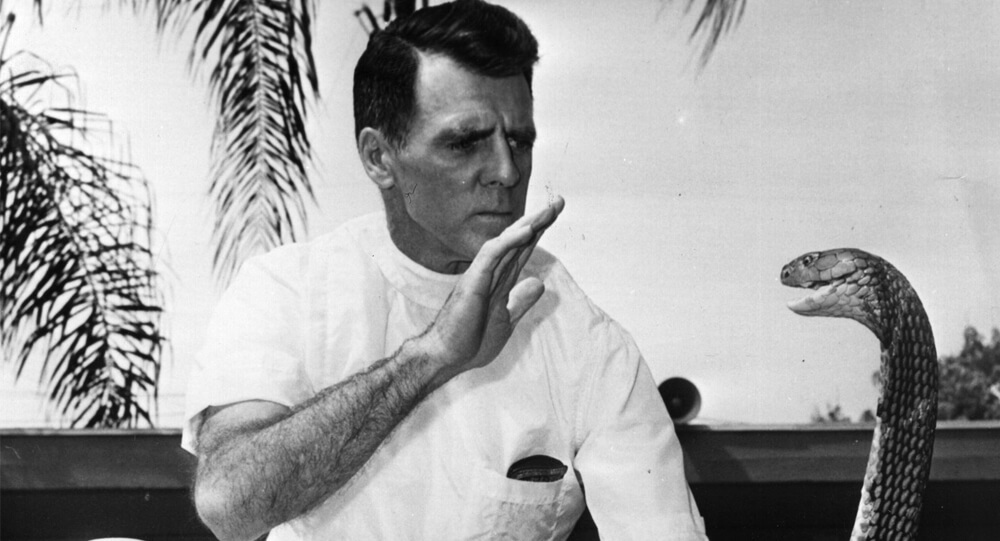
The story of Bill Haast, who lived to be 100 despite his extensive snake venom injections
Bill Haast immunized himself by injecting snake venom into his blood for several years. He holds the Guinness World Record for surviving the most lethal snake bites, having been bitten over 172 times. Bill became known as "Snake Man" around the world and lived for over 100 years.
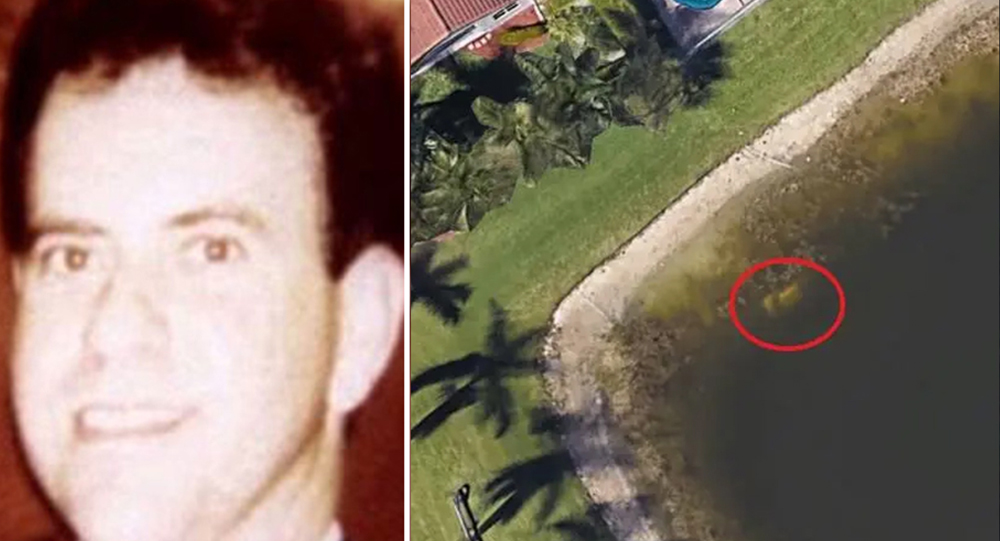
The Google Maps Discovery: the Mystery of William Moldt's Disappearance
In 2019, Google Maps helped solve the decades-old mystery of William Moldt, who disappeared in 1997. A former resident spotted his submerged car in a retention pond while using Google Earth. The vehicle, visible since 2007, contained Moldt's skeletal remains, providing closure to his case.

Poland's Krzywy: The Mysteries of the Crooked trees
In Poland, there is a forest with 400 crooked trees that have a 90-degree bend at the base of their trunks. Despite of numerous possibilities, the real reason and how it evolved remain a mystery.
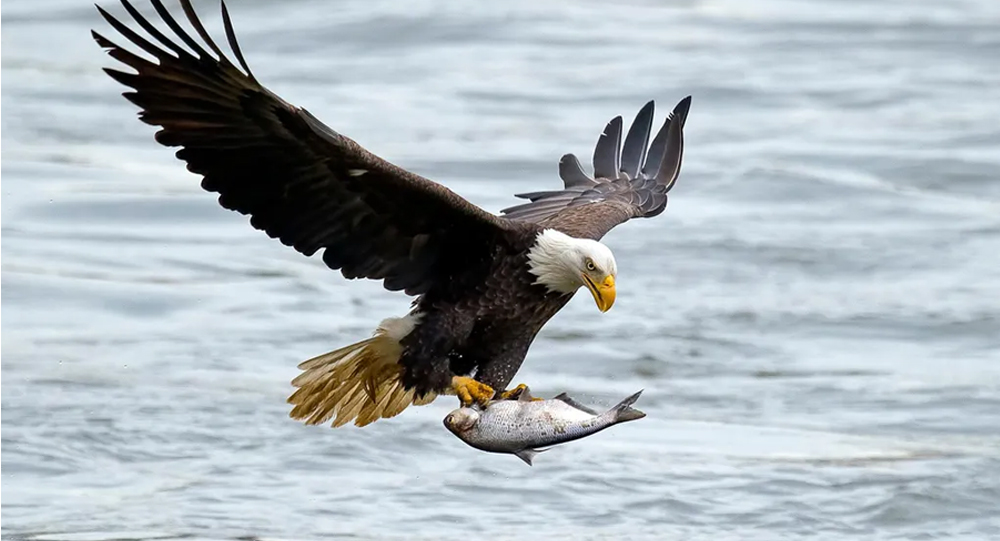
When the Sky Rained Fish: An Unbelievable Encounter Above Alaska
A small Alaskan plane was hit by a fish falling from the sky. It had been dropped by an eagle that misjudged its grip. The plane was unharmed, but it made the news as possibly the weirdest bird strike ever.

Preserving Bodies in a Deep Freeze Await Revival
There are currently hundreds of deceased people in the U.S., including baseball legend Ted Williams, whose bodies are frozen in liquid nitrogen in hopes that future technology will be able to revive them.

Thousands of Rare "Ice Eggs" Blanket Finnish Beach in Spectacular Natural Phenomenon
Thousands of ice balls recently covered a beach in Finland, a rare phenomenon caused by wind and waves sculpting pieces of ice into smooth spheres. These "ice eggs" can vary in size from chicken eggs to soccer balls and have also been spotted in other cold regions globally.

Brazilian gang leader attempts to escape from Rio de Janeiro prison by dressing up as his daughter
In 2019, a Brazilian gang leader tried to escape from prison by dressing up as his daughter when she visited him behind bars and walking out of the penitentiary's main door in her place.