
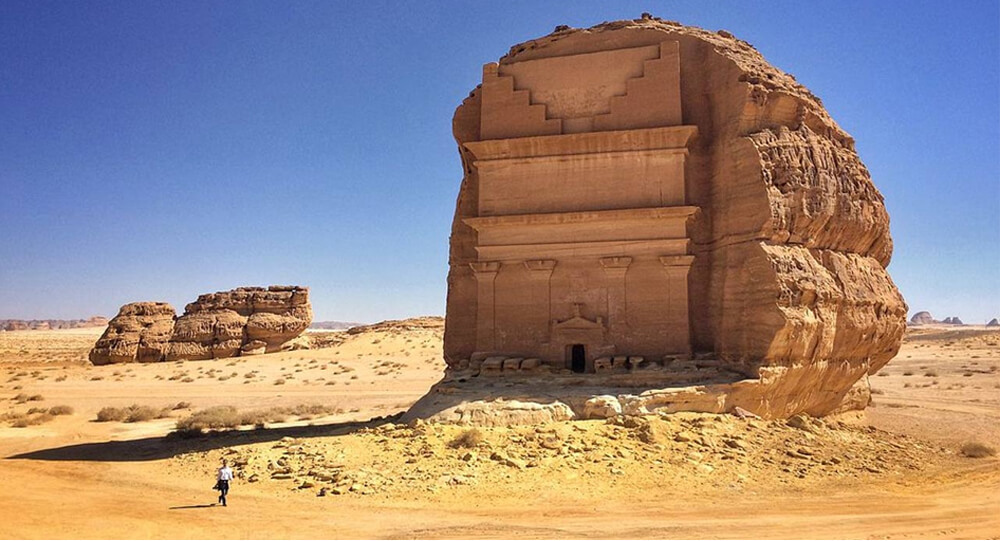
Because of its location, which allowed it to control the Incense Route that went through the Arabian Peninsula, the Nabataean Kingdom ruled over a vast territory that stretched from the southern Levant to northern Arabia. Due to this profitable trade, the Nabataeans became extremely powerful and wealthy. The monuments they erected are one example of how wealthy they were. The al-Khazneh in Petra, Jordan, is arguably the most famous Nabataean monument. That being said, there are many examples of the Nabataeans’ exceptional rock-carving skills found all over their kingdom. The Qasr al-Farid is one such monument.
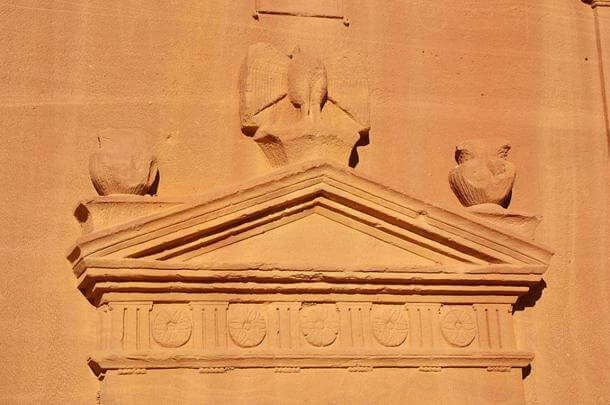
The Qasr al-Farid, also referred to as the “Lonely Castle,” is situated in the northern Saudi Arabian region of Madâin Sâlih, an archaeological site also called al-Hijr or Hegra. The Qasr al-Farid, despite being called a castle, was actually a tomb built in the first century AD. The Madâin Sâlih is home to 111 massive tombs, of which the Qasr al-Farid is just one. The site was designated a World Heritage site by UNESCO in 2008.
Ninety-four of these tombs have decorations. Because of its complete isolation from the other tombs in the vicinity, the Qasr al-Farid is regarded as one of the most well-known tombs in Madâin Sâlih. Considering that the majority of the massive tombs in Madâin Sâlih were discovered to have been constructed in groups, this is unusual. These consist of the tombs of Qasr al-Bint, Qasr al-Sani, and the Jabal al-Mahjar region.
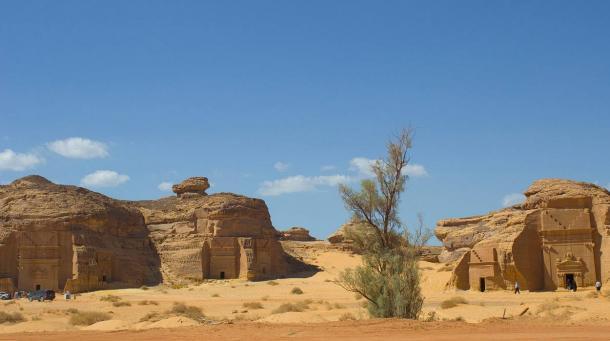
It is said that the Qasr al-Farid is four stories tall. Larger monuments were unquestionably better because they were intended to serve as a symbol of the social standing and wealth of the individuals who commissioned them. The quantity of pilasters on the façade of the Qasr al-Farid is another remarkable feature. There are just two pilasters on each of the other Madâin Sâlih tomb façades: one on the left and one on the right. On the other hand, the façade of the Qasr al-Farid is supported by four pilasters—two in the center and one on each side. This could provide more proof that the occupant of the tomb was a very powerful and affluent person in Nabataean society.
The mysterious Nabataeans were formerly a nomadic tribe, but some 2,500 years ago they started constructing large towns and cities, which flourished from the first century BC to the first century AD. One such city is the stunning city of Petra in Jordan. Along with their agricultural endeavors, they also created political structures, works of art, engineering, astronomy, stonemasonry, and an incredible level of hydraulic proficiency through the building of cisterns, aqueducts, and wells.
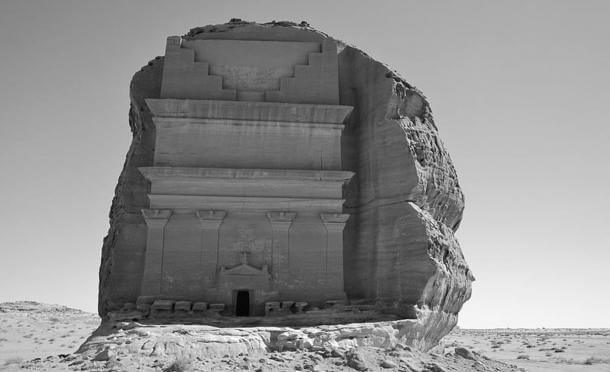
The fact that the construction of the Qasr al-Farid was never finished may therefore come as a surprise. It is, regrettably, very unlikely that we will ever learn who this tomb was constructed for. We will also not be aware of the reason behind the workers’ and project owner’s departure. However, the incompleteness of the Qasr al-Farid reveals something intriguing about its construction. It has been proposed that the monument was fashioned from the top down because the lower portion of the tomb’s façade has rougher quality work. It’s also possible that other monuments with comparable features were created in a similar way.
Related Topic You Might Find Interesting:
- The unbroken seal on King Tutankhamun’s tomb until 1922
- Ancient Egyptians Had Pregnancy Tests Over 3500 Years Ago
- Top 10 mysterious and least explored places on Earth
- Famous abandoned cities and ghost towns in the world
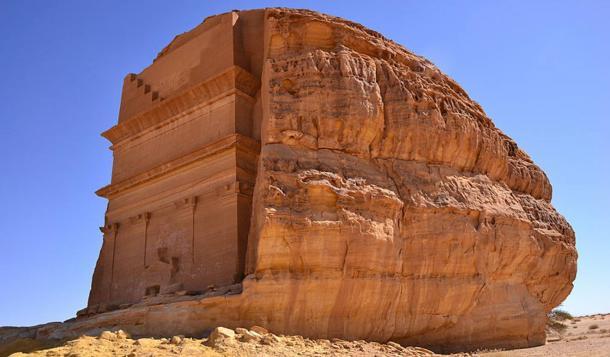
The Incense Route was in decline by the third century A.D. as a result of the Roman Empire’s political and economic problems. The decline in trade would therefore have an impact on a large number of the towns along the trade route. Not even Medain Salih, which had been a significant staging area on the main caravan route running north-south, was spared, eventually becoming little more than a village. For example, the Arab traveler from the tenth century described Madâin Sâlih as little more than a tiny oasis where the locals’ lives revolved around their wells and peasants.
This is undeniably a stark contrast compared to the site’s heyday during the Nabataean period, when merchants and camels laden with the incense of Arabia would have thronged its streets on their way to the north. Still, the Qasr al-Farid and the other tombs built by the Nabataeans remain as a testimony to the greatness that the Madâin Sâlih once was.


The 1978 Lufthansa Heist: Unraveling the Mystery of America's Most Infamous Airport Robbery
During the 1978 Lufthansa heist, robbers infiltrated JFK Airport, restraining employees and holding a night guard hostage. They escaped with $5.9 million—worth over $27 million today. The crime, linked to the Lucchese crime family, remained unsolved for decades, with most suspects vanishing
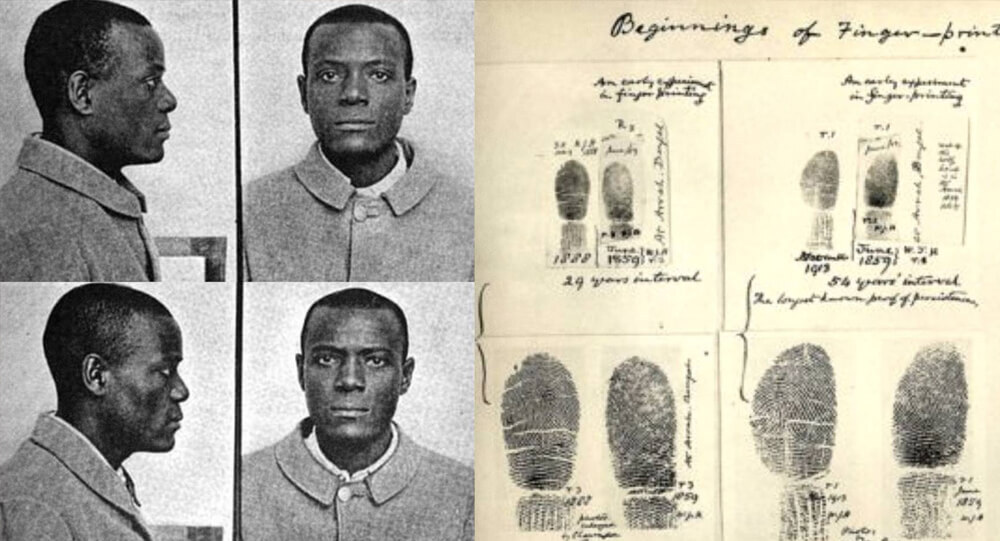
Will & William Wests: The puzzling situation of two inmates who are identical but not related
These are the mugshots of Will West and William West, and they are not related. They were both sent to Leavenworth Prison at the same time, in 1903, and after some confusion, the staff understood they had two different prisoners with the nearly same name, who looked exactly alike. They are part of the reason fingerprints are now used as identification.
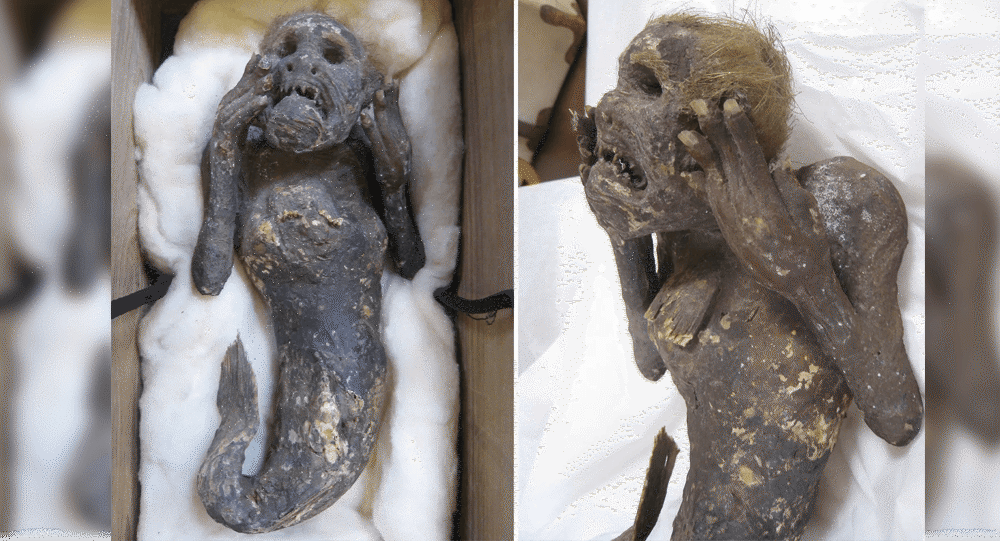
Mystery of 300-year-old mummified mermaid is being probed
There is a 300-year-old mummified mermaid with 30 centimetres tall and features a human-like head, two hands with what appear to be fingernails, and its lower body that look like a fish tail. The “mermaid mummy” is being probed by Japanese scientists in an attempt to unravel the mystery of its existence.

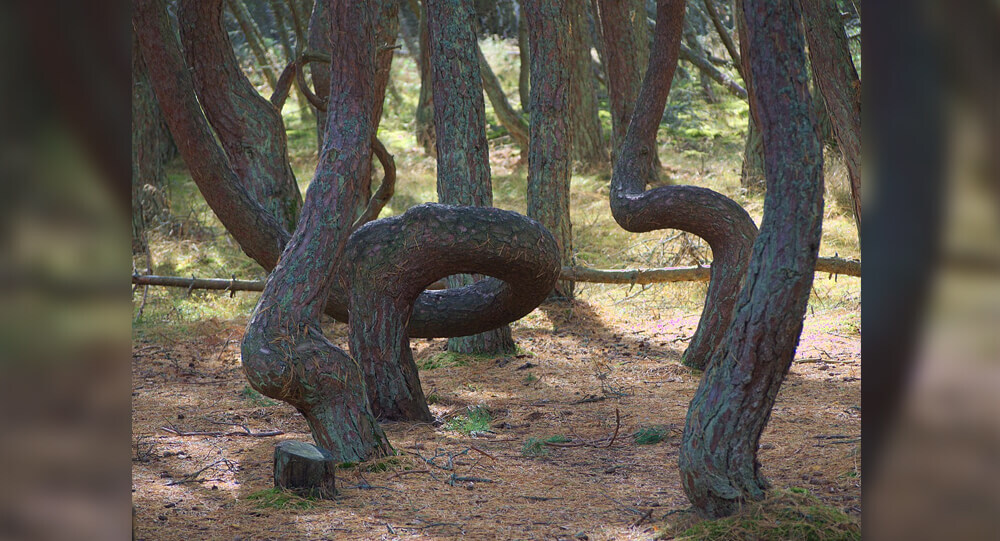
The Mystery of the Dancing Forest: Reasons behind the unusual wonders of forest
The Dancing Forest in Russia is noted for its unusually twisted pine trees. The trunks of these trees are contorted into spirals, rings, and other squiggly loops, but the reason for this malformation is still a mystery.

Recipient of suicide victim's heart kills himself 12 years later
In 1995, Sonny Graham received a transplanted heart from a suicide victim. He then committed suicide in the very same manner as the donor.

Sandy Island: The Phantom Island That Fooled Maps and Google Earth for Centuries
Sandy Island, charted since 1774, was long considered a phantom island in the Coral Sea. Despite appearing on maps and Google Earth, it was "undiscovered" by scientists in 2012, revealing only deep ocean instead of land. The island's existence was likely a cartographic error or a misidentified pumice raft.
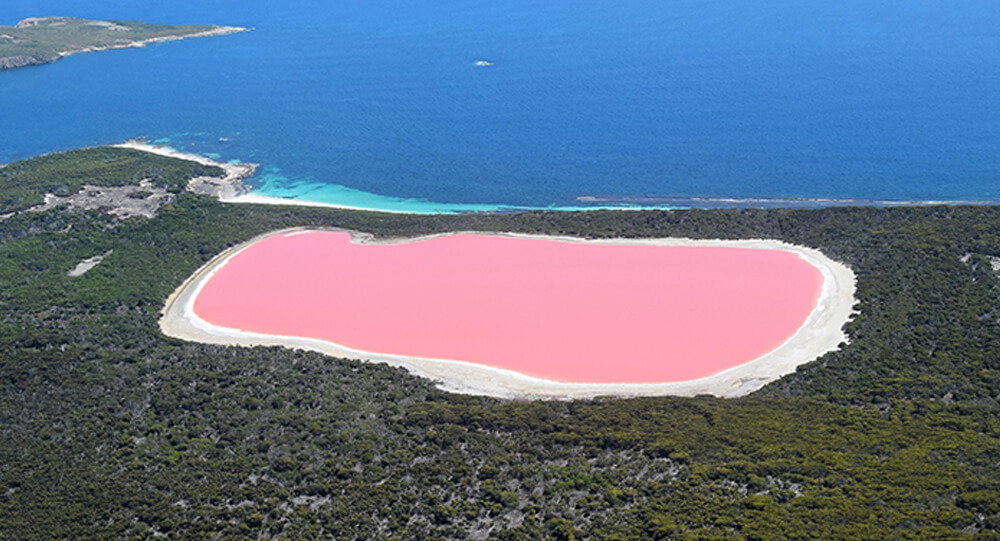
What is secret behind the Australia’s mysterious pink lake?
Lake Hillier in Australia maintains a bright pink hue all year round. Although no one knows for sure what causes the unique coloring, experts speculate that it might be the result of high salinity, a pink bacteria called “halobacteria,” and a salt-loving algae species called Dunaliella salina.

Mystery SOLVED: blood Rain in India
The dissemination of spores of microalgae has been identified as the origin of the 'Blood Rain' phenomena, according to a new study by Indian and Austrian experts. Since 1896, reports of intermittent red-colored rain in portions of Kerala and Sri Lanka have been coming in. The most recent one occurred in 2013 over Kerala.

The mystery of the Sri Lankan national handball team's disappearance
In 2004, the whole Sri Lankan national handball team disappeared. Later, the Sri Lankan government denied the existence of such a team. The location of the team is still unknown.
![[solved] “macaroni mystery”, 500 pounds of pasta dumped in new jersey](https://weeklyrecess.com/wp-content/uploads/2024/05/Macaroni-Mystery-cover.jpg)
[solved] “macaroni mystery”, 500 pounds of pasta dumped in new jersey
In April 2023, Old Bridge, New Jersey, faced a peculiar 'Macaroni Mystery' when 500 pounds of pasta were mysteriously dumped in the woods.

The birth or sign language in Nicaragua
When 50 deaf Nicaraguan children who did not know sign language were placed in the same classroom, they created their own sign language. Scientists are still researching the unique spontaneous appearance of language, as well as its own evolution and training of grammar.

The Mysterious Disappearance of Frederick Valentich: Australia’s Most Baffling Aviation Enigma
In 1978, Pilot Frederick Valentich and his plane disappeared in Australia. His last communication was “Melbourne that strange aircraft is hovering on top of me again… (two seconds open microphone)… it is hovering and it’s not an aircraft…”
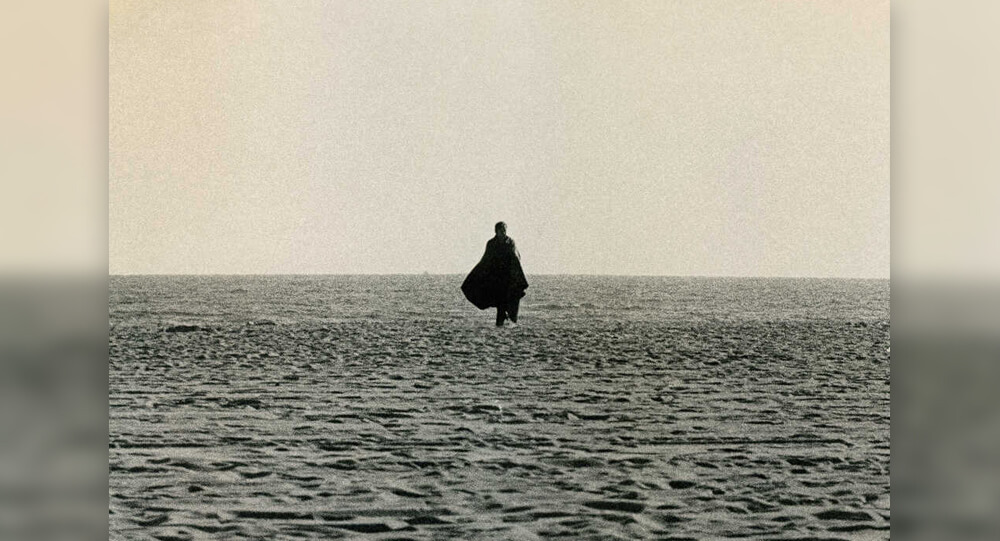
Jim Sullivan's Mysterious Masterpiece: 'U.F.O.'
In 1969, a musician named Jim Sullivan recorded an album titled "UFO" which featured a song about him being abducted by aliens in the desert. Years later, Jim disappeared and his car was found abandoned in middle of New Mexico desert. His body has never been found.
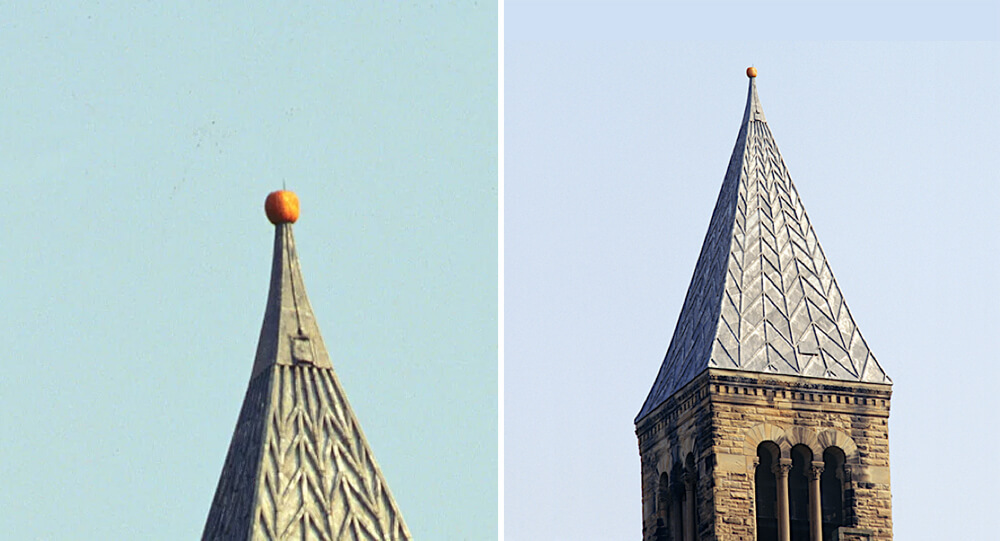
The mysterious Pumpkin impaled on the top of Tower
Twenty Three years ago, somebody impaled a 60-pound pumpkin 170 off the ground on this spire at Cornell University. Nobody knows who did this or how they did it.

Lucy and Maria The Biracial Twin Sisters with Rare Black and White Skin Colours
Lucy and Maria Aylmer are twins, but they have a hard time to convincing people. Even though they have mixed-raced parents, their mom was still shocked when the midwife handed her babies she’d expected to look alike, but were complete opposite.

The Unsolved mystery of Bobby Dunbar's Disappearance
In 1912, a four-year-old boy named Bobby Dunbar went missing on a family trip, 8 months later he was found and reunited with his family. Nearly a century later, DNA testing of his descendants revealed that the child reunited with the Dunbar family was not Bobby, but rather a boy named Charles (Bruce) Anderson who resembled Bobby.
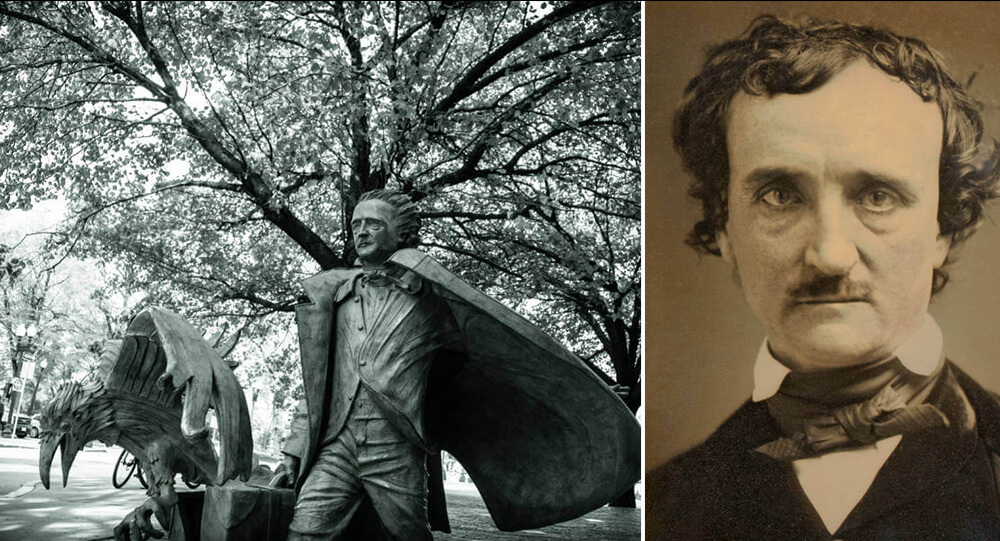
Inside The Mysterious Death Of The Famed Gothic Writer Edgar Allan Poe
Hours before his death Edgar Allen Poe was found on the streets of Baltimore. He was incoherent, wearing another man’s clothes, and unable to explain how he got there. The cause of his death is an unsolved mystery.
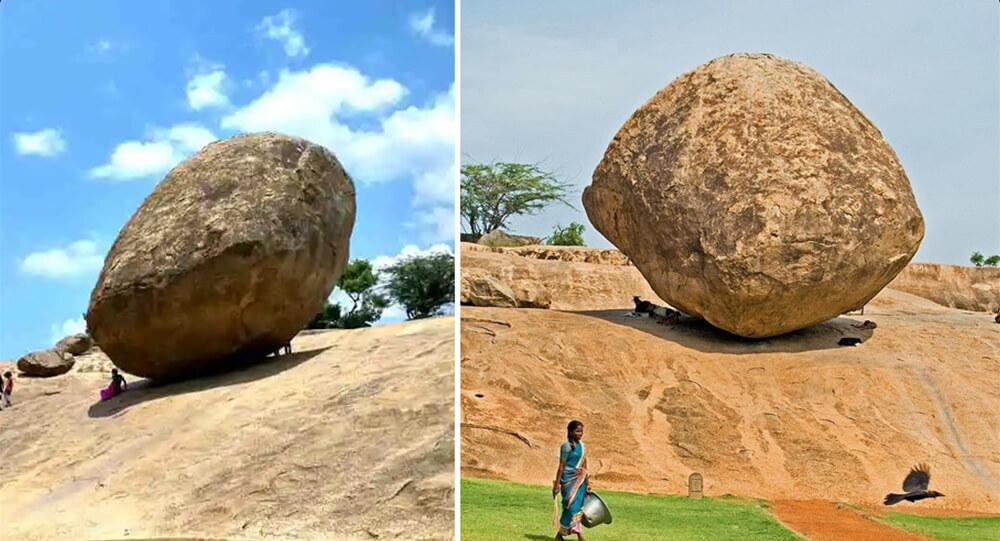
Mahabalipuram: The mystery behind Lord Krishna's butterball that defies gravity
Krishna's Butter Ball is a massive rock in Mahabalipuram, Tamilnadu, India, that is perfectly balanced on a slope. An attempt was made in 1908 to remove the rock for fear that it would roll down and destroy nearby homes, but the efforts were wasted.

Thousands of Rare "Ice Eggs" Blanket Finnish Beach in Spectacular Natural Phenomenon
Thousands of ice balls recently covered a beach in Finland, a rare phenomenon caused by wind and waves sculpting pieces of ice into smooth spheres. These "ice eggs" can vary in size from chicken eggs to soccer balls and have also been spotted in other cold regions globally.
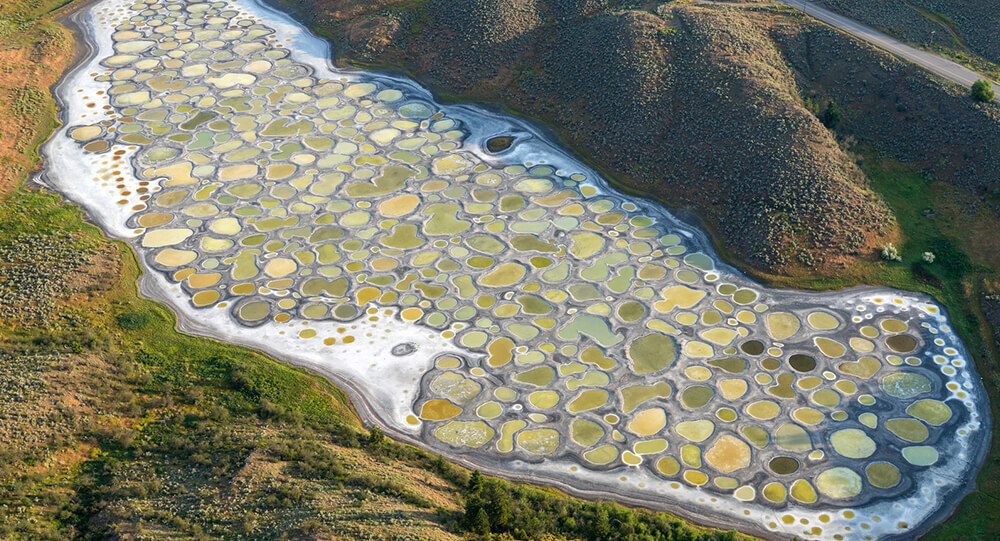
The Mystery of Canada's Magical Spotted Lake
Lake Khiluk, the world's most mineralized lake, and one of the most mysterious places on Earth. Each of these spots has a distinct chemical content and is said to cure various diseases.

Lightning bolt restores man’s sight and hearing.
In 1980, an old blind and partially deaf man, Edwin Robinson, was struck by lightning. He suffered no injuries, but the impact of the lightning bold cured his vision and hearing.
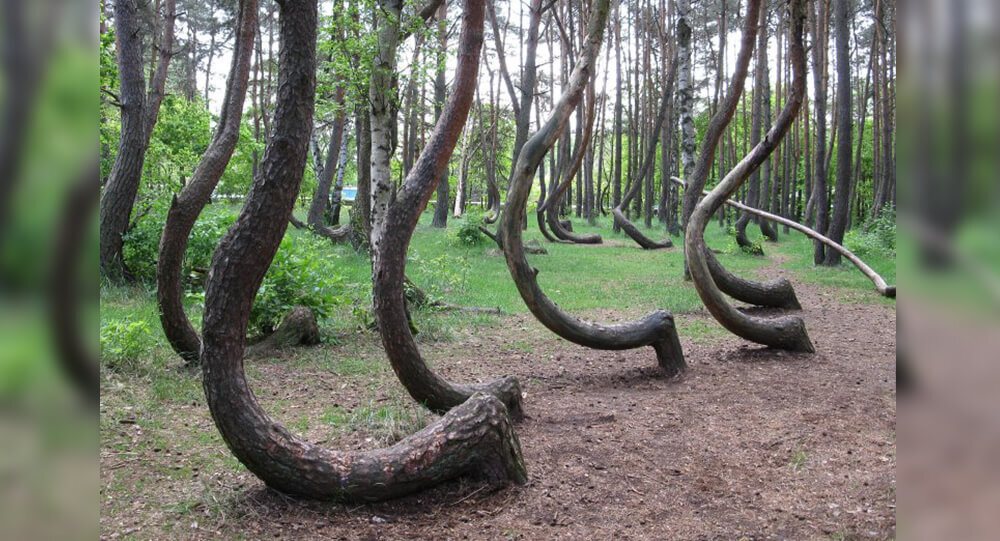
Poland's Krzywy: The Mysteries of the Crooked trees
In Poland, there is a forest with 400 crooked trees that have a 90-degree bend at the base of their trunks. Despite of numerous possibilities, the real reason and how it evolved remain a mystery.
![Mysterious ghost ship found with mummified captain inside [SOLVED]](https://weeklyrecess.com/wp-content/uploads/2024/07/Solved-Mysterious-ghost-ship-with-mummified-captain-cover.jpg)
Mysterious ghost ship found with mummified captain inside [SOLVED]
German captain had been sailing the world for 20 years. It was unknown when or how he died or how long the ghost ship had been adrift
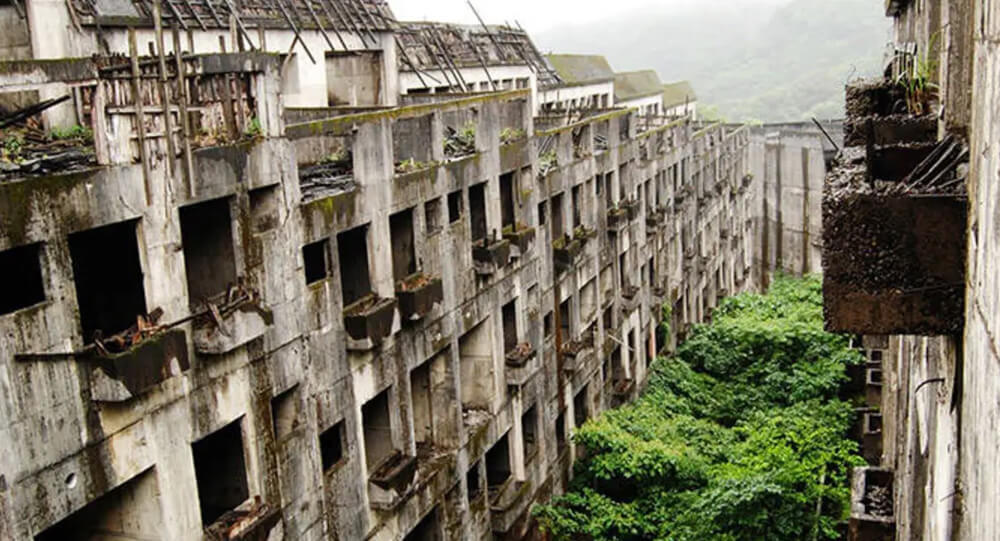
Famous abandoned cities and ghost towns in the world
Learn the stories behind seven of the world's most renowned abandoned cities and villages, from the infamous Chernobyl nuclear catastrophe zone to Hashima Island.
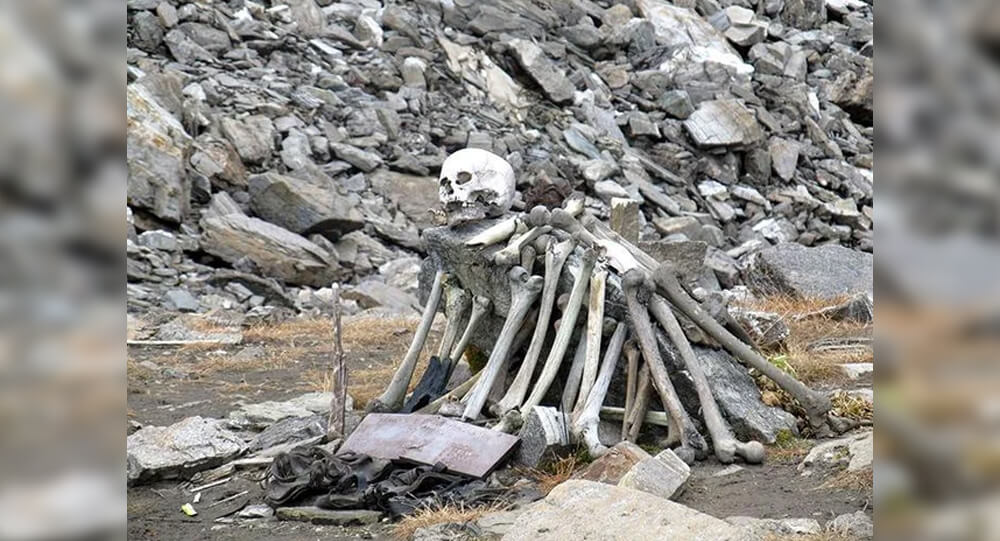
The mystery of India's 'lake of skeletons'
In 1942, a British forest guard in India made an alarming discovery. Some 16,000 feet above sea level, at the bottom of a small valley, was a frozen lake absolutely full of skeletons.