

The assassination of King Alexander of Yugoslavia marked a pivotal moment in the country’s history. This article delves into the rise and reign of King Alexander, exploring his early life and ascension to the throne. It also examines the political and social climate in interwar Yugoslavia, setting the stage for the tensions and challenges that ultimately culminated in his tragic assassination. By understanding the context in which this event unfolded, we can better grasp the significance and impact it had on the nation and its future.
Early Life and Ascension to the Throne
Once upon a time, in a land not so far away, there lived a young prince named Alexander. Born into royalty, he had the charm of a Disney prince and the ambition of a CEO. Destined to become the king, he grew up under the watchful eyes of his regal parents, who hoped he would bring prosperity and stability to their kingdom.
At the tender age of 11, tragedy struck when his father, King Peter I, passed away. Suddenly, young Alexander found himself thrust into the spotlight and had to learn the ropes of ruling a country. He embraced the challenge with the enthusiasm of a puppy learning new tricks, determined to make his mark on the world.
Political and Social Climate in Interwar Yugoslavia
Ah, the turbulent times of Interwar Yugoslavia. Imagine a roller coaster ride with more twists and turns than a pretzel factory. It was a period of great political and social upheaval, with tensions simmering like a pot of grandma’s secret soup recipe.
Yugoslavia, a new kingdom formed after the First World War, brought together a diverse mix of ethnic groups who had more differences than flavors at an ice cream parlor. Serbs, Croats, Slovenes, Bosniaks, and Montenegrins were all jumbled together like mismatched puzzle pieces.
To add fuel to the fire, political factions battled it out like reality TV contestants, each vying for power and influence. Nationalists, communists, and royalists clashed in a never-ending struggle for control, making the kingdom feel more like a battleground than a united nation.
Tensions and Challenges in Interwar Yugoslavia
Once upon a time, a bunch of politicians gathered around a table and decided to create a brand new kingdom called Yugoslavia. They thought it would be a marvelous idea to throw together a dash of Serbia, a pinch of Croatia, and a sprinkle of other territories, hoping for a perfect blend.
The idea was noble, aiming to bring peace and unity to the region. However, not everyone was thrilled with this concoction. Some felt like their identities were being diluted in a pot of political stew. It was like forcing a vegetarian to eat a juicy steak; the flavors just didn’t mesh well.
As you might expect when you mix different ingredients haphazardly, Yugoslavia turned out to be quite the spicy stew. The various ethnic groups within the kingdom had their own unique flavors, and they weren’t afraid to spice things up with their cultural pride.
Nationalism ran rampant, with each group fiercely defending its own interests. Croats wanted more autonomy, Serbs wanted a centralized state, and Slovenes just wanted to be left alone to enjoy their picturesque landscapes and delightful cream cakes.
Meanwhile, political factions battled it out like rival gangs in a West Side Story dance-off. It was a constant tug-of-war between ideologies, with everyone hoping to come out on top. Little did they know that this simmering pot of tensions would soon reach its boiling point.
The Assassination Plot: Planning and Execution
Behind every juicy plot, there is always a mastermind lurking in the shadows. In the case of King Alexander’s assassination, it all started with a group of discontented individuals who believed the kingdom needed a shake-up.
These conspirators, like Bond villains with an ax to grind, were unhappy with the political status quo. They saw King Alexander as the embodiment of everything wrong in Yugoslavia and decided it was time for him to exit the stage.
To carry out their dastardly plan, the conspirators needed a team of dedicated individuals who were willing to risk their lives for the cause. Enter the key figures and organizations that make James Bond’s entourage look like amateurs.
From extremist political groups to rogue military officers, the cast of characters involved in the plot was as diverse as the flavors at an international food festival. They might not have had catchy codenames like 007, but their determination to remove King Alexander from power was unmatched.
Plotting an assassination is no walk in the park. These cunning conspirators had to analyze every detail, plan every move, and execute their attack with military precision. They weren’t just going to waltz into the king’s palace and challenge him to a game of chess.
From secret meetings to covert communication channels, they operated like a well-oiled machine. They meticulously studied King Alexander’s schedule, identified weak spots in his security, and crafted a plan that would send shockwaves through the kingdom.
The Day of the Assassination: Events Unfold
The stage was set, the actors were ready, and the stagehands had their popcorn at the ready. On that fateful day, the location of the assassination was none other than the streets of Marseilles, France. Why there? Well, it turns out the conspirators felt more comfortable carrying out their plan on foreign turf.
As for the timing, it was one of those moments where fate gave a little wink. A diplomatic visit by King Alexander provided the perfect opportunity for the plot to unfold. The conspirators knew they had to strike when the iron was hot, and boy, was it sizzling that day.
It all happened in the blink of an eye, leaving everyone in shock and disbelief. As King Alexander’s car cruised through the streets, bullets rained down upon him like a hailstorm of danger. The chaos and confusion that followed were like a scene straight out of an action movie.
People scattered, screams filled the air, and the fate of a king hung in the balance. Sadly, the attack claimed not only the life of King Alexander but also that of his close confidante, Foreign Minister Louis Barthou.
The kingdom was left reeling, trying to make sense of the senseless. The assassins had achieved their goal, but at what cost? The repercussions of this tragic event would ripple through the nation, forever changing the course of history.
And so, the tale of the assassination of King Alexander came to a chilling, heartbreaking end. It serves as a reminder that the pursuit of power often comes at a steep price, leaving a trail of sorrow in its wake.
On Tuesdays, Alexander refused to participate in any public activities.
Alexander refused to participate in any public activities on Tuesdays because three family members had previously passed away on that day of the week.
He was forced to fortify the two nations’ alliance in the Little Entente on Tuesday, October 9, 1934, as he arrived in Marseilles to begin a state visit to France.
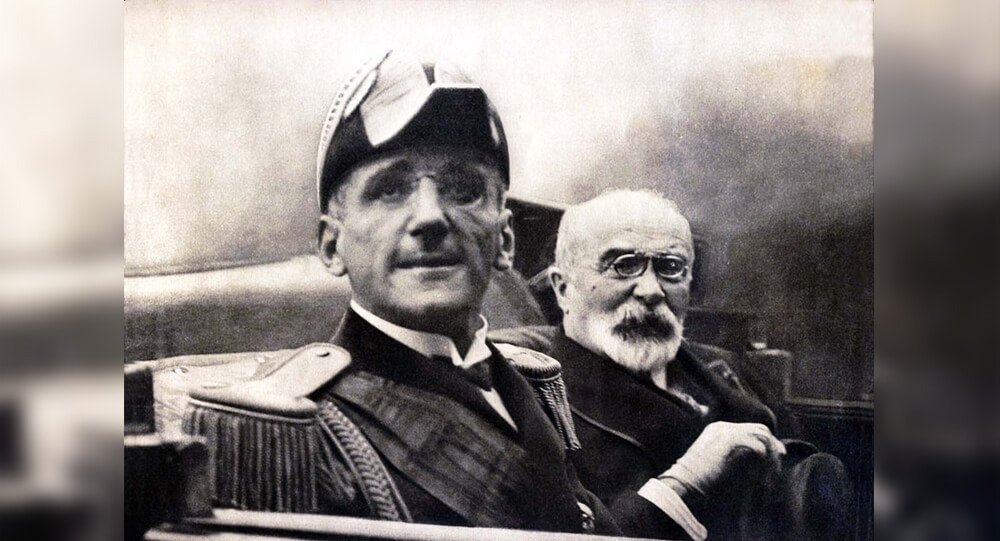
Along with the French Foreign Minister Louis Barthou, Alexander was being slowly driven through the streets when a gunman, Bulgarian Vlado Chernozemski, stepped out into the street and shot the King twice as well as the driver with a Mauser C96 semiautomatic pistol. Alexander passed away in the car, eyes open but slumped backward in the seat. Barthou suffered a severe arm injury, but he later passed away from insufficient medical care.
Aftermath: Immediate Reactions and Impact on Yugoslavia
The news of King Alexander’s assassination sent shockwaves across Yugoslavia and beyond. The nation was thrown into mourning, with citizens expressing their grief and disbelief. Flags were lowered to half-mast, and public gatherings were held to honor the fallen leader.
Internationally, the assassination garnered widespread condemnation. Leaders from different countries expressed their condolences and solidarity with Yugoslavia. It served as a stark reminder of the fragility of political stability and the real threats faced by leaders in a rapidly changing world.
The assassination of King Alexander had far-reaching consequences for Yugoslavia. In the immediate aftermath, the nation plunged into a state of uncertainty and unrest. The loss of a figurehead and the subsequent power vacuum created a sense of instability, fueling political tensions.
This tragic event also highlighted the underlying issues within the country, exacerbating existing divisions and nationalist sentiments. The assassination became a catalyst for political change, pushing Yugoslavia further towards an uncertain future.


The worst blizzard in recorded history: the 1972 Iran blizzard
The deadliest snowstorm ever recorded occurred in Iran in 1972. It lasted for a week, burying areas in 26 feet of snow and killing over 4,000 people, including the entire populations of three villages.

Reason Behind The Suicide Of Christine Chubbuck Live On Air
Actor Rebecca Hall had serious reservations about tackling the macabre story around why Chubbuck killed herself in 1974. So what changed her mind?

10 world’s most destructive and dangerous volcanic eruptions in history
Volcanic eruptions can devastate cities, change the world's atmosphere, and devastate economic systems. They can create molten lava rivers, mudslides, suffocating ash, and poisonous gases that cause chaos around the world for years. A volcanic explosion's effects can be massive, from its size to its death toll to its economic cost. Here is ten world’s most destructive and dangerous volcanic eruptions in history.

Nathan's Famous Doctor Stunt
When Nathan's Famous Hot Dogs first opened in 1916, the owner hired people to dress as doctors and eat hot dogs outside his shop, to convince people his hot dogs were healthy.

D.B. Cooper: Man who hijacked a plane and jumped out with a $200,000
On November 22, 1971, DB Cooper hijacked a Boeing 727, drank a whisky, smoked a fag, and then jumped out of the plane with $200,000. He was never again seen.

The Mouth of Truth: Ancient Rome’s Legendary "Lie Detector" That Bit Off Hands
Discover the chilling legend of the Mouth of Truth (Bocca della Verità) in Ancient Rome—a massive carved stone face believed to bite off the hand of anyone who lied while inserting their hand into its gaping mouth. Uncover the truth behind its eerie reputation and how this ancient artifact became a symbol of honesty and fear.

Before Radar: How Giant Acoustic Mirrors Detected Enemy Aircraft in WWI and WWII
Long before radar revolutionized air defense, enormous acoustic mirrors and specialized sound locators stood as the first line of defense against enemy aircraft. Designed as giant “ears,” these structures amplified distant engine noises, allowing operators to detect incoming planes by sound alone. Dive into the intriguing world of these pioneering listening devices, their operation, limitations, and enduring legacy in military history.

The touching story of David Vetter (bubble boy), the 'boy who lived in a bubble
David Vetter lived his whole 12 years in sterile “bubble”. He was “outside” for 20 second after being removed from his mother’s womb. He never touched any human.

Juliane Koepcke: The Teenager Who Fell 10,000 Feet And Trekked The Jungle to survive
In 1971, a high school student was sucked out of an airplane after it was struck by lightning. She fell 10,000 feet to the ground while still strapped to her chair and survived. Only to endure a 9-day trek to the nearest civilization.

Shizo Kanakuri’s 1912 Olympic Marathon Finished 54 Years
At the 1912 Olympics, a marathon runner quit and went home to Japan without telling officials and was considered a missing person in Sweden for 50 years. In 1966, he was invited to complete the marathon. His time: 54 years, 8 months, 6 days, 5 hours, 32 minutes, and 20.379 seconds.

History of Treadmill, punishment for prisoners
Treadmills were originally a punishment used to harness human power on a giant wheel used to grind grains, hence the name "treadmill." The History of Treadmill

Graves holding hands over wall, A Catholic woman and her Protestant husband grave
A protestant man and a Catholic woman who weren't allowed from being buried together in a graveyard in 19th-century Holland turned their graves into a monument showing them holding hands across the wall separating them.

Irena Sendler: woman who rescued Jews during holocaust
Irene Sendler was the Zegota resistance group's head of the children's department. She risked her life to smuggle children out of the Warsaw ghetto, place them with Polish families or orphanages, give each child a new identity, and keep records so that they could be returned to their families. In 1943, the Gestapo arrested and sentenced her to death, but she was rescued by Zegota.

Charlie Brown and Franz Stigler incident: Enemy became friends
During WWII, a German pilot spotted an American pilot’s crippled plane in the sky. Tailing it, he noticed that gunner was dead, crew injured, and they posed no threat. Instead of destroying the plane, he led it to safety. 40 years later, the two pilots reunited.

The Arabia Steamboat: Unearthing a 19th Century Time Capsule from the Missouri River
The Arabia was a steamboat that sank in the Missouri River in 1856. Over time, the river shifted 800 meters to the east, eventually turning the site of the sinking into a field. The steamboat remained under 45 feet of slit and topsoil until 1988, when it was excavated. The mud, as it turned out, was such a great preserver that most of the artifacts on board were found to be intact. They even found jars of preserved apples that were still edible!

Albert Einstein’s brain after it was stolen from his body
Albert Einstein's brain was taken by the opportunistic pathologist who performed his autopsy hours after he died and kept in two jars for 30 years. The stolen brain of Albert Einstein was preserved in a cookie jar for 30 years until being discovered by a journalist.

Top 10 most cruel medical procedures that are being used today
We are all aware that medicine has advanced dramatically over the last fifty years. There are several modern medical approaches available today, but this was not always the case. However, the past of medicine is a dark one. Medical leeches, lobotomy, vascular surgery, cranial stenosis, and even electroshock therapy are all options. These are only a couple of the cruel healing techniques that are still in use today.

From Flapper to Fashion Week: How 1920s Style Still Shapes Modern Trends
The roaring 1920s revolutionized fashion, introducing bold styles, daring cuts, and a spirit of freedom that still inspires today’s wardrobes. From flapper dresses to statement accessories, here’s how the Jazz Age lives on in modern fashion.

Xin Zhui And The Story Of The Stunningly Intact Lady Dai Mummy
A 2,000-year-old mummy of a Chinese woman, Xin Zhui, also known as “Lady Dai,” was preserved in 21 gallons of an “unknown liquid.” With her original hair, organs, eyebrows, and eyelashes intact, the mummy still has blood in her veins. Her skin and ligaments are soft and as flexible as that of a living person.

Mother who spent entire life savings for daughter’s cancer treatment won the lottery
A mother won $2 million from a $10 scratch-off lottery ticket after she spent all of her entire life savings to pay her daughter’s cancer treatment. She bought the winning ticket after her daughter’s last cancer treatment.

Franz Ferdinand’s Assassination that sparked World War I
Archduke Franz Ferdinand of Austria and his wife Sophie are shot to death by a Bosnian Serb nationalist during an official visit to the Bosnian capital of Sarajevo on June 28, 1914. The killings sparked a chain of events that led to the eruption of World War I by early August.

Max Headroom Incident: America’s Creepiest TV Hack
In 1987 a man hijacked a television station during an episode of Dr. Who and wore a Max Headroom mask and uttered nonsense, and he still hasn’t been caught

how Ferris wheel invented
In 1891, Chicago challenged engineers to create a structure to surpass the Eiffel Tower for the World's Columbian Exposition. George Washington Gale Ferris jr. responded with the original Ferris Wheel, a giant rotating structure elevating visitors above the city. This invention became an iconic attraction at the fair.

Knockers-up: waking up the Industrial Britain's Workers in 1900-1941
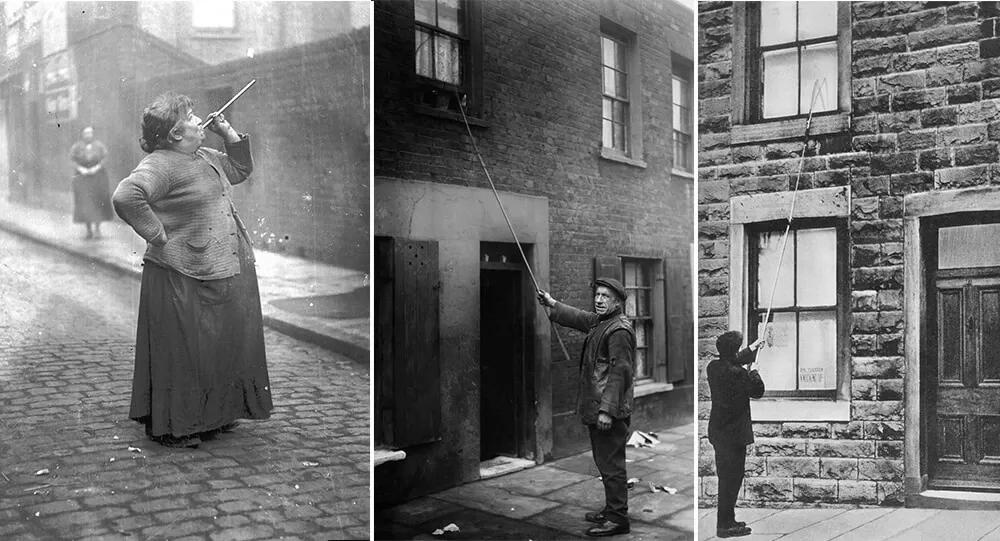
Before alarm clocks were invented, there was a profession called a knocker-up, which involved going from client to client and tapping on their windows (or banging on their doors) with long sticks until they were awake. It lasted into the 1920s.

Archaeologists Uncover 2,000-Year-Old Amazonian Cities Using Lidar Technology
Deep in the Ecuadorian Amazon, archaeologists have uncovered an ancient network of urban settlements once inhabited by the Upano people about 2,000 years ago. Using cutting-edge lidar technology, these discoveries reveal a highly organized society featuring sophisticated agricultural systems, drainage canals, and extensive road networks. This transformative find challenges long-held assumptions about ancient Amazonian societies and sheds light on a complex civilization thriving in one of the world’s most biodiverse regions.