
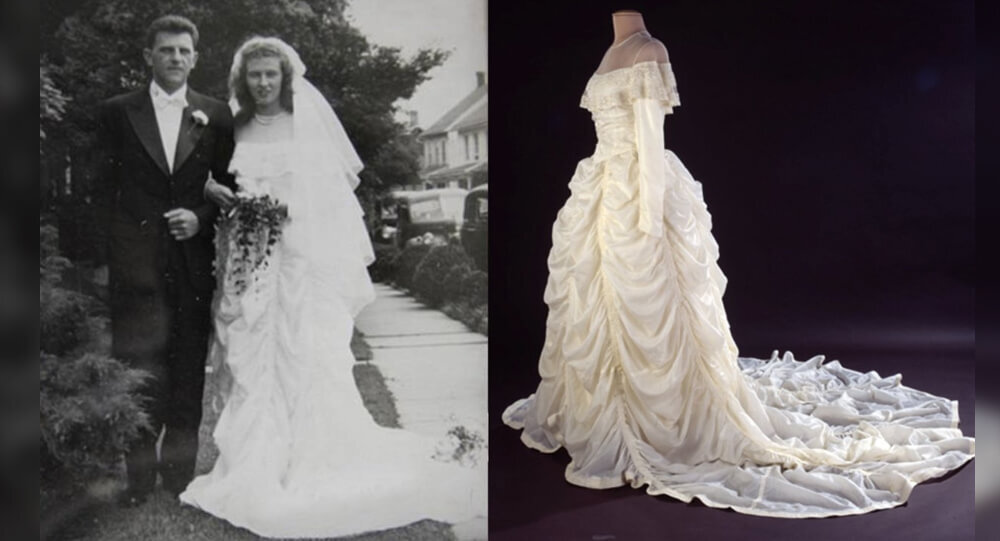
Ingenious brides from all over the nation showed their creativity and support for the war effort by making wedding gowns out of parachutes during World War II. Because it was difficult to find fabric for bridal gowns, brides learned to improvise or go without. The white nylon or silk fabric became surplus if a parachute was rejected for any reason, and parachute manufacturers were held to high standards. Many brides used that extra fabric to make their wedding dresses. This is the tale of a bride who married in a parachute during World War II.
The Navy created WAVES (Women Accepted for Volunteer Emergency Service) in the summer of 1942. By assigning enlisted women to their onshore positions in place of men, WAVES hoped to free up men for sea duty. Massachusetts native Janet Gleason, age 20, made the decision to join the WAVES. She worked as a Parachute Rigger Second Class at Joint Fort Dix Army Air Force Base in New Jersey.

Reo Arland Casper, a 19-year-old native of Idaho, signed up for the draft that same summer. He soon joined the US Marines and was accepted into their top paratrooper training program. 40% of potential submariners failed the rigorous fitness test required for enrollment in the program. They were also forbidden from getting married. Reo received specialized training at Fort Dix before being elevated to the rank of Sergeant.
In the classroom, where Paramarines and Navy WAVES both attended training, Janet caught Reo’s attention one day as they were learning how to fold and pack a parachute.

They became good friends. Reo and Janet loved attending concerts at Radio City Music Hall and taking long walks in Central Park. They quickly fell in love. Reo had finished his training and was getting ready to leave for another country. He had one more jump to make before graduating, and Janet packed his chute with care. Reo prepared to ship after receiving orders. He requested Janet’s hand in marriage before departing. As soon as the war was over, they intended to get married.
Reo and Janet consistently wrote each other letters and hoped to be reunited someday. Given that she couldn’t afford a wedding gown, Janet’s commanding officer gave her a Japanese silk parachute. The stunning silk was the ideal material for a wedding dress.

Janet created and sewed her wedding dress then carefully storing it away while she awaited the end of the war. Reo finally experienced that day on October 19, 1945, when he traveled back to the country for his formal discharge in California. He made plans with Janet for them to meet up in his native Idaho. After three years, Janet boarded a train, bringing them back together at last.
The couple faced difficulties as their wedding preparations got underway when Reo’s mother objected to the wedding. She was worried about the couple’s contrasting religious beliefs. Reo and Janet decided to elope on October 31, 1945, after traveling to Dillon, Montana. After meticulously designing and sewing a wedding gown from a parachute, Janet was finally able to wear it.
The marriage between Reo and Janet lasted 58 years. Reo died in 2005, a year after she did in 2004. The historical dress was later worn by both their daughter and their son’s bride, and today is housed at the Smithsonian Institution as a significant item in American History.
The story of parachute wedding dress
During an unsuccessful WWII mission, Maj. Hensinger, a B-29 pilot, managed to save both the parachute and the groom. He was returning to an Allied base in August 1944 after bombing Japan’s Yowata city when his engine caught fire. Over China, the entire crew was forced to jump ship, and that’s when the life-saving epic parachute opened. That night, as Hensinger waited for dawn, it also served as a blanket and a pillow.
Fortunately, the crew was able to reunite the following day, and they were welcomed by hospitable Chinese. Maj. Hensinger made it back to the US safely, and when the war came to an end a year later, he moved back to his home state of Pennsylvania, bringing his life-saving parachute with him.
Once Claude was back in the real world, he made the decision to find Ruth and start dating her. When it came time to make the marriage proposal, Ruth was surprised to see Hensinger on his knee instead of offering a ring but the priceless cloth that had helped him during the war.


The Man Who Survived Falling Through a Thunderstorm, William Rankin
William Rankin was a fighter pilot who survived an ejection into a thunderstorm. He suffered frostbite, violent wind and lightning, severe decompression, and nearly drowned from breathing in rain water. He was in the cloud for over 40 minutes in total.


'Super obedient' lookout parrot trained by Brazilian drug dealers is seized by police
In 2019, police in Brazil seized a 'super obedient' lookout parrot trained by drug dealers. According to reports, the bird had been taught to alert criminals to police operations by shouting: "Mum, the police!" As soon as the police got close, he started shouting.

Before Hollywood, Christopher Walken Was a Teenage Lion Tamer with a Lioness Named Sheba
Before acting, Christopher Walken worked as a lion tamer in a circus at age 16. He performed with a lioness named Sheba and described the job as surprisingly calm—just another day before Hollywood stardom.

Man Trapped in the Sahara Desert Constructs a Bike From His Broken-Down Car to Save His Life
A man who became lost in the desert disassembled his broken-down car and turned it into a functional motorcycle, which he used to escape.

Restaurant owner offers burglar a job rather than filing charges
On April 13, 2021, Diablo’s Southwest Grill was robbed, but instead of pressing charges, owner Carl Wallace decided to offer the burglar a job in his business and said “There are better opportunities out there than this path you’ve chosen,”.
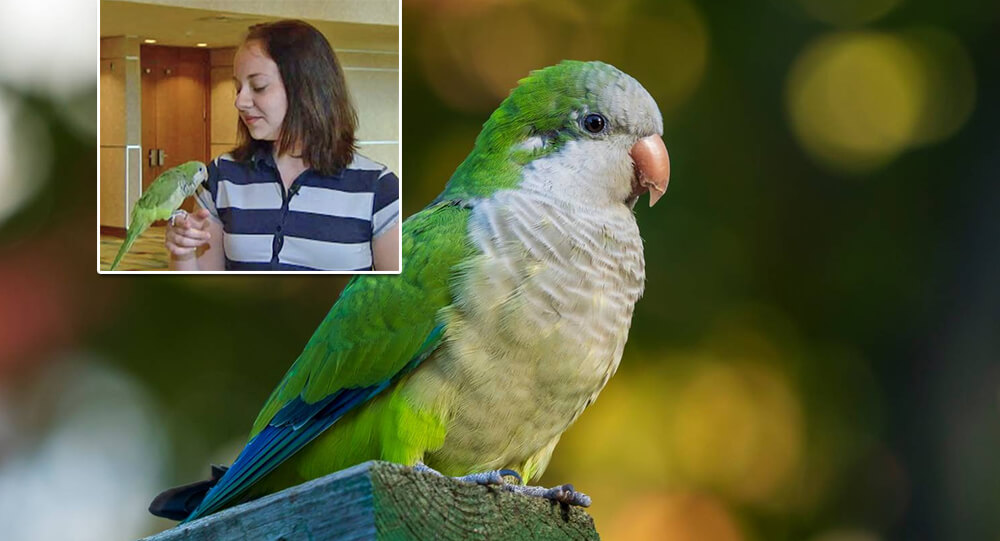
How hero parrot saved little girl who was choking on her breakfast
In 2008 Quaker parrot Willie alerted his owner Megan Howard when the little girl she was babysitting began to choke. Howard was in the bathroom when the parrot repeatedly yelled "Mama! Baby!" flapping his wings. Megan rushed and performed the Heimlich maneuver, saving her life. Willie received the Red Cross Animal Lifesaver Award.

Max Headroom Incident: America’s Creepiest TV Hack
In 1987 a man hijacked a television station during an episode of Dr. Who and wore a Max Headroom mask and uttered nonsense, and he still hasn’t been caught
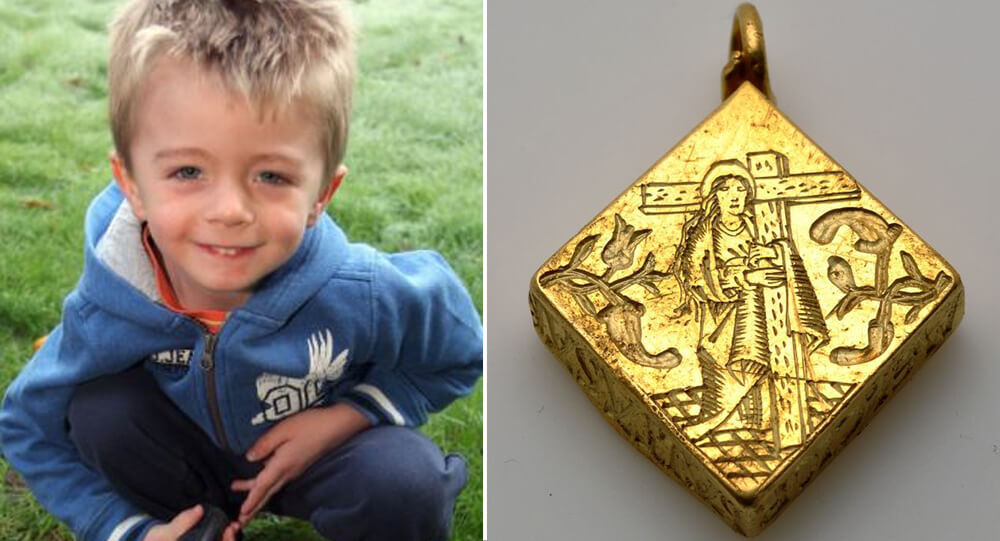
A three-year-old boy discovers a $4 million pendant in England
A $4 million 16th-century gold pendant was discovered in 2010 by a three-year-old boy using his father's metal detector.
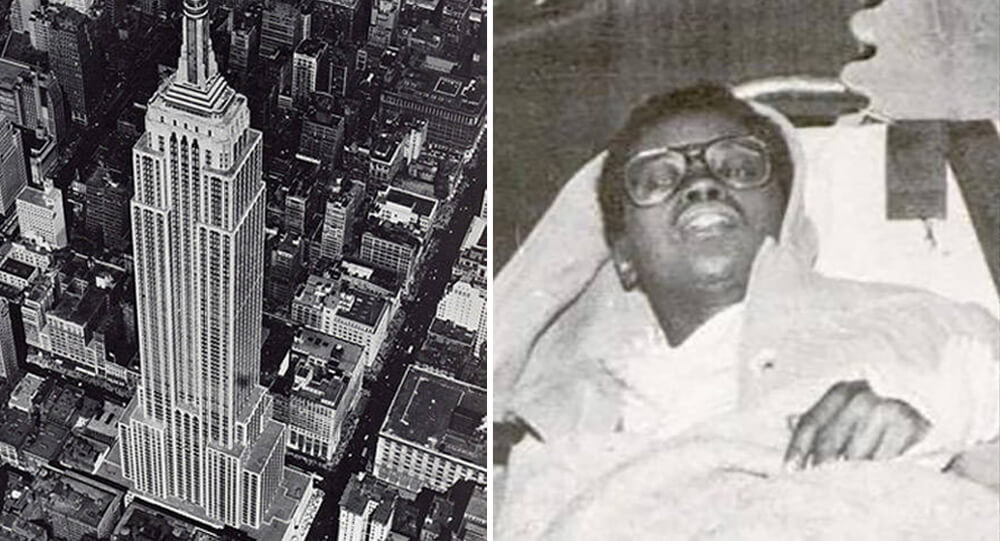
Elvita Adams jumps from the Empire State Building and amazingly survived
Elvita Adams once tried to commit suicide by jumping off the empire state building. She Jumped from the 86th floor but was blown back to 85th floor by a strong gust of wind.

The beauty and uniqueness of Fukang Meteorite
This Fukang meteorite is around 4.5 billion years old and weighs more than 2,000 pounds. It was discovered in China in 2014 and is assumed to have formed when our solar system initially formed.
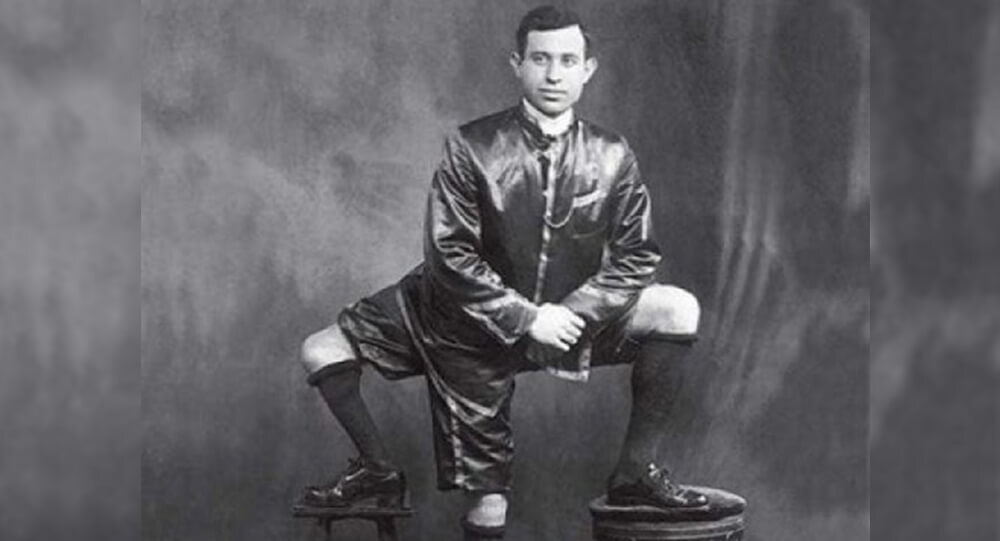
Frank Lentini, The Three-Legged Sideshow Performer
Francesco Lentini was a man with three legs, four feet, sixteen toes, and two sets of functional male genitals. He worked for the circus and lived to be 78 years old.
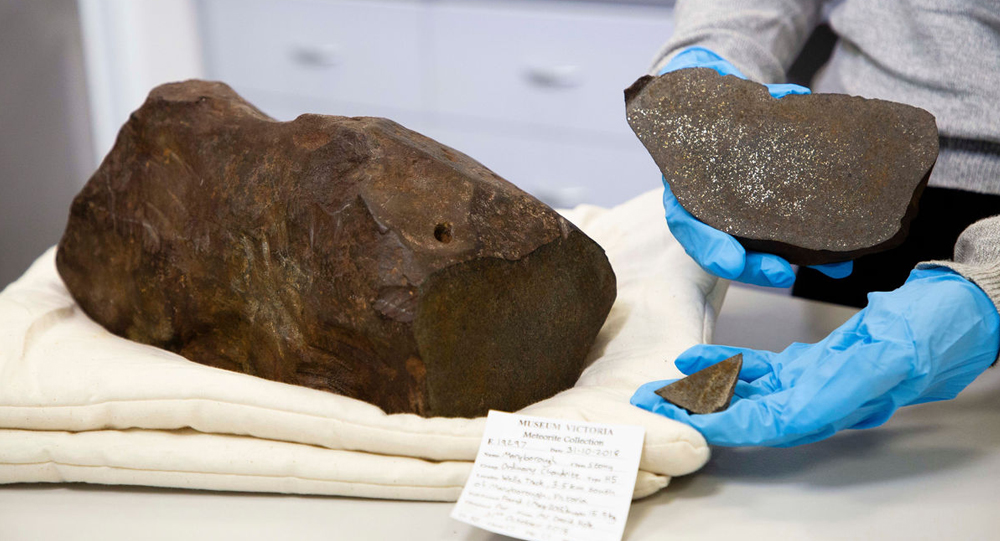
The Man Who Kept a “Gold” Rock for Years—Only to Discover It Was a 4.6-Billion-Year-Old Meteorite Worth a Fortune
A man cherished a heavy 17-kilogram rock for years, believing it to be solid gold. The surprising twist? Experts later revealed it was a rare, 4.6-billion-year-old iron meteorite—an ancient cosmic relic worth far more than gold. Dive into the fascinating story of this celestial treasure and what makes it so valuable.

Neerja Bhanot, the braveheart flight attendant was never run away from a crisis
Neeja Bhanot, a 22 year old Indian flight attendant who helped hides 41 American passports aboard a hijacked plane. She died shielding three children from gunfire and was posthumously awarded bravery medals from India, Pakistan, and the United States.
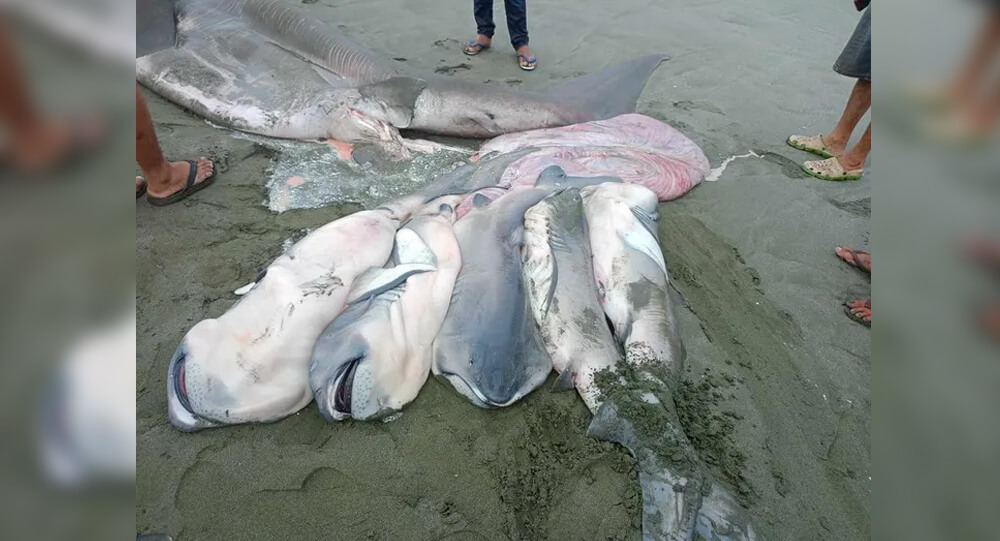
Megamouth Shark And Her Babies Found Dead In The Philippines
Filipino zoologists have recorded a pregnant megamouth shark for the first time ever since the rare aquatic specie was discovered in 1974.

Kenyan Innovator Creates Smart Gloves That Translate Sign Language Into Audible Speech
In 2023, a Kenyan inventor Roy Allela invented smart gloves that can convert sign language movements into audio speech, for his six years old niece who was born deaf.

LEGO Braille Bricks: Revolutionizing Braille Learning Through Play and Inclusion
go Braille Bricks were launched in 2020 to help visually impaired children learn Braille through play. Each brick features the Braille alphabet and is fully compatible with standard Lego sets, allowing sighted peers to join in, fostering inclusivity and collaboration in learning environments.

Drive-Thru Weddings in Las Vegas: The Ultimate Fast, Fun, and Legal Way to Say “I Do”
Inspired by fast food convenience, Las Vegas offers drive-thru weddings where couples can legally marry in under 5 minutes—without leaving their car. Some chapels even offer curbside Elvis impersonators and 24/7 ceremonies, complete with “to-go” marriage licenses.

The Crystal Maiden of the Actun Tunichil Muknal Cave
Located in Belize, there is a cave where the remnants of ancient Maya human sacrifices can be witnessed. However, reaching the back of the cave system requires swimming, wading through a cave river, and crawling through narrow, uneven rocky passages in darkness. Once there, visitors can walk among the numerous corpses of sacrifice victims, including The Crystal Maiden, an 18-year-old whose skeleton has become calcified to the point of sparkling.

The fearless Annie Lee Cooper
Annie Lee Cooper was fired in 1963 after attempting to register to vote. She attempted it once more in 1965, but the sheriff ordered her to leave after prodding her in the neck with a club. She then punched him, causing him to fall to the ground. She was imprisoned before ultimately registering to vote. Following the passage of the Voting Rights Act, the sheriff was ousted and subsequently imprisoned for collaborating to transport drugs, but Annie Lee Cooper lived to reach 100 years old and bears her name to this day.

Whang-od Oggay, The legendary tattoo artist from the Philippines
This is Whang-od Oggay, a 106-year-old tattoo artist from the Philippines. She is often described as the last and oldest Kalinga tattoo artist, and has been performing the traditional art of hand-tapped tattoos since the age of 15

Estonians save a wolf from the ice by mistaking it for a dog
Two young construction workers in Estonia discovered what they thought was a dog caught in a frozen lake. They carried it to their car and brought him to an animal shelter, not realizing it was a wolf.

Smart guy brings life-sized cutout of his late mother to his graduation
Even though that his mother passed away in 2016, a young man had a clever idea to make a life-size cutout of her and bring it to the event so that she could attend his graduation ceremony.

Man uses first-class ticket to eat for free at airport's VIP lounge for almost a year
A Chinese man purchased a First Class Ticket, which included admission to a VIP Lounge with free food. Over the course of a year, he rescheduled over 300 times in order to receive over 300 free dinners. When questioned, it was discovered that he is rescheduling his reservation to another date after eating. He eventually cancelled the ticket and got a full refund.

A story of a man Survived Inside Sunken Ship For Three Days
A man survived a sunken ship for nearly three days, 279 feet underwater and in complete darkness, while listening to fish eat the bodies of his shipmates.

Why Is the N Lowercase in 7-Eleven?
7-ELEVEN is thought to have a lowercase "n" in its logo because the company president's wife believed that a logo with all caps would seem harsh, while a lowercase "n" would make it more graceful.