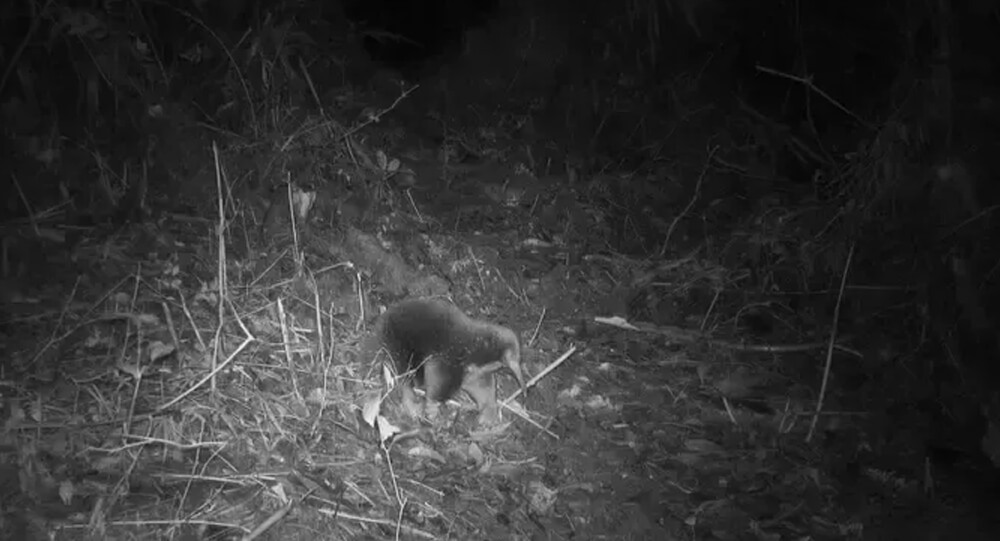

For the First Time in 60 Years, Scientists Discover a 'Lost' Echidna Species
An elusive species of echidna in the wild has been photographed for the first time by an expedition team investigating Indonesia’s Cyclops Mountains. Some researchers worry that the species may have become extinct because the last confirmed sighting of it was more than 60 years ago.
However, the team maintained optimism throughout their four-week expedition, supported by local reports suggesting the species might still be around. The Attenborough’s long-beaked echidna, named for renowned broadcaster and naturalist David Attenborough, was caught on the final day of their expedition.
According to James Kempton, a biologist at the University of Oxford who oversaw the expedition, “the first feeling was one of great relief, because we had tried so hard and thought they were there, but we needed concrete evidence for the scientific proof.” Kempton speaks with Natalie Kainz of NBC News. After that, there was intense euphoria.
Echidnas are unusual, quill-behaving animals with long noses and tiny eyes. They are members of the uncommon monotreme group of mammals that lay eggs. There are only five monotremes left in the world: the platypus and four species of echidna.
According to Kempton, “these five species are the only defenders of 200 million years of evolutionary history,” Douglas Main of the New York Times reports. “It is crucial to preserve that rare and delicate evolutionary history.”
Related Topic You Might Find Interesting:
- Jack the Baboon operated a railroad, earned a living, and never made a mistake
- Kipekee, the world’s only spotless giraffe, was born at Brights Zoo
- Titanoboa cerrejonensis, fossils of the world’s largest species of snake
A Dutch botanist acquired the first and only specimen of the Attenborough’s long-beaked echidna (Zaglossus attenboroughi) in 1961, and it is currently housed in a museum in the Netherlands. Despite being the smallest of the long-beaked echidnas, very little is known about this critically endangered animal because sightings are so infrequent. Its primary threats are habitat loss and hunting.
Because in this room is the preserved skin of David Attenborough’s long-beaked echidna. No other museum or scientific collection has one. Until this Sunday, we knew it as the only evidence that this species ever existed. pic.twitter.com/QAfFPuN41Y— Naturalis Biodiversity Center (@Naturalis_Sci) November 10, 2023
Z. According to a statement from Re:wild, attenboroughi has been “lost” from the scientific record since it was first discovered, but members of the Yongsu Sapari community in Indonesia have reported much more recent sightings. Gison Morib, a member of the expedition team, discovered evidence of the animals as recently as 2022, including their burrows and the holes in the ground that their long snouts left behind when they dug for worms.
The echidna is known as “payangko” in the local Tepera language. According to the statement, the animals were traditionally used to settle disputes within the community rather than engaging in physical combat. While the other party headed to the ocean in search of a marlin, one side would head up into the Cyclops Mountains in search of an echidna. Although these animals are incredibly rare and can take decades to locate, their discovery would signify the restoration of peaceful relationships within the village.
The Expedition Cyclops team, comprising an Indonesian non-governmental organization, global researchers, university students from the nearby campus, and residents of Yongsu Sapari, worked together on a demanding expedition to obtain photographic proof of the animals.
Eighty trail cameras were positioned by the team in the Indonesian province of Papua’s tropical rainforests. They fought off insects, poisonous animals, hostile terrain, leeches, malaria, earthquakes, and intense heat for a month, but they were unable to take a single picture of the echidnas. Ultimately, with their last SD card, the researchers were able to acquire the images and videos that proved the elusive creatures were still alive on the mountain.
Director of the Australian Museum Research Institute and mammalogist Kristofer Helgen, who was not part of the expedition, tells the Times that it is “really valuable to understand that it still occurs in the Cyclops Mountains.” “These are some of the most unique animals on Earth, in my opinion.”
The expedition team discovered other ground-breaking things in addition to the echidnas. According to a statement from the University of Oxford, they found new species of blind spiders, a whip scorpion, and a blind harvestman (also known as daddy longlegs) in an underground cave system. They also found the Mayr’s honeyeater, a bird that hasn’t been seen since 2008.
The findings, according to the researchers, should support conservation efforts in the Cyclops Mountains.
Greek insect expert Leonidas-Romanos Davranoglou of the University of Oxford, who participated in the study, tells BBC News’ Jonah Fisher and Charlie Northcott, “We were so excited, because we were always saying, ‘This is new, nobody has seen this’ or ‘Oh my God, I can’t believe that I’m seeing this.'” “That expedition was absolutely monumental.”

Man discovers he has 3 kidneys after going to doctor for severe back pain
In 2020, a 38-year-old Brazilian man visited his doctor for severe back pain and was shocked to find out that he has three kidneys instead of just two.
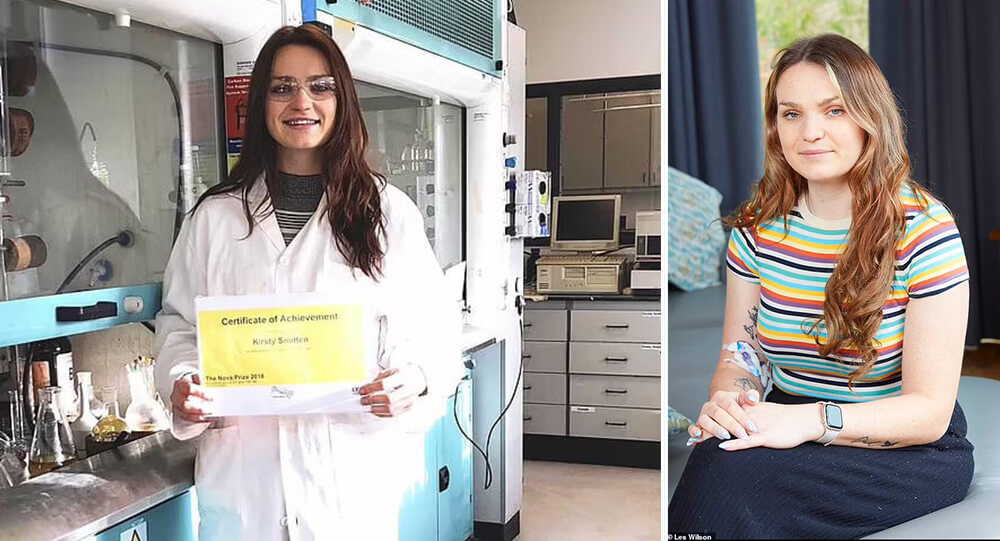
A 28-year-old scientist could win a Nobel Prize for creating new class of antibiotics
A 28-year-old scientist could receive the Nobel Prize for developing a new class of antibiotics that fight drug-resistant bacteria, but she only has months to live after being diagnosed with incurable heart cancer, and she says "There aren't words to express how sad I feel' about not seeing award."

Henrietta Lacks: Who Was She? Here's how HeLa cells became necessary for medical research
Henrietta Lacks was died in 1951. The tumor that killed her has been alive and growing to this day. The tumor is immortal and was used to progress the Polio vaccine and is the jumping point for most human cell research to this day. Scientists have grown some 20 tons of her cells.

India's chandrayaan-3 becomes the first landed craft on moon's south pole
India's chandrayaan-3 becomes the first land craft on moon's south pole. It landed safely on August 2023


The Physics Behind Why Cats Always Land on Their Feet
Cats have an extraordinary survival skill known as the “righting reflex” that allows them to twist midair and land on their feet, even when dropped upside down. This uncanny ability is made possible by their flexible spine, lack of a functional collarbone, and a combination of biological sensors and physical laws governing motion. Astonishingly, kittens develop this reflex as early as three weeks old, mastering the art of graceful landing that defies everyday expectations. This article unravels the science and mystery behind this feline feat.

Inspiring story of Jono Lancaster, Abandoned by His mother at birth for this 'defect' on his face
When Jono Lancaster was just 36 hours old, his parents left him for adoption because he was suffering from Treachers Collins Syndrome, a genetic disorder which hampers facial bones development. Now he is an inspirational speaker, a professional model and a teacher, giving inspiration to millions

George Dantzig solved two famous “unsolved” problems in statistics mistakenly as assignment
In 1939, George Dantzig arrived late to his statistics class. On the board were two famous “unsolved” problems in statistics written as an example by his professor. Dantzig mistook the examples for homework assignments. He solved the “unsolved” problems and submitted the homework to his professor a few days later. His solutions earned him a doctorate.

The Heartbreaking Story Of Ella Harper, The ‘Camel Girl’
Ella Harper, Professionally known as the “Camel Girl” was born with a rare orthopedic condition that cased her knee to bend backward. Due to this condition, had to walked on all four legs, which resulted in her nickname as “Camel Girl”. Tough it was hard at first, but soon she made a fortune out of it.

What makes bananas radioactive?
Yes, It is true that bananas contain radioactive substances. But the same can be said for spinach, potatoes, oranges, Brazil nuts, kitten litter, granite counter tops, even the air you breathe! Radioactivity is unavoidable and all around us. So, what exactly is it?

Stephen Hawking’s Warning: Humanity Has Less Than 200 Years to Escape Earth’s Limits
Stephen hawking says humanity won't survive without leaving earth. In fact, human beings may have less than 200 years to figure out how to escape our planet

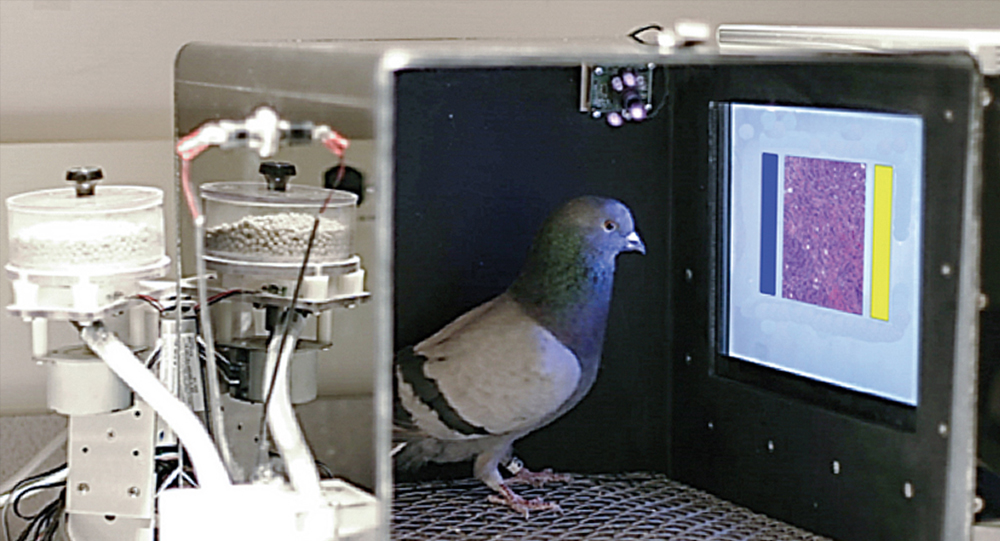
The Science Behind Pigeons in Cancer Detection and What It Means for Medicine
In a groundbreaking study, researchers have discovered that pigeons can be trained to distinguish between cancerous and non-cancerous tissues in medical images with accuracy rivaling that of human experts. This surprising capability opens new avenues for understanding visual perception and has potential implications for improving diagnostic tools in medicine. Here is the fascinating science behind pigeons’ ability to spot cancer and what it signifies for the future of medical imaging.

Woman's transplanted 'man hands' became lighter and more feminine over time
After losing both arms in an accident, an Indian girl received limbs from a male donor. The donor hands, which were formerly huge and hairy, changed skin tone and became thin and feminine over time to mix in with her body.
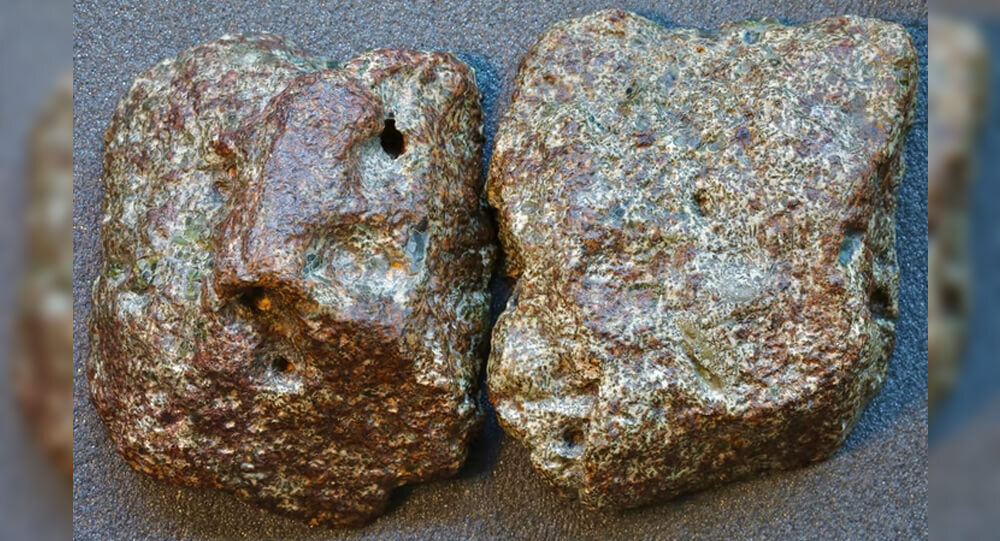
Meteorite found in Sahara Desert older than the earth
This Sahara Desert Meteorite was discovered to be older than the earth itself. This Meteorite is estimated to be 4.6 billion years old, while earth is estimated to be 4.54 billion years old.

The extraordinary case of Olivia Farnsworth, who hit by a car and dragged down the street without pain because of chromosome 6 deletion
In 2016, 7-year-old Olivia Farnsworth was hit by a car and dragged down the street, but she did not feel a thing. That is because of a rare condition called “chromosome 6 deletion,” which causes her to feel no pain. She also does not experience hunger or exhaustion.
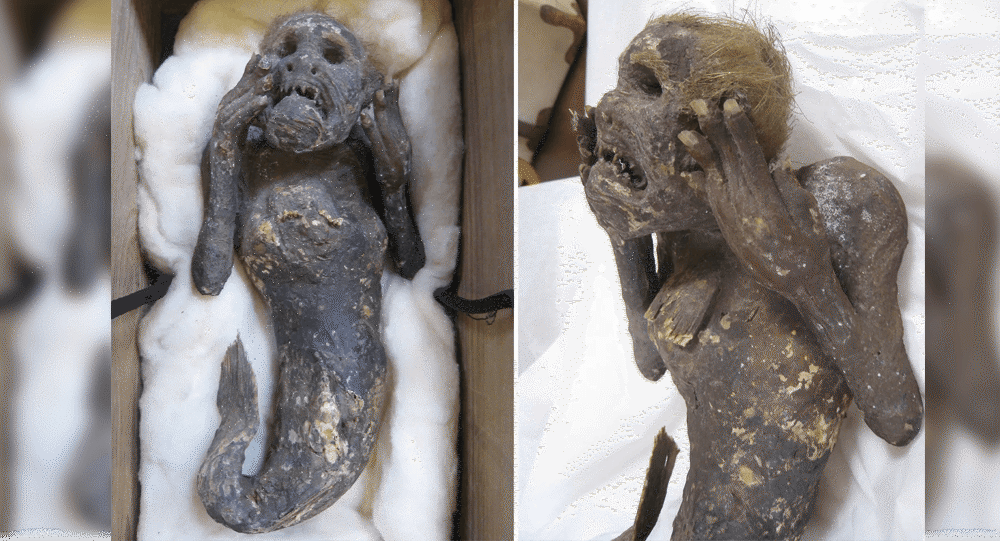
Mystery of 300-year-old mummified mermaid is being probed
There is a 300-year-old mummified mermaid with 30 centimetres tall and features a human-like head, two hands with what appear to be fingernails, and its lower body that look like a fish tail. The “mermaid mummy” is being probed by Japanese scientists in an attempt to unravel the mystery of its existence.
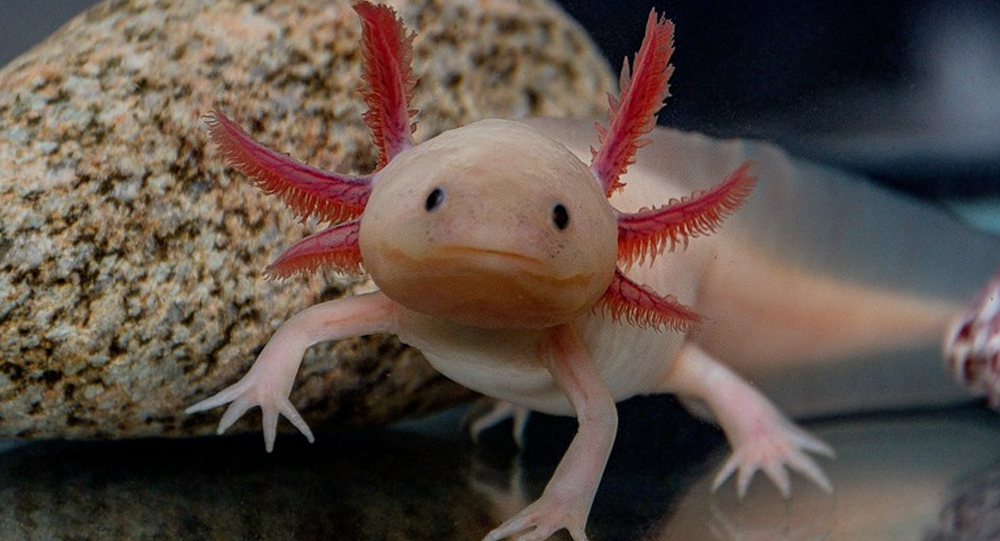
Why Some Animals Can Regenerate Limbs and What Science Says About Human Possibilities
Certain animals possess the extraordinary ability to regenerate lost limbs, a process that has fascinated scientists and inspired hopes for human medical breakthroughs. From salamanders’ perfect limb regrowth to starfish’s incredible body regeneration, this article explores how and why these animals can perform such feats, the biological mechanisms underpinning regeneration, and what cutting-edge research means for the future of human limb regeneration.
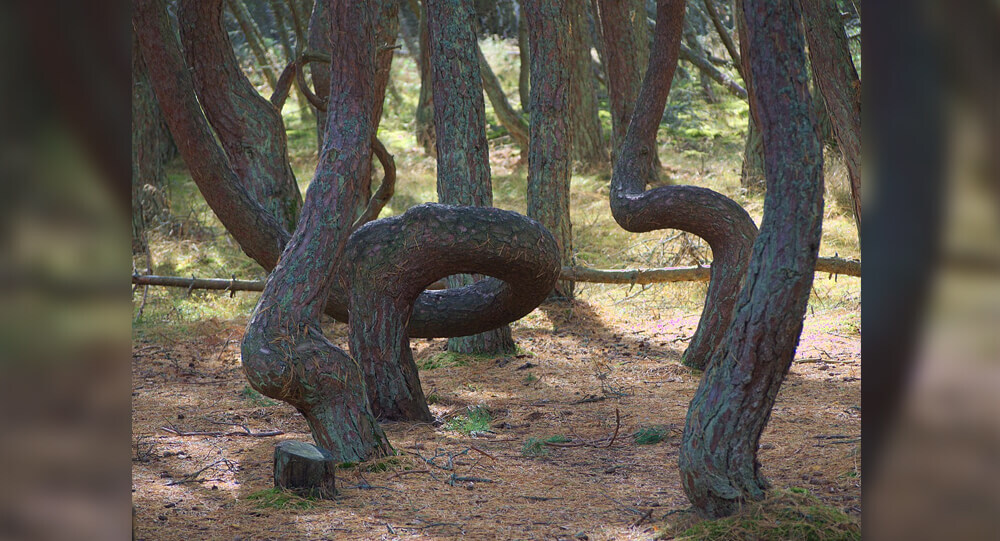
The Mystery of the Dancing Forest: Reasons behind the unusual wonders of forest
The Dancing Forest in Russia is noted for its unusually twisted pine trees. The trunks of these trees are contorted into spirals, rings, and other squiggly loops, but the reason for this malformation is still a mystery.

The story of Lionel the Lion-Faced Man, Stephan Bibrowski
Stephen Bibrowski, also known as Lionel the Lion-faced Man, was a well-known sideshow entertainer. His entire body was covered in long hair, giving him the appearance of a lion; this was most likely due to a rare condition known as hypertrichosis. Lionel traveled to the United States in 1901 and began performing with the Barnum and Bailey Circus.
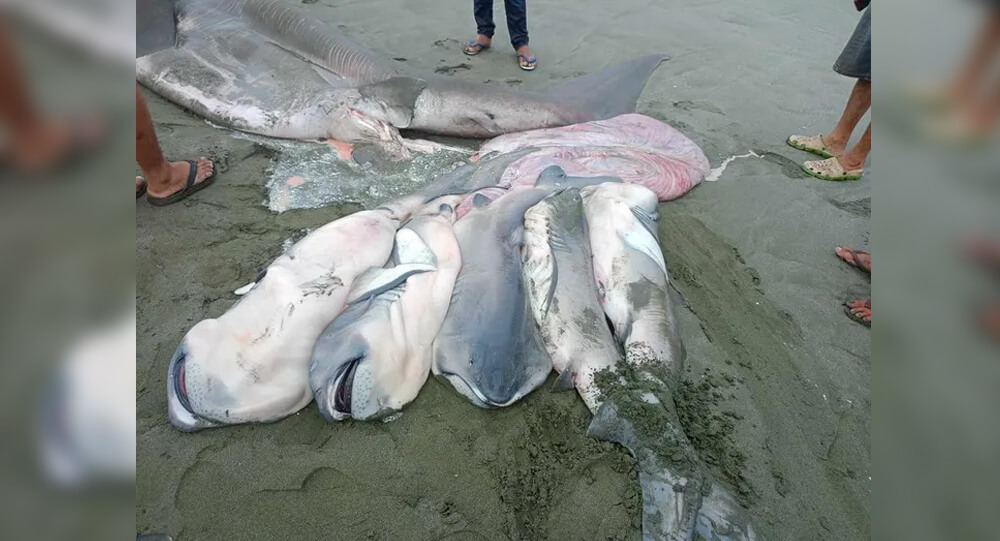
Megamouth Shark And Her Babies Found Dead In The Philippines
Filipino zoologists have recorded a pregnant megamouth shark for the first time ever since the rare aquatic specie was discovered in 1974.

The Astonishing Case of Sanju Bhagat: Living with a Twin Inside Him for 36 Years
Sanju Bhagat, an Indian farmer, lived with an undiagnosed parasitic twin inside his abdomen for 36 years. In 1999, doctors discovered the twin during surgery. This rare condition, fetus in fetu, occurs when a malformed twin is absorbed during pregnancy, surviving within the host sibling's body.
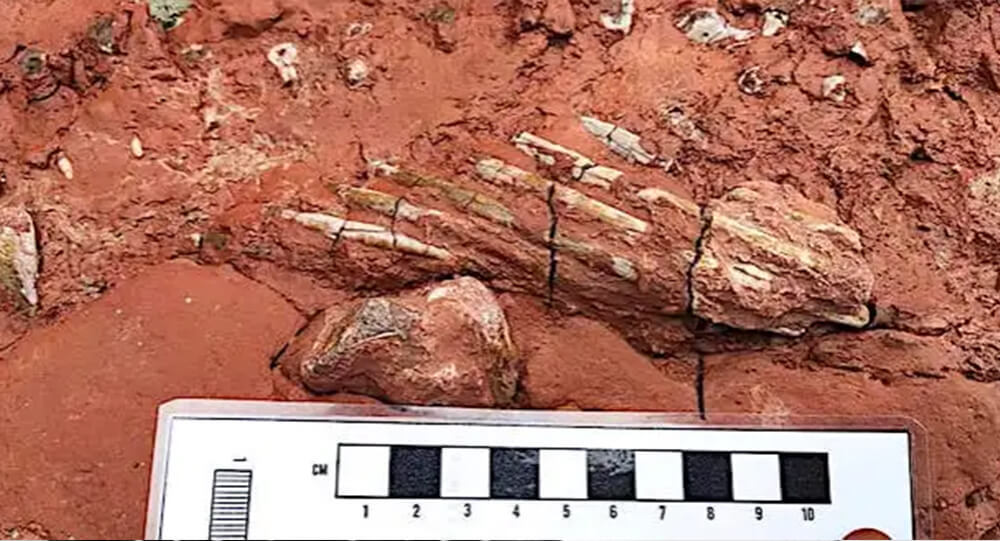
Canadian Schoolteacher Discovers a Fossil That May Be 300 Million Years Old
School teacher discovers extremely rare fossil of unknown animal that maybe 300 million years old. One high school teacher was walking her dog when she made a once-in-a-lifetime find. It turns out that the fossil is probably 300 million years old and came from an extinct species of reptile.

The World’s First Seismograph: How Ancient China Detected Earthquakes 1,800 Years Ago
Over 1,800 years ago, long before modern technology, the ancient Chinese astronomer and inventor Zhang Heng created the world’s first seismograph in 132 AD. This ingenious bronze device could detect distant earthquakes by releasing small balls from dragons’ mouths into toads’ mouths—each indicating a different compass direction. Its historic detection of an earthquake 400 miles away astonished the imperial court and transformed the way societies understood and responded to seismic events.

The Mystery of Canada's Magical Spotted Lake
Lake Khiluk, the world's most mineralized lake, and one of the most mysterious places on Earth. Each of these spots has a distinct chemical content and is said to cure various diseases.

The Giant Mirrors Brought Sunlight to Rjukan
Due to the steep mountains that surround it, the town of Rjukan, Norway, doesn't receive any natural sunlight from September to March. They placed large mirrors in the town square to reflect light. The mirror follows the path of the sun and moves every 10 seconds to create a 600m squared light pool.

Earthquakes: Can Animals Really Predict Them?
In 1975, when officials in the Chinese city of Haicheng were alarmed by odd and anxious behaviors of dogs and other animals. These observations led them to order 90,000 residents to evacuate the city. Only a few hours later a 7.3 magnitude earthquake destroyed nearly 90% of the city’s buildings.