

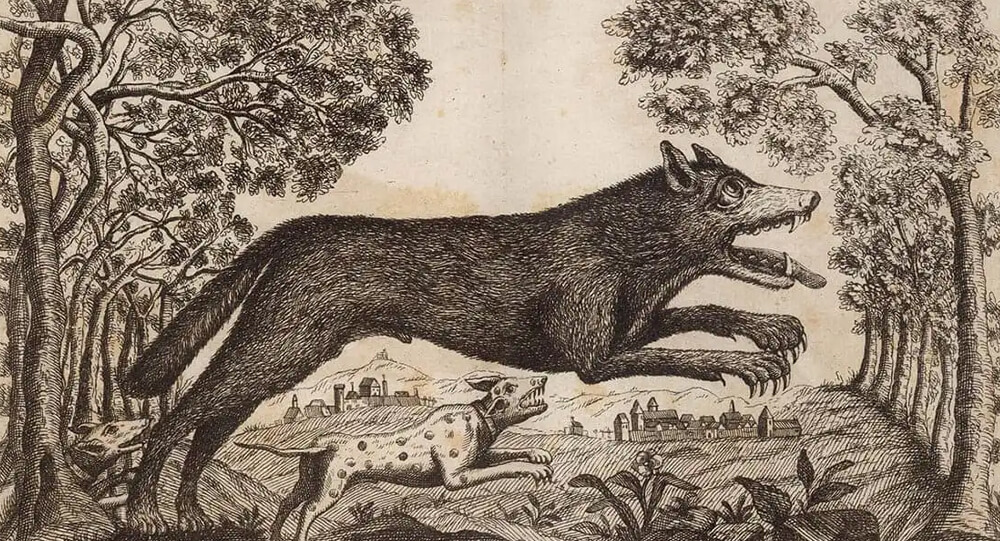
Generations of people have been fascinated by and speculated about The Beast of Gévaudan, a fabled and mysterious creature that terrorized the French province of Gévaudan in the 18th century. The Beast gained notoriety in European folklore as a result of its vicious attacks on people, which left a trail of blood and terror in its wake. This article explores the creature’s history, the sequence of attacks, the methods used to catch it, and the unsolved question of who it really is. In an effort to discover the truth behind this spellbinding and terrifying tale, we also look into the legacy of the Beast, its cultural impact, and the various theories that have developed over time. Join us as we explore the mysterious and ominous past of the Beast of Gévaudan.
the Beast of Gévaudan
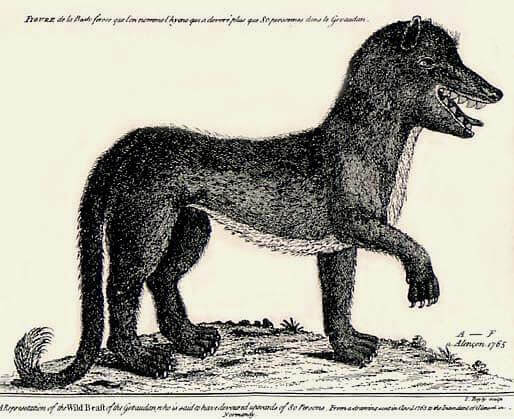
In the 18th century, a terrifying creature prowled the lush countryside of Gévaudan, a charming province in France, terrifying the locals. The so-called Beast of Gévaudan was not your typical animal. This mysterious beast, described as a massive wolf-like creature with gnarled fangs and a ravenous appetite for human flesh, left a trail of destruction in its wake.
The Beast of Gévaudan legend caught the attention of people all over the world and quickly spread like wildfire. With each horrifying attack, as the death toll increased and fear spread throughout the area, its infamous reputation grew. The beast’s reputation for being savage and monstrous in size only served to heighten the morbid fascination surrounding it. It became a real-life horror story, captivating both the curious and the terrified.
Historical Background and Context
We must first examine the historical backdrop in order to comprehend the impact of the Beast of Gévaudan. The southern French province of Gévaudan, where the majority of the population resided in rural areas, was renowned for its serene way of life and picturesque surroundings. Most of its residents were farmers and shepherds; they lived far from Paris’ hectic city life.
In Europe, the 18th century was a time of social and political change. In particular, France was changing as the ideas of revolution and enlightenment spread. However, life moved much more slowly in the isolated province of Gévaudan. The province, which had its own distinct traditions and customs, remained comparatively remote.
Beastly Attacks: Timeline and Description
The Beast of Gévaudan made its first known attack in 1764, killing and brutally mauling a young woman who was tending her cattle. This unexpected incident shocked the neighborhood and sparked a wave of anxiety and paranoia. People began to live in constant fear of the beast’s impending attack as soon as reports of a man-eating monster started to spread.
The attacks got worse and more frequent as the weeks turned into months. The beast appeared unstoppable as it mercilessly tore apart innocent villagers. Even the most courageous people shook at the mere mention of the creature’s name because nobody felt safe. The beast was merciless, leaving a trail of dismembered bodies in its wake.
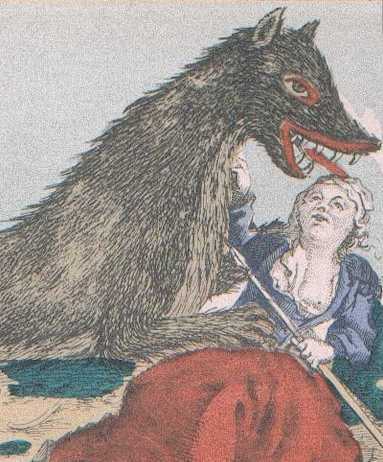
Those who had survived the beast’s attacks related horrifying tales of their encounters. They spoke of an enormously powerful and large creature with terrifyingly evil eyes. A collective picture of the beast emerged from these accounts, solidifying its reputation as a terrifying and dangerous predator. These firsthand accounts contributed to the general nightmare that had descended upon Gévaudan.
Professional hunters and soldiers were sent to Gévaudan in order to find the elusive animal. They sought to put an end to the beast’s reign by using their knowledge and powerful weapons. The creature, however, managed to elude capture repeatedly despite their best efforts and relentless pursuit, leaving those in pursuit frustrated and perplexed.
There were difficulties in the search for the Beast of Gévaudan. For those determined to capture it, dense forests, hazardous terrain, and the creature’s cunning nature presented significant obstacles. The hunters were confused and worn out as the creature appeared to have an uncanny ability to vanish into thin air. As the hunt dragged on, frustration increased and the beast’s aura of mystery grew thicker.
The Hunt for the Beast: Strategies and Challenges

Local and royal authorities felt compelled to act in response to the Beast of Gévaudan’s reign of terror. To rid their beloved province of this monstrous threat, hunting parties were set up, made up of amateur and professional hunters from the area. The hunt was made even more intense by the royal court’s generous rewards for the beast’s capture.
Finally, the Beast of Gévaudan story continues to be a terrifying historical episode that inspires both dread and fascination. Its legacy serves as a reminder of the mysterious and enigmatic forces that have the power to capture our collective imagination and fill us with awe and fear of the things that lurk in the dark.
Speculations and Theories: Solving the Mysteries
There are conflicting views on the infamous Beast of Gévaudan. Was it merely an animal or was it something more evil? Some people think it was just a regular wolf, while others put forth theories about a supernatural being, possibly even a werewolf. While the exact truth may never be known, this controversy adds a layer of intrigue to the beast’s already fascinating mystery.
The identity of the Beast of Gévaudan has been the subject of many theories throughout history. According to scientific theories, the creature could be anything from a rabid wolf to a hybrid animal created when wolves and other species interbred. Additionally, historians have suggested that the beast was trained by a disturbed person or that it was a component of a complex plan to sow fear. Each theory offers a distinctive point of view, adding to the intrigue of solving this mystery.
There are a variety of competing explanations and conspiracies surrounding the Beast of Gévaudan, just like there are for any unsolved mystery. Some contend that the beast was really a royal experiment gone awry, while others think it was a political ruse to divert attention away from the nation’s more urgent problems at the time. These theories may seem improbable, but they undoubtedly contribute to the mystery’s allure by leaving room for speculation and imagination.
Modern Interpretations and Cultural Representations
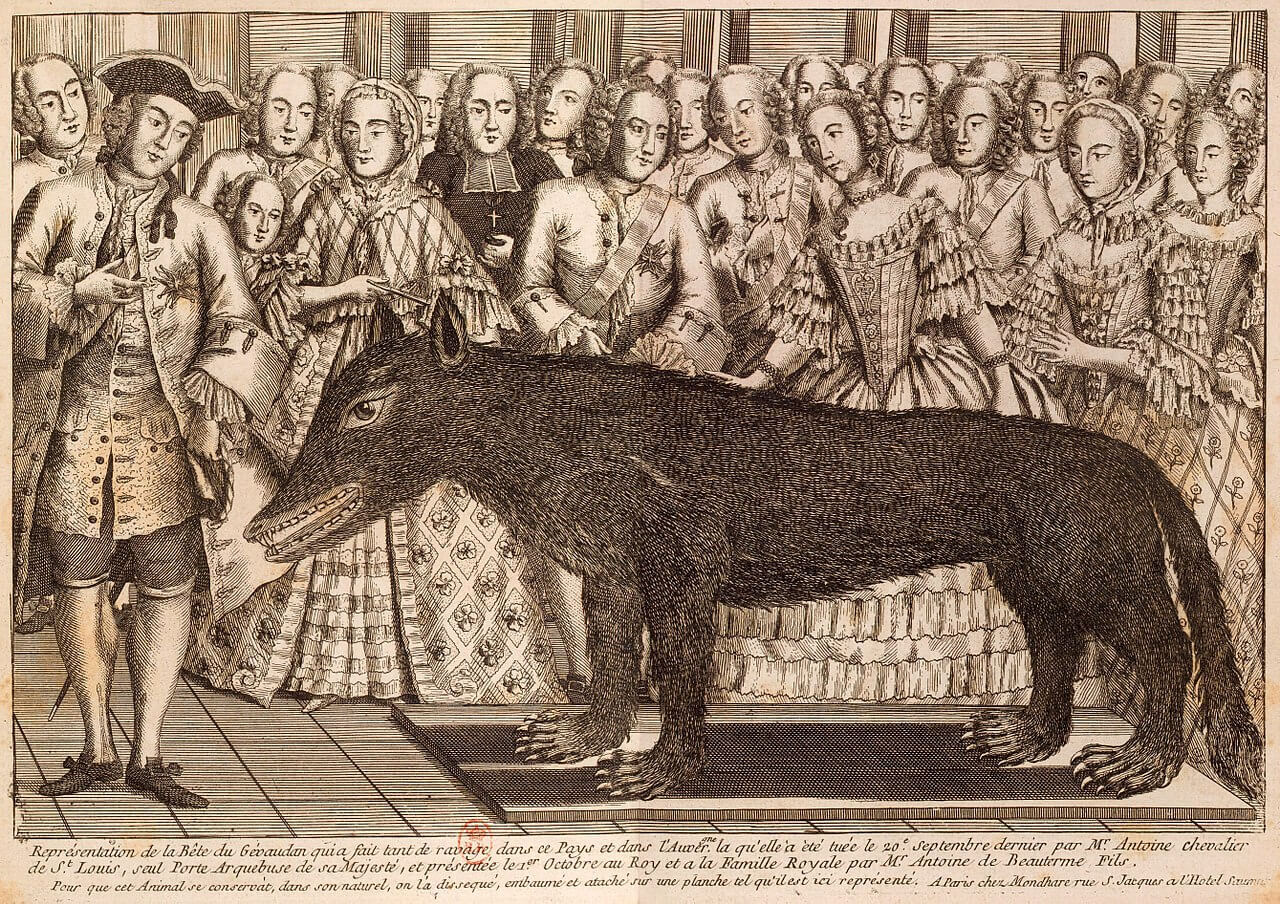
The Beast of Gévaudan’s tale is frequently told in popular culture, and it continues to enthrall contemporary audiences. The legacy of the beast lives on, reaching new generations and continuing to be a source of intrigue and fascination through everything from documentaries and podcasts to fictional adaptations.
Even after centuries have passed, experts and enthusiasts are still interested in the Beast of Gévaudan case. In order to shed new light on this long-standing mystery, contemporary investigations employ cutting-edge scientific methodologies and historical research. The search for solutions continues as new theories are developed and old evidence is reviewed, reminding us of the enduring allure of unsolved mysteries.
Unanswered Questions and Continuing Fascination
The Beast of Gévaudan has been the subject of extensive research, but many mysteries still remain. The extent of human involvement in the events, the creature’s true identity, and the reasons behind the attacks are just a few of the unanswered questions. The ongoing fascination with this legendary beast is only heightened by the pervasive feeling of suspense and uncertainty.
With its tale of terror, The Beast of Gévaudan has endured the test of time and enthralled generations. It’s still possible to learn more about the beast as new technologies and investigation techniques become available. The Beast of Gévaudan is still an unsolved mystery that intrigues and fascinates people. The ongoing interest and research surrounding this enigmatic creature attest to its lasting impact and the unyielding curiosity of humanity. The true nature and origin of the Beast have remained a mystery despite centuries of study and conjecture. However, the region’s collective memory is still marred by the legacy of terror and fear it left behind. As we continue to revisit the case and explore new theories, the legend of the Beast of Gévaudan reminds us of the enduring power of folklore and the enduring allure of unresolved mysteries.

Hedy Lamarr, A Hollywood actress who also a mathematician and inventor
Hollywood actress Hedy Lamarr was also a mathematician and the inventor of frequency hopping spread spectrum, a technology still used for bluetooth and wifi

Remembering the miracles of the 1985 Mexico earthquake (unbelievable stories)
In 1985, after an 8.0 magnitude earthquake hit Mexico City, nearly all newborn babies survived a collapsed hospital. They are known as “Miracle Babies” for surviving 7 days without nourishment, water, warmth or human contact.

The true story Of The Radium Girls that change US labor laws
Hundreds of young women worked in clock factories during World War I, painting watch dials with luminous radium paint. The company lied about the risk of radiation, claiming there was no danger, which resulted in the death of the young women.

The story of Bill Haast, who lived to be 100 despite his extensive snake venom injections
Bill Haast immunized himself by injecting snake venom into his blood for several years. He holds the Guinness World Record for surviving the most lethal snake bites, having been bitten over 172 times. Bill became known as "Snake Man" around the world and lived for over 100 years.

Quaker Oats Fed Children with Radioactive Oatmeal
In the 1940s and 1950s, Quaker Oats and MIT conducted experiments on radioactive iron and calcium-containing cereal. The diet was part of a study to see if the nutrients in Quaker oatmeal traveled throughout the body. In January 1998, a $1.85 million settlement was reached for 30 victims who came forward.

Martin Couney, Saved Thousands of Premature Babies Wasn’t a Doctor at All
Martin Couney never qualified as a medical doctor. However, in the 1900s, he saved thousands of premature babies by exhibiting them in incubators at his Coney Island sideshow. Over the course of his career, he is said to have saved about 6,500 babies that had previously been written off by mainstream medicine.

The Littlest Skyscraper: How J.D. McMahon’s 480-Inch Con Fooled Investors in 1919
In 1919, J.D. McMahon convinced investors to fund a 480-foot skyscraper, but he labeled the plans as 480 inches, building a 40-foot structure instead. After taking $200,000, he won in court since the plans matched what he built.

Why Comedians Failed to Make Sober Sue Laugh in the Early 1900s
In the bustling vaudeville scene of early 20th century New York, a mysterious performer known as "Sober Sue" captured public imagination not for jokes or songs, but for her unshakable stoicism—she never smiled or laughed. A local theater even offered a tempting reward of $1,000 to anyone who could make her laugh, drawing crowds and famous comedians eager to claim the prize. Despite countless hilarious attempts, Sue remained expressionless, a mystery that baffled performers and audiences until it was revealed that she suffered from facial paralysis, explaining her unchanging demeanor.

Sylvan Goldman: The Visionary Who Revolutionized Shopping with the Cart
The inventor of shopping carts, Sylvan Goldman, had to hire several male and female models to push carts around in his store, demonstrate their utility, and explain their use to other customers, due to not catching on initially.

Why the Brooklyn Bridge Was Once Crossed by 17 Camels and 21 Elephants
On May 30, 1883, a rumor that the Brooklyn Bridge was going to collapse caused a stampede, which killed at least at twleve people. To prove the bridge was safe, P.T. Barnum led a parade of 21 elephants over it.

Why the Word ‘Pen’ Comes from the Latin ‘Penna’ Meaning Feather
The humble word “pen” carries a rich history rooted in ancient times, derived from the Latin word penna, meaning “feather.” Long before modern pens revolutionized writing, feather quills—especially from geese—were the essential tools of scribes, scholars, and artists. This article journeys through the origins of the pen, its evolution, and fascinating trivia about the timeless connection between feathers and writing.

The true story of Josephine Myrtle Corbin, the lady born with four legs and two private parts
Josephine Myrtle Corbin, an American sideshow performer born in 1868, had a rare condition known as dipygus, which caused her to have four legs, each smaller inner leg paired with one of her outer legs. Corbin joined the sideshow circuit, captivating audiences as the "Four-Legged Girl from Texas."

The Baltic Way: the longest unbroken human chain in history
On August 23, 1989, about 2 million people from Latvia, Estonia, and Lithuania formed a human chain that united all 3 countries to show the world their desire to escape the Soviet Union and the communism that brought only suffering and poverty. This power stretched 600 km.

Remembering the 1945 Empire State Building Disaster: When a Plane Met Skyscraper
An airplane crashed into the Empire State Building in 1945. Among other damage, plane parts severed the cables of an elevator and the woman inside fell over 70 stories. She lived and holds the world record for the longest survived elevator fall.

Ancient Jericho: The First Walled City In History
The ancient city of Jericho is the world's oldest walled city, with evidence of stone fortifications dating back nearly 9000 years.

The true story of Annie Oakley, legendary sharpshooter
Anne Oakley was such a good shooter that she could split a playing card help edge-on, hit dimes thrown into the air, shoot cigarette from her husband's lips, and pierce a playing card thrown into the air before it hit the ground.

From Flapper to Fashion Week: How 1920s Style Still Shapes Modern Trends
The roaring 1920s revolutionized fashion, introducing bold styles, daring cuts, and a spirit of freedom that still inspires today’s wardrobes. From flapper dresses to statement accessories, here’s how the Jazz Age lives on in modern fashion.

Roller Coasters were First Invented to Distract People from sin
Roller coasters were invented to distract Americans from sin. In the 1880s, hosiery businessman LaMarcus Thompson didn’t like that Americans were going to places like saloons and brothels and created the first roller coaster on Coney Island to persuade them to go there instead.

How 18th Century Women’s Rights Movements Shaped Modern Equality
The 18th century marked a turning point in the quest for women’s rights, as passionate voices challenged centuries of gender inequality and laid the groundwork for modern feminism. From pioneers like Mary Wollstonecraft to revolutionary declarations and early advocacy, this era sparked debates on education, political participation, and social justice that continue to resonate today. Journey through the origins of women’s rights movements and discover how their bold ideas shaped the fight for equality.

Susanna Salter: The Trailblazing Story of America’s First Female Mayor
In 1887, Susanna Salter became the first female mayor in the United States, elected in Argonia, Kansas. Her nomination was initially a prank by men opposing women in politics. However, she won by a landslide and served effectively, inspiring the women’s suffrage movement and breaking barriers for women in leadership.

Ea-Nasir: world's oldest written customer complaint
This clay tablet, written in cuneiform, is the oldest known written customer complaint about the delivery of poor quality copper ingots. Originally from ancient Babylon, the tablet dates back to 1750 BCE, and it was written by a customer named Nanni to a merchant named Ea-Nasir. It is currently housed in the British Museum.

Terry Fox, a 21-year-old one-legged cancer patient who ran 143 days before dying
Terry Fox was a 21-year-old one-legged cancer patient who ran 3,339 miles across Canada in 143 days before dying.

Moondyne Joe: The story of Australia's most notorious prison escapee
A man named Joseph Bolitho Johns (A.K.A Moondyne Joe) broke out of Australian prisons so many times that the police were compelled to build a special cell just for him. He escaped from that as well.

Nathan's Famous Doctor Stunt
When Nathan's Famous Hot Dogs first opened in 1916, the owner hired people to dress as doctors and eat hot dogs outside his shop, to convince people his hot dogs were healthy.

Medals of Friendship: The Enduring Olympic Story of 1936
At the 1936 Summer Olympics, two Japanese pole vaulters named Sueo Oe and Shuhei Nishida tied for second, but they declined to compete against each other. As a result, Nishida was awarded the silver medal and Oe won a bronze medal. Upon returning to Japan, the athletes had their medals cut in half and spliced together to create new "friendship medals," which were half silver and half bronze.