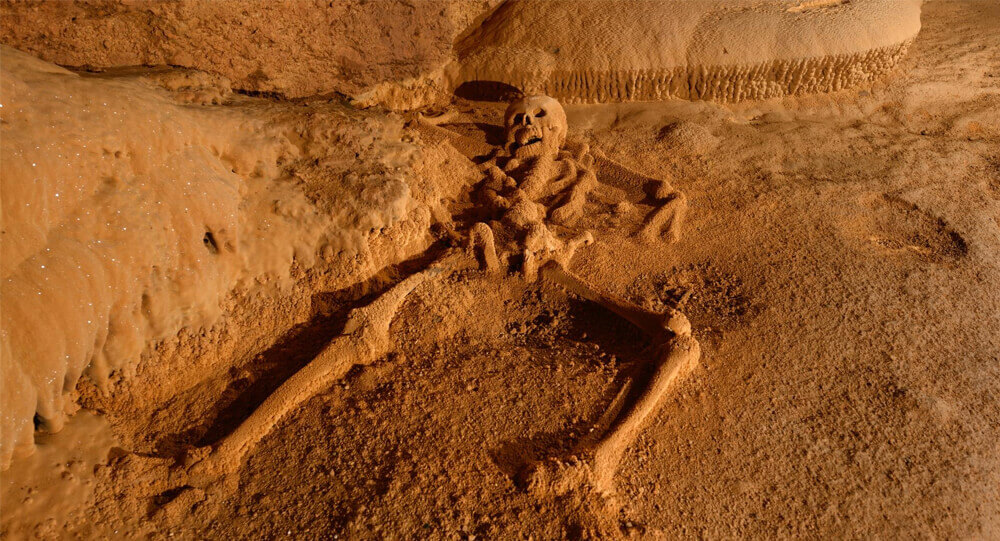
This jungle cave, which was discovered in 1989, is located in the Tapir Mountain Nature Reserve. To get there, take an hour’s ride from San Ignacio, Belize, and then walk through the jungle and across shallow rivers for an additional hour. At this point, the Actun Tunichil Muknal, or “ATM,” cave mouth, is reached. One must swim into the cave and then wade up the cave river for an additional kilometer in order to enter the cave.
The skeletons of the ceremonial sacrifices the Maya made to their gods more than a thousand years ago can be found at the back of the cave system by walking another kilometer and a half through the cave, past massive boulders and large rooms, one of which is called “The Cathedral.”

The age range of the skeletons is one year to adulthood. Four of those sacrificed are young children, some of whom were crammed into small adjacent caves and cracks. They range in age from one to three. There’s a fifteen-year-old (who looks like she was bound before she was killed), a twenty-year-old, and a large number of adults between the ages of thirty and forty-five. Numerous younger skeletons exhibit “skull shaping,” or cranial deformation, which gives the heads of these individuals an oddly elongated appearance.
The majority of them died from blunt head trauma; some had their entire skulls crushed. The majority of the pottery discovered at the site dates from between 700 and 900 AD, which is probably the time when bodies discovered here were sacrificed, even though it is challenging to date skeletons precisely because they are essentially cemented to the cave floor by calcite.

Most famous of these long-dead Maya is probably the skeleton of a 17-year-old boy known as “The Crystal Maiden,” which is located farther into the cave. Although the owner of the skeleton was first thought to be female (due to its small size and slight frame), closer inspection of the bones has revealed features that suggest they were male. (There are reports that certain tour guides call it “The Crystal Prince.”)
The positioning of the skeleton and the fact that two vertebrae are crushed make it unique. The person’s body has been lying on the ground for at least the past 1,100 years, and researchers think that before being hurled or tossed, this person may have died in a particularly violent way. Because the skeleton has been there for so long, the bones have completely calcified, giving them a sparkling, slightly plump appearance that gave rise to the nickname “crystalline.”
Related Topic You Might Find Interesting:
- Xin Zhui And The Story Of The Stunningly Intact Lady Dai Mummy
- Top 10 Greatest and shocking Archaeological Discoveries of All Time
- 13-year-old dog missing for two months found alive in a cave.
The purpose of the sacrifices is unknown, but some people think it was to placate the gods of the underworld or the rain god Chac. Another theory holds that these were believed to be witches (possibly suffering from some kind of mental or physical ailments) and that leaving them unburied in the cave would ensure that their spirits were trapped there.
Additional artifacts discovered within the cave comprise of ceramics bearing “kill holes” and Maya-carved animal and facial silhouettes. Amblypygi, or “whip spiders,” and other predatory spiders can also be found in the cave.
Very little has been taken from the cave since it was discovered, largely because of its inaccessibility and the calcification process that has preserved many of the relics exactly as they were left. (A few items were taken early on.)

Translating to “Cave of the Crystal Sepulchre,” Actun Tunichil Muknal is also called “Xibalba” by the locals, who named it after the Mayan underworld. Traditionally, the Crystal Cave was thought to be a portal to hell, a large crack in the ground that was home to scorpions and rivers of blood. This was the underground court of the Lords of Xibalba, home to the Mayan death gods. These twelve gods, often called “demons,” went by titles like “Skull Staff” and “Stabbing Demon,” and they plagued people with a variety of ailments like pain, illness, and terror.

Only a select few tour guides are authorized to lead tours of ATM Cave, one of the few protected areas in all of Belize. Be very careful, however, as none of the skeletons or pottery are roped off, and one tourist has already accidentally stepped on and broken one of the skulls.


The world’s longest flight spent more than two months in the air
Roberts Timm and Jim Cook, two pilots, flew an aircraft for more than two months without landing in 1958. Matching the speed of a truck moving down the road to refuel. A mattress for sleeping, a small steel sink for personal hygiene, the removal of most interior fittings to reduce weight, and a basic autopilot were among the improvements.


Story of Forrest Fenn and who he hid a bronze chest treasure full of gold and other jewels
Forrest Fenn, an art dealer, hid a bronze chest full of gold and other jewels somewhere in the Rocky Mountains ten years ago. In a poem, he hinted at its location. Thousands of people tried and failed to find the treasure, which is said to be worth over a million dollars, and at least four people died in the process. In June 2020, the Fenn treasure was discovered.

Estonians save a wolf from the ice by mistaking it for a dog
Two young construction workers in Estonia discovered what they thought was a dog caught in a frozen lake. They carried it to their car and brought him to an animal shelter, not realizing it was a wolf.

Timothy Ray Brown, who inspired millions of HIV-positive people, died of leukemia
Timothy Ray Brown, also known as "The Berlin Patient," was the first person to be HIV-free. He was diagnosed with leukemia in 2006 and had a bone marrow transplant in 2007 as part of his treatment. The transplant helped him overcome the otherwise incurable disease thanks to the rare, HIV-resistant donor.

Before Hollywood, Christopher Walken Was a Teenage Lion Tamer with a Lioness Named Sheba
Before acting, Christopher Walken worked as a lion tamer in a circus at age 16. He performed with a lioness named Sheba and described the job as surprisingly calm—just another day before Hollywood stardom.


Apple Watch saves a 78 year old man from life threatening fall
An Apple watch saved the life of a 78-year-old man from North Carolina. When the man was unconscious and collapsed on his driveway, his Apple watch quickly sent an alert to emergency services.

How hero parrot saved little girl who was choking on her breakfast
In 2008 Quaker parrot Willie alerted his owner Megan Howard when the little girl she was babysitting began to choke. Howard was in the bathroom when the parrot repeatedly yelled "Mama! Baby!" flapping his wings. Megan rushed and performed the Heimlich maneuver, saving her life. Willie received the Red Cross Animal Lifesaver Award.

Smart guy brings life-sized cutout of his late mother to his graduation
Even though that his mother passed away in 2016, a young man had a clever idea to make a life-size cutout of her and bring it to the event so that she could attend his graduation ceremony.

Smart girl saves her family more than 100 people in 2004 tsunami
In 2004, a 10-year-old girl saved her family and 100 other tourists from the Asian tsunami because she had learned about the giant waves in a geography lesson, it has emerged.

JBJ Soul Kitchen: Bon Jovi's community restaurant
JBJ Soul Kitchen is a community restaurant by Jon Bon Jovi with no prices on the menu; customers donate to pay for their meals. If you are unable to donate you may do volunteer work in exchange for your family’s meal.

The Man Who Survived Falling Through a Thunderstorm, William Rankin
William Rankin was a fighter pilot who survived an ejection into a thunderstorm. He suffered frostbite, violent wind and lightning, severe decompression, and nearly drowned from breathing in rain water. He was in the cloud for over 40 minutes in total.
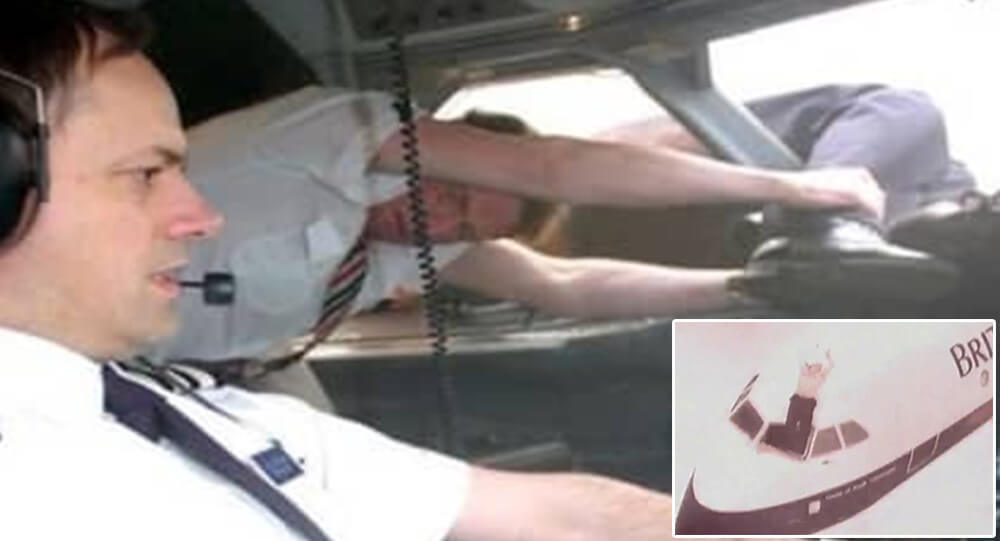
A Pilot Survived 20 Minutes Outside A Flying Jet
In 1990, the captain of flight 5390 Timothy Lancaster got sucked out of his own plane when the window of the plane fell off. The crew held the captain’s leg for 30 minutes while the plane performed emergency landing. Everyone survived.

The incredible story of a plane that lost its roof in mid-flight and the light signal that saved 94 lives.
On April 28, 1988, Aloha Airlines flight 243 was on the way to Honolulu from Hilo when a huge portion of the upper part of the fuselage blew off the airplane.

The Terrifying Mount St. Helens Eruption is Captured by the Robert Landsburg Photographs
Robert Landsburg, a photographer who upon realisation that he is going to die in the mount St. Helens eruption of 1980 lay down on top if his equipment to preserve the photographs he had taken of the events. Landsburg‘s body was found 17 days later, buried in ash with his film intact.
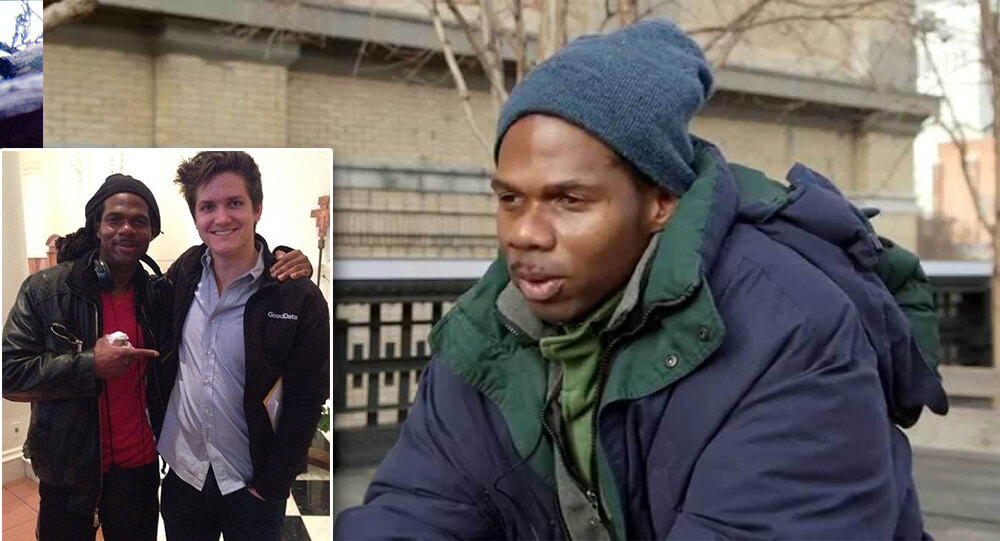
Leo Grand: from homeless to mobile app developer
In 2013, A young programmer offered a homeless man the choice between $100 cash or coding lessons. Leo Grand chose the lessons, and his first mobile app was “Trees for Cars," which helps drivers find carpooling partners.

Croatian teenager wakes up from coma speaking fluent in German In 2010
In 2010, a Croatian teenager awoke from a coma to discover she could no longer speak Croatian but was fluent in German, a language she had just recently begun studying at school in the United Kingdom. reports in the press

Inspiring story of Emma Schols who Saved Her Six Kids From A Burning House
Emma Schols, a Swedish mother, saved all six of her children from a devastating house fire in 2019, running from room to room through flames while bleeding and losing skin. Against all odds, she survived with severe burns covering 90% of her body.
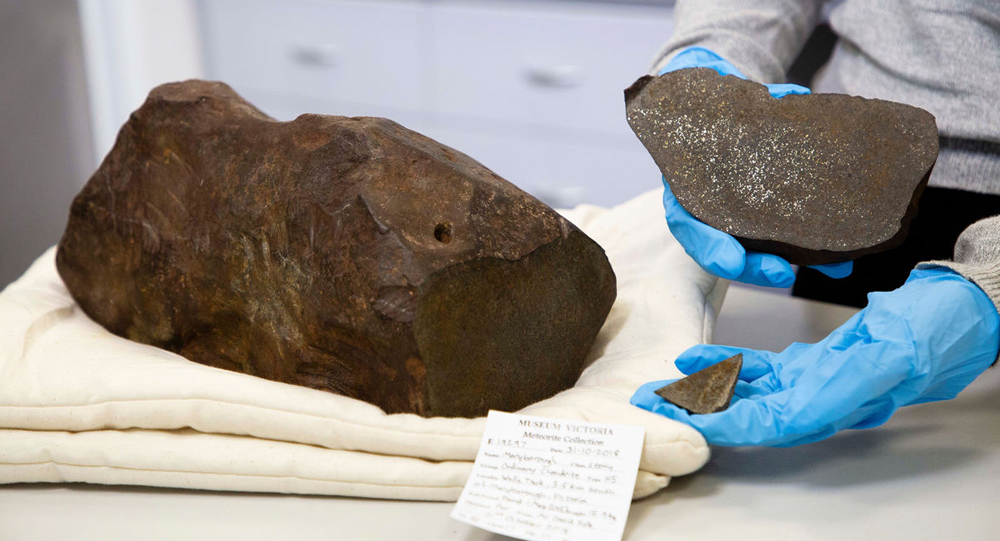
The Man Who Kept a “Gold” Rock for Years—Only to Discover It Was a 4.6-Billion-Year-Old Meteorite Worth a Fortune
A man cherished a heavy 17-kilogram rock for years, believing it to be solid gold. The surprising twist? Experts later revealed it was a rare, 4.6-billion-year-old iron meteorite—an ancient cosmic relic worth far more than gold. Dive into the fascinating story of this celestial treasure and what makes it so valuable.
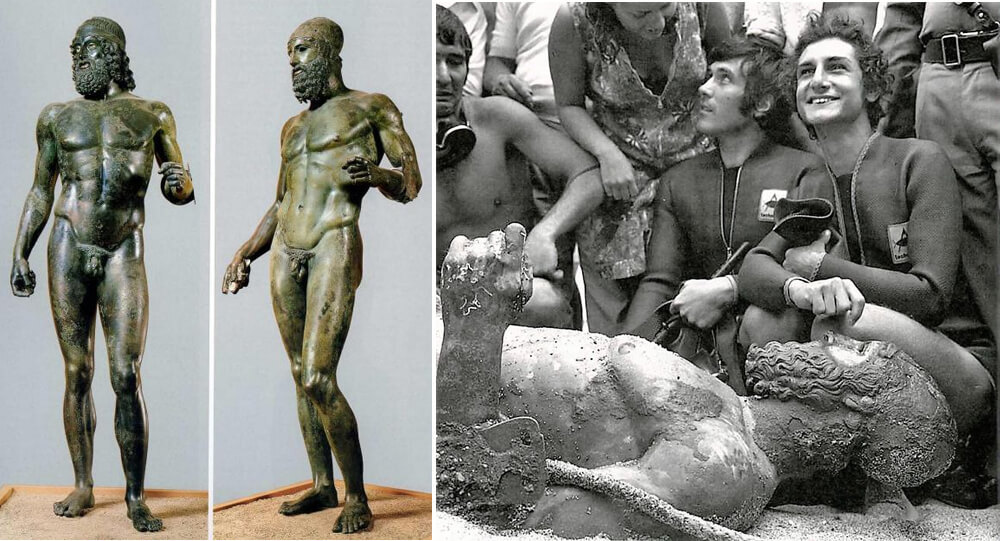
The accidentally discovery of Riace bronzes
Stefano Mariottini was snorkeling off the coast of Monasterace near Riace in 1972 when he noticed a human hand sticking out of the sand and called the police, thinking it was a corpse. It was actually two statues of "Warriors from Riace" - 5th century BC Greek bronze statues.

24-year-old burglar beaten by retired boxer victim
A 24-year-old knife-wielding burglar attempted to get into the home of a 72-year-old senior in Oxford, England, in 2009, but was left battered, bruised, and pinned to the ground. Frank Corti, the elderly, turned out to be a former boxing champion.

The actions of a 7-year-old girl protected her mother from bullets
A 7-year-old girl jumped in front of her mother to save her from a man who was attempting to kill her in 2007. She was shot six times and survived, as well as saving her mother.

New York installs first offshore wind turbine to power 70,000 homes
New York State has achieved a historic milestone in its clean energy transition by installing the first wind turbine at its first offshore wind farm, South Fork Win.

A subway in Chongqing passes through a building (images)
A train has been constructed through an apartment complex in Chongqing, China. The 19-story residential structure is not only passed by the light rail passenger train, but it also serves as a transit stop. Apartment residents can simply get a ride from the sixth to eighth levels.

Morgan’s Wonderland, the world’s first ultra-accessible amusement park
Gordon Hartman was heartbroken when his special needs daughter, Morgan, was rejected by a group of children playing by the hotel poolside. He then set out to build a place where all children can play together. This led to the development of the world’s first ultra-accessible amusement park, Morgan’s Wonderland

The Inspiring Journey of Francis Tsai, Marvel Comics artist diagnosed with ALS
Francis Tsai, an American illustrator and conceptual artist who worked for Marvel Comics, was diagnosed with ALS in 2010. After he lost the ability to move his hands and arms, he started painting digitally on his cellphone with his right big toe. After he could not move his feet anymore, he began using eye-gaze technology to keep drawing.