
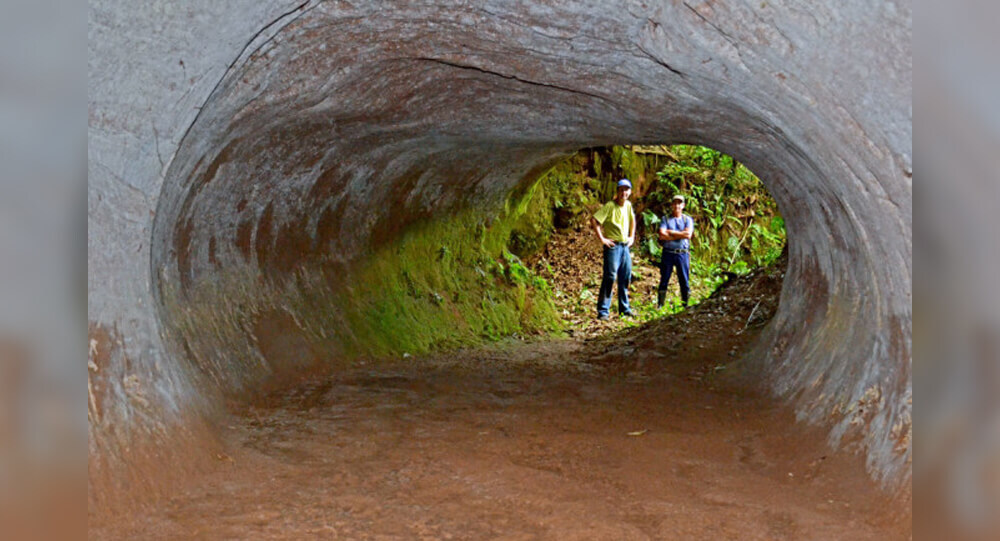

Tunnels Dug by ancient giant sloths, A South American Megafauna
At the time, Adamy, a geologist with the Brazilian Geological Survey (known by its Portuguese acronym, CPRM), was working on a general survey of the state of Rondonia in the Amazon. He eventually found his way to a large hole on a forested slope a few miles north of the Bolivian border after asking around.
Adamy couldn’t thoroughly examine the cave during that first visit because he couldn’t get in touch with the landowner. However, an initial examination indicated that it was not the result of any organic geological process. He had visited other neighboring caves created by water in the same geology that underlies this specific hillside. This wide, round passage with a smooth floor was nothing like the caves that once existed.
Adamy remarked, “I’d never seen anything like it before,” and vowed to go back someday to take a closer look. It truly caught my interest. It appeared unnatural.
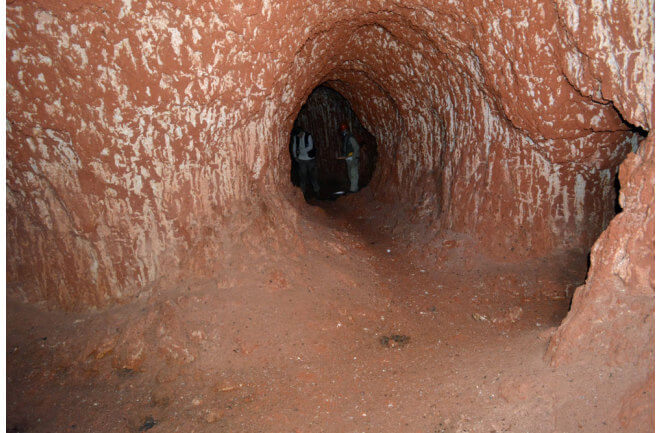
Some years prior, approximately 1,700 miles southeast, a different Brazilian geologist discovered an identically strange cave. A construction site in the town of Novo Hamburgo was passed by Heinrich Frank, a professor at the Federal University of Rio Grande do Sul, as he was speeding down the highway on a Friday afternoon. There he saw a strange hole in a bank where half of a hill had been eaten away by excavators.
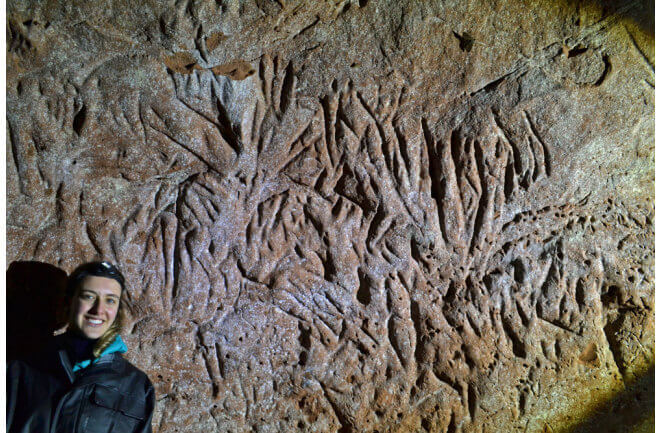
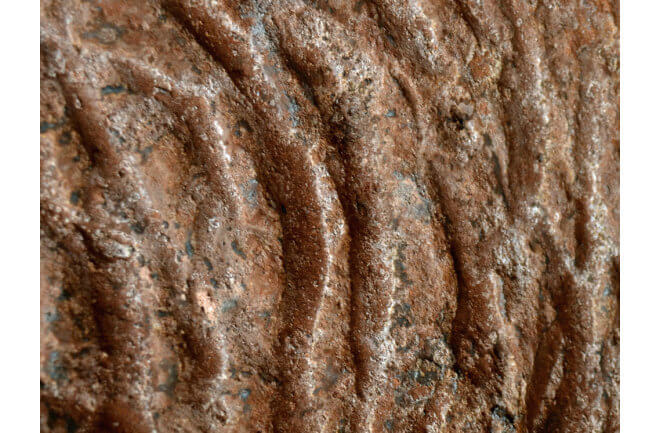
Given the lack of such a sight in the local geology, Frank returned a few weeks later and crawled inside. There was only one shaft, roughly fifteen feet long, and when he was lying on his back, he discovered what appeared to be claw marks all over the ceiling. After failing to find any geologically plausible explanation for the cave’s existence, he came to the conclusion that it was a “paleoburrow,” which he believes was excavated by a giant ground sloth species that is now extinct.
Frank remarks, “I had no idea that paleoburrows existed.” “As a professor and geologist, I’d never even heard of them.”
Rise of the Burrow
Actually, very few burrows associated with extinct megafauna had been documented in the scientific literature until the early 2000s. That’s particularly odd since Frank became enamored with burrows and started discovering them in large quantities following his accidental discovery in Novo Hamburgo.
For instance, when Frank and his students surveyed a 45-mile stretch of newly constructed highway close to Porto Alegre, they found paleoburrows in more than 70% of the road cuts. Many of them are completely filled with sediment, but they are still easily visible, resembling dark, round knots in a bank of dirt. Some, like the one that initially caught Frank’s interest, are still open.
Frank eventually found a suitable opening and squeezed through an elliptical shaft that was about 65 feet long, four feet wide, and covered in claw marks. He estimated that the original burrow was roughly 250 feet long, not including the twists and turns that it undoubtedly once contained, by extrapolating from the original size of the hill that was cut away for the highway.
According to Frank, “there is no geological process in the world that produces long tunnels with claw marks on the walls, that branch and rise and fall, and that have an elliptical or circular cross-section.” “I’ve also seen dozens of caves with inorganic origins, and it’s very evident that digging animals had no part in their creation in these cases.”
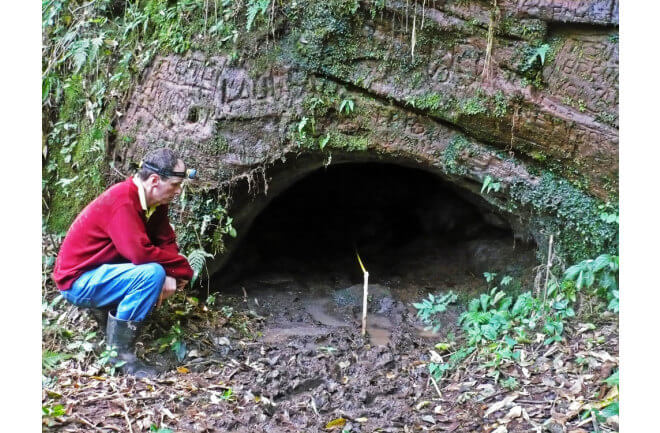
Frank has found at least 1,500 paleoburrows in his native state of Rio Grande do Sul, in the extreme south of Brazil. He has located hundreds more and counting in Santa Catarina, which is directly to the north.
Because of how much these burrows resemble ancient animal dens, he says, “sometimes you get the feeling that there’s some creature waiting around the next curve.”
The First in the Amazon
Amilcar Adamy of the CPRM didn’t get the chance to visit that peculiar cave in Rondonia again until 2015. Granted, it’s not the coolest part—it turned out to be the first paleoburrow found in the Amazon. It also turned out to be one of the longest ever measured, with 2,000 feet or so of branching tunnels combined. An estimated 4,000 metric tons of dirt and rock were excavated from the hillside to create the burrow; the main shafts, which have since been widened by erosion, were originally more than six feet tall and three to five feet wide.
Adamy claims, “This wasn’t made by one or two people.” It was created by many, over many generations, according to Frank, who calls it an exciting discovery that is not very surprising.
He claims, “We knew that burrows this big could exist.” “This massive one in Rondonia just serves as proof that they are real.”
Frank has discovered burrows in Rio Grande do Sul that were once several hundred feet long. In another burrow located far to the north in the state of Minas Gerais in the Gandarela Mountains, more than 1,000 total feet of tunnel have been measured. Frank has heard of one burrow in Santa Catarina that is longer than 3,000 feet, but he hasn’t looked into it yet.
Prehistoric Engineers
Frank thinks ground sloths were the ones who dug the largest burrows, which could have a diameter of up to five feet. He and his colleagues are considering the possibility of studying the fossil remains of several genera that were once found in South America and whose adaptation suggests further research, including the massive, several-ton Lestodon, Glossotherium, and Catonyx. Others think that even the largest burrows were made by extinct armadillos, like Pampatherium, Holmesina, or Propraopus, despite their smaller stature than that of sloths.
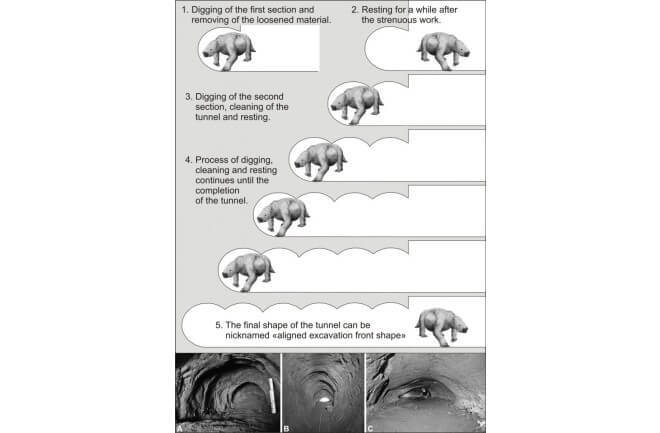
Nevertheless, Frank and his colleagues are still at a loss as to how to account for the sheer size of the burrows. The burrows are much bigger than what would be required to protect the animals that dug them from weather or predators, regardless of whether armadillos or prehistoric sloths are to blame.
The largest surviving member of the family, the giant armadillo, is found throughout most of South America and weighs between 65 and 90 pounds. Its burrows can reach a length of 20 feet and a diameter of just 16 inches.
“So what would dig one five feet wide and 250 feet long if a 90-pound animal alive today digs a 16-inch by 20-foot borrow?Frank enquires. “Nothing explains it; not humidity, not climate, not predators. Really, I have no idea.
Since animals stop digging burrows when they become extinct, dating the burrows is also at best conjecture. But they had to have been excavated between 8,000 and 10,000 years ago, when the giant ground sloths and armadillos of South America went extinct. It is not yet known when sediments washed in, but dating organic material discovered in burrow sediments would indicate when the burrow was dug. Frank adds that although it hasn’t been tested yet, speleothems, or mineral deposits, growing on burrow walls may be utilized to determine an age.
The peculiar geographic distribution of paleoburrows is another puzzling finding. Although they are widespread in the southern Brazilian states of Rio Grande do Sul and Santa Catarina, they are presently virtually unknown in Uruguay, even though some of the earliest known specimens were discovered in Argentina, which is even farther south. Similar to this, not many have been discovered in Brazil further north, and Frank is only aware of a very small number of potential burrows in other South American nations.
Because he happens to live and work in the heart of burrow country, he doesn’t believe he is biased. Frank’s colleagues have done extensive searches in other parts of Brazil, but their results have been largely negative. He has also conducted some detective work by looking through other people’s cave photos on Google. He often recognizes paleoburrows in the south of Brazil from details inadvertently captured in photographs, such as a grinning group of Brazilian boy scouts posing in front of a wall of a cave pocked with claw marks. People share photos of caves they have visited on social media in other parts of the nation and continent, but almost none of them appear to have been originally excavated by animals.
A South American Thing
You won’t find paleoburrows here, despite the fact that giant ground sloths and armadillos once roamed North America.
“It’s possible that we haven’t noticed them here,” says paleontologist Greg McDonald of the Bureau of Land Management, who specializes in studying extinct South American sloths. “Alternatively, it’s possible that they were present here but were unable to thrive for an extended period of time due to improper soil conditions.”
The lack of paleoburrows also raises unanswered questions. Dasypus bellus, the magnificent armadillo, is extinct. It was roughly twice as large as the nine-banded armadillo of today. It was common in Pleistocene North America and shared many forelimb morphologies with modern armadillos, which love to burrow. Beautiful amardillo remains are frequently found in caves, but not ones scientists have ever thought were actually dug by the animal.
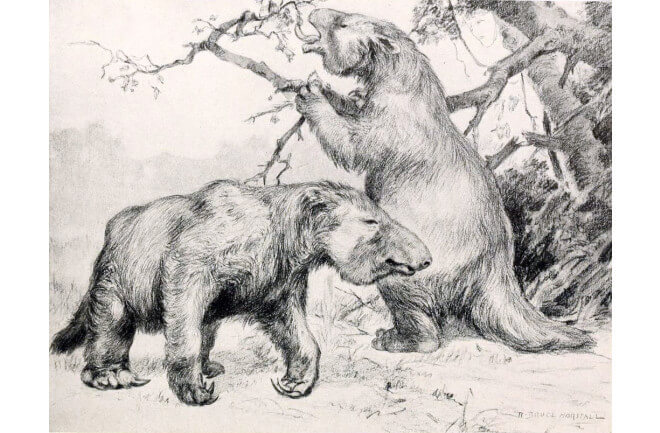
McDonald acknowledges another possibility: paleoburrows may exist in North America but have received little attention, similar to what happened in South America until recently.
“There are things that are so commonplace that people just take them for granted,” he says. “And nobody will know until someone who is at least mildly curious looks more closely and asks, ‘What’s forming these?'”
There’s a long list of research projects to design for the few scientists in South America studying paleoburrows, all centered around the same fundamental questions: who, why, what, where, and when?
Frank has been studying paleoburrows for the past ten years, and describing patterns that have emerged from his observations is at the top of his priority list. While some are straightforward shafts, others are intricate feats of subterranean construction with branching tunnels that rise, fall, and twist to form a network with multiple entrances. Every now and then, a few of them reveal much larger chambers. There are comparatively few of them. And then there are the big ones.
“We must identify the patterns. We’re beginning to get a better understanding of this,” says Frank. “And from there, it will be easier for us to deduce the kinds of animals that were digging them.”
The Forgotten Story of Semipalatinsk and the Soviet Nuclear Experiments
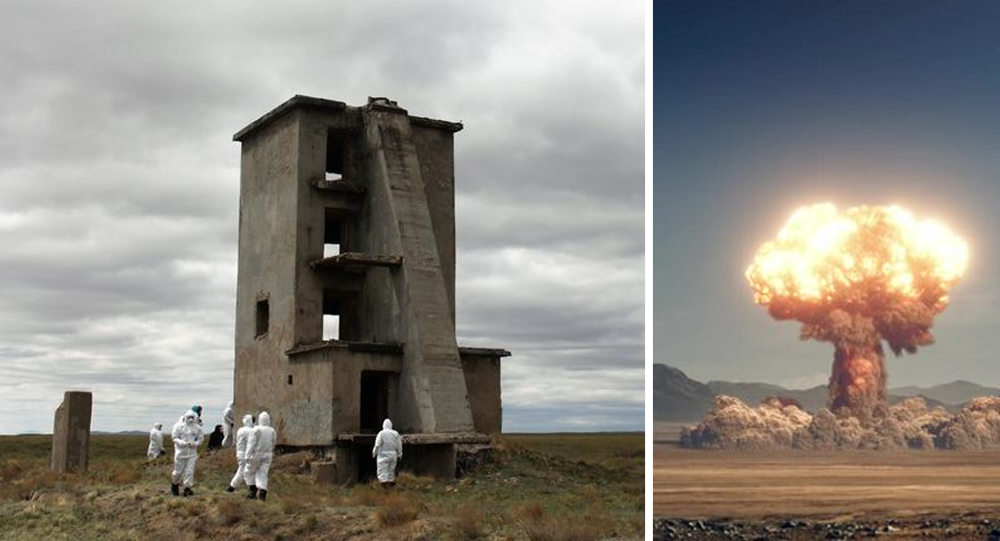
Between 1949 and 1989, the Semipalatinsk Test Site in Kazakhstan became the primary location for Soviet nuclear weapons tests, exposing millions of unsuspecting villagers to radioactive fallout. Known as the “Polygon of Suffering,” this remote desert witnessed 456 nuclear detonations that caused widespread health crises, birth defects, and generational genetic damage. This article narrates the chilling legacy of Semipalatinsk, unveiling the human cost of Cold War arms development and the ongoing struggle for healing and recognition in Kazakhstan.

Xin Zhui And The Story Of The Stunningly Intact Lady Dai Mummy
A 2,000-year-old mummy of a Chinese woman, Xin Zhui, also known as “Lady Dai,” was preserved in 21 gallons of an “unknown liquid.” With her original hair, organs, eyebrows, and eyelashes intact, the mummy still has blood in her veins. Her skin and ligaments are soft and as flexible as that of a living person.


The History Behind the “No One Dies Alone” Program
In 1986, while doing a night shift at the hospital, Sandra Clarke, a registered nurse, was asked by an elderly patient to stay. She promised to be back after checking on her other patients, but by the time she returned, the gentleman had passed away. Clarke became one of the key figures in launching No One Dies Alone, a program that allows volunteers to sit with terminal patients who have no one else.
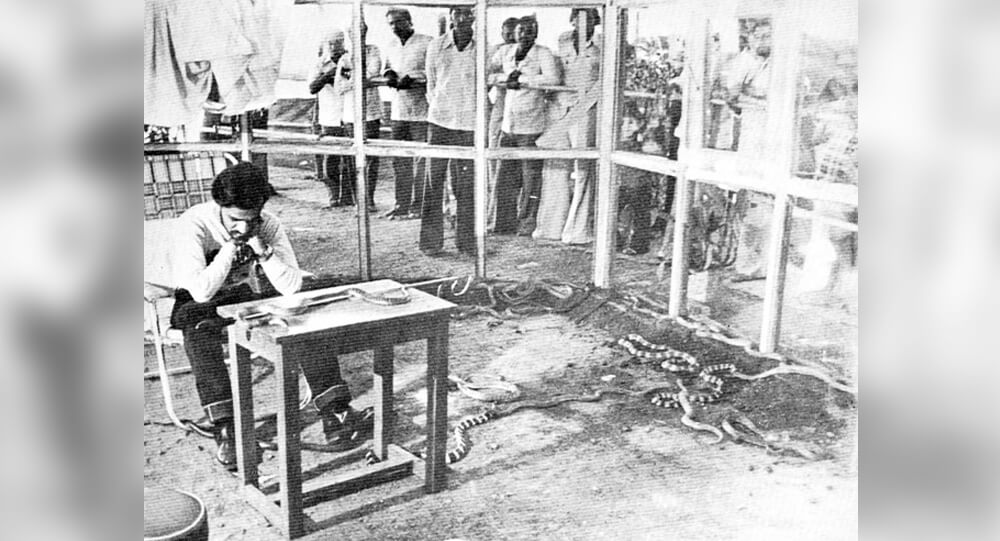
The story of a man who spent 72 hours with 72 venomous snakes to prove they only bite when provoked
In the 1980s, an Indian man spent 72 hours in a glass cabin with 72 snakes, some of which were extremely venomous. His aim was to prove that snakes only attack when provoked. Remarkably, he was not bitten once in those 72 hours and even set a Guinness World Record in the process.

Quaker Oats Fed Children with Radioactive Oatmeal
In the 1940s and 1950s, Quaker Oats and MIT conducted experiments on radioactive iron and calcium-containing cereal. The diet was part of a study to see if the nutrients in Quaker oatmeal traveled throughout the body. In January 1998, a $1.85 million settlement was reached for 30 victims who came forward.

Sylvan Goldman: The Visionary Who Revolutionized Shopping with the Cart
The inventor of shopping carts, Sylvan Goldman, had to hire several male and female models to push carts around in his store, demonstrate their utility, and explain their use to other customers, due to not catching on initially.

Charlie Brown and Franz Stigler incident: Enemy became friends
During WWII, a German pilot spotted an American pilot’s crippled plane in the sky. Tailing it, he noticed that gunner was dead, crew injured, and they posed no threat. Instead of destroying the plane, he led it to safety. 40 years later, the two pilots reunited.
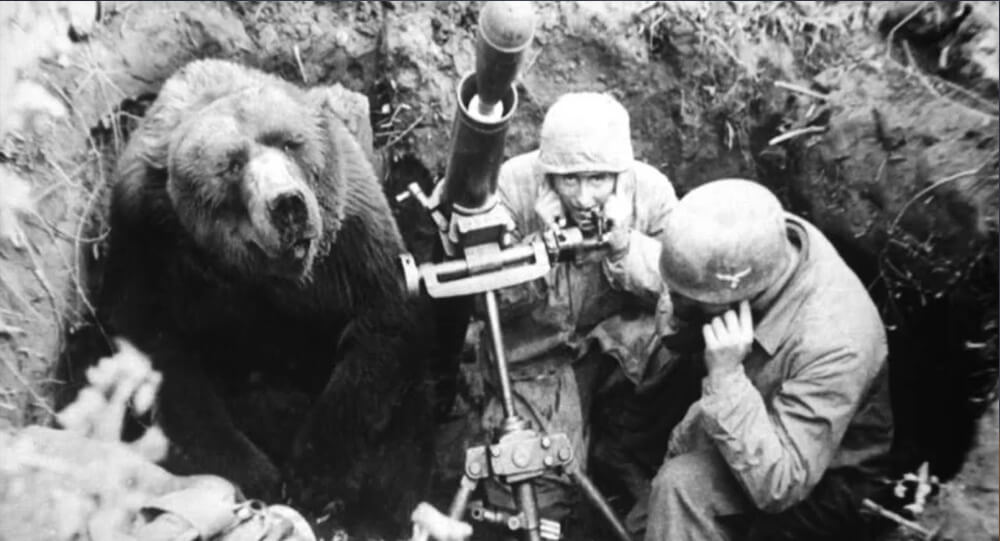
The 440-pound bear named Wojtek and his World War II battle against the Nazis
Polish troops raised an orphaned bear cub during WWII. He enjoyed drinking beer, and was trained to salute. He became officially enlisted as a member of the forces, and helped carry artillery during battle.

Man's Blood Helped Save Millions of Babies
Australian blood donor James Harrison has been one of our most impressive and valued donors, having donated for 60 years. Know his story, how he was a pioneer of our Anti-D program, and why this matters.

Before Radar: How Giant Acoustic Mirrors Detected Enemy Aircraft in WWI and WWII
Long before radar revolutionized air defense, enormous acoustic mirrors and specialized sound locators stood as the first line of defense against enemy aircraft. Designed as giant “ears,” these structures amplified distant engine noises, allowing operators to detect incoming planes by sound alone. Dive into the intriguing world of these pioneering listening devices, their operation, limitations, and enduring legacy in military history.

The Amazing Truth About The German U-Boat That Was Sunk By A Toilet
During WWII, a German captain and an engineer flushed the submarine's high-tech toilet incorrectly, causing the vessel to rapidly fill with water. British planes patrolling the sea attacked them as the submarine was brought to the surface. While many members of the crew were killed in the attack, the captain escaped!

Nathan's Famous Doctor Stunt
When Nathan's Famous Hot Dogs first opened in 1916, the owner hired people to dress as doctors and eat hot dogs outside his shop, to convince people his hot dogs were healthy.

During the 1996 Olympic bombing, Richard Jewell falsely accused of committing the crime after saving dozens of people
Richard Jewell, an American security guard, discovered a bomb during the 1996 Olympic Games in Atlanta and assisted in the evacuation, but was later wrongfully accused and faced public scrutiny. He was cleared, but it had a lasting impact on him until his death in 2007 at the age of 44.
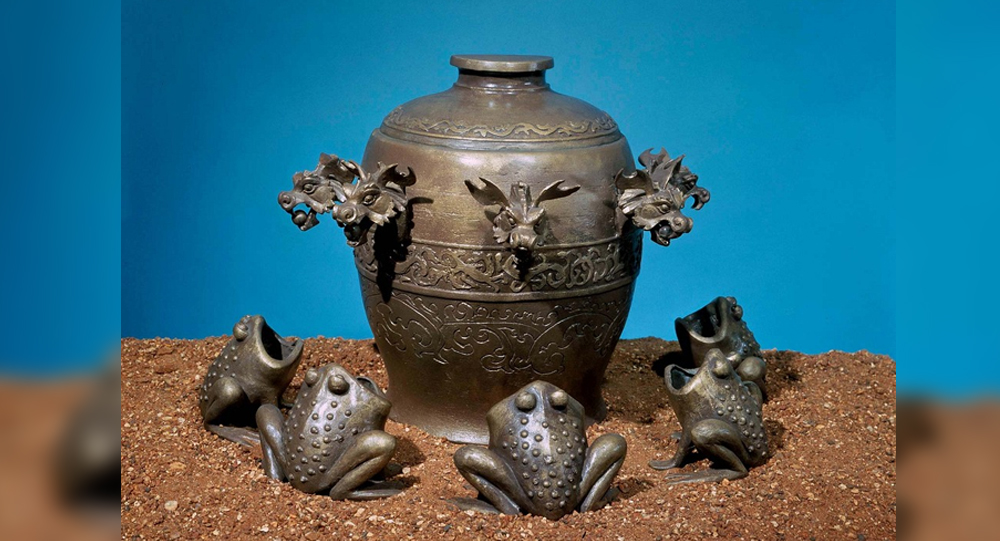
The World’s First Seismograph: How Ancient China Detected Earthquakes 1,800 Years Ago
Over 1,800 years ago, long before modern technology, the ancient Chinese astronomer and inventor Zhang Heng created the world’s first seismograph in 132 AD. This ingenious bronze device could detect distant earthquakes by releasing small balls from dragons’ mouths into toads’ mouths—each indicating a different compass direction. Its historic detection of an earthquake 400 miles away astonished the imperial court and transformed the way societies understood and responded to seismic events.
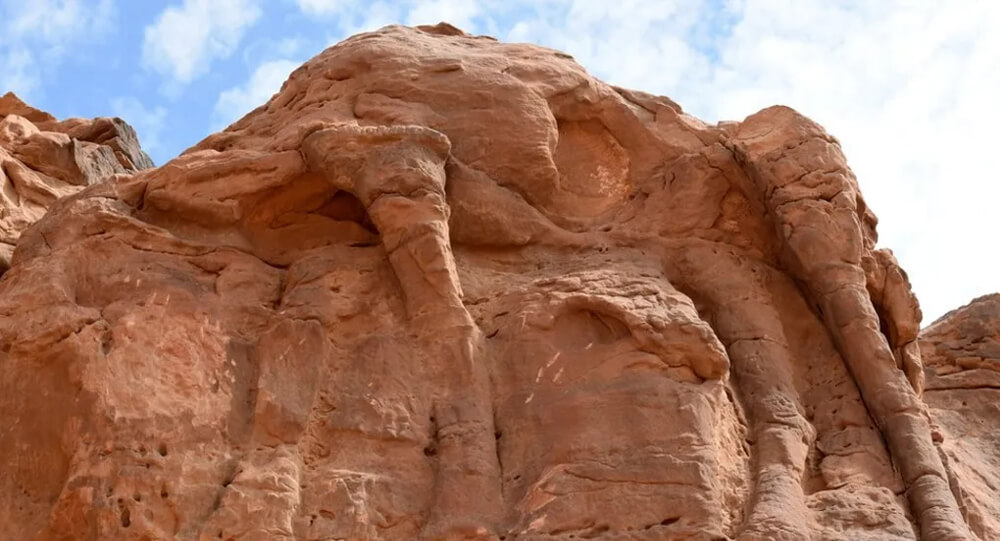
Saudi Arabia camel carvings dated to prehistoric era
Archaeologists were shocked to discover that a series of camels carved into desert rock faces in north-western Saudi Arabia are actually prehistoric, dating from 7,000-8,000 years ago - before either the Pyramids of Giza or Stonehenge were built.
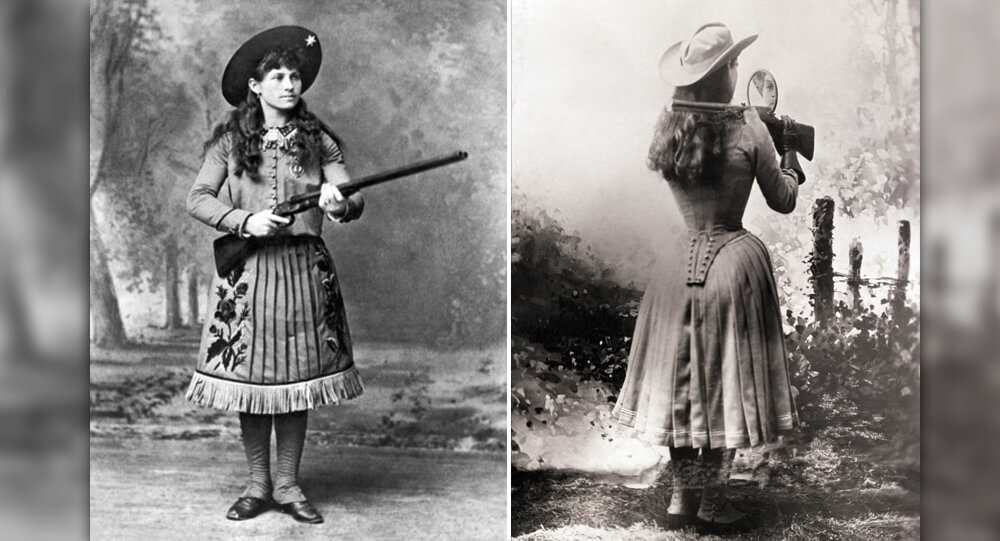
The true story of Annie Oakley, legendary sharpshooter
Anne Oakley was such a good shooter that she could split a playing card help edge-on, hit dimes thrown into the air, shoot cigarette from her husband's lips, and pierce a playing card thrown into the air before it hit the ground.

Terry Fox, a 21-year-old one-legged cancer patient who ran 143 days before dying
Terry Fox was a 21-year-old one-legged cancer patient who ran 3,339 miles across Canada in 143 days before dying.
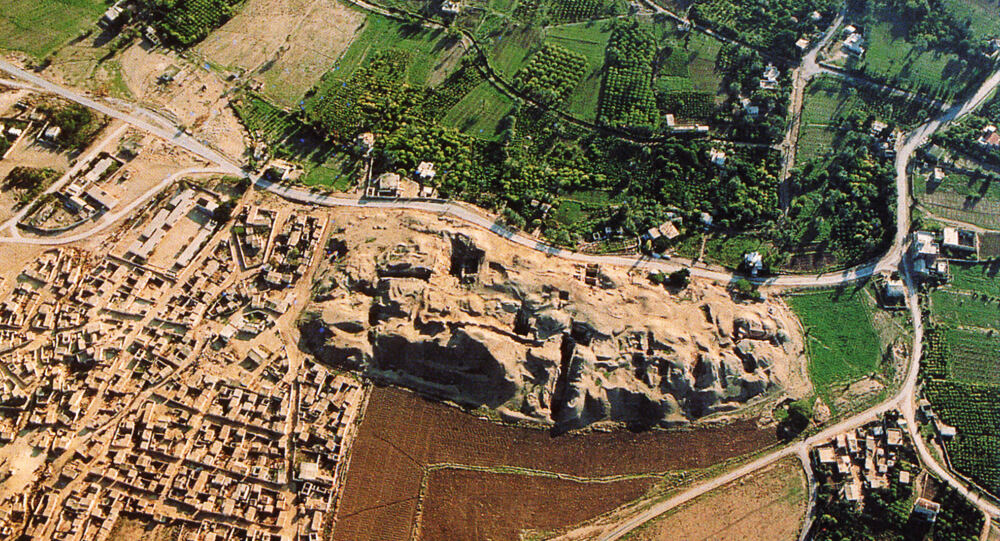
Ancient Jericho: The First Walled City In History
The ancient city of Jericho is the world's oldest walled city, with evidence of stone fortifications dating back nearly 9000 years.

The youngest person executed, George Stinney Jr was proven innocent
In 1944, George Stinney Jr. was 14 years old when he was executed in South Carolina. It took only ten minutes to convict him — and 70 years to exonerate him.
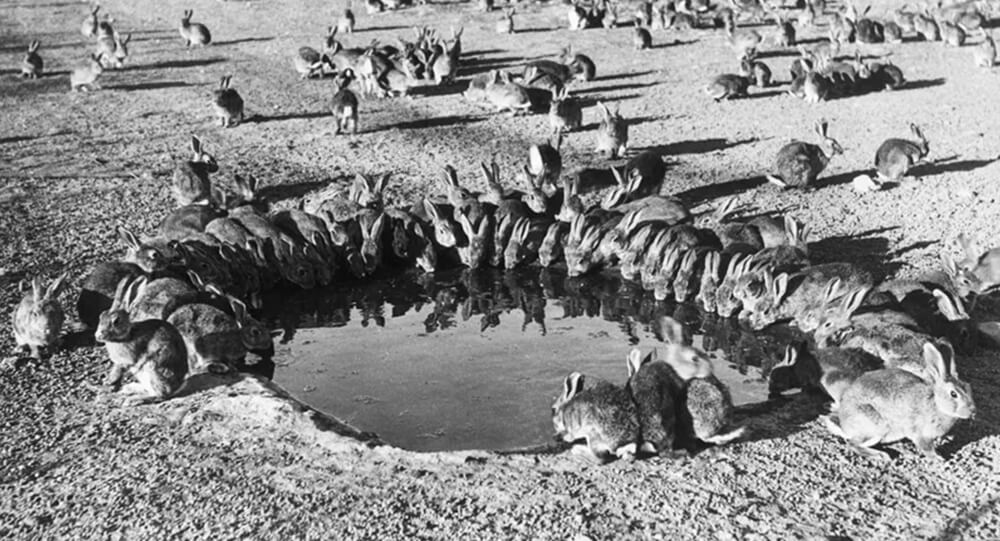
How European Rabbits Took over Australia
In 1859, wealthy settler Thomas Austin released 13 wild rabbits on his Australian estate. By 1920, their population grew to 10 billion.

how Ferris wheel invented
In 1891, Chicago challenged engineers to create a structure to surpass the Eiffel Tower for the World's Columbian Exposition. George Washington Gale Ferris jr. responded with the original Ferris Wheel, a giant rotating structure elevating visitors above the city. This invention became an iconic attraction at the fair.

What is the story behind Wrigley chewing gum?
Wrigley's was originally a soap company that gifted baking powder with their soap. The baking powder became more popular than the soap so they switched to selling baking powder with chewing gum as a gift. The gum became more popular than the baking powder so the company switched to selling gum.

The history of Flour sack clothing fashion
After Kansas mill owners found women reused flour sack materials into apparel in the 1920s and 1930s, they started applying patterned designs to give families with more fashionable patterns and material.

The true story of Josephine Myrtle Corbin, the lady born with four legs and two private parts
Josephine Myrtle Corbin, an American sideshow performer born in 1868, had a rare condition known as dipygus, which caused her to have four legs, each smaller inner leg paired with one of her outer legs. Corbin joined the sideshow circuit, captivating audiences as the "Four-Legged Girl from Texas."

15 interesting facts about Queen Elizabeth II
Queen Elizabeth II, who ruled Britain for 70 years, has away at the age of 96. She was the country's longest-reigning monarch. Here are some little-known facts about her.