
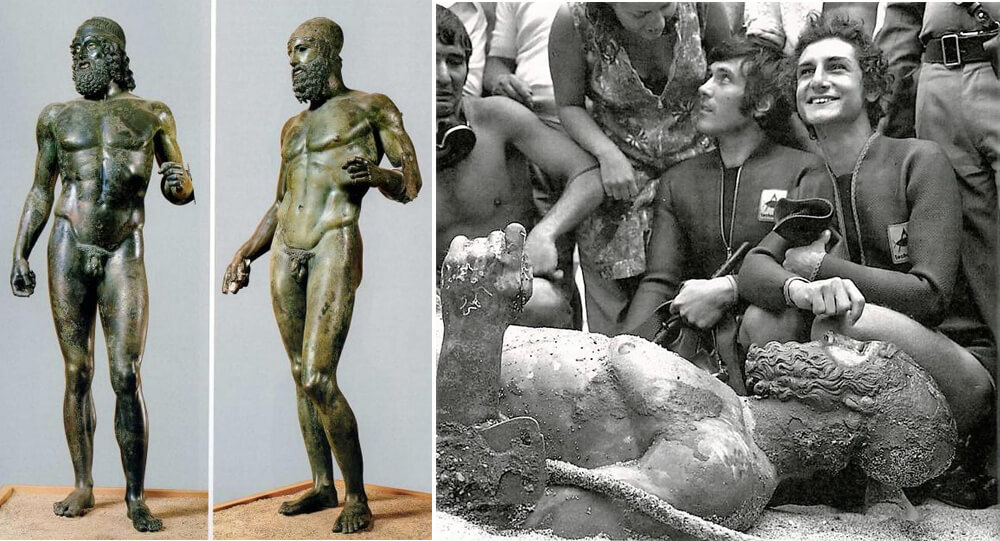
Mr. Stefano Mariottini, a novice scuba diver from Rome, made the discovery of the Bronzes of Riace while on vacation along the Calabrian coast.
They ended up being one of Italy’s most significant archeological discoveries in the previous 100 years.
The two sculptures straddle reality and myth, appearing both human and divine.

These well-known figures are shrouded in secrecy; we don’t know anything about their identity, paternity, or origins, let alone where they came from.
These art pieces are beautifully made and succeed in evoking strong emotions in the public. These are, in fact, the primary causes of the enthusiasm that the Riace bronzes have sparked.
However, some talk about “magnetic force,” “eroticism,” and “halo of fear.”
Others introduce Freud into the conversation. We will talk about this topic in great detail later.
They were first displayed in Florence, followed by Rome, and finally, as well as lastly, in the Museum of Reggio Calabria.
The Romans, after conquering Greece, stole the great artistic patrimony and moved it through a low coastal navigation, along the safer open sea roots of the Ionian coast, which may explain why there are statues in the sea depths today.
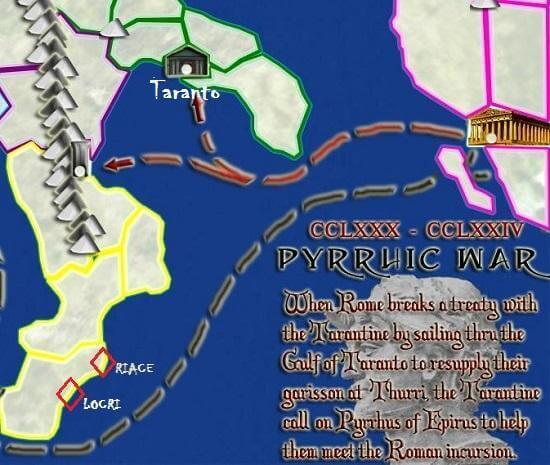
Even if the Bronzi belonged to a Great Greece town like Tarrant (Taranto-Apulia), a transportation towards Rome is objectionable. However, if we place the statues in Locri Epizephiri, it would be more difficult to comprehend why they were more than 30 km north and facing the wrong way. One theory is that the statues were removed during the theft of Locri by Pirrus, the Epirus’ king, in 275 B.C.
It is more likely that the statues were thrown overboard in order to lighten the load on the ship during a storm or to keep them out of pirates’ hands.
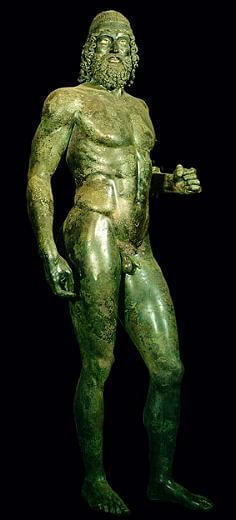
The statues depict two hunky men, possibly gods or warriors, who may have once wielded lances and shields.
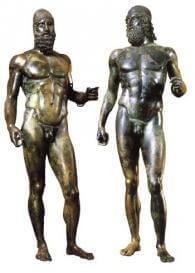
They are considerably larger than life at about two meters. The ‘older’ man, identified as Riace B, is wearing a helmet, while the ‘younger’ Riace A is wearing nothing to cover his ruffled hair.
They are both naked. Although the statues are made of bronze, they have ivory, limestone, glass, and amber paste eyes, silver lashes and teeth, copper-red lips, and copper-colored nipples.
Italian archeological treasures are well-known, but the Riace bronzes have garnered particular interest.
This is due in part to their incredibly realistic rendering and in part to the rarity of old bronze statues, as the metal tended to be melted down and reused.
Mariottini said the bronze was so real that at first he believed he had discovered the remains of a corpse after discovering the statues 300 meters off the coast and eight meters underwater.
Millions of people visited them when they first went on display in 1981, and they were even the subject of a special postage stamp.
The statues draw about 130,000 visitors a year to the Reggio Calabria museum where they are on display. Since there were no wrecks in the area, it is unknown how or when the statues submerged to their watery resting place.
The two “champions” represented manliness in the collective public’s imagination, their “miraculous” reappearance from the waters having touched everyone’s subconscious.
While archeology is more abstract, let’s try to learn more about these two magnificent statues, which are among the few remaining authentic, antique bronze sculptures.
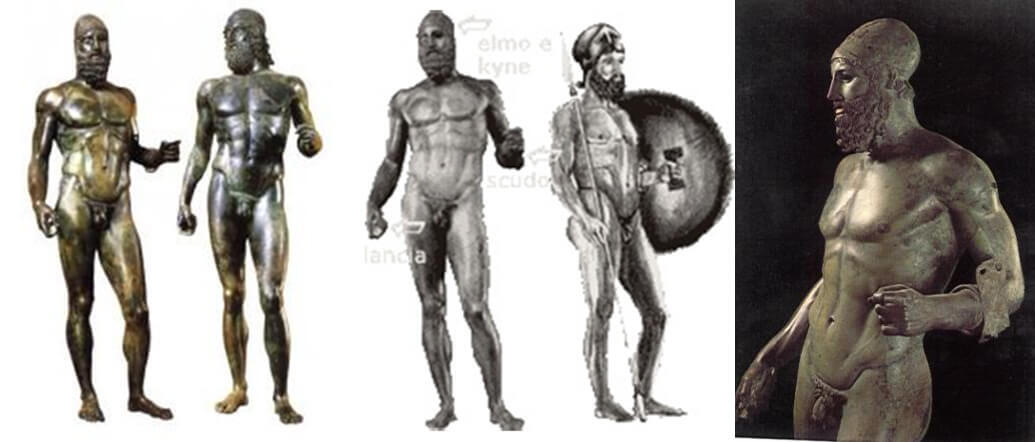
The two statues show two naked men standing erect in the same pose and are about a few centimeters apart in height.
In both instances, the left arms still show signs of a former shield; traces in the hairstyles imply that each individual once wore a helmet.
Half-closed, the right hands were holding something that couldn’t yet be positively identified.
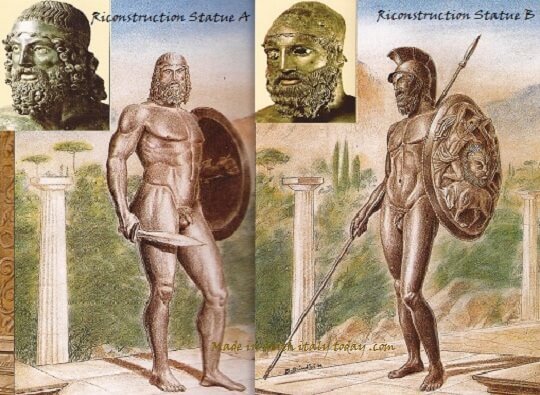
In the Bronze A, this movement does not affect the upper part of the thorax, where the pectorals and shoulders are almost horizontal, whereas in the Bronze B, it affects both the pectorals, defined by a tilted line, and on the shoulders: the right one is in a lower position than the other. As a result, the right thigh stands higher than the left one.
The two statues display a crossed rhythmic pattern in their bodies. The left arm, leaned to hold the heavy shield, corresponds with the upright right leg, which bears the weight of the body; the right arm, with the lower right arm holding the mast, corresponds with the flexed left leg, in a forward position.
In the Bronze A, the plastic vigor strengthens the strong muscles in a more geometrical and static way, whereas in the Bronze B, it does so in a more analytical and dynamic way.
The sub-skinned veins are one of the anatomically correct details that the Bronzi reproduces, and they are especially noticeable in the hands and feet.
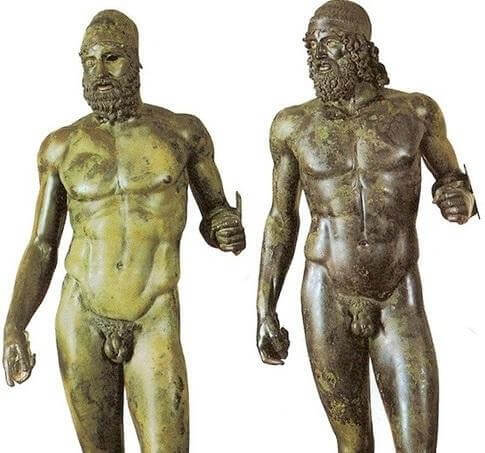
Even the separately manufactured, hammered-applied pinked colored nipples (not made from copper, but from a small amount of lead) are intriguing.
The ability to display the beauty of the human body while being naked is thought to be a crucial component of both “virtue” and one’s capacity for moral and intellectual development.
Due to the fact that athletes played naked and received hero’s honors in the event of victory, being naked was the ideal way to represent divinities, heroes, and also athletes.
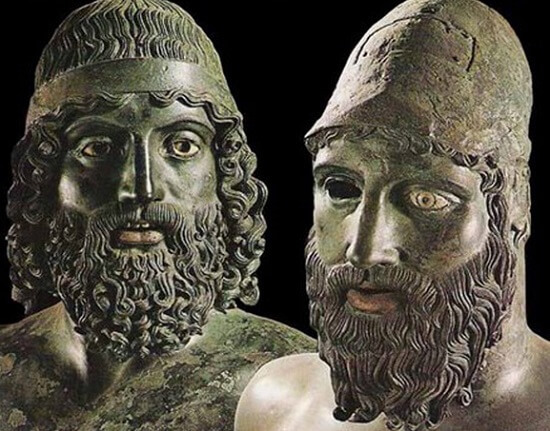
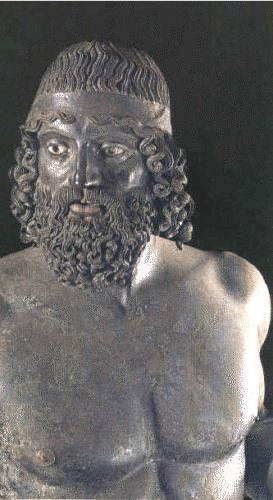
Head of the “A” statue. The hair on the head is held back by a wide band and has a finely defined shave with strongly plastic sinuous wisps.
The long wisp of waved hair that covers the entire scalp and falls into curled wisps on the shoulders leads us to believe that the head was originally helmetless; on top, there is a hollow that may be for a meniscus as well as a practical bronzed tip to deter birds from landing on the statues.
Nevertheless, a Corinthian helmet was positioned a second time, as indicated by standing signs, and the original hollow was changed into an inlet for the same helmet. At that time, applied wisps covered the nicely shaped ears.
The mouth has copper-colored lips and an upper row of five silver-foil-shaped teeth.
The eyes have ivory corneas and bronzed foiled lashes, while the iris, which was not preserved, was likely made of a precious stone or glassed pasta.
The bronze A would stand in for Tideus, who was so ferocious that he bit his foe and ate his brain (hence the silver teeth that could be seen);
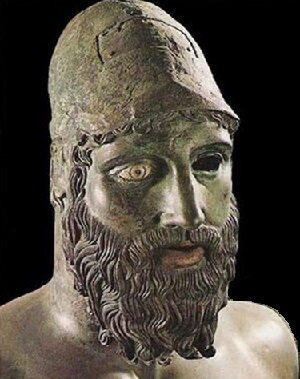
Head of the “B” statue. We can see some plate cats, covered by light hammering and the sulk on the sides of the shave the lower side of the throat; the head is smooth and deformed, likely as a result of the raised Corinthian helmet, and covered by a leather or felt cap.
Lower lobes of the ears and wisps of hair that resembled those from a recent shave but were plastic in nature emerged from the cap.
We only have the right eye, which has the white-marbled cornea, the iris, which is made up of a whitish ring and a pinkish one, and the black eye pupil. Even the mouth has the copper-colored lips.
Anfiarao, who predicted his own demise thanks to his prophetic spirit (remembered by the cap worn by seers), would be the Bronze B.
Other elements differentiate them.
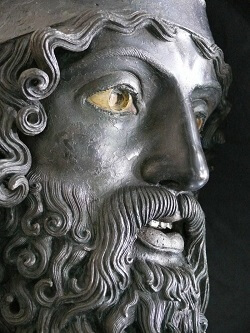
In addition to having a different face, hairstyle, and beard, statue B has a significantly displaced right hip, which places it in the generation immediately succeeding statue A.
The head, the thorax, the arms (divided into three sectors), the hands, the legs, the feet, and the medium-sized fingers on the feet have all been separately cast and then welded together to create the Bronzi.
According to a widely held belief, two sculptors from various historical eras created the Bronzi.
The theory that they were created in Attica, in the environment of Phydia, the creator of the sculptures that decorate the famous Parthenon of Athens, is confirmed.
The A statue was created around the middle of the 5th century B.C., while the B statue, with its new artistic sensibility and Polycletus as its primary creator, was created 30 years later.
Their shared stance, the similarity of the metal alloys used, the fusion process, and the skill demonstrated in the metal inlay used for specific touches (the areolas, lips, and teeth) all point us in the direction of their origins and original intent.
How else could we account for these traits continuing for about 30 years?
This is especially true given that these 30 years fall during the fifth century’s richest, most vibrant, and most innovative period. BC in the era of Phidias and the enormous Parthenon workshop, surrounded by a classical environment.
The two bronze statues were likely commemorative offerings, erected by the winners of the “oplitodromies” (races between athletes in heavy armour introduced in Athens in 520 BC and continued until Hellenistic times). Experts have not reached a final unanimous agreement on this, but it is very likely.
The fame that these race winners attained persisted for as long as their monuments.

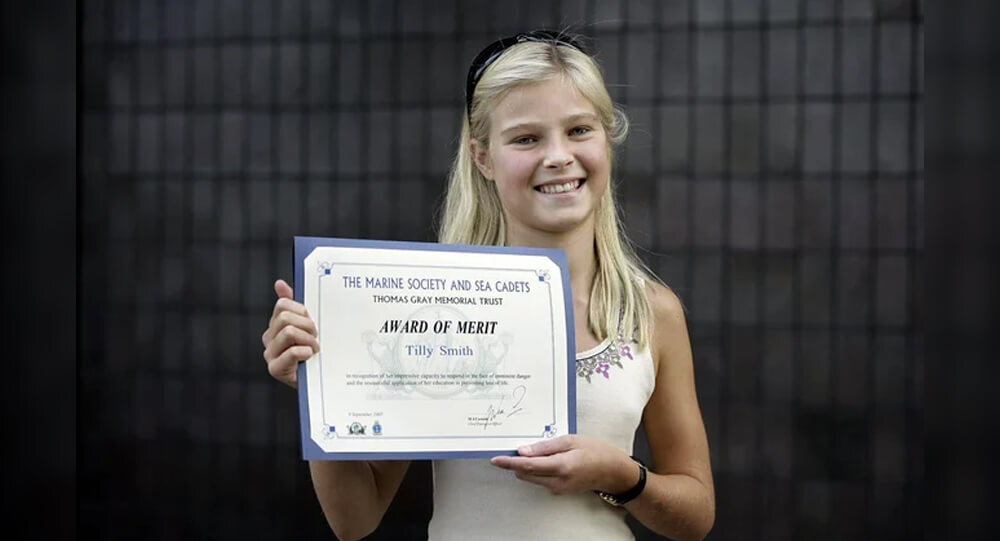
Smart girl saves her family more than 100 people in 2004 tsunami
In 2004, a 10-year-old girl saved her family and 100 other tourists from the Asian tsunami because she had learned about the giant waves in a geography lesson, it has emerged.

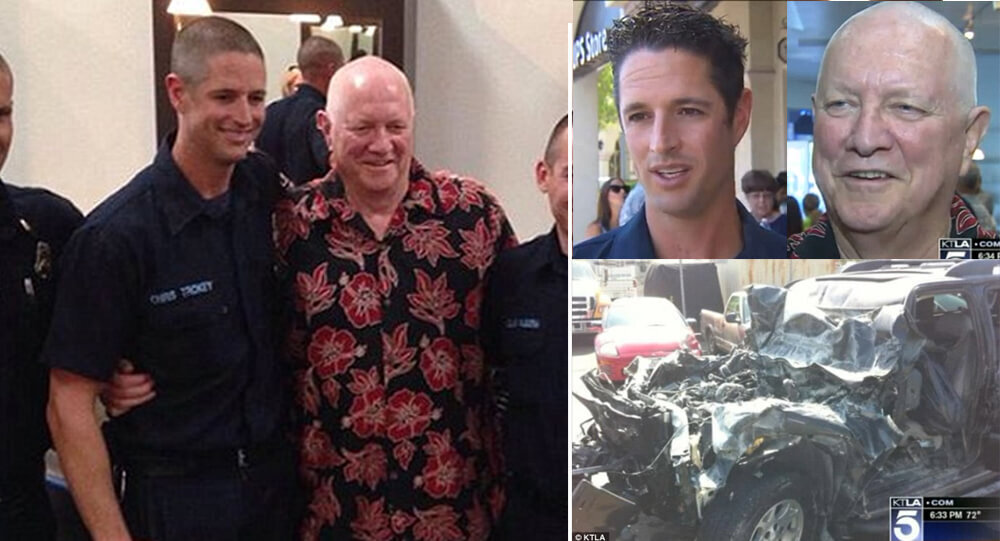
Paramedic Rescues Doctor Who Saved Him 30 Years Earlier
In 1981, a doctor helped save the life of a 3.2 pounds premature baby boy. Thirty years later, the boy, who had grown up to be a firefighter-paramedic, helped in saving the same doctor from a car accident.
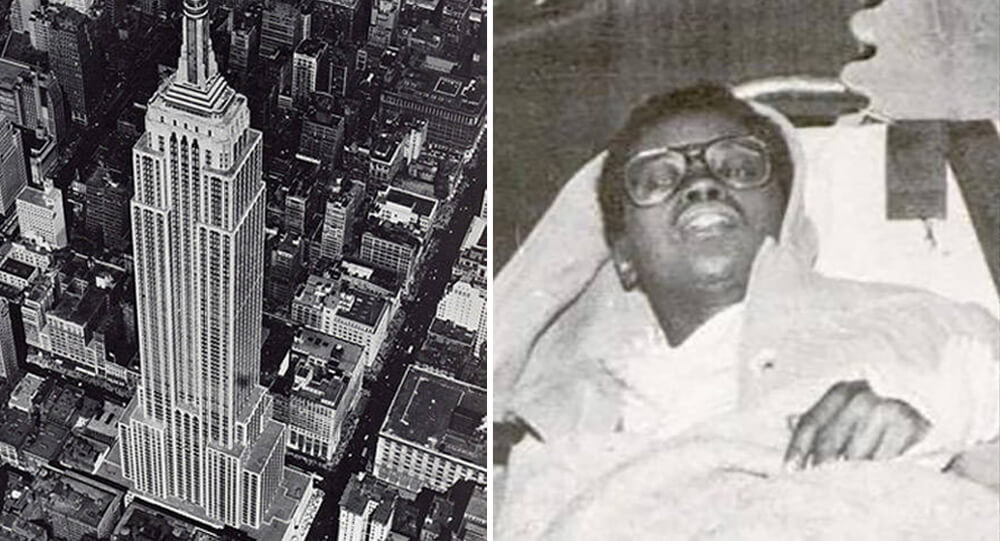
Elvita Adams jumps from the Empire State Building and amazingly survived
Elvita Adams once tried to commit suicide by jumping off the empire state building. She Jumped from the 86th floor but was blown back to 85th floor by a strong gust of wind.

LEGO Braille Bricks: Revolutionizing Braille Learning Through Play and Inclusion
go Braille Bricks were launched in 2020 to help visually impaired children learn Braille through play. Each brick features the Braille alphabet and is fully compatible with standard Lego sets, allowing sighted peers to join in, fostering inclusivity and collaboration in learning environments.

Max Headroom Incident: America’s Creepiest TV Hack
In 1987 a man hijacked a television station during an episode of Dr. Who and wore a Max Headroom mask and uttered nonsense, and he still hasn’t been caught

Croatian teenager wakes up from coma speaking fluent in German In 2010
In 2010, a Croatian teenager awoke from a coma to discover she could no longer speak Croatian but was fluent in German, a language she had just recently begun studying at school in the United Kingdom. reports in the press

A man who was saved from committing suicide 16 years ago now assists people dealing with mental health issues
Kevin Berthia traveled to the Golden Gate Bridge in 2005 to commit suicide. He ended up spending 92 minutes on the edge of the bridge talking to officer Kevin Briggs about his life. In much better circumstances, they cross paths at the same bridge ten years later.

The world’s longest flight spent more than two months in the air
Roberts Timm and Jim Cook, two pilots, flew an aircraft for more than two months without landing in 1958. Matching the speed of a truck moving down the road to refuel. A mattress for sleeping, a small steel sink for personal hygiene, the removal of most interior fittings to reduce weight, and a basic autopilot were among the improvements.

A Pilot Survived 20 Minutes Outside A Flying Jet
In 1990, the captain of flight 5390 Timothy Lancaster got sucked out of his own plane when the window of the plane fell off. The crew held the captain’s leg for 30 minutes while the plane performed emergency landing. Everyone survived.

Woman had no idea she had an identical twin until she saw a 'lookalike' on YouTube
When Anais Bordier saw a YouTube video of Samantha Futerman, who looked exactly like her, she messaged her on Facebook and discovered they were both adopted and born on the same day. They were identical twins who had been separated at birth and had found each other by chance and on social media.

This whale tail sculpture saved a train that went off the rails
A train in the Netherlands failed to stop in time and broke through the emergency barrier. It's being held up by the statue of a whale's tail.
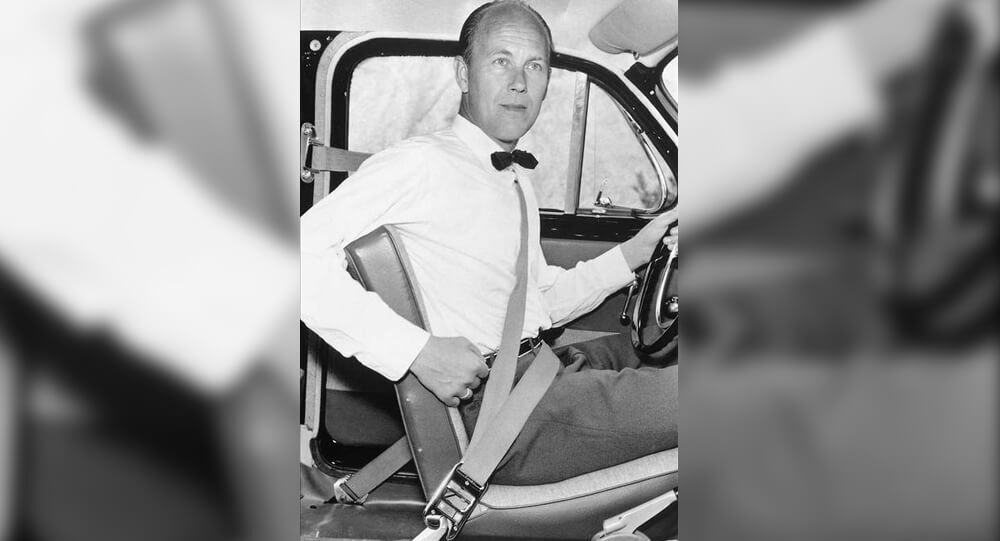
Who invented the three-point seat belt?
While employed by Volvo in 1959, Swidish engineer Nils Bohlin created the three-point safety belt. Volvo first had the design patented, but soon as they discovered its importance as a new safety measure, they made the patent open to everyone. Millions of lives were genuinely spared by Volvo’s gift to the world.

Abraham Crijnssen – The Ship That Disguised Itself As An Island
During World War II a Dutch minesweeper evaded the Japanese for eight days disguised as an island. The crew covered the decks in cut trees and painted exposed surfaces to look like rocks. They moved only at night and anchored closed to shore by day, eventually escaping to Australia.
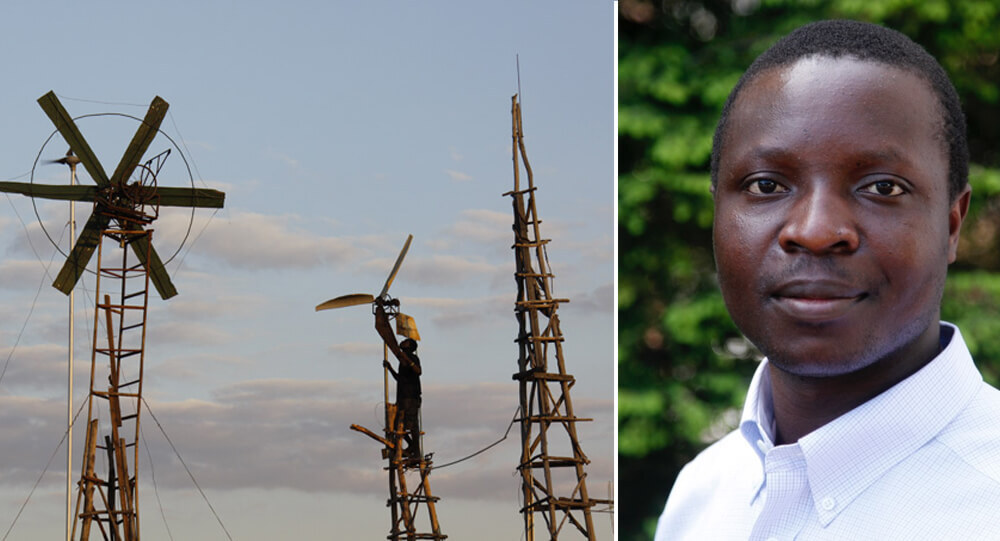
Self-taught William Kamkwamba built a windmill for his town
A Malawian teenager who taught himself how to build a windmill out of junk and bring power to his village. He then went on to build a second, larger windmill to power irrigation pumps. He did this all from books he read in the library.

A subway in Chongqing passes through a building (images)
A train has been constructed through an apartment complex in Chongqing, China. The 19-story residential structure is not only passed by the light rail passenger train, but it also serves as a transit stop. Apartment residents can simply get a ride from the sixth to eighth levels.

Mom hears son's heartbeat 3 years after his death when she meets organ recipient
She agreed to donate her son's organs after his sudden death in June 2013 at the age of 7 months. The grieving mother was able to listen to her late son’s heart beating inside the little girl who received the organ after his death.
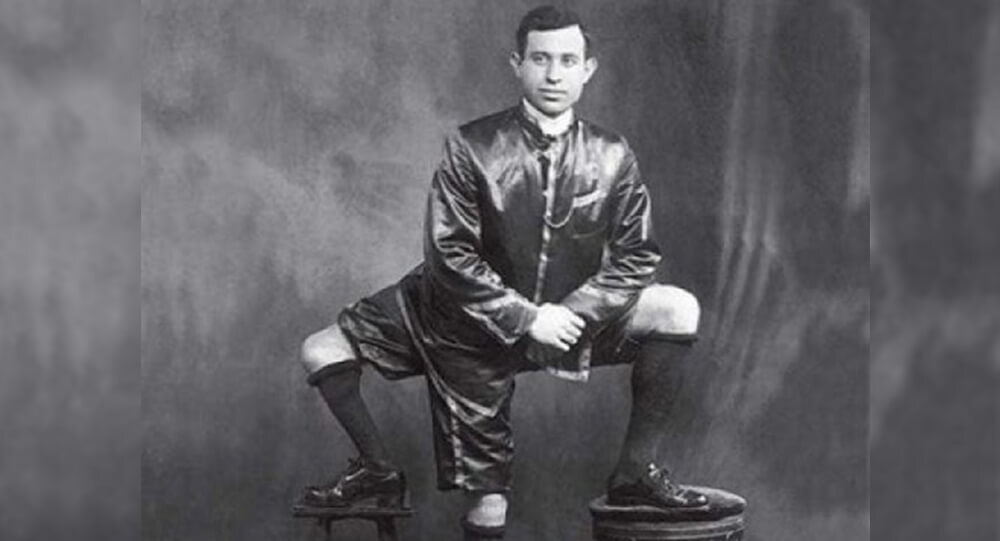
Frank Lentini, The Three-Legged Sideshow Performer
Francesco Lentini was a man with three legs, four feet, sixteen toes, and two sets of functional male genitals. He worked for the circus and lived to be 78 years old.

Unique Dining table with a hole for your cat to peek and join you dinner.
Dinos, a Japanese internet shop, has launched a new range of cat furniture, which includes this oak table with a hole in the middle and a perch underneath. It places your cat companion in the center of the table, making your cat the main focus of your meal, as it should be, because cats are the true proprietors of “your” home.

A woman who had been lost since she was a newborn 51 years ago was said to have been spotted
A woman who had been lost since she was a newborn for 51 years was reported to have been sighted.

Before "The Rock," There Was "Rocky Maivia"
Dwayne “The Rock” Johnson’s first WWF persona was Rocky Maivia, a face (good guy). The audience rejected him due to his cheesy character, with chants of “Die, Rocky, die!”. After this, he became a heel (villain), referring to himself in the third person as “The Rock” and insulting the audience.

Inspiring story of Emma Schols who Saved Her Six Kids From A Burning House
Emma Schols, a Swedish mother, saved all six of her children from a devastating house fire in 2019, running from room to room through flames while bleeding and losing skin. Against all odds, she survived with severe burns covering 90% of her body.

Restaurant owner offers burglar a job rather than filing charges
On April 13, 2021, Diablo’s Southwest Grill was robbed, but instead of pressing charges, owner Carl Wallace decided to offer the burglar a job in his business and said “There are better opportunities out there than this path you’ve chosen,”.
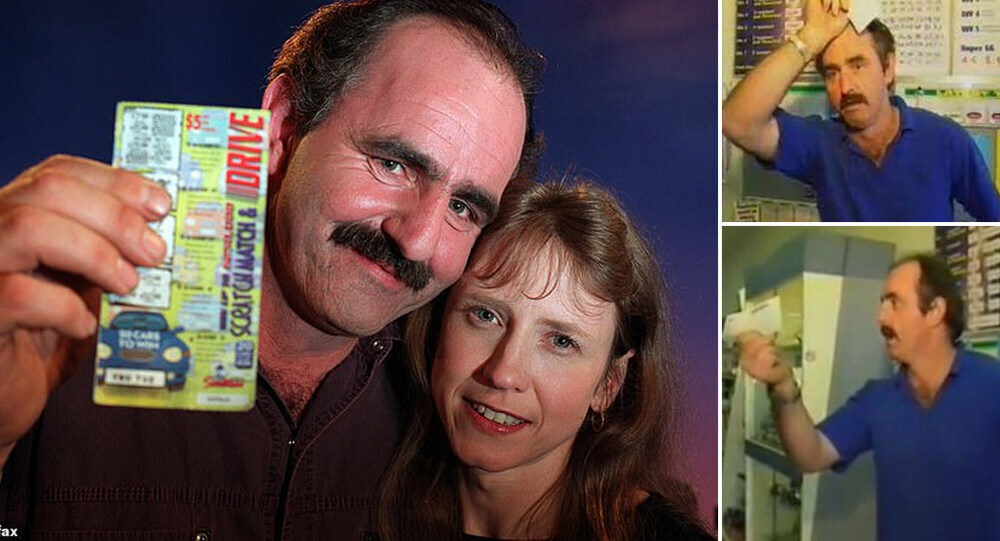
Australian man dies, comes back to life, and wins the lottery twice
Bill Morgan, an Australian, is a man who has beat the odds. He escaped death by surviving a horrific automobile accident and heart attack before collapsing into a coma and going on to win the lotto twice. He went from losing virtually everything to winning far more than he could have imagined.

How Magic Johnson Missed Out On $7 Billion Nike deal
Magic Johnson turned down a deal with Nike in 1979 that offered him 100,000 shares of stock and $1 for every pair of shoes sold. Instead, he chose Converse, which offered him $100,000 per year. Johnson lost about $5 billion by declining the Nike deal.
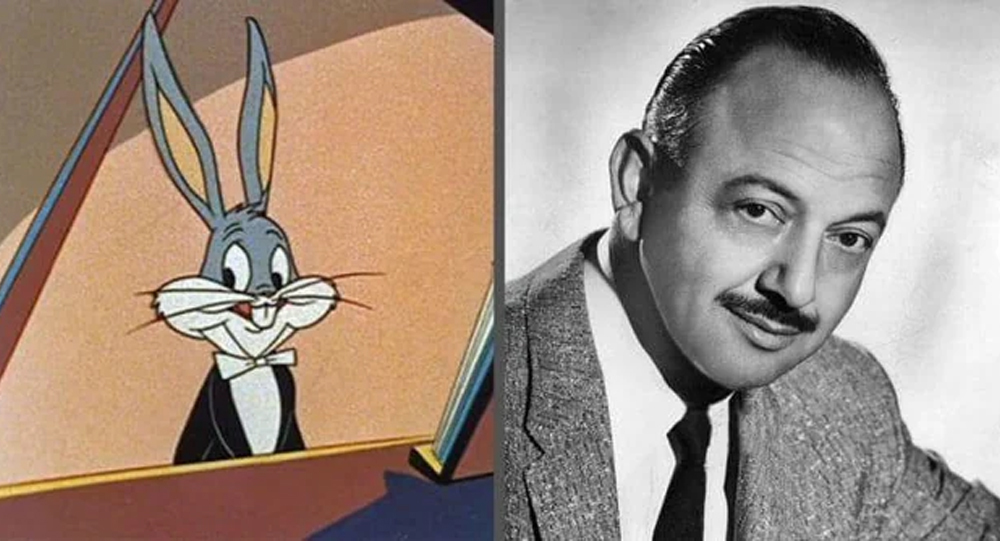
How Being Bugs Bunny Helped This Voice Actor Out of Coma
Mel Blanc; the voice of Bugs Bunny, had been in a serious car accident that put him in a coma. After many unsuccessful attempts to get him to talk, a doctor asked “Bugs, can you hear me” Mel responded in the voice of bugs bunny, “Whats up, Doc? The doctors used this to lead him out of his coma.