


The most intelligent person to ever live was born in America in 1898. William James Sidis was his name, and he eventually had an IQ score that ranged between 250 and 300. (with 100 being the norm).
His parents, Boris and Sarah, had good minds of their own. Sarah worked as a doctor, and Boris was a well-known psychotherapist. Some accounts claim that the Ukrainian immigrants settled in New York City, while others identify Boston as their hometown.
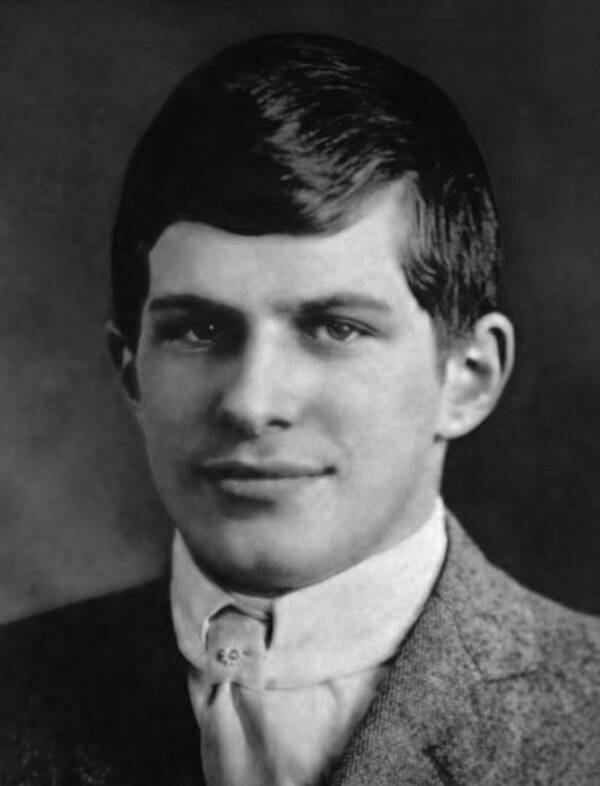
In each case, the parents were proud of their talented boy and lavished financial resources on books and maps to support his early education. Yet they were unaware of how quickly their beloved toddler would catch on.
A Genuine Young Prodigy
William James Sidis was able to read The New York Times when he was just 18 months old.
He could speak English, French, German, Russian, Hebrew, Turkish, and Armenian by the time he was six years old.
Sidis created his own language as a child, which is even more impressive (though it’s unknown if he ever used it as an adult). The aspirational child also wrote a novel, poetry, and even a proposed constitution for an eventual utopia.
At the tender age of nine, Sidis got accepted to Harvard University. He couldn’t enroll in classes, though, until he was eleven.
He gave a speech to the Harvard Mathematical Club in 1910 when he was still a student on the exceedingly difficult subject of four-dimensional bodies. For the majority of the audience, the talk was nearly incomprehensible, but for those that did, the lesson was a revelation.
Sidis earned his degree from the renowned institution in 1914. He was 16 at the time.
William James Sidis’ Unparalleled Intelligence

As there are no known records of William Sidis having his IQ tested, historians of today are left to guess as to what it might have been.
For comparison, an IQ score of 100 is regarded as average, while one of less than 70 is frequently seen as low. Anything over 130 is regarded as exceptionally gifted or advanced.
Reverse-analysis of historical IQs has revealed that Albert Einstein had a 160 IQ, Leonardo da Vinci had a 180 IQ, and Issac Newton had a 190 IQ.
William James Sidis’ IQ was reportedly between 250 and 300.
Every intelligent person will be pleased to inform you that it has no meaning (though they will probably still be a little cocky about it). Yet, Sidis was so intelligent that his IQ was equal to that of three typical people put together.
Nonetheless, despite his intelligence, he had trouble blending in with a society that didn’t comprehend him.
At age 16, after he received his Harvard diploma, he declared to reporters, “I want to live the perfect life. Living in seclusion is the only way to lead the ideal existence. I’ve never liked crowds.
The boy wonder’s strategy succeeded about as well as you might expect, especially for someone who had been so well-known for such a long time.
He briefly served as a mathematics instructor at Houston, Texas’ Rice Institute. But he was nearly driven out, in part because he was younger than many of his pupils.
The smartest person in the world passes away quietly rather than with a bang.
When William Sidis was detained during a Boston May Day Socialist March in 1919, he temporarily courted controversy. He had committed neither of the crimes for which he had been given an 18-month prison sentence: rioting nor assault on a police officer.
After his run-in with the law, Sidis was resolved to live in peace and alone. He took on a number of low-paying occupations, like entry-level accounting. Yet as soon as he was identified or his coworkers found out who he was, he would leave right away.
He later complained, “The very sight of a mathematical formula makes me physically uncomfortable.” They won’t let me be alone, even if all I want to do is run an adding machine.
Sidis made his final appearance in the public eye in 1937 when The New Yorker published a dismissive story about him. He chose to file a lawsuit for malicious libel and violation of privacy, but the judge


Quaker Oats Fed Children with Radioactive Oatmeal
In the 1940s and 1950s, Quaker Oats and MIT conducted experiments on radioactive iron and calcium-containing cereal. The diet was part of a study to see if the nutrients in Quaker oatmeal traveled throughout the body. In January 1998, a $1.85 million settlement was reached for 30 victims who came forward.

The touching story of David Vetter (bubble boy), the 'boy who lived in a bubble
David Vetter lived his whole 12 years in sterile “bubble”. He was “outside” for 20 second after being removed from his mother’s womb. He never touched any human.

Top 10 most cruel medical procedures that are being used today
We are all aware that medicine has advanced dramatically over the last fifty years. There are several modern medical approaches available today, but this was not always the case. However, the past of medicine is a dark one. Medical leeches, lobotomy, vascular surgery, cranial stenosis, and even electroshock therapy are all options. These are only a couple of the cruel healing techniques that are still in use today.

Ancient Jericho: The First Walled City In History
The ancient city of Jericho is the world's oldest walled city, with evidence of stone fortifications dating back nearly 9000 years.
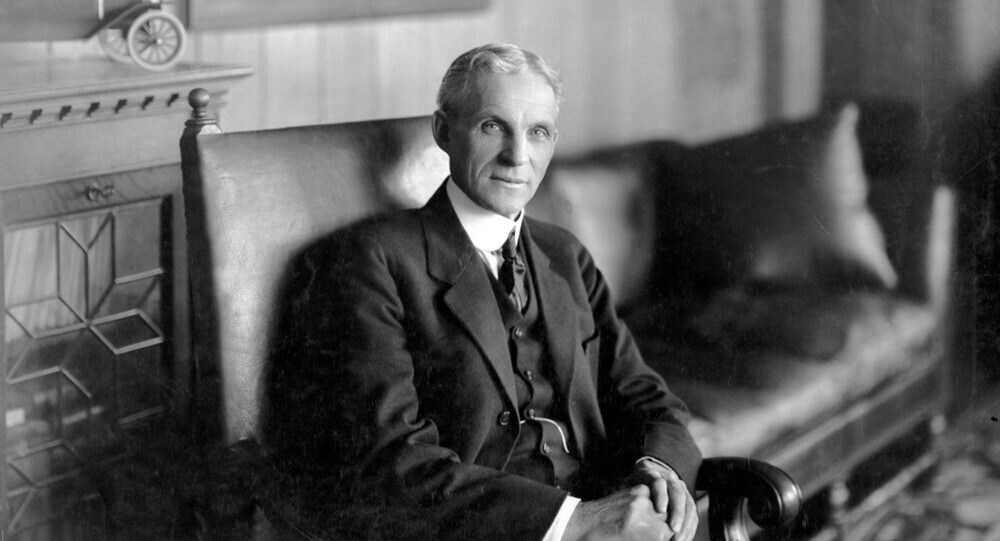
Henry Ford, The man popularizing the concept of the weekend off
Henry Ford was the first Industrial Giant to give his employees both Saturday and Sunday off in the hope of encouraging more leisurely use of automobiles and thus popularizing the concept of the "weekend."

A Brief History of the PlayStation Gaming Console
Sony's PlayStation was never meant to be an actual product. Instead, it was intended to be a CD-ROM console that would support Nintendo games. However, when Nintendo backed out of the deal at the last minute, Sony went ahead and launched what soon became one of the most successful gaming consoles of all time.

how Ferris wheel invented
In 1891, Chicago challenged engineers to create a structure to surpass the Eiffel Tower for the World's Columbian Exposition. George Washington Gale Ferris jr. responded with the original Ferris Wheel, a giant rotating structure elevating visitors above the city. This invention became an iconic attraction at the fair.
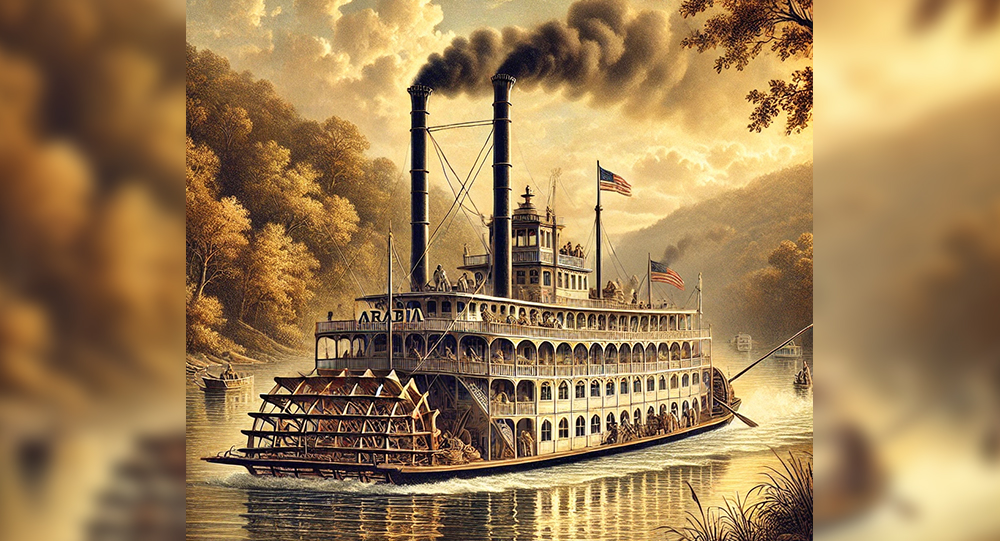
The Arabia Steamboat: Unearthing a 19th Century Time Capsule from the Missouri River
The Arabia was a steamboat that sank in the Missouri River in 1856. Over time, the river shifted 800 meters to the east, eventually turning the site of the sinking into a field. The steamboat remained under 45 feet of slit and topsoil until 1988, when it was excavated. The mud, as it turned out, was such a great preserver that most of the artifacts on board were found to be intact. They even found jars of preserved apples that were still edible!
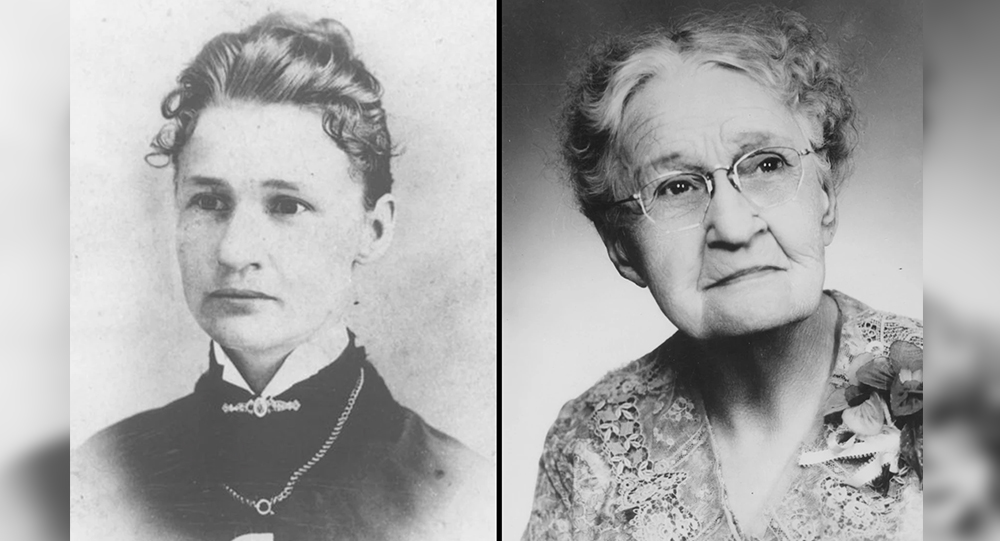
Susanna Salter: The Trailblazing Story of America’s First Female Mayor
In 1887, Susanna Salter became the first female mayor in the United States, elected in Argonia, Kansas. Her nomination was initially a prank by men opposing women in politics. However, she won by a landslide and served effectively, inspiring the women’s suffrage movement and breaking barriers for women in leadership.

The Littlest Skyscraper: How J.D. McMahon’s 480-Inch Con Fooled Investors in 1919
In 1919, J.D. McMahon convinced investors to fund a 480-foot skyscraper, but he labeled the plans as 480 inches, building a 40-foot structure instead. After taking $200,000, he won in court since the plans matched what he built.

Xin Zhui And The Story Of The Stunningly Intact Lady Dai Mummy
A 2,000-year-old mummy of a Chinese woman, Xin Zhui, also known as “Lady Dai,” was preserved in 21 gallons of an “unknown liquid.” With her original hair, organs, eyebrows, and eyelashes intact, the mummy still has blood in her veins. Her skin and ligaments are soft and as flexible as that of a living person.

3 men lived on top of a billboard in tents for almost 9 months
From 1982-1983, three men in Allentown PA competed in a radio contest in which they lived on top of a billboard in tents. Whoever stayed up longest would win a house. Due to economic pressure from the recession, none of the contestants wanted to give up, so the contest lasted almost 9 months.

George Dantzig solved two famous “unsolved” problems in statistics mistakenly as assignment
In 1939, George Dantzig arrived late to his statistics class. On the board were two famous “unsolved” problems in statistics written as an example by his professor. Dantzig mistook the examples for homework assignments. He solved the “unsolved” problems and submitted the homework to his professor a few days later. His solutions earned him a doctorate.

Nearest Green, America's first known Black master distiller
Nathan "Nearest" Green was an African-American head stiller who is now more frequently referred to as a master distiller. He was renowned for imparting his distilling knowledge to Jack Daniel, the creator of Jack Daniel's Tennessee whiskey distiller, after Jack Daniel was freed from slavery following the American Civil War.

Juliane Koepcke: The Teenager Who Fell 10,000 Feet And Trekked The Jungle to survive
In 1971, a high school student was sucked out of an airplane after it was struck by lightning. She fell 10,000 feet to the ground while still strapped to her chair and survived. Only to endure a 9-day trek to the nearest civilization.

The 440-pound bear named Wojtek and his World War II battle against the Nazis
Polish troops raised an orphaned bear cub during WWII. He enjoyed drinking beer, and was trained to salute. He became officially enlisted as a member of the forces, and helped carry artillery during battle.

The Baltic Way: the longest unbroken human chain in history
On August 23, 1989, about 2 million people from Latvia, Estonia, and Lithuania formed a human chain that united all 3 countries to show the world their desire to escape the Soviet Union and the communism that brought only suffering and poverty. This power stretched 600 km.

Tunnels Dug by ancient giant sloths, A South American Megafauna
For years, scientists didn’t know what caused mysterious cave networks in South America. In 2010, they learned that the caves were actually tunnels dug by ancient giant sloths

The story of a man who spent 72 hours with 72 venomous snakes to prove they only bite when provoked
In the 1980s, an Indian man spent 72 hours in a glass cabin with 72 snakes, some of which were extremely venomous. His aim was to prove that snakes only attack when provoked. Remarkably, he was not bitten once in those 72 hours and even set a Guinness World Record in the process.

Medieval Medicine: A 1,000-year-old onion and garlic salve kills modern bacterial superbugs
Scientists recreated an Anglo-Saxon manuscript-based 9th century onion and garlic eye remedy and discovered that it killed 90% of antibiotic-resistant staph bacteria (MRSA).

What exactly was the US's 'Ghost Army' during WWII?
During WW2, there was a special unit of men dubbed the ‘Ghost Army’. The unit was made of artists, creative and engineers and their job was to create deception about the enemy. From inflatable tanks to phony convoys to scripted conversations in bars intended to spread disinformation, they used all possible tricks to fool the enemy.

Underground Railroad to Mexico freed thousands of slaves in 1829
Slavery was abolished in Mexico in 1829. Slaves were escaping to Mexico, and slaveholders in the US were aware of this. The US attempted to get Mexico to sign a fugitive slave treaty, which would have required Mexico to send back escaped slaves to the US. But, Mexico refused, arguing that slaves were free as soon as they set foot on Mexican soil.

Jack the Baboon operated a railroad, earned a living, and never made a mistake
A baboon worked as a signalman for the railroad in the late 1800s. He never made a mistake and worked for the railroad until the day he died.

15 interesting facts about Queen Elizabeth II
Queen Elizabeth II, who ruled Britain for 70 years, has away at the age of 96. She was the country's longest-reigning monarch. Here are some little-known facts about her.

The Day an Israeli F-15 Landed with One Wing: Zivi Nedivi’s Unbelievable Mid-Air Survival
Discover the astonishing true story of Israeli pilot Zivi Nedivi, who safely landed an F-15 after a mid-air collision tore off its entire right wing. Learn how skill, quick thinking, and the F-15’s unique design turned a disaster into a legendary feat in aviation history