

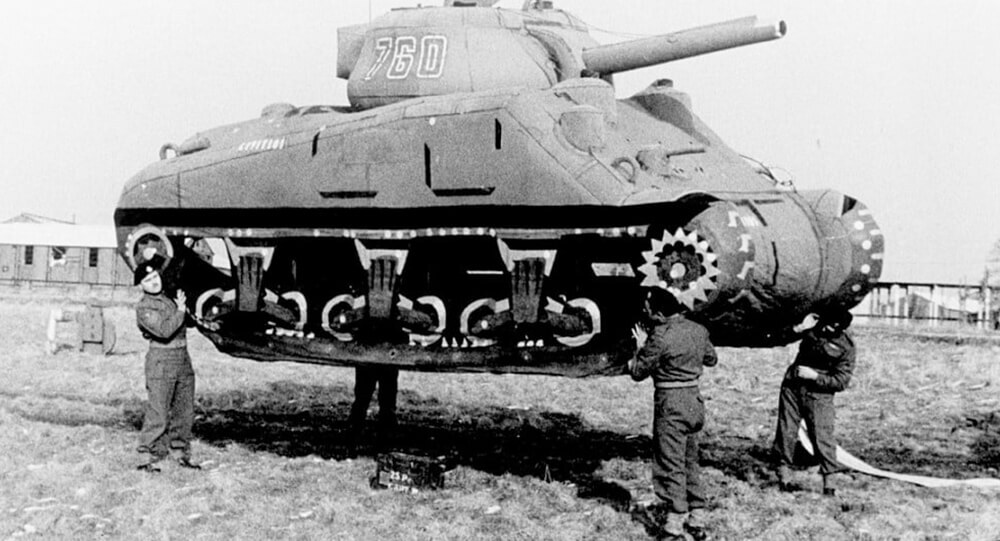
The “Ghost Army Congressional Gold Medal Act,” which US President Joe Biden signed into law on February 2, 2022, essentially recognizes the “Ghost Army,” a tactical deception unit used by the US during World War II.
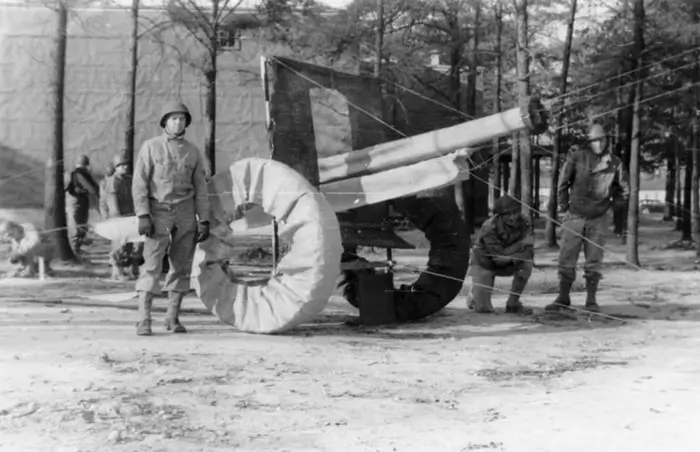
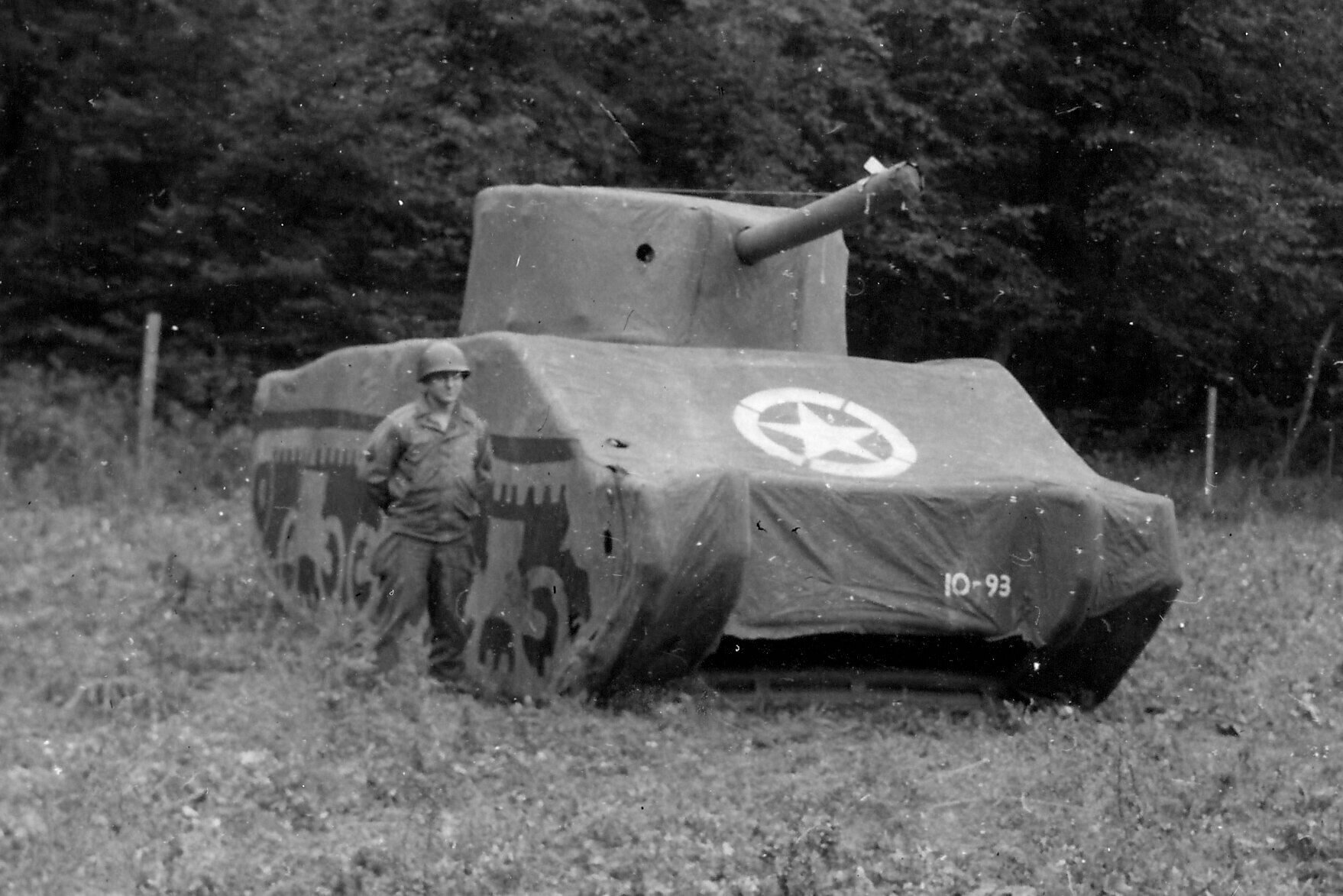
This unit was assigned a mission in 1944 to put on a show for the German troops in an effort to trick them and influence their decisions. They employed deception techniques such as sound effects, dummy trucks, personnel, and tanks that floated around. They had a 0.50 caliber machine gun, which was their heaviest weapon.
There are only nine Ghost Army veterans left, dispersed across the US, 77 years after this mission was completed.
What is the Congressional Gold Medal?
The highest national recognition for exceptional accomplishments and contributions is the Congressional Gold Medal, which is awarded by the Congress.
Participants in the American Revolution, the War of 1812, and the Mexican War were the first recipients of the medal. Later, Congress expanded the eligibility for the medal to include pioneers in a variety of other fields as well as actors, authors, musicians, entertainers, explorers, athletes, humanitarians, and foreign recipients.
The US Capitol Police and those who guarded the US Capitol on January 6, 2021, the day of the siege, received the medal most recently.
The ‘Ghost Army’
After it was established in January 1944, the existence of the “Ghost Army” was unknown for about 50 years. The unit’s “strange mission” was to conceal American troop strength and location from the enemy.

In 1996, when the official history—which was originally written in 1945 by Captain Fred Fox, an officer on the unit—became public, its existence was declared to be public knowledge.
Ghost Army is the collective name for the 3133rd Signal Company Special and the 23rd Headquarters Special Troops.
According to the unit’s official history, the US War Department activated it on January 20, 1944. Members of the units were trained and assembled pretty quickly in Tennessee. The unit served with four US armies in France, Belgium, England, Luxembourg, Holland, and Germany for a year and a half before it was on its way home.
The unit arrived in France with 1023 enlisted men and 82 officers in command. Four units provided the majority of the men and officers. Some of the members were New York and Philadelphia-based artists, while others were combat engineers and others had received special training in deception.
According to the book “The Ghost Army of World War II,” some of the members’ tasks included creating intricate models and using nettle as cover. Pilots would fly overhead and photograph these to show how the camouflage installations appeared. Since the inflatable personnel installations were immovable, they were not very effective.
Some operations of the Ghost Army
Operation Brest, in which the 23rd Headquarters Special Troops used sonic, radio, and visual deception, was one of the operations they carried out. The Ghost Army was tasked with inflating the apparent size of American troops at Brest, which was held by the Germans and was under siege by the Allies, in order to persuade the Germans to submit. According to the Ghost Army Legacy Project, they did this by fooling the Germans with inflatable tanks, noises, and illusions.
However, opinions on the unit’s accomplishments are still divided. The aforementioned book makes reference to a top-secret report that claims that overall, the army fell short of its potential. Despite a history of minor enemy intelligence manipulations that were successful, the report stated that tactical deception was characterized by a string of missed opportunities.
However, some specialists thought the work of the unit was worthwhile. One such person is a United States Army analyst by the name of Mark Kronman who praised the unit in a classified report. Rarely, if ever, has a small group of men had such a significant impact on the outcome of a significant military operation, the author noted in his article.

How Dmitri Mendeleev Developed the periodic table of the elements
1850 Dmitri Mendeleev walked almost a thousand miles to Moscow so he could apply for the University of Moscow. Although he was not accepted, he walked to St. Petersburg where he was accepted, And with that education, he developed the the periodic table of the elements

Blanche Monnier: Imprisoned For 25 Years For Falling in Love
Blanche Monnier, she was a French woman noted for her beauty, she wished to marry an old lawyer that her mother disapproved of, so she locked her in a small dark room in her attic for 25 years.

8 Interesting Facts About The Unsinkable Ship, TITANIC
If you ask your friends what's the most famous ship in history the answer in most cases will be the same, of course the legendary Titanic. Its history is full of mysteries, at first it was a source of hope and national pride as well as proof of the triumphs of mankind but it soon became a source of nostalgia and pain, the extent of which cannot be described in words.

The touching story of David Vetter (bubble boy), the 'boy who lived in a bubble
David Vetter lived his whole 12 years in sterile “bubble”. He was “outside” for 20 second after being removed from his mother’s womb. He never touched any human.

The Assassination Of King Alexander
The assassination of King Alexander of Yugoslavia marked a pivotal moment in the country's history. This article delves into the rise and reign of King Alexander, exploring his early life and ascension to the throne. It also examines the political and social climate in interwar Yugoslavia, setting the stage for the tensions and challenges that ultimately culminated in his tragic assassination. By understanding the context in which this event unfolded, we can better grasp the significance and impact it had on the nation and its future.

The Arabia Steamboat: Unearthing a 19th Century Time Capsule from the Missouri River
The Arabia was a steamboat that sank in the Missouri River in 1856. Over time, the river shifted 800 meters to the east, eventually turning the site of the sinking into a field. The steamboat remained under 45 feet of slit and topsoil until 1988, when it was excavated. The mud, as it turned out, was such a great preserver that most of the artifacts on board were found to be intact. They even found jars of preserved apples that were still edible!

Medieval Medicine: A 1,000-year-old onion and garlic salve kills modern bacterial superbugs
Scientists recreated an Anglo-Saxon manuscript-based 9th century onion and garlic eye remedy and discovered that it killed 90% of antibiotic-resistant staph bacteria (MRSA).

Hedy Lamarr, A Hollywood actress who also a mathematician and inventor
Hollywood actress Hedy Lamarr was also a mathematician and the inventor of frequency hopping spread spectrum, a technology still used for bluetooth and wifi

Vince Coleman, a railway dispatcher, sacrificed his own life
Vince Coleman, a railway dispatcher, sacrificed his life in order to warn an incoming train of an imminent explosion. His telegraph said “Hold up the train. Ammunition ship afire in harbor making for Pier 6 and will explode. Guess this will be my last message. Good-bye, boys.” He saved 300 lives.

Why the Word ‘Pen’ Comes from the Latin ‘Penna’ Meaning Feather
The humble word “pen” carries a rich history rooted in ancient times, derived from the Latin word penna, meaning “feather.” Long before modern pens revolutionized writing, feather quills—especially from geese—were the essential tools of scribes, scholars, and artists. This article journeys through the origins of the pen, its evolution, and fascinating trivia about the timeless connection between feathers and writing.

The Baltic Way: the longest unbroken human chain in history
On August 23, 1989, about 2 million people from Latvia, Estonia, and Lithuania formed a human chain that united all 3 countries to show the world their desire to escape the Soviet Union and the communism that brought only suffering and poverty. This power stretched 600 km.

Irena Sendler: woman who rescued Jews during holocaust
Irene Sendler was the Zegota resistance group's head of the children's department. She risked her life to smuggle children out of the Warsaw ghetto, place them with Polish families or orphanages, give each child a new identity, and keep records so that they could be returned to their families. In 1943, the Gestapo arrested and sentenced her to death, but she was rescued by Zegota.

Nordlingen, The Town Inside A Meteorite Crater With Millions Of Meteorite Diamonds
The German town of Nördlingen is embedded with 72,000 tons of microscopic diamonds. About 15 million years ago, a meteorite hit this region, and the impact created a massive depression and formed rocks containing diamonds, glass, and crystals. The town was built in the impact crater sometime around 898 CE.

How European Rabbits Took over Australia
In 1859, wealthy settler Thomas Austin released 13 wild rabbits on his Australian estate. By 1920, their population grew to 10 billion.

History of Treadmill, punishment for prisoners
Treadmills were originally a punishment used to harness human power on a giant wheel used to grind grains, hence the name "treadmill." The History of Treadmill

Why Comedians Failed to Make Sober Sue Laugh in the Early 1900s
In the bustling vaudeville scene of early 20th century New York, a mysterious performer known as "Sober Sue" captured public imagination not for jokes or songs, but for her unshakable stoicism—she never smiled or laughed. A local theater even offered a tempting reward of $1,000 to anyone who could make her laugh, drawing crowds and famous comedians eager to claim the prize. Despite countless hilarious attempts, Sue remained expressionless, a mystery that baffled performers and audiences until it was revealed that she suffered from facial paralysis, explaining her unchanging demeanor.

The history of Flour sack clothing fashion
After Kansas mill owners found women reused flour sack materials into apparel in the 1920s and 1930s, they started applying patterned designs to give families with more fashionable patterns and material.

10 world’s most destructive and dangerous volcanic eruptions in history
Volcanic eruptions can devastate cities, change the world's atmosphere, and devastate economic systems. They can create molten lava rivers, mudslides, suffocating ash, and poisonous gases that cause chaos around the world for years. A volcanic explosion's effects can be massive, from its size to its death toll to its economic cost. Here is ten world’s most destructive and dangerous volcanic eruptions in history.

The History Behind the “No One Dies Alone” Program
In 1986, while doing a night shift at the hospital, Sandra Clarke, a registered nurse, was asked by an elderly patient to stay. She promised to be back after checking on her other patients, but by the time she returned, the gentleman had passed away. Clarke became one of the key figures in launching No One Dies Alone, a program that allows volunteers to sit with terminal patients who have no one else.

Shizo Kanakuri’s 1912 Olympic Marathon Finished 54 Years
At the 1912 Olympics, a marathon runner quit and went home to Japan without telling officials and was considered a missing person in Sweden for 50 years. In 1966, he was invited to complete the marathon. His time: 54 years, 8 months, 6 days, 5 hours, 32 minutes, and 20.379 seconds.

Juliane Koepcke: The Teenager Who Fell 10,000 Feet And Trekked The Jungle to survive
In 1971, a high school student was sucked out of an airplane after it was struck by lightning. She fell 10,000 feet to the ground while still strapped to her chair and survived. Only to endure a 9-day trek to the nearest civilization.

Titanoboa cerrejonensis, fossils of the world’s largest species of snake
In 2009 in a coal mine of Columbia, scientists discovered fossils of the world’s largest species of snake. The species is called “Titanoboa cerrejonensis,“and it is from around 60 million years ago. It would have had measured about 48 feet long and weighed about 2,500 pounds

The Littlest Skyscraper: How J.D. McMahon’s 480-Inch Con Fooled Investors in 1919
In 1919, J.D. McMahon convinced investors to fund a 480-foot skyscraper, but he labeled the plans as 480 inches, building a 40-foot structure instead. After taking $200,000, he won in court since the plans matched what he built.

Graves holding hands over wall, A Catholic woman and her Protestant husband grave
A protestant man and a Catholic woman who weren't allowed from being buried together in a graveyard in 19th-century Holland turned their graves into a monument showing them holding hands across the wall separating them.

The incredible story of a plane that lost its roof in mid-flight and the light signal that saved 94 lives.
On April 28, 1988, Aloha Airlines flight 243 was on the way to Honolulu from Hilo when a huge portion of the upper part of the fuselage blew off the airplane.