

The majority of teenagers would hate being sent away from their families and friends, especially if they were to be sent to a Catholic residential school where there were rigid rules that had to be followed.
Australian teenager Keith Sapsford, then 14 years old, experienced a similar situation in 1970. After only a few weeks, he made the decision to flee, demonstrating his determination to escape this predicament, but he made no decision to return home.
Instead, he made the decision to leave Australia entirely. Keith Sapsford left his school and drove himself to the Sydney airport. Keith got to the airport and snuck onto the tarmac where a few planes were waiting.
He managed to escape on one plane that was bound for Tokyo, Japan. He gave in to temptation and entered the open undercarriage of the Japan Air Lines.
What drove him to make this desperate move?
The History of Keith Sapsford
Events that took place months before Keith stepped out onto that tarmac affected his choices and ultimately caused him to climb onto that plane’s wheel well. Keith’s father, Charles Sapsford, had told his son a story about a Spanish boy who had perished as a result of climbing into an airplane’s undercarriage.
Without a pressurized compartment, that boy had been exposed to the high altitude. It ultimately resulted in his death.
Keith’s father had hoped to talk his daring son out of taking such a chance, but it seems to have motivated him to board a plane for Japan. Keith, who was born in 1956, was a curious young man who enjoyed being active.
In fact, his family had just returned from a trip abroad to sate his wanderlust. Unfortunately, he had a tendency to disappear, and even a lengthy international trip could not stop his wanderlust.
But when they got back home, Keith Sapsford started to feel restless. His parents decided that he needed some structure and formalized discipline. Keith was deemed to be best suited for Boys’ Town, a Roman Catholic school situated in Sydney’s southern region.
This facility specialized in working with troubled kids who required structure and a formal system of discipline. Helping him find the best path seemed right in their parents’ eyes.
Keith was only in the institution for two weeks before he was able to escape because the facility misjudged his sense of adventure. Keith may not have even known the plane’s destination when he climbed into the wheel well; it is unclear what made him decide to go to the airport.
It is not surprising that a teenager was able to sneak onto the tarmac because regulations at major airports were simpler than those we deal with today.
Keith decided to take a chance when he saw a Douglas DC-8 getting ready to take off. Unlike that Spanish boy, he believed he would be able to survive because Keith would be in the wheel well. Keith thought he could escape the perils of exposure to high altitude.
Keith Sapsford did not realize, however, that after takeoff, when the plane’s wheels retracted, the wheel-well compartment would reopen. Keith died after falling 200 feet as a result of that.
The evidence, in his father’s opinion, suggested that Keith might have also been mowed down by the wheels as they tried to retract. In either case, a family suffered a tragic loss of life and heartbreak as a result. That heartbreak would last for more than 40 years, until his parents died.
One study by the U.S. Federal Aviation Authority revealed that only one out of every four stowaways on an airplane make it through the flight. On short, low-altitude flights, survivors board as stowaways; however, when an aircraft reaches cruising altitude, there are no surviving stowaways.
Statistics show that over the course of 85 flights, there were 96 attempts to stow away in the wheel-well compartments between 1947 and 2012. 23 of them were still alive. Thus, 73 people lost their lives while trying to obtain a free trip.
Ignoring this information and making an attempt to stow away can end tragically, as Keith Sapsford’s tale demonstrates.
A Photographer Snaps Heartbreaking Fall
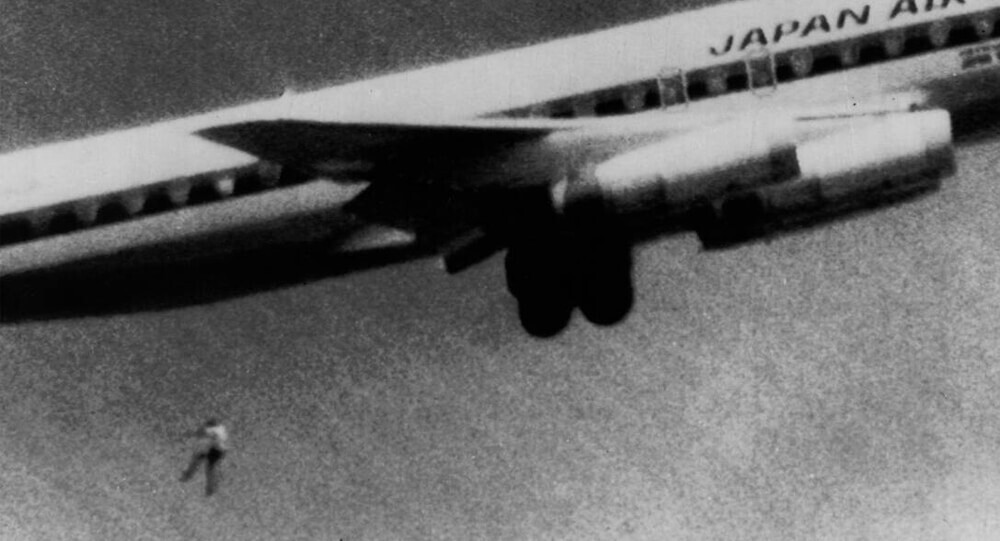
John Gilpin, a beginner photographer, just so happened to be at the airport. He was photographing activities at the airport in the hopes that one or two would turn out well. John would eventually capture Keith Sapsford as he plunged to his death, despite the fact that he was unaware of this at the time.
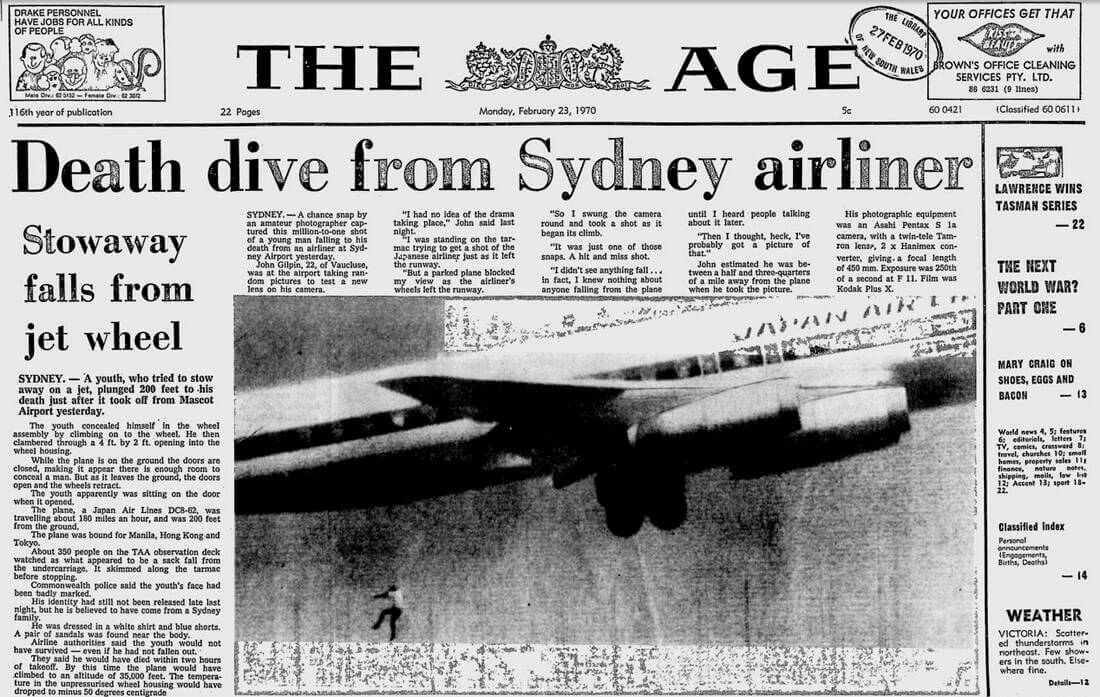
Before the plane took off, Keith had already spent a number of hours in the wheel well. Experts later discovered handprints, footprints, and clothing threads when they examined the plane. To demonstrate that Keith had boarded the aircraft, they required all available proof.
Even more tragically, Keith would have probably frozen or suffocated to death if he hadn’t fallen out of the plane. It was not oxygenated and the compartment reached freezing temperatures.
Keith Sapsford had little insulation against the change in temperature that would happen as the plane rose to its cruising altitude because he was only wearing a short-sleeved shirt and shorts. There wasn’t enough room in their compartment for both him and the retracting wheels, so even they posed a threat.
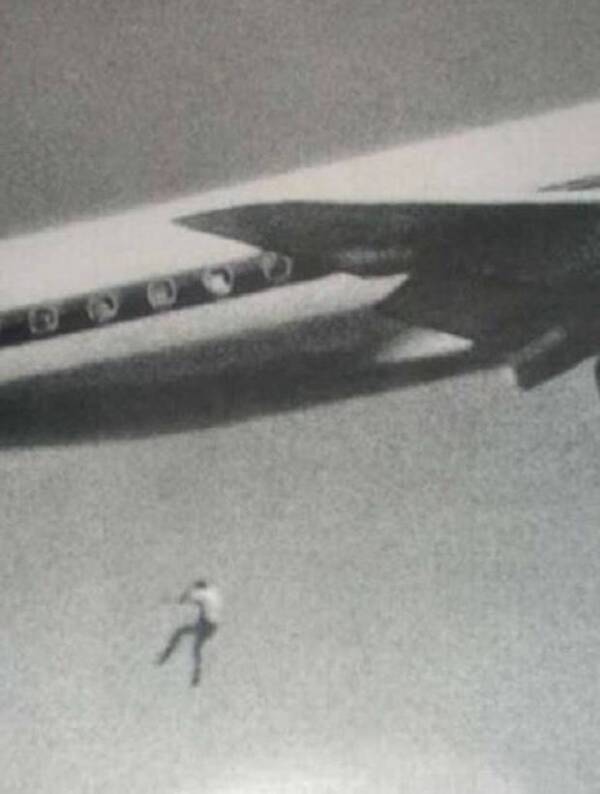
Surprisingly, John didn’t become aware of what he had photographed until almost a week later. John noticed a print of a boy falling from the plane feet first while developing his photos from the day at the airport. He appeared to be reaching up with his hands in an effort to grab onto something and prevent falling.
The image serves as a chilling reminder of the young boy’s tragic death while making a last-ditch effort to leave his school and see the outside world.

The true story of Annie Oakley, legendary sharpshooter
Anne Oakley was such a good shooter that she could split a playing card help edge-on, hit dimes thrown into the air, shoot cigarette from her husband's lips, and pierce a playing card thrown into the air before it hit the ground.

Graves holding hands over wall, A Catholic woman and her Protestant husband grave
A protestant man and a Catholic woman who weren't allowed from being buried together in a graveyard in 19th-century Holland turned their graves into a monument showing them holding hands across the wall separating them.

Underground Railroad to Mexico freed thousands of slaves in 1829
Slavery was abolished in Mexico in 1829. Slaves were escaping to Mexico, and slaveholders in the US were aware of this. The US attempted to get Mexico to sign a fugitive slave treaty, which would have required Mexico to send back escaped slaves to the US. But, Mexico refused, arguing that slaves were free as soon as they set foot on Mexican soil.

The mysterious secret of Dr James Barry
Before women were allowed to enroll in medical school, Margaret Ann Bulkley studied medicine and assumed the identity of Dr. James Barry for 56 years while dressing as a man. After 46 years of service as an army doctor officer, her secret was not made public until after her death in 1865.

What exactly was the US's 'Ghost Army' during WWII?
During WW2, there was a special unit of men dubbed the ‘Ghost Army’. The unit was made of artists, creative and engineers and their job was to create deception about the enemy. From inflatable tanks to phony convoys to scripted conversations in bars intended to spread disinformation, they used all possible tricks to fool the enemy.

Terry Fox, a 21-year-old one-legged cancer patient who ran 143 days before dying
Terry Fox was a 21-year-old one-legged cancer patient who ran 3,339 miles across Canada in 143 days before dying.

The Littlest Skyscraper: How J.D. McMahon’s 480-Inch Con Fooled Investors in 1919
In 1919, J.D. McMahon convinced investors to fund a 480-foot skyscraper, but he labeled the plans as 480 inches, building a 40-foot structure instead. After taking $200,000, he won in court since the plans matched what he built.

How Greek prime minister in 1830’s tried to spread the potato in Greece
A Greek prime minister in 1830’s tried to spread the potato in Greece but people weren’t interested so he put armed guards in front of shipments of potatoes so people would think they were important. People later started stealing these potatoes a lot which spread the crop to all of Greece.

A Brief History of the PlayStation Gaming Console
Sony's PlayStation was never meant to be an actual product. Instead, it was intended to be a CD-ROM console that would support Nintendo games. However, when Nintendo backed out of the deal at the last minute, Sony went ahead and launched what soon became one of the most successful gaming consoles of all time.

How Cleveland's Balloonfest in 1986 Turned Into a Public Tragedy
In Cleveland, Ohio, United Way broke the world record by deflating nearly 1.5 million balloons as part of a publicity stunt to raise money. The balloon obstructed a US Coast Guard search for two boaters who were subsequently discovered to have drowned, blocked airport runways, and blocked land and waterways.

The 440-pound bear named Wojtek and his World War II battle against the Nazis
Polish troops raised an orphaned bear cub during WWII. He enjoyed drinking beer, and was trained to salute. He became officially enlisted as a member of the forces, and helped carry artillery during battle.

George Dantzig solved two famous “unsolved” problems in statistics mistakenly as assignment
In 1939, George Dantzig arrived late to his statistics class. On the board were two famous “unsolved” problems in statistics written as an example by his professor. Dantzig mistook the examples for homework assignments. He solved the “unsolved” problems and submitted the homework to his professor a few days later. His solutions earned him a doctorate.

Franz Ferdinand’s Assassination that sparked World War I
Archduke Franz Ferdinand of Austria and his wife Sophie are shot to death by a Bosnian Serb nationalist during an official visit to the Bosnian capital of Sarajevo on June 28, 1914. The killings sparked a chain of events that led to the eruption of World War I by early August.

June and Jennifer Gibbons The silent twin who Only Spoke to Each Other
Identical twins June and Jennifer Gibbons were born on 11 April 1963 at a military hospital in Aden, Yemen where their father worked as part of the Royal Air Force.

Why the Word ‘Pen’ Comes from the Latin ‘Penna’ Meaning Feather
The humble word “pen” carries a rich history rooted in ancient times, derived from the Latin word penna, meaning “feather.” Long before modern pens revolutionized writing, feather quills—especially from geese—were the essential tools of scribes, scholars, and artists. This article journeys through the origins of the pen, its evolution, and fascinating trivia about the timeless connection between feathers and writing.

How Sleep Deprivation Was Once Used as Torture
Sleep deprivation, long before modern interrogation techniques, was considered a “clean” and effective form of torture—leaving no physical scars, yet breaking minds with haunting silence. Victims endured days and nights without rest, leading to vivid hallucinations, disorientation, and psychological torment. This article traces the dark history of sleep deprivation as a weapon, examines the science behind its effects on the brain, and shines a light on the painful balance between human endurance and cruelty in the annals of coercion.

Thomas Baker's heroic act that earned him the "Medal of Honor" was 8 bullets until death
Thomas Baker instructed his team to leave him with a pistol and eight bullets propped up against a tree after he was injured. Later, American troops discovered the now-deceased Baker in the same location, lying next to eight dead Japanese soldiers and carrying an empty pistol.

Why was the Eiffel Tower almost demolished
The Eiffel Tower was intended to be a temporary structure for the World's Fair in 1889, but it was nearly dismantled and sold for scrap metal. It was saved because of its potential use as a radio antenna, and it now serves as a tourist attraction as well as a working broadcast tower.

The Day an Israeli F-15 Landed with One Wing: Zivi Nedivi’s Unbelievable Mid-Air Survival
Discover the astonishing true story of Israeli pilot Zivi Nedivi, who safely landed an F-15 after a mid-air collision tore off its entire right wing. Learn how skill, quick thinking, and the F-15’s unique design turned a disaster into a legendary feat in aviation history

Max Headroom Incident: America’s Creepiest TV Hack
In 1987 a man hijacked a television station during an episode of Dr. Who and wore a Max Headroom mask and uttered nonsense, and he still hasn’t been caught

The history of Flour sack clothing fashion
After Kansas mill owners found women reused flour sack materials into apparel in the 1920s and 1930s, they started applying patterned designs to give families with more fashionable patterns and material.

Archaeologists Uncover 2,000-Year-Old Amazonian Cities Using Lidar Technology
Deep in the Ecuadorian Amazon, archaeologists have uncovered an ancient network of urban settlements once inhabited by the Upano people about 2,000 years ago. Using cutting-edge lidar technology, these discoveries reveal a highly organized society featuring sophisticated agricultural systems, drainage canals, and extensive road networks. This transformative find challenges long-held assumptions about ancient Amazonian societies and sheds light on a complex civilization thriving in one of the world’s most biodiverse regions.

story of the youngest mother in the world at age of five - Lina Medina
Lina Medina, a five-year-old Peruvian girl, became the youngest mother in history in 1939 when she gave birth to a boy.

Why This Belgian Bar Makes You Trade Your Shoe for a Beer
To prevent tourists from stealing their beer glasses, some bars in Belgium require people to hand over one of their shoes as a deposit which is then put in a basket and hung from the ceiling. These shoe baskets have also become an attraction.

Roller Coasters were First Invented to Distract People from sin
Roller coasters were invented to distract Americans from sin. In the 1880s, hosiery businessman LaMarcus Thompson didn’t like that Americans were going to places like saloons and brothels and created the first roller coaster on Coney Island to persuade them to go there instead.