


Did Gil Pérez Really Teleport from Manila to Mexico Overnight? The 1593 Mystery
ESP, time travel, and teleportation are frequent plot devices in fiction. Why not? (Try counting how many time-defying tropes-containing books, films, or television shows were published this year.) It’s an intriguing idea, especially given that physicists claim it’s entirely feasible. But most of the time, reality is stranger than fiction.
Consider the Moberly-Jourdain incident, in which two women, Eleanor Jourdain and Charlotte Anne Moberly, asserted that they had traveled through time while at the Palace of Versailles in 1901. According to legend, the two realized that everything appeared unusual and surreal as they made their way to the Petit Trianon through the gardens after getting lost. They even implied that they had traveled back in time or had been haunted when they claimed to have encountered Marie Antoinette.
Although the Moberly-Jourdain incident is still one of the most well-known supernatural urban legends, there was the enigmatic case of the Spanish soldier Gil Pérez who is said to have teleported from Manila to Mexico in the 16th century years before.
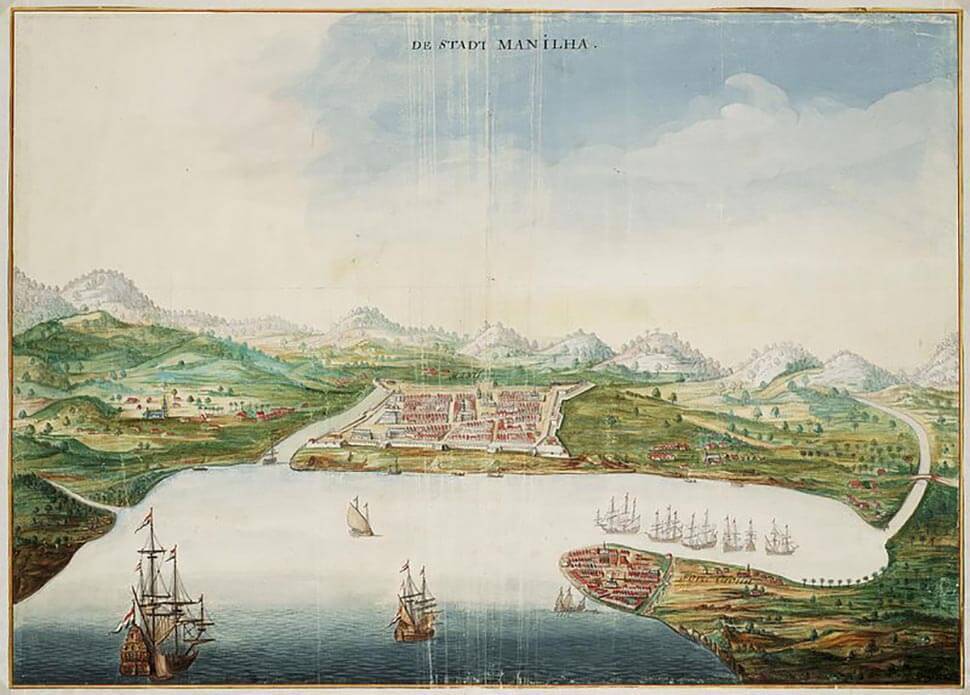
Gil Pérez served as a soldier for Spain in the early days of its administration of the Philippines. He served as a palace guard for the Gobernador-General as a member of the Guardia Civil. However, during a voyage to the Moluccas in October 1593, Chinese pirates assassinated the seventh governor-general, Gómez Pérez Dasmarias. Given that Dasmarias hadn’t chosen a successor and that there were several eminent Spaniards vying for the position, the time following his death was quite hectic.
During the early years of Spain’s rule in the Philippines, Gil Pérez served as a soldier. He was a guard for the Gobernador-palace General’s and a member of the Guardia Civil. However, on one occasion in October 1593, Chinese pirates killed the seventh governor-general Gómez Pérez Dasmarias while they were on an expedition in the Moluccas. When Dasmarias passed away, there was a lot of competition for the position among several well-known Spaniards because he hadn’t chosen a successor.
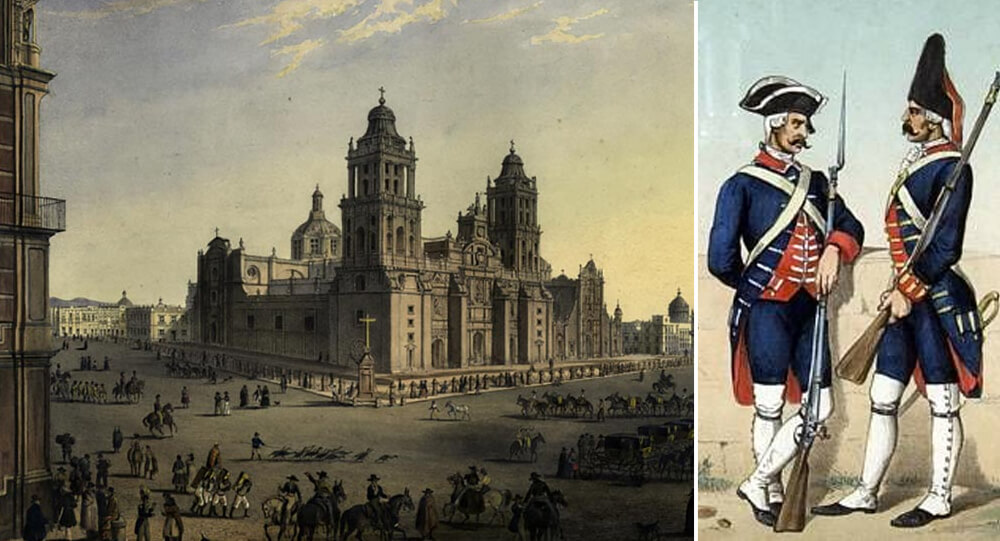
Pérez was reportedly guarding the palace when he reportedly started to feel faint and exhausted due to the tense circumstances. He then rested his head against the wall and fell asleep for a brief period of time. However, when he opened his eyes, he was shocked to discover that he had moved to a completely different location. He was told that he was in Mexico City’s Plaza Mayor (now known as the Zocalo) when he asked a passerby where he was. Guards in New Spain soon learned about Pérez because of his assertions and his peculiar Manila uniform. He was presented to the authorities, including Viceroy Luis de Velasco of New Spain, whose palace was where he was transported to.
Despite their understandable shock, Pérez was able to provide them with thorough answers to all of their questions, including the assassination of Dasmarias, which would not be proven for months because it had only occurred the night before. The Viceroy appreciated Pérez’s justifications, but it was only a matter of time before religious authorities got involved. He was given to the Holy Office of the Inquisition, also called the Spanish Inquisition, for additional interrogation. He was transported from Mexico to Santo Domingo in the Caribbean and imprisoned for leaving and being a “servant of the devil.”
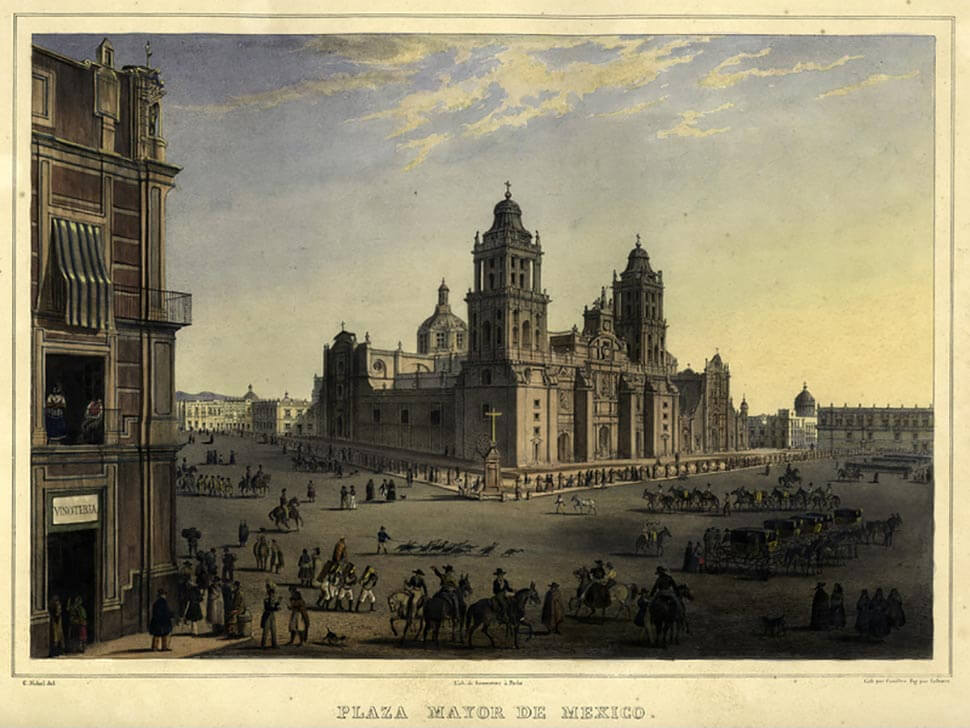
Pérez, a devoted and decorated soldier, handled everything well and cooperated with the law. It was even claimed that he chose prison over battling the Philippines’ jungle men. He was ultimately discovered to be a devoted Christian, and because of this discovery and his good behavior, he was never charged with any crimes. However, because the situation was so unusual, the authorities were at a loss for what to do and kept him behind bars until they made a firm decision.
When a Spanish galleon finally made its way to Acapulco, it was revealed that Pérez’s allegations about the Gobernador-General were accurate. Some of the passengers even recognized him as a palace guard when he was returned to Mexico. He was subsequently released and sent back to Manila on the following ship.
The tale of Pérez has since gained notoriety. The American folklorist Thomas Allibone Janvier, Washington Irving, Luis González Obregón, Gaspar de San Agustn, Antonio de Morga, and even José Rizal have all written books and stories about it.
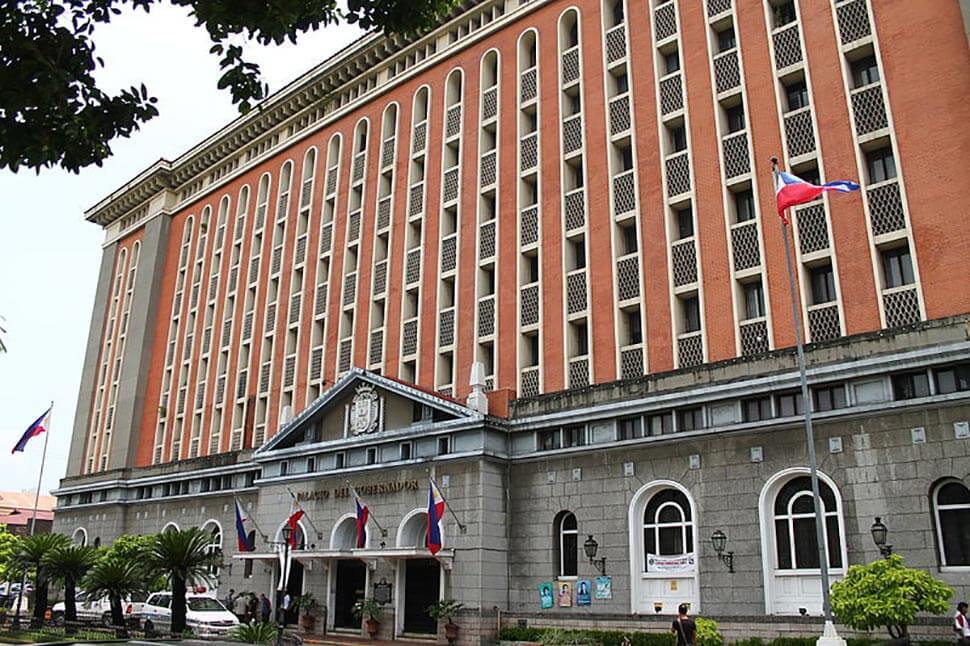
Although the story may seem unbelievable, people are still attempting to explain it centuries later. Perhaps a trip to Intramuros’ Palacio del Gobernador, where the Gobernador-former General’s residence during the Spanish colonial period once stood, will do for the time being.


Why the Brooklyn Bridge Was Once Crossed by 17 Camels and 21 Elephants
On May 30, 1883, a rumor that the Brooklyn Bridge was going to collapse caused a stampede, which killed at least at twleve people. To prove the bridge was safe, P.T. Barnum led a parade of 21 elephants over it.

Nuclear bomb accidentally dropped on North Carolina in 196
4 January 1961: The 4241st Strategic Wing's Boeing B-52G-95-BW Stratofortress, serial number 58-0187, was on a 24-hour airborne alert mission off the United States' Atlantic Coast.

The unbroken seal on King Tutankhamun's tomb until 1922
The unbroken seal of Tutankhamun's tomb before it was opened in 1923, it was unbroken for over 3000 years.

Roller Coasters were First Invented to Distract People from sin
Roller coasters were invented to distract Americans from sin. In the 1880s, hosiery businessman LaMarcus Thompson didn’t like that Americans were going to places like saloons and brothels and created the first roller coaster on Coney Island to persuade them to go there instead.

How Dmitri Mendeleev Developed the periodic table of the elements
1850 Dmitri Mendeleev walked almost a thousand miles to Moscow so he could apply for the University of Moscow. Although he was not accepted, he walked to St. Petersburg where he was accepted, And with that education, he developed the the periodic table of the elements

The mysterious secret of Dr James Barry
Before women were allowed to enroll in medical school, Margaret Ann Bulkley studied medicine and assumed the identity of Dr. James Barry for 56 years while dressing as a man. After 46 years of service as an army doctor officer, her secret was not made public until after her death in 1865.

15 interesting facts about Queen Elizabeth II
Queen Elizabeth II, who ruled Britain for 70 years, has away at the age of 96. She was the country's longest-reigning monarch. Here are some little-known facts about her.

Remembering the 1945 Empire State Building Disaster: When a Plane Met Skyscraper
An airplane crashed into the Empire State Building in 1945. Among other damage, plane parts severed the cables of an elevator and the woman inside fell over 70 stories. She lived and holds the world record for the longest survived elevator fall.

The day Iceland's women went on strike
Icelandic women went on strike for equal rights on October 24, 1975. 90% of women walked out of their jobs and homes, effectively shutting down the entire country. The men were struggling to keep up. The following year, Parliament passed a law requiring equal pay. Iceland elected the world's first female President five years later. Iceland now has the highest gender equality rate in the world.

Louis Le Prince Invented the motion picture camera, and then he mysteriously disappeared
Louis Le Prince, the inventor of motion pictures, vanished without a trace in 1890. Thomas Edison quickly claimed the title of "first and sole inventor of cinema," even taking Le Prince's son to court to dispute it. A few years later, the son also dies under mysterious circumstances.

Nearest Green, America's first known Black master distiller
Nathan "Nearest" Green was an African-American head stiller who is now more frequently referred to as a master distiller. He was renowned for imparting his distilling knowledge to Jack Daniel, the creator of Jack Daniel's Tennessee whiskey distiller, after Jack Daniel was freed from slavery following the American Civil War.

Keith Sapsford: The Story of 14-Year-Old Stowaway
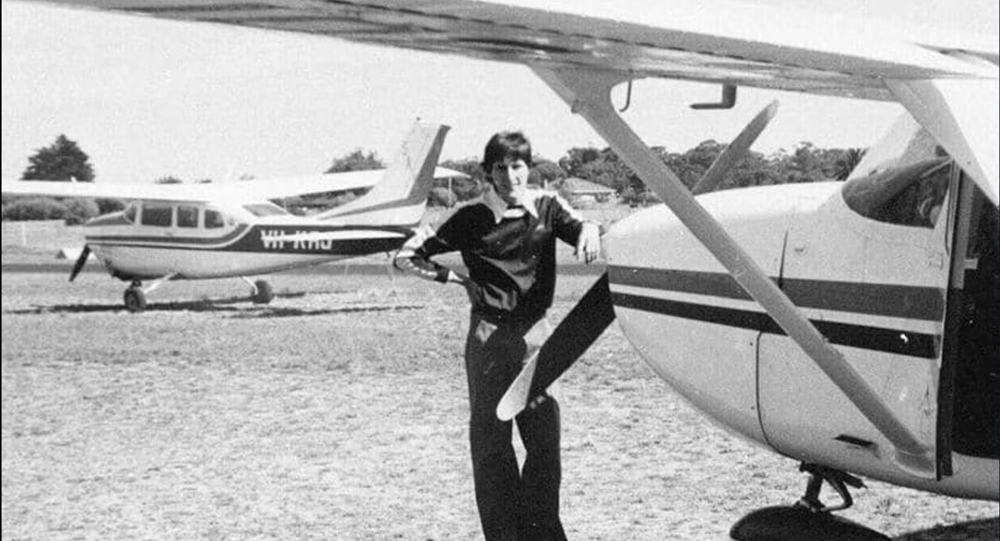
The final image of 14-year-old Australian Keith Sapsford, who aspired to travel the world. In February 1970, he sneaked into the wheel-well of a plane flying from Sydney to Tokyo. It opened mid-air & fell out. When a photographer was testing a new lens, he captured this moment on film and was surprised when it developed.

The history of Flour sack clothing fashion
After Kansas mill owners found women reused flour sack materials into apparel in the 1920s and 1930s, they started applying patterned designs to give families with more fashionable patterns and material.

Hedy Lamarr, A Hollywood actress who also a mathematician and inventor
Hollywood actress Hedy Lamarr was also a mathematician and the inventor of frequency hopping spread spectrum, a technology still used for bluetooth and wifi

How 18th Century Women’s Rights Movements Shaped Modern Equality
The 18th century marked a turning point in the quest for women’s rights, as passionate voices challenged centuries of gender inequality and laid the groundwork for modern feminism. From pioneers like Mary Wollstonecraft to revolutionary declarations and early advocacy, this era sparked debates on education, political participation, and social justice that continue to resonate today. Journey through the origins of women’s rights movements and discover how their bold ideas shaped the fight for equality.

Atomic Tourism: In the 1950s, nuclear tests in Las Vegas served as a draw for tourists
Between 1950 and 1960, Las Vegas offered “Atomic Tourism” in which guests could watch atomic bombs being tested in the desert as a form of entertainment.

Ancient Egyptians Had Pregnancy Tests Over 3500 Years Ago
The ancient Egyptians used a pregnancy test that involved potentially pregnant women peeing on barley and wheat seeds. Plant growth indicated pregnancy: barley for a boy and wheat for a girl. Later tests revealed that pregnant women's urine causes plant growth 70% of the time, whereas non-pregnant women's urine does not.

Mother who spent entire life savings for daughter’s cancer treatment won the lottery
A mother won $2 million from a $10 scratch-off lottery ticket after she spent all of her entire life savings to pay her daughter’s cancer treatment. She bought the winning ticket after her daughter’s last cancer treatment.

The History Behind the “No One Dies Alone” Program
In 1986, while doing a night shift at the hospital, Sandra Clarke, a registered nurse, was asked by an elderly patient to stay. She promised to be back after checking on her other patients, but by the time she returned, the gentleman had passed away. Clarke became one of the key figures in launching No One Dies Alone, a program that allows volunteers to sit with terminal patients who have no one else.

The true story of Annie Oakley, legendary sharpshooter
Anne Oakley was such a good shooter that she could split a playing card help edge-on, hit dimes thrown into the air, shoot cigarette from her husband's lips, and pierce a playing card thrown into the air before it hit the ground.

The Mouth of Truth: Ancient Rome’s Legendary "Lie Detector" That Bit Off Hands
Discover the chilling legend of the Mouth of Truth (Bocca della Verità) in Ancient Rome—a massive carved stone face believed to bite off the hand of anyone who lied while inserting their hand into its gaping mouth. Uncover the truth behind its eerie reputation and how this ancient artifact became a symbol of honesty and fear.

How Cleveland's Balloonfest in 1986 Turned Into a Public Tragedy
In Cleveland, Ohio, United Way broke the world record by deflating nearly 1.5 million balloons as part of a publicity stunt to raise money. The balloon obstructed a US Coast Guard search for two boaters who were subsequently discovered to have drowned, blocked airport runways, and blocked land and waterways.

The Forgotten Story of Semipalatinsk and the Soviet Nuclear Experiments
Between 1949 and 1989, the Semipalatinsk Test Site in Kazakhstan became the primary location for Soviet nuclear weapons tests, exposing millions of unsuspecting villagers to radioactive fallout. Known as the “Polygon of Suffering,” this remote desert witnessed 456 nuclear detonations that caused widespread health crises, birth defects, and generational genetic damage. This article narrates the chilling legacy of Semipalatinsk, unveiling the human cost of Cold War arms development and the ongoing struggle for healing and recognition in Kazakhstan.

Mario Segale, Developer Who Inspired Nintendo to Name Super Mario
Super Mario is named after real-life businessman Mario Segale, who was renting out a warehouse to Nintendo. After Nintendo fell far behind on rent, Segale did not evict them but gave them a second chance to come up with the money. Nintendo succeeded and named their main character after him.

George Dantzig solved two famous “unsolved” problems in statistics mistakenly as assignment
In 1939, George Dantzig arrived late to his statistics class. On the board were two famous “unsolved” problems in statistics written as an example by his professor. Dantzig mistook the examples for homework assignments. He solved the “unsolved” problems and submitted the homework to his professor a few days later. His solutions earned him a doctorate.