
A 19-story skyscraper housing hundreds of people is crossed every two minutes by a subway in the south-eastern Chinese city of Chongqing. The skyscraper is directly adjacent to Line 2 of the city’s public transportation system, and between the sixth and eighth floors there is a rail stop called Liziba!

One of the world’s biggest urban areas, Chongqing has a population of about 32 million people. The concept used by the architects to plan the subway route allowed the city to make use of the available area without razing the neighborhood. In addition to the convenience of having a stop just outside their door, residents also noticed a significant boost in the value of their properties, thus they gave their assent.

One of the 25 stops on Line 2, which connects the three districts of the city center, is Liziba, which is situated between the sixth and eighth floors of the same structure. The building project, which was finished in 2005, was created to lessen the noise and movement caused by the passing train. The noise is less than 60 decibels, or around the volume of a running dishwasher.



This whale tail sculpture saved a train that went off the rails
A train in the Netherlands failed to stop in time and broke through the emergency barrier. It's being held up by the statue of a whale's tail.


The Inspiring Journey of Francis Tsai, Marvel Comics artist diagnosed with ALS
Francis Tsai, an American illustrator and conceptual artist who worked for Marvel Comics, was diagnosed with ALS in 2010. After he lost the ability to move his hands and arms, he started painting digitally on his cellphone with his right big toe. After he could not move his feet anymore, he began using eye-gaze technology to keep drawing.

ILOVEYOU Virus, the worst computer virus of all time
The ILOVEYOU Virus, also known as Love Letter for You or Love Bug, had a high infection rate due to its ability to spread itself by copying entries from users' email address books. It is a virus that was created in 2000 by a college student in Manilla, Philippines, and was recognized by the Guinness Book of World Records as the worst computer virus of all time, causing more damage than anything before it.

Abraham Crijnssen – The Ship That Disguised Itself As An Island
During World War II a Dutch minesweeper evaded the Japanese for eight days disguised as an island. The crew covered the decks in cut trees and painted exposed surfaces to look like rocks. They moved only at night and anchored closed to shore by day, eventually escaping to Australia.

stranded hikers rescued by a life-saving iPhone feature
Stranded hikers were rescued by a life-saving iPhone feature that an awful lot of folks don't know a lot about.

Beyoncé and Jay-Z's Hospital Security Blocked NICU Access for Father of Premature Twins
A father was denied access to see his premature twins in the NICU when Beyonce and Jay-Z had their daughter at the same time.

How hero parrot saved little girl who was choking on her breakfast
In 2008 Quaker parrot Willie alerted his owner Megan Howard when the little girl she was babysitting began to choke. Howard was in the bathroom when the parrot repeatedly yelled "Mama! Baby!" flapping his wings. Megan rushed and performed the Heimlich maneuver, saving her life. Willie received the Red Cross Animal Lifesaver Award.

Lafayette pizza delivery driver who saved 5 from burning house
Nicholas Bostic a 25-year-old pizza delivery man from Lafayette, Indiana, ran into a burning house to rescue four children, who told him there is one more inside. He ran back inside, he found the six-year-old girl, jumped out of a window, carried her to a cop who captured the moment on his bodycam.
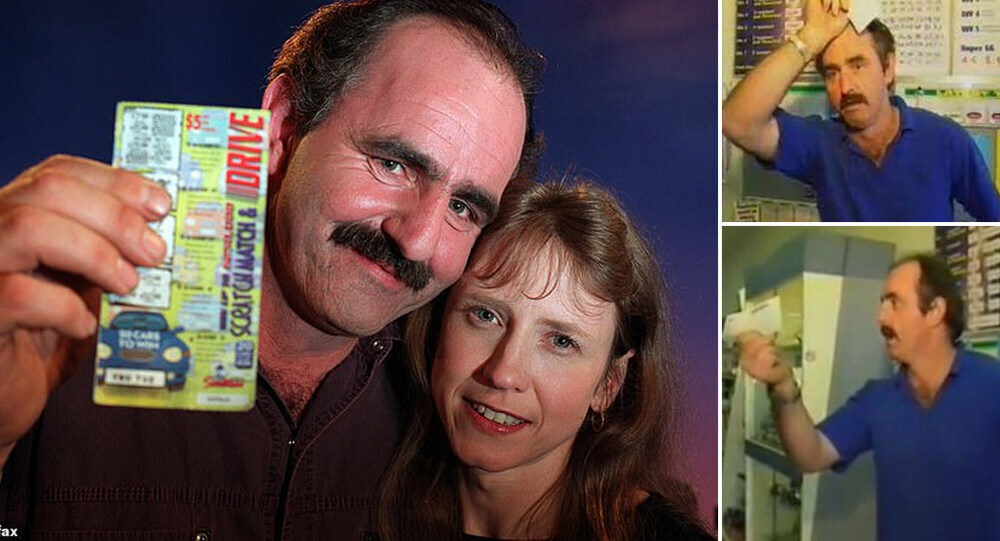
Australian man dies, comes back to life, and wins the lottery twice
Bill Morgan, an Australian, is a man who has beat the odds. He escaped death by surviving a horrific automobile accident and heart attack before collapsing into a coma and going on to win the lotto twice. He went from losing virtually everything to winning far more than he could have imagined.

Woman had no idea she had an identical twin until she saw a 'lookalike' on YouTube
When Anais Bordier saw a YouTube video of Samantha Futerman, who looked exactly like her, she messaged her on Facebook and discovered they were both adopted and born on the same day. They were identical twins who had been separated at birth and had found each other by chance and on social media.

Neerja Bhanot, the braveheart flight attendant was never run away from a crisis
Neeja Bhanot, a 22 year old Indian flight attendant who helped hides 41 American passports aboard a hijacked plane. She died shielding three children from gunfire and was posthumously awarded bravery medals from India, Pakistan, and the United States.
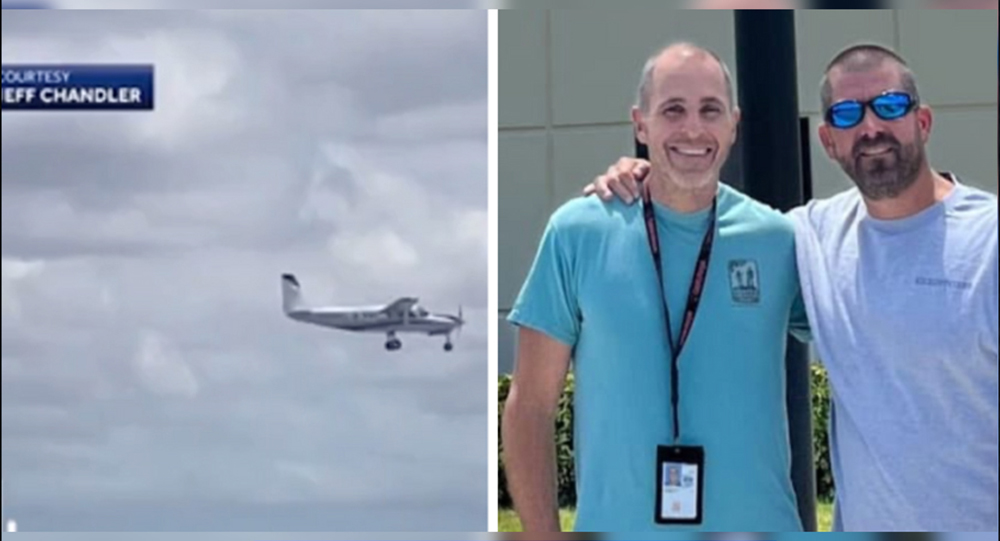
Passenger with No Flying Experience Lands Plane in Florida: A Real-Life Aviation Miracle
A passenger with no flying experience landed a twin-engine plane in Florida after the pilot died mid-flight. With guidance from air traffic control, he safely touched down—a real-life aviation miracle caught on radar and radio.

Aitzaz Hasan, Pakistani school boy who sacrificed his life from suicide bomber
Aitzaz Hasan, a 15 year old Pakistani school boy, sacrificed his life while preventing a suicide bomber from entering his school of 2000 students. His father said "My son made his mother cry but saved hundreds of mothers from crying for their children."

Baby Lynlee 'born twice' after life-saving tumour surgery
Baby Lynlee was "born twice." First, surgeons brought her out of the womb to remove a spinal tumor. After the successful surgery, she was placed back and born again as a healthy baby girl.

Elvita Adams jumps from the Empire State Building and amazingly survived
Elvita Adams once tried to commit suicide by jumping off the empire state building. She Jumped from the 86th floor but was blown back to 85th floor by a strong gust of wind.

Mom hears son's heartbeat 3 years after his death when she meets organ recipient
She agreed to donate her son's organs after his sudden death in June 2013 at the age of 7 months. The grieving mother was able to listen to her late son’s heart beating inside the little girl who received the organ after his death.

Before "The Rock," There Was "Rocky Maivia"
Dwayne “The Rock” Johnson’s first WWF persona was Rocky Maivia, a face (good guy). The audience rejected him due to his cheesy character, with chants of “Die, Rocky, die!”. After this, he became a heel (villain), referring to himself in the third person as “The Rock” and insulting the audience.

Woman survives skydiving accident, discovers she's pregnant
2005, a woman performing her first solo skydive jump survived a parachute malfunction which caused her to slam face first into a parking lot at 50 MPH. During surgery doctors discovered she was pregnant. She made a full recovery and the baby was fine.
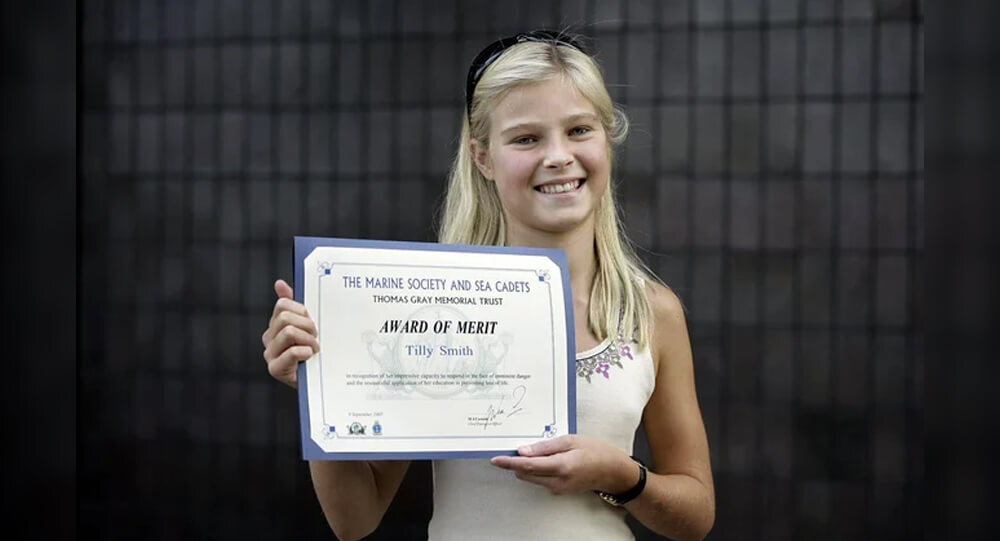
Smart girl saves her family more than 100 people in 2004 tsunami
In 2004, a 10-year-old girl saved her family and 100 other tourists from the Asian tsunami because she had learned about the giant waves in a geography lesson, it has emerged.

China Weather Control on 2008 Olympics with missile
One thing is certain: when it comes to ensuring nice weather for the world's largest party, the Chinese cannot be accused of being subtle. The Chinese government authorized the use of 1,104 cloud seeding missile launches from 4:00-11:39 p.m. on Friday night to reduce the possibility of rain ahead of the 29th Olympic opening ceremony in Beijing

Missing Masterpiece Discovered in the Background of ‘Stuart Little’
In 2009, Gergely Barki, an art historian, was watching the film Stuart Little (1999) when he spotted an original long-lost painting used as a prop. Called Sleeping Lady with Black Vase, this painting was the work of Hungarian avant-garde painter Róbert Berény. The painting had been considered lost after World War II.


Apple Watch saves a 78 year old man from life threatening fall
An Apple watch saved the life of a 78-year-old man from North Carolina. When the man was unconscious and collapsed on his driveway, his Apple watch quickly sent an alert to emergency services.
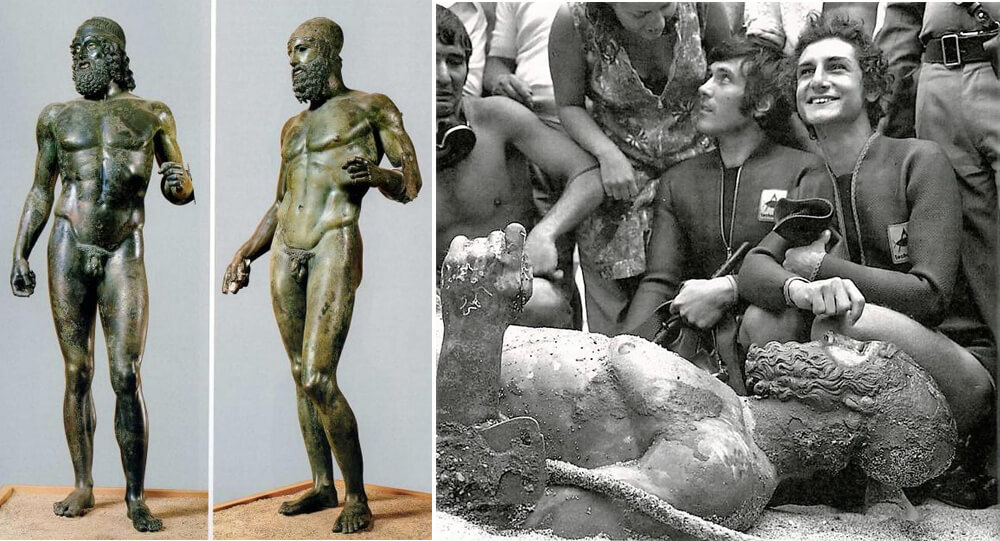
The accidentally discovery of Riace bronzes
Stefano Mariottini was snorkeling off the coast of Monasterace near Riace in 1972 when he noticed a human hand sticking out of the sand and called the police, thinking it was a corpse. It was actually two statues of "Warriors from Riace" - 5th century BC Greek bronze statues.

Kipekee, the world's only spotless giraffe, was born at Brights Zoo
The world's only spotless giraffe was born at a zoo in the United States. The giraffe born without spots on July 31 is the only one of her kind on Earth.

The world’s longest flight spent more than two months in the air
Roberts Timm and Jim Cook, two pilots, flew an aircraft for more than two months without landing in 1958. Matching the speed of a truck moving down the road to refuel. A mattress for sleeping, a small steel sink for personal hygiene, the removal of most interior fittings to reduce weight, and a basic autopilot were among the improvements.