
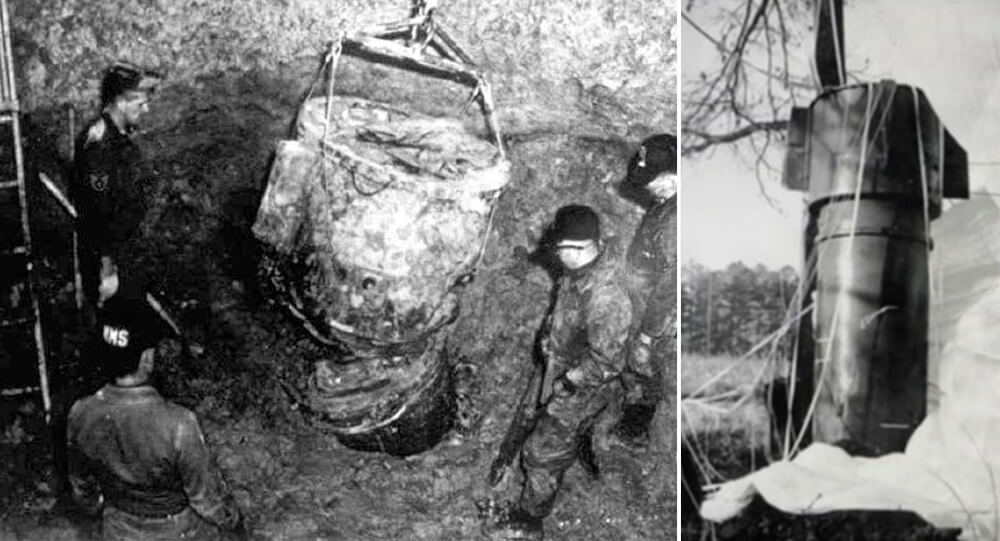
4 January 1961: The 4241st Strategic Wing’s Boeing B-52G-95-BW Stratofortress, serial number 58-0187, was on a 24-hour airborne alert mission off the United States’ Atlantic Coast. Major Walter S. Tulloch, US Air Force, piloted the bomber with Captain Richard W. Hardin and First Lieutenant Adam C. Mattocks. Major Eugene Shelton, Radar Navigator; Captain Paul E. Brown, Navigator; First Lieutenant William H. Wilson, Electronics Warfare Officer; Major Eugene H Richards, Electronics Warfare Instructor; and Technical Sergeant Francis R. Barnish, Gunner were among the other members of the crew. It was equipped with two Mark 39 thermonuclear bombs, each with a 3–4 megaton explosive yield.
The B-52 was refueled by an air tanker while in flight. Major Tulloch was told by the tanker crew that the B-52’s right wing was leaking fuel. More than 5,400 gallons (37,000 pounds/17,000 kilograms) of jet fuel were wasted in less than three minutes due to the massive leak. The B-52 was on its way to North Carolina’s Seymour Johnson Air Force Base.
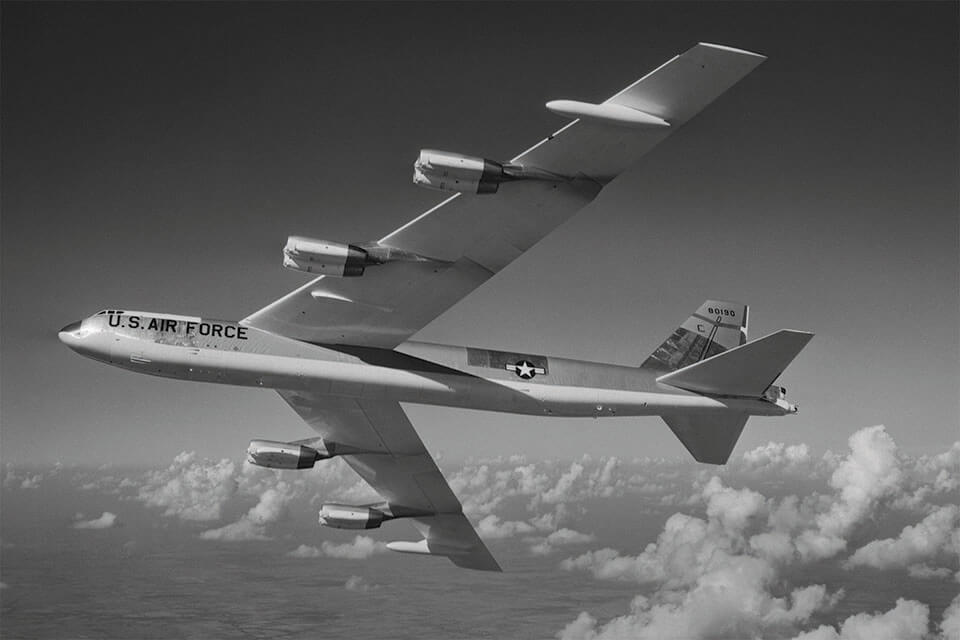
The bomber became increasingly difficult to control as they fell due to the unbalanced condition. Major Tulloch ordered the crew to abandon the fatal ship when the bomber lost control. Five crew members were evacuated, and one climbed through the top hatch. (Lieutenant Mattocks is thought to be the only member of the B-52 crew to have fled through the upper hatch.)
58-0187 shattered and exploded. Its debris reached an area of two square miles (5.2 square kilometers). Majors Shelton and Richards, as well as Sergeant Barnish, were killed.
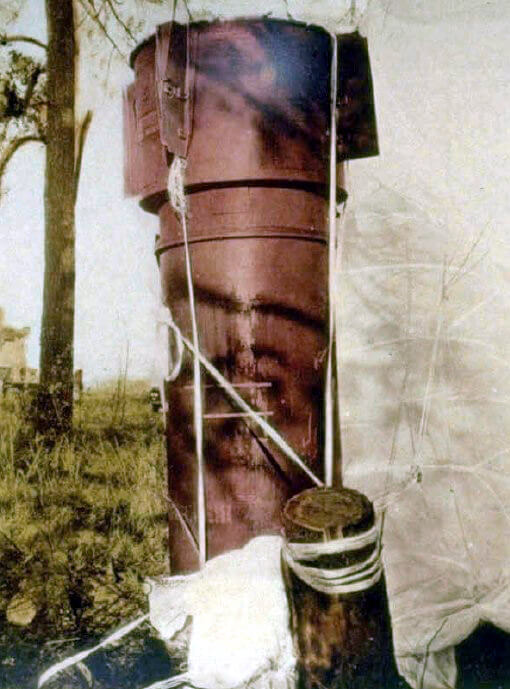
The B-52’s two Mark 39 bombs fell out of the bomb bay as the plane exploded. One buried itself to a depth of more than 55 meters (180 feet). The parachute retarding mechanism on the other plane worked perfectly, and it landed safely. An bomb disposal team promptly detonated it and carried it away.
The buried bomb was extremely difficult to recover. The ordnance crew retrieved the majority of the bomb after eight days, including the 92 detonators and conventional explosive “lenses” of the “primary,” the first stage implosion portion. On January 29, the uranium-235/plutonium-239 “pit,” the bomb’s very core, was discovered. The “secondary,” on the other hand, was never discovered.
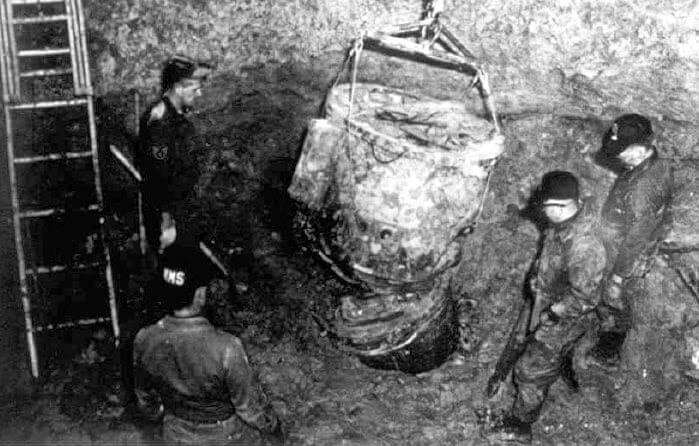
The fusion fuel is held in the secondary, but it cannot detonate without the primary exploding first. There is no threat of an explosion because the secondary is buried.
“During a B-52 airborne alert mission structural failure of the right wing resulted in two weapons separating from the aircraft during aircraft breakup at 2,000 – 10,000 feet altitude. One bomb parachute deployed and the weapon received little impact damage. The other bomb fell free and broke apart upon impact. No explosion occurred. Five of the eight crew members survived. A portion of one weapon, containing uranium, could not be recovered despite excavation in the waterlogged farmland to a depth of 50 feet. The Air Force subsequently purchased an easement requiring permission for anyone to dig there. There is no detectable radiation and no hazard in the area.”
The military code term for an accident like this involving the loss of nuclear weapons is BROKEN ARROW.
Though official declarations claim that neither weapon was in danger of exploding, others claim that five of the six steps (or six of seven) required for a thermonuclear detonation were followed.
The aircraft commander’s arming switch was the only one that had not been turned on.
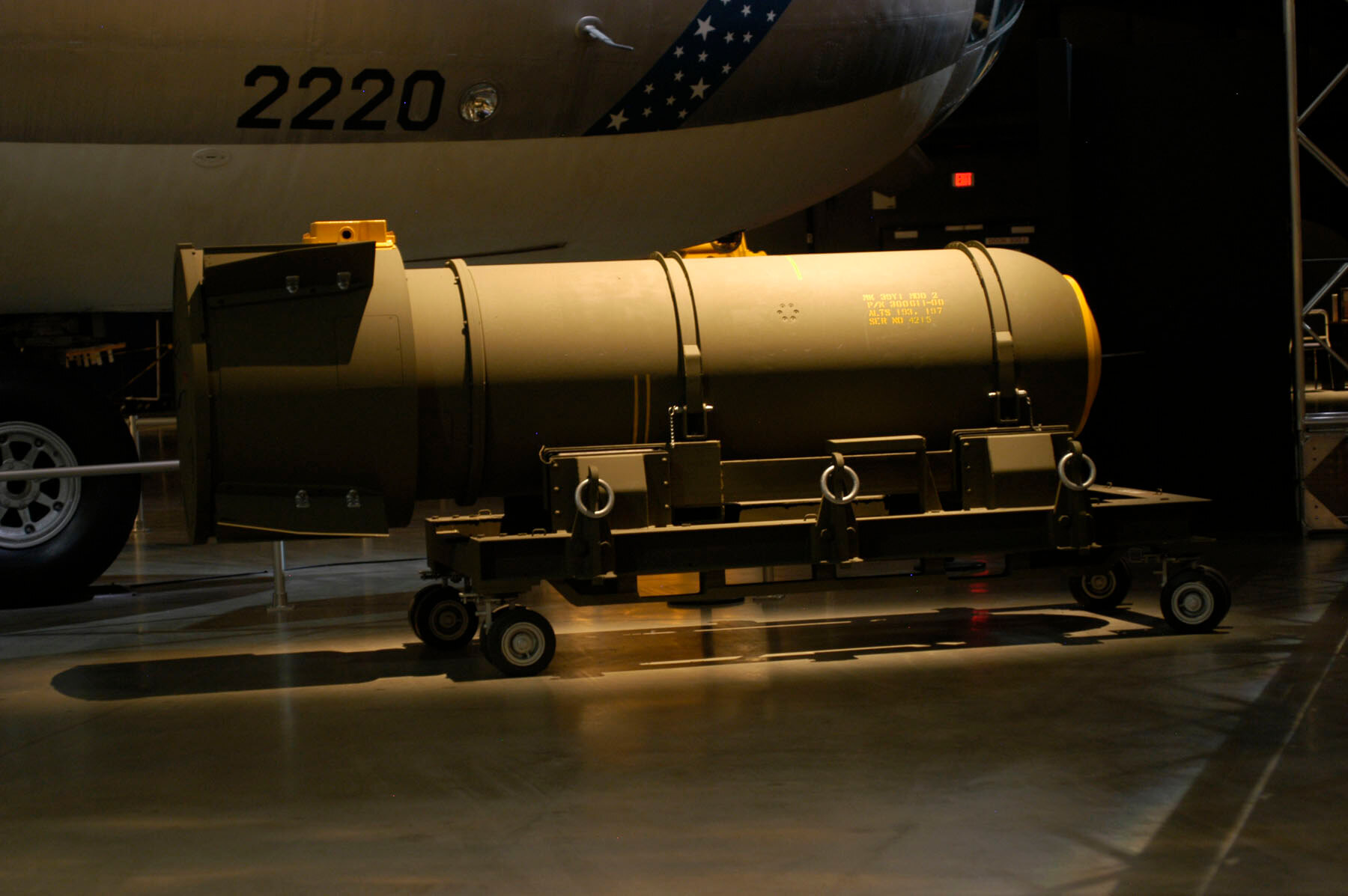
The Mark 39 was a two-stage thermonuclear bomb with radiation-implosion. It was produced from 1957 to 1959, with over 700 units produced. It was fully fused, which meant it could be detonated by contact with the ground, as an air burst, or by “laid down,” in which a sequence of parachutes would slow the bomb and allow it to land on its intended target before detonating. This gave the bomber enough time to clear the area.
With a weight of 6,500–6,750 pounds (2,950–3,060 kilograms), the Mark 39 was considered a light weapon. The bomb was roughly 11 feet, 8 inches (3.556 meters) in length and 2 feet, 11 inches in diameter (0.889 meters). The Mark 39 had a 3–4 megaton explosive output. (For comparison, the Redwing Cherokee nuclear weapons test at Bikini Atoll in 1956 had a yield of 3.8.)
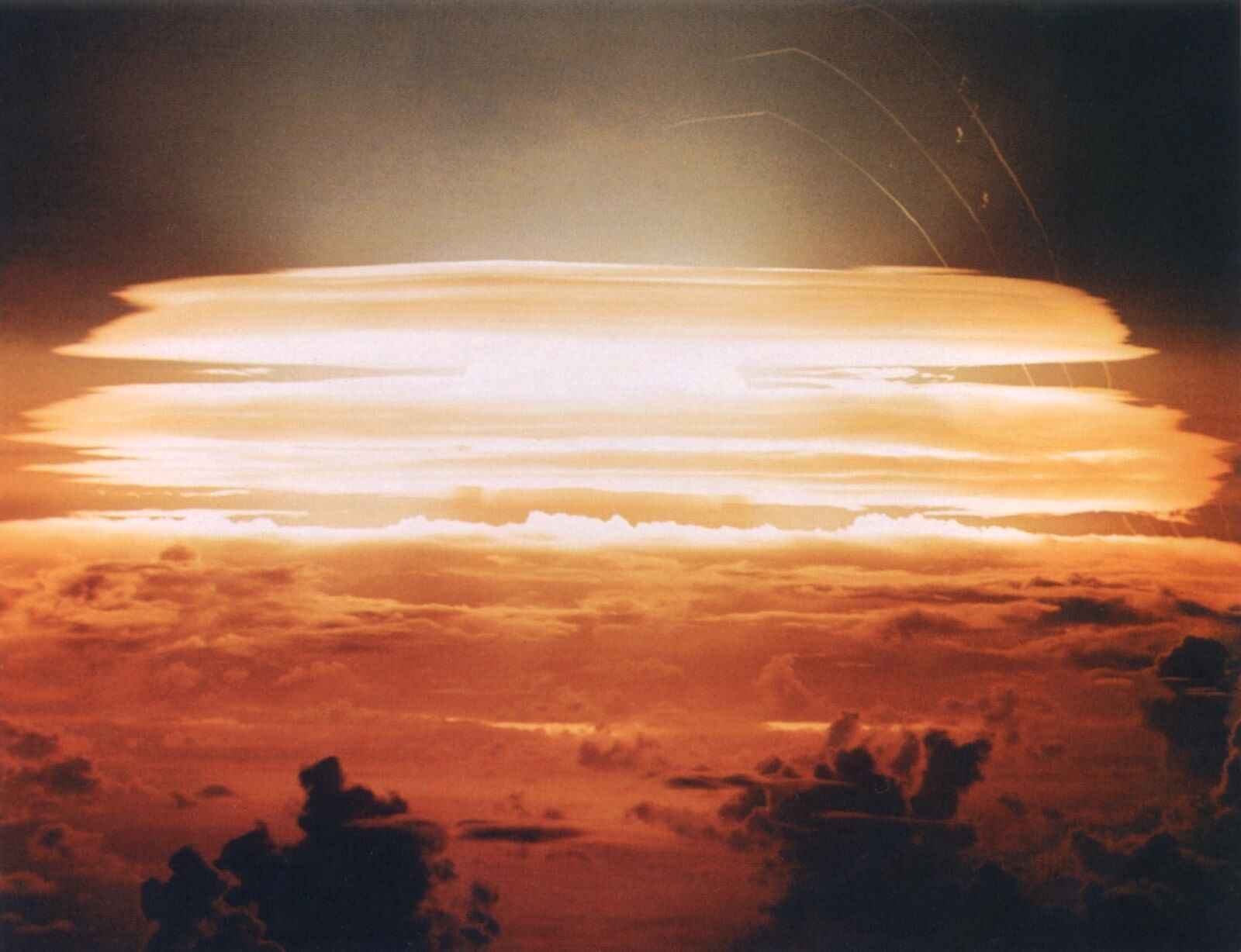
In the mid-1960s, the Mark 39 was phased out of service and replaced by the more powerful Mk 41.

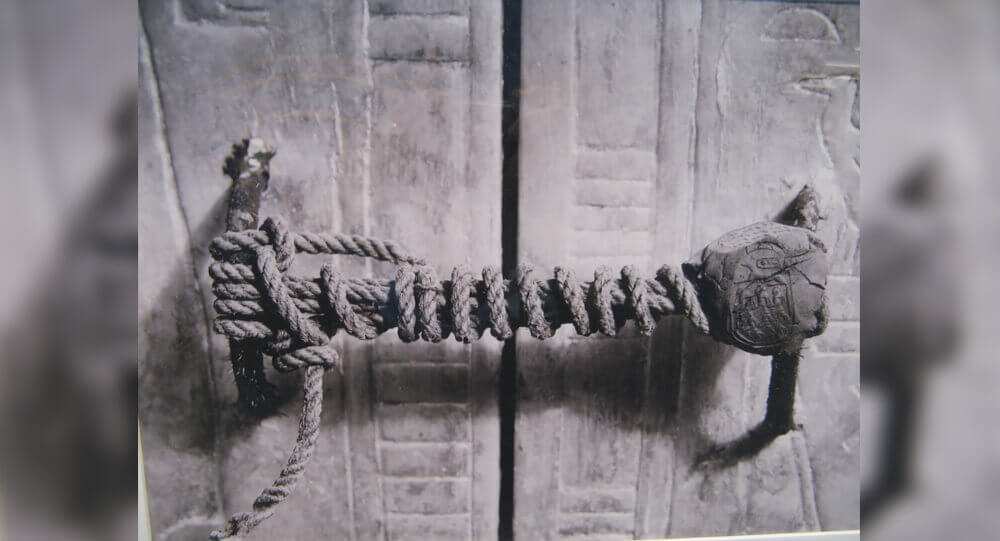
The unbroken seal on King Tutankhamun's tomb until 1922
The unbroken seal of Tutankhamun's tomb before it was opened in 1923, it was unbroken for over 3000 years.

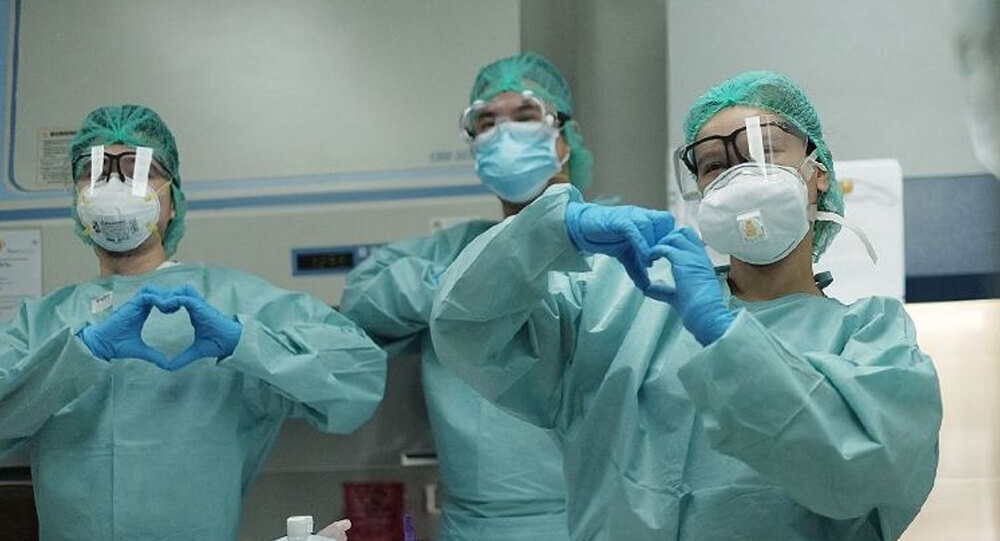
Philippines, the largest supplier of Nurses in the World
Philippines is the world’s largest supplier of nurses, supplying roughly 25% of all overseas nurses worldwide.
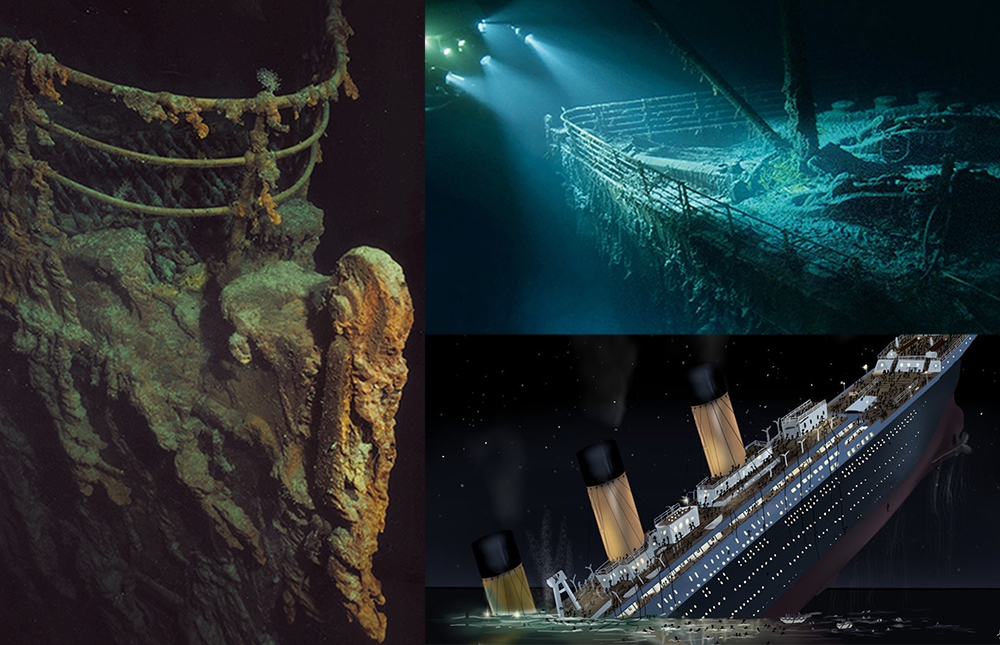
8 Interesting Facts About The Unsinkable Ship, TITANIC
If you ask your friends what's the most famous ship in history the answer in most cases will be the same, of course the legendary Titanic. Its history is full of mysteries, at first it was a source of hope and national pride as well as proof of the triumphs of mankind but it soon became a source of nostalgia and pain, the extent of which cannot be described in words.

Man's Blood Helped Save Millions of Babies
Australian blood donor James Harrison has been one of our most impressive and valued donors, having donated for 60 years. Know his story, how he was a pioneer of our Anti-D program, and why this matters.
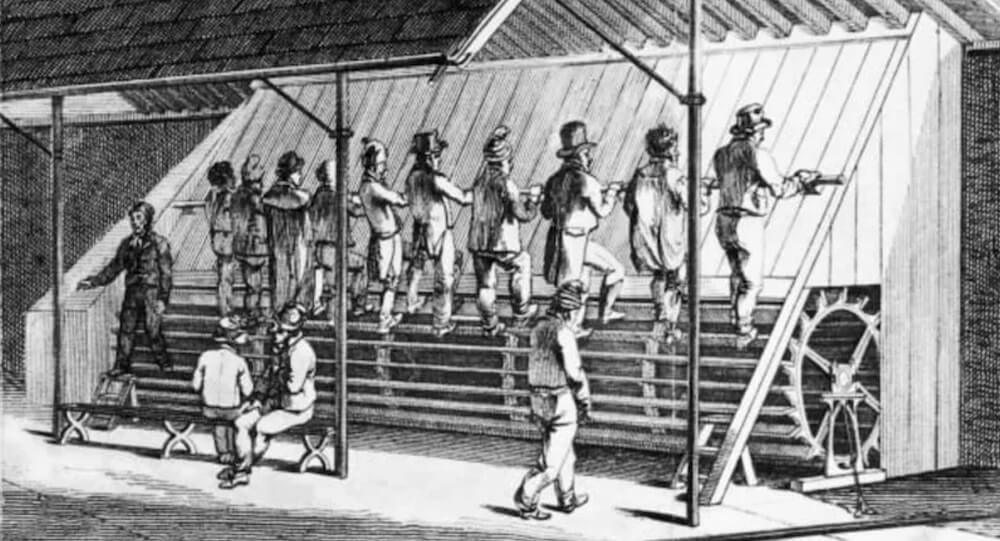
History of Treadmill, punishment for prisoners
Treadmills were originally a punishment used to harness human power on a giant wheel used to grind grains, hence the name "treadmill." The History of Treadmill
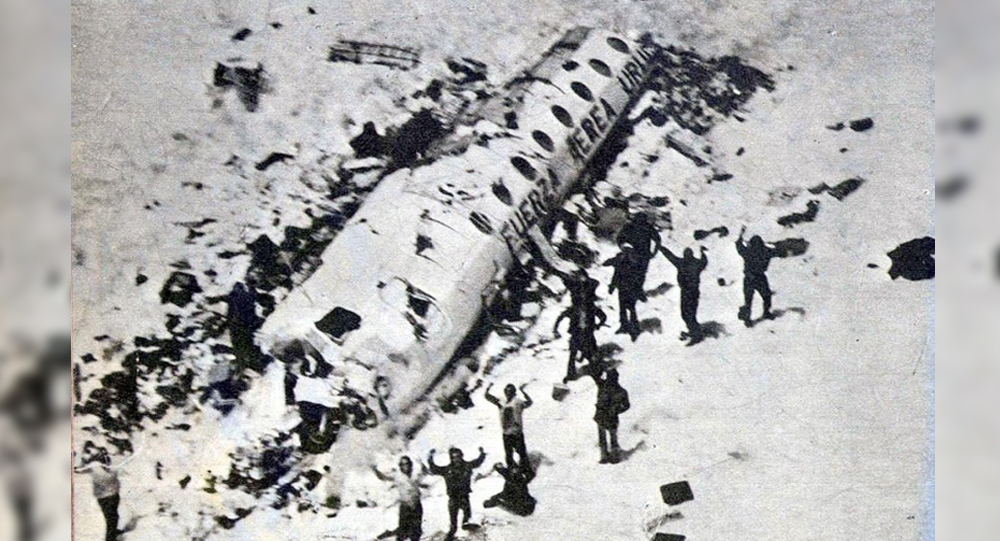
1972 Andes Plane Crash Survivor recall the terrifying Struggles to Stay Alive
On October 13, 1972, a plane carrying a rugby team from Uruguay crashed in the Andes between Chile and Argentina. The survivors were in brutal conditions - high altitude, bitter cold, and the lack of food—and faced the most terrible choice—eating the frozen flesh of their dead friends or starving to death themselves.
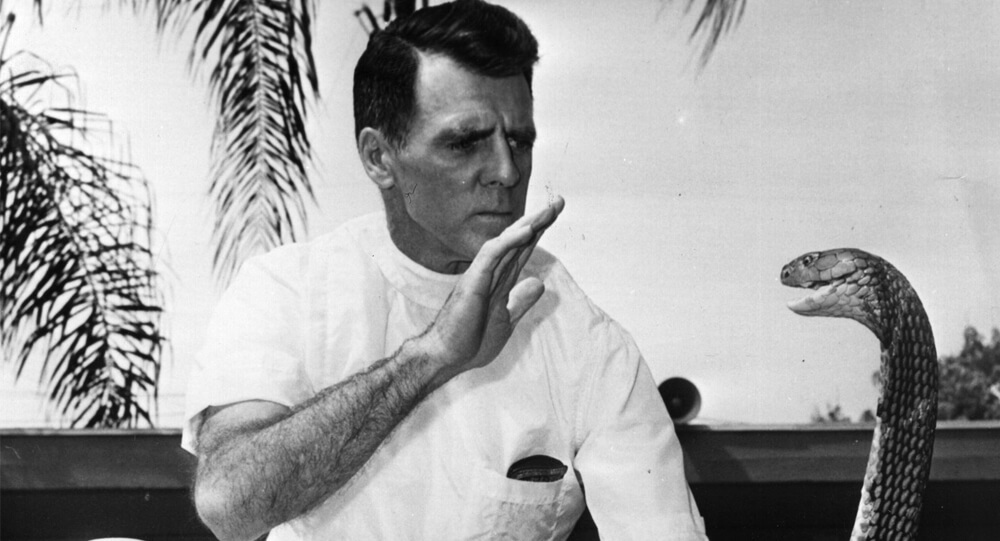
The story of Bill Haast, who lived to be 100 despite his extensive snake venom injections
Bill Haast immunized himself by injecting snake venom into his blood for several years. He holds the Guinness World Record for surviving the most lethal snake bites, having been bitten over 172 times. Bill became known as "Snake Man" around the world and lived for over 100 years.
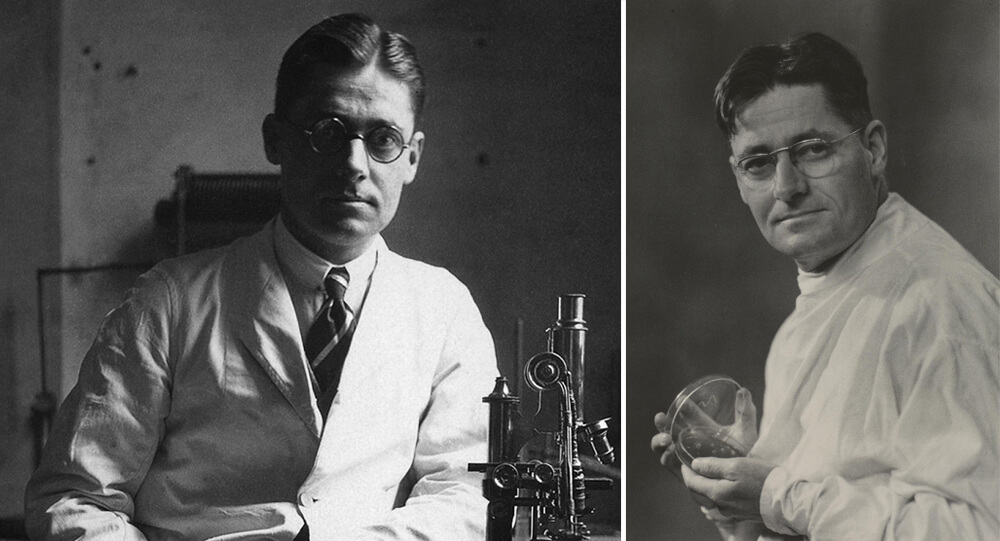
How did Howard Florey discover penicillin
Penicillin was discovered by Alexander Fleming, but he never attempted to turn it into an antibiotic. It wasn't until ten years later that Howard Florey discovered Fleming's obscure paper and understood the mold's potential. Up to 200 million lives may have been saved as a result of Florey's work.
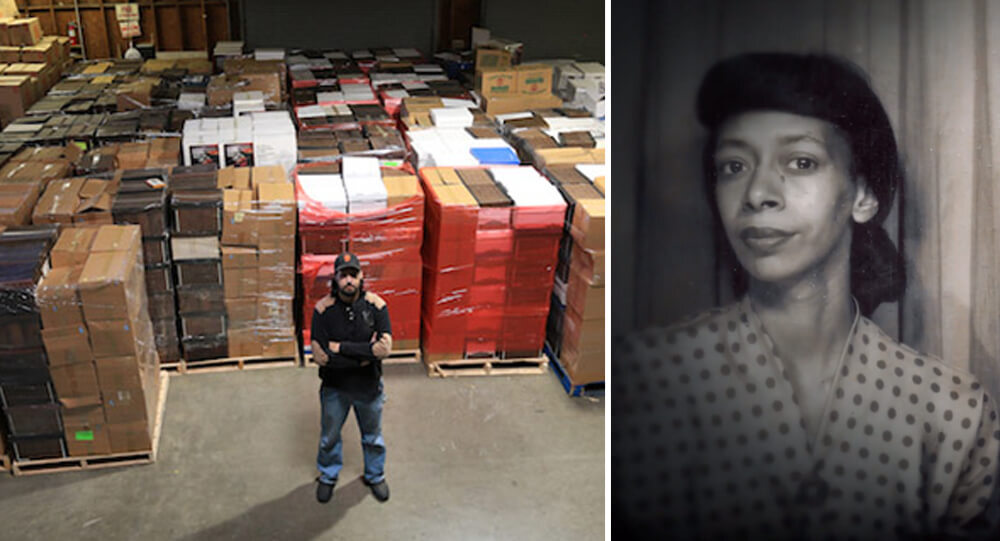
Marion Stokes recorded 30 years of television
Marion Stokes, a Philadelphia woman began taping whatever was on television in 1979 and didn’t stop until her death in 2012. The 71,000 VHS and Betamax tapes she made are the most complete collection preserving this era of TV. They are being digitized by the Internet Archive.
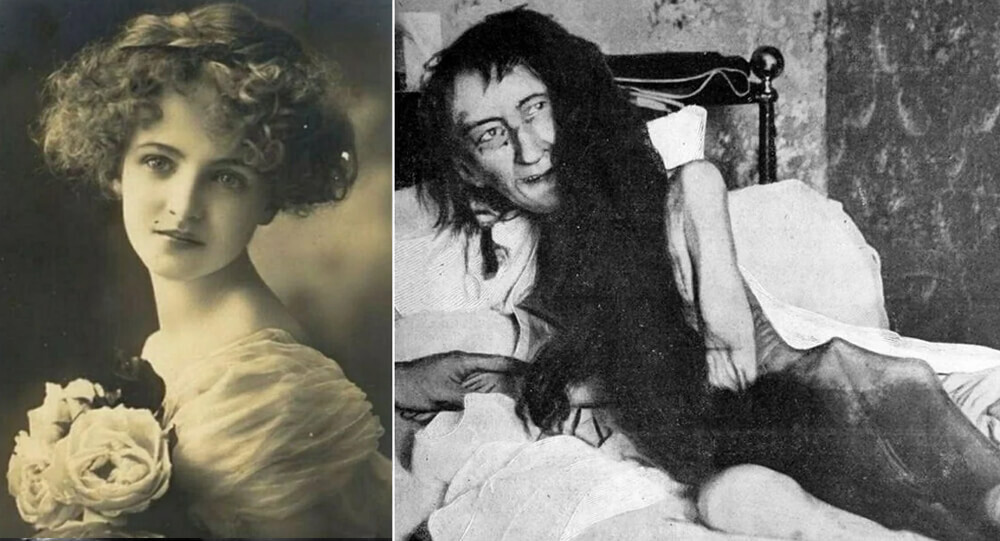
Blanche Monnier: Imprisoned For 25 Years For Falling in Love
Blanche Monnier, she was a French woman noted for her beauty, she wished to marry an old lawyer that her mother disapproved of, so she locked her in a small dark room in her attic for 25 years.

The Littlest Skyscraper: How J.D. McMahon’s 480-Inch Con Fooled Investors in 1919
In 1919, J.D. McMahon convinced investors to fund a 480-foot skyscraper, but he labeled the plans as 480 inches, building a 40-foot structure instead. After taking $200,000, he won in court since the plans matched what he built.
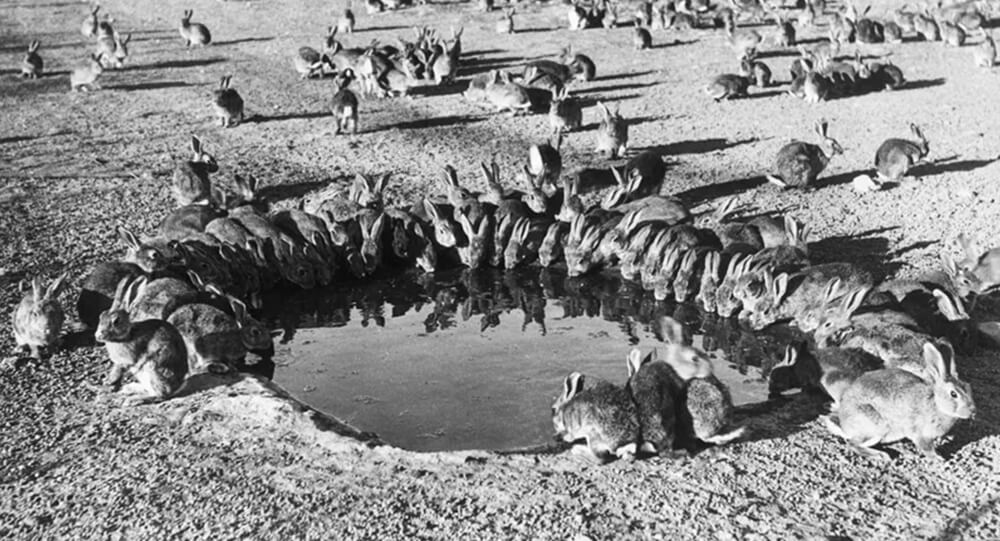
How European Rabbits Took over Australia
In 1859, wealthy settler Thomas Austin released 13 wild rabbits on his Australian estate. By 1920, their population grew to 10 billion.

The Horrific story of Ariel Castro and the Cleveland abduction
Cleveland abduction victims Gina DeJesus, Michelle Knight, and Amanda Berry were forced to live in Ariel Castro's house of horrors for 10 years. He raped and beat them until they escaped in 2013.

Remembering the miracles of the 1985 Mexico earthquake (unbelievable stories)
In 1985, after an 8.0 magnitude earthquake hit Mexico City, nearly all newborn babies survived a collapsed hospital. They are known as “Miracle Babies” for surviving 7 days without nourishment, water, warmth or human contact.
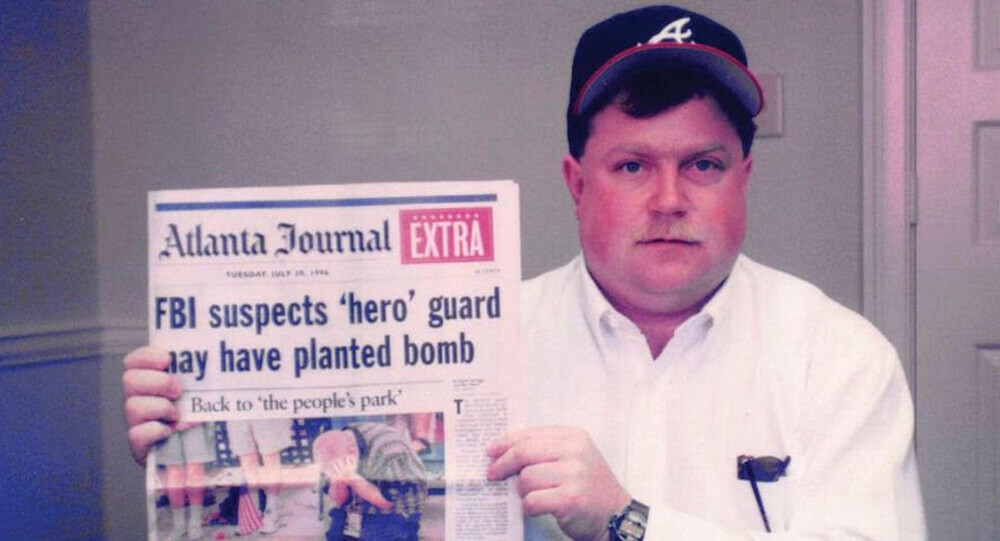
During the 1996 Olympic bombing, Richard Jewell falsely accused of committing the crime after saving dozens of people
Richard Jewell, an American security guard, discovered a bomb during the 1996 Olympic Games in Atlanta and assisted in the evacuation, but was later wrongfully accused and faced public scrutiny. He was cleared, but it had a lasting impact on him until his death in 2007 at the age of 44.
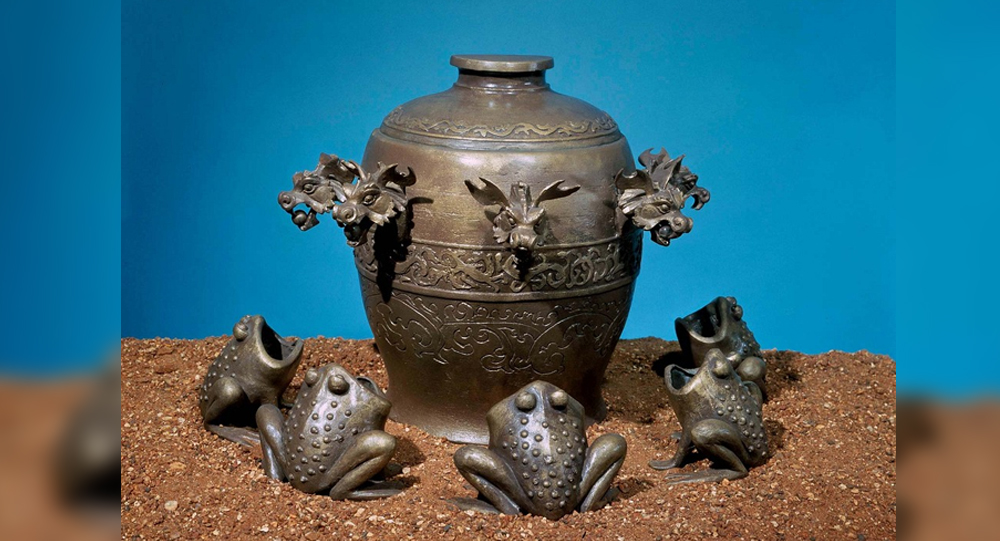
The World’s First Seismograph: How Ancient China Detected Earthquakes 1,800 Years Ago
Over 1,800 years ago, long before modern technology, the ancient Chinese astronomer and inventor Zhang Heng created the world’s first seismograph in 132 AD. This ingenious bronze device could detect distant earthquakes by releasing small balls from dragons’ mouths into toads’ mouths—each indicating a different compass direction. Its historic detection of an earthquake 400 miles away astonished the imperial court and transformed the way societies understood and responded to seismic events.
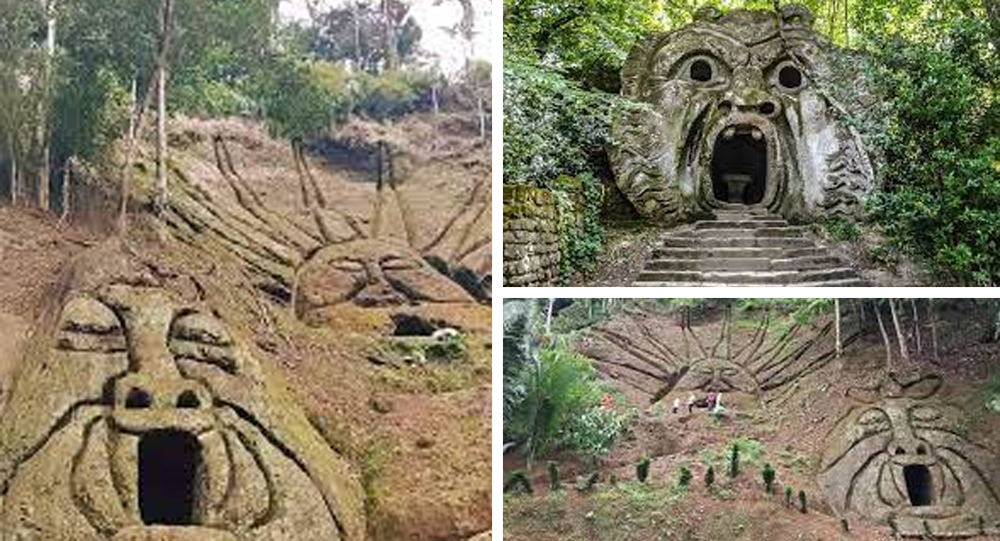
Archaeologists Uncover 2,000-Year-Old Amazonian Cities Using Lidar Technology
Deep in the Ecuadorian Amazon, archaeologists have uncovered an ancient network of urban settlements once inhabited by the Upano people about 2,000 years ago. Using cutting-edge lidar technology, these discoveries reveal a highly organized society featuring sophisticated agricultural systems, drainage canals, and extensive road networks. This transformative find challenges long-held assumptions about ancient Amazonian societies and sheds light on a complex civilization thriving in one of the world’s most biodiverse regions.

How Sleep Deprivation Was Once Used as Torture
Sleep deprivation, long before modern interrogation techniques, was considered a “clean” and effective form of torture—leaving no physical scars, yet breaking minds with haunting silence. Victims endured days and nights without rest, leading to vivid hallucinations, disorientation, and psychological torment. This article traces the dark history of sleep deprivation as a weapon, examines the science behind its effects on the brain, and shines a light on the painful balance between human endurance and cruelty in the annals of coercion.

Poto And Cabengo: The Secret Language Of Twins
Poto and Cabengo, as the two girls called each other, communicated in their own language. The twins were ignored by their parents and secluded from the outside world because their father felt they were developmentally retarded, and their unique language evolved as a result of that neglect.
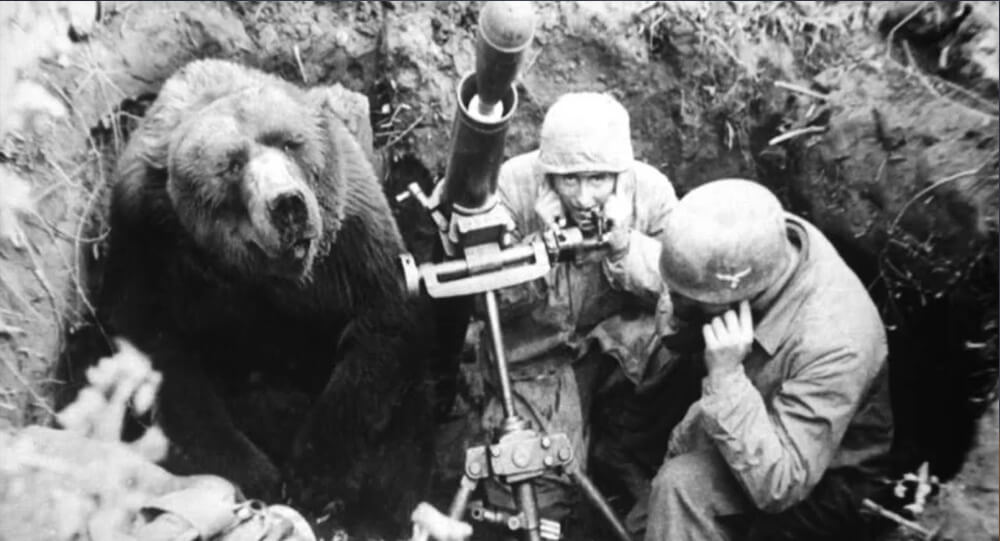
The 440-pound bear named Wojtek and his World War II battle against the Nazis
Polish troops raised an orphaned bear cub during WWII. He enjoyed drinking beer, and was trained to salute. He became officially enlisted as a member of the forces, and helped carry artillery during battle.

The youngest person executed, George Stinney Jr was proven innocent
In 1944, George Stinney Jr. was 14 years old when he was executed in South Carolina. It took only ten minutes to convict him — and 70 years to exonerate him.
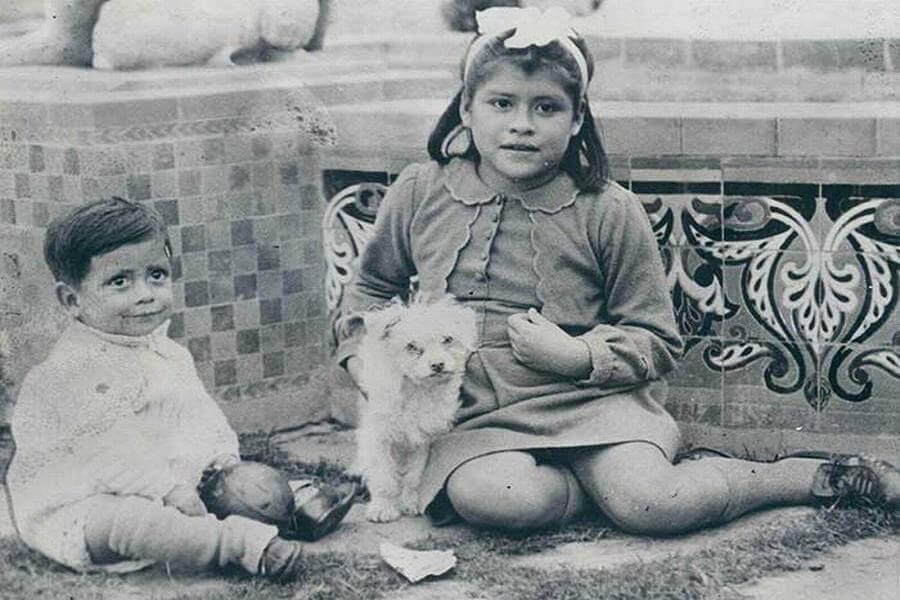
story of the youngest mother in the world at age of five - Lina Medina
Lina Medina, a five-year-old Peruvian girl, became the youngest mother in history in 1939 when she gave birth to a boy.
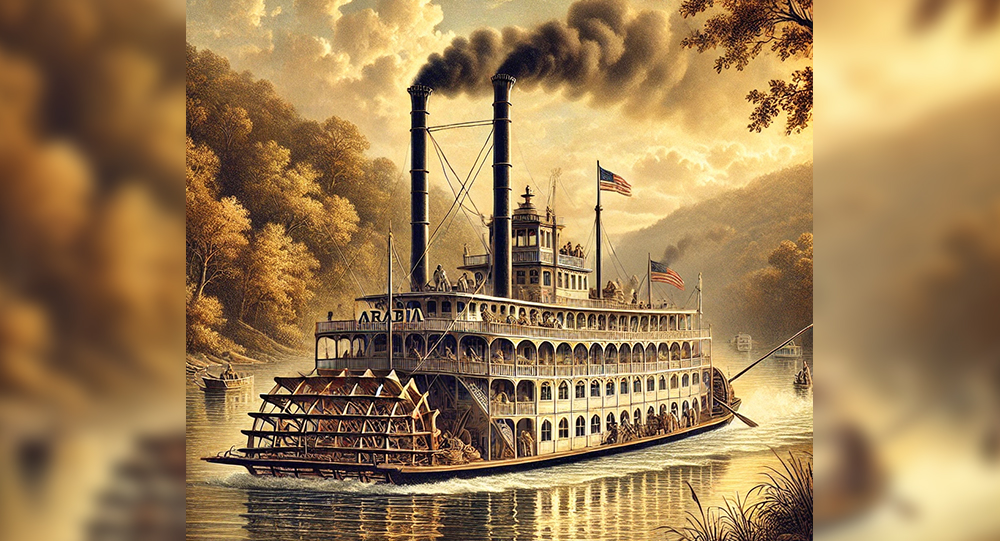
The Arabia Steamboat: Unearthing a 19th Century Time Capsule from the Missouri River
The Arabia was a steamboat that sank in the Missouri River in 1856. Over time, the river shifted 800 meters to the east, eventually turning the site of the sinking into a field. The steamboat remained under 45 feet of slit and topsoil until 1988, when it was excavated. The mud, as it turned out, was such a great preserver that most of the artifacts on board were found to be intact. They even found jars of preserved apples that were still edible!
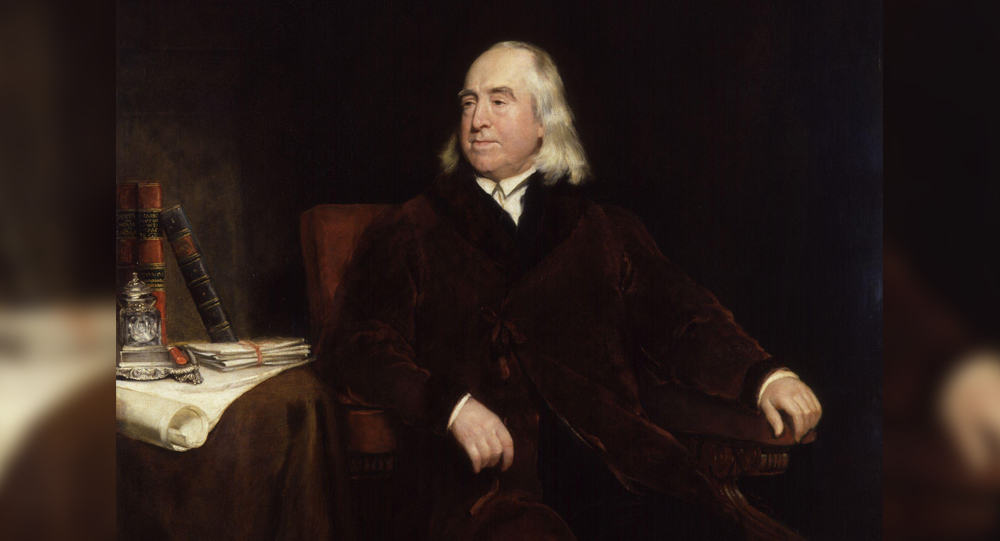
How 18th Century Women’s Rights Movements Shaped Modern Equality
The 18th century marked a turning point in the quest for women’s rights, as passionate voices challenged centuries of gender inequality and laid the groundwork for modern feminism. From pioneers like Mary Wollstonecraft to revolutionary declarations and early advocacy, this era sparked debates on education, political participation, and social justice that continue to resonate today. Journey through the origins of women’s rights movements and discover how their bold ideas shaped the fight for equality.
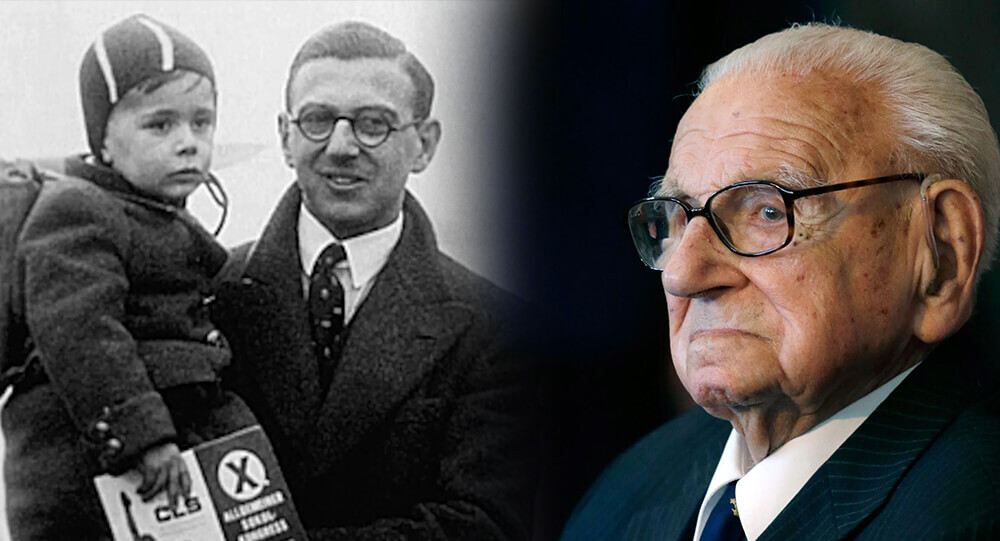
Nicholas Winton ‘British Schindler’: Man who rescued 669 Czech children from Nazis
A man named Nicholas Winton saved 669 kids during WWII and lived almost all his life without letting people know.