

That’s Life, a BBC magazine show, was one of the most watched television shows of the 1980s. Few of the episodes, despite consistently drawing more than 20 million viewers each week, had the same impact as the one that aired on February 27, 1988.
Near the end of the program, host Esther Rantzen produced a scrapbook listing the names of hundreds of mostly Jewish children who had been hidden from the Nazis by being brought to Britain from Czechoslovakia in 1939. Vera Diamant, a ten-year-old whose parents had arranged for her and an older sister to start a new life in Britain, was one of the names mentioned.
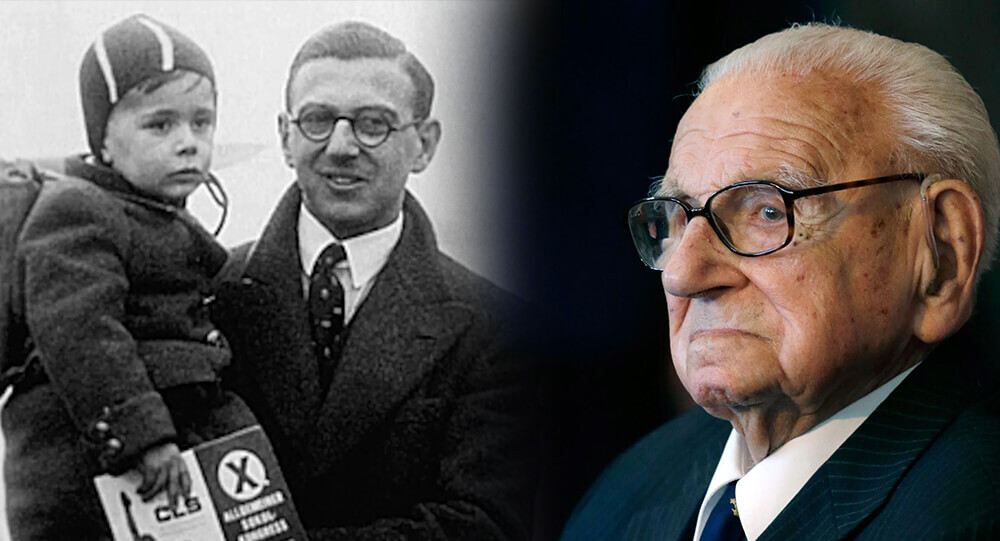
When the camera focused on Vera in the studio audience, viewers could see an elderly man standing next to her. He and Vera were unaware that That’s Life had “set them up.” Rantzen announced that the elderly man was named Nicholas Winton and that 49 years earlier he had played a crucial role in saving Vera’s life as well as the lives of hundreds of other children, drawing gasps from the audience. As Winton wiped a tear from his eye during their embrace, Vera leaned in and said, “Thank you.”
On the surface, Winton appeared to be an unlikely hero for Czech children. After receiving a private education and being born into affluence in north London in 1909, he was a successful stockbroker by the late 1930s. Winton’s ancestry was foreign, despite the fact that he appeared to be the stereotypical English gentleman.
Although Nicholas was raised as a Christian, the family name was Wertheim, a German Jewish surname. It wasn’t until 1938 that he and the rest of the family changed their names to Winton to emphasize where their loyalties lay.
Winton, a fanatic opponent of fascism, joined the Labour Party. He accepted a fellow activist’s invitation to go to Prague at the end of December 1938 so that he could witness the suffering of Czech Jews firsthand. On New Year’s Eve, Winton arrived in Prague and met Doreen Warriner. She was an academic from England, age 34, who had been in Prague since October 13 due to a sense of shame over how many people felt the British government had betrayed the Czechs. When she decided to leave her Rockefeller fellowship in the US to go to Prague, she recalled, “I had no idea at all what to do, only a desperate wish to do something.”
Neville Chamberlain, the British prime minister, had signed the Munich Agreement a week prior to Warriner’s arrival, allowing Adolf Hitler to annex the Sudetenland, a portion of western Czechoslovakia that borders Germany. More than 100,000 refugees from the Sudetenland fled into the rest of Czechoslovakia, which was still temporarily free of Nazi rule, as a result.
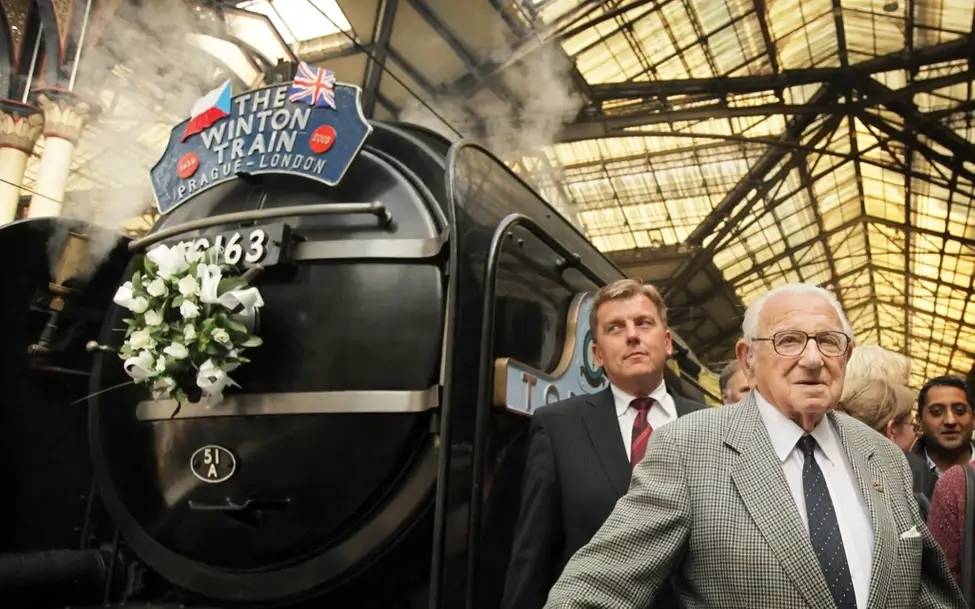
Displeased and unappeased
Not only Warriner, but other Britons also felt repulsed by the Munich Agreement. To help those Czechs who wanted to escape the Nazis, numerous charities and organizations emerged. When Warriner arrived in Prague, she first offered her services to the most well-known of these, the British Committee for Refugees from Czechoslovakia (BCRC). Her main concern was helping political refugees find a way to travel from Czechoslovakia to Britain, and Winton immediately recognized how he could help.
Early in January 1939, Winton wrote to his mother that “Miss Warriner has already asked me to be secretary of a Children’s Committee for Czechoslovakia, which I suggested should be formed.” It will require a lot of effort.
He gave his mother some of that work, like asking the London Home Office what assurances were required to bring a child into Britain. Meanwhile, Winton started to remove some of the layers of red tape that were impeding the BCRC’s operations in Prague. Although it was a difficult task, Winton lived by the old saying that “if something is not impossible, then there must be a way to do it.”
The incident Winton saw in Prague on January 11, 1939, when he came across a group of rowdy Czech youths marching down the street and shouting vigorously, strengthened his resolve to aid the children. In a letter to his mother, he wrote, “I found myself standing next to another unthreatening looking man and I asked him what it had all been about.” “He informed me that the shouting was anti-Jewish slurs and the procession was anti-Jewish,”
Winton encountered other sinister incidents in addition to this one. His suspicion that he was being followed was confirmed by Warriner, who claimed that German agents were keeping an eye on her and the other members of the BCRC in Prague.
On January 14, Winton accompanied British MP Eleanor Rathbone to one of the numerous refugee camps in Czechoslovakia, where an estimated 250,000 refugees were now living. The pair had a humbling experience; seeing so many kids living in terrible conditions was especially upsetting. Winton wrote his mother that evening to let her know that “as far as I can see, my work with children is only just getting started.”
It would be great if she could help, he continued, but he thought he would be more effective if he was based in London. He told her, “If I can help it, I don’t want to work anywhere near any of the existing committees. “Based on past experience, they can do nothing but delay the work. Therefore, I basically need someone the entire time I’m at work.
A £4 million fund established by the British government to aid Sudeten refugee families played a significant role in Winton’s decision to return to London.
The children’s situation would be better served if Winton were in Britain to plan their distribution when they arrived since Warriner was in Prague. Warriner emailed the BCRC in London and said, “He is perfect for the job.” He “has tremendous energy, businessman’s methods, and perfect situational awareness.”
Winton spent a significant portion of February planning the requirements to bring each child from Prague to Britain with the Home Office. Three of these were required: a medical certificate, a £50 guarantee, and the name of a foster parent.
Full steam ahead
On March 14, a train carrying 20 boys and girls, part of the so-called “Kindertransport,” departed Prague. The following day, however, Germany invaded Czechoslovakia, making the need to evacuate more children even more urgent. Fortunately, Trevor Chadwick, a teacher from Swanage in Dorset, had taken over Winton’s duties in Prague. Chadwick had initially traveled to the Czech capital in early March to pick up three students for his school. Now Chadwick and Warriner had to deal with strutting Gestapo officers rather than enigmatic German agents.
They initially treated me poorly, Chadwick recalled. The Kriminalrat, or section chief, was Karl Bömelburg, a thug who could be easily charmed by the cunning Chadwick, and he approved the departure of eight trains in total containing 669 children. “I remember putting on the screaming table-thumping acts – always reliable with these louts – and demanding an interview with the Kriminalrat.”
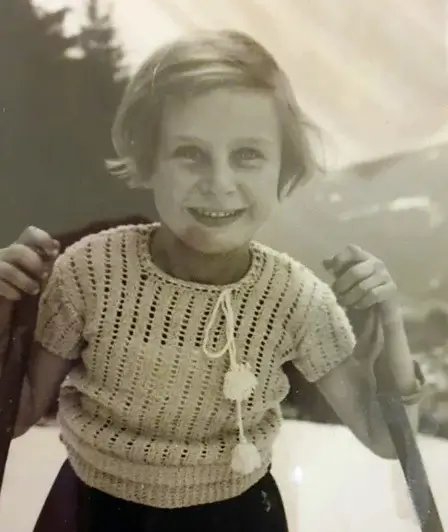
Vera Diamant and her sister Eva were in one of them. Their parents had asked Chadwick for assistance soon after German troops had occupied their hometown of Celákovice. On June 2, 1939, 123 children, including the two, boarded the fifth train for Britain.
Diamant recalled, “The last time I saw my parents was getting on the train in Prague to go to England.” We were seated in the train when I noticed my parents’ agony, which they had been trying to hide up until that point.
When the train arrived in London, Winton met Vera and the other kids, and among the foster parents and other well-wishers was a reporter from The New Statesman publication. The journalist declared, “I have seldom seen a more moving sight.” The crocodile was led off to a gymnasium by police officers, who kept a gangway for it. and draped in the center. The parents were on one side of the curtain, and the kids were seated on benches there. The child passed through a curtain opening as each name was called out and was greeted by its new parents on the other side.
The final train Chadwick waved off from Prague was the one carrying the Diamant sisters. British charity workers were no longer safe in the Czech capital, so he left in June, just as Warriner had done a few weeks earlier. In July, the BCRC was replaced by the Czech Refugee Trust Fund, and Walter Creighton, a government official with greater protection, took over Chadwick’s position.
That summer, three more trains departed from Prague, the most recent one carrying 241 kids to London on July 1. The ninth was supposed to leave Prague with 250 boys and girls on September 1st, but it never did. Germany invaded Poland that morning, sparking a global war that affected all of Europe.
Silent heroism
Numerous children’s lives were saved by Winton, Chadwick, and Warriner, but for many years their efforts went unappreciated. There was hardly any coverage of Chadwick and Warriner’s deaths in the 1970s. When Warriner passed away in December 1972, there was a brief notice in The Times that stated: “Doreen was the best possible company in bad times, and it was rewarding to work with someone of such competence and compassion.”
Winton and the work of the BCRC nearly fifty years earlier came into the public eye thanks to the stirring reunion with Vera Diamant on That’s Life. A BCRC volunteer had given Winton the scrapbook as a memento of their endeavor in 1939, and Esther Rantzen found it to be such a wealth of information. Elizabeth Maxwell, a Holocaust scholar and the spouse of newspaper magnate Robert, who was himself a Czech Jew who had fled the Nazis, learned about it in the early 1980s.
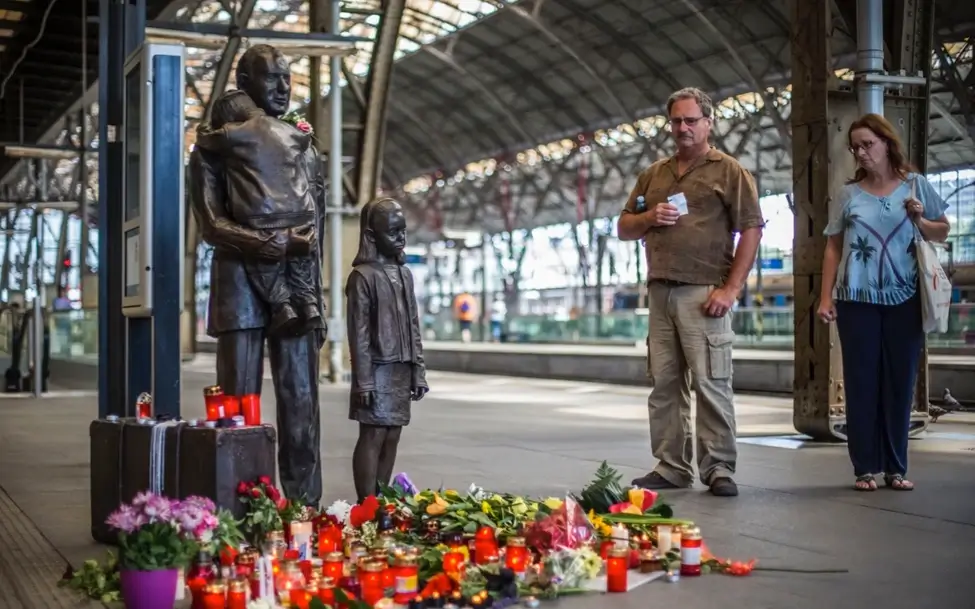
Winton, who received a knighthood in 2003, never liked how the media hailed him as the only success of this endeavor. He frequently emphasized Chadwick and Warriner’s contributions in interviews, claiming in 2014 (the year before he passed away at age 106) that “I wasn’t heroic because I was never in danger.” Winton had been ready to act bravely while the majority of the West was indifferent to the plight of Europe’s Jews, which was more important than the fact that he had been in danger for some time. Vera remarked, “He is the father of the largest family in the world.