


10 world’s most destructive and dangerous volcanic eruptions in history
Volcanic eruptions can devastate cities, change the world’s atmosphere, and devastate economic systems. They can create molten lava rivers, mudslides, suffocating ash, and poisonous gases that cause chaos around the world for years.
The Volcanic Explosivity Index (VEI), like the Richter scale for earthquakes, is used to determine the magnitude of a volcanic eruption. Volcanic explosions are ranked from 1 to 8, with 1 being a gentle lava outpouring and 8 being a mega-colossal eruption.
The size of an eruption is a strong indicator, but it does not always predict its effect. Calculating the potential loss of life is one of the most common ways to assess the severity of an eruption. Deaths can occur not only as a result of an eruption’s effect, but also as a result of a lack of food.
Economically, volcanic eruptions can be devastating. Although calculating the economic cost of ancient eruptions is primarily theoretical, the costs of more recent eruptions are determined by calculating the loss of infrastructure and income to local residents. Volcanic eruptions cost $152.6 billion in damages between 1995 and 2015, or $7.6 billion per year, according to a United Nations report.
A volcanic explosion’s effects can be massive, from its size to its death toll to its economic cost. Here is ten world’s most destructive and dangerous volcanic eruption in history:
1. Santa Maria, Guatemala, 25 October 1902 (VEI6)
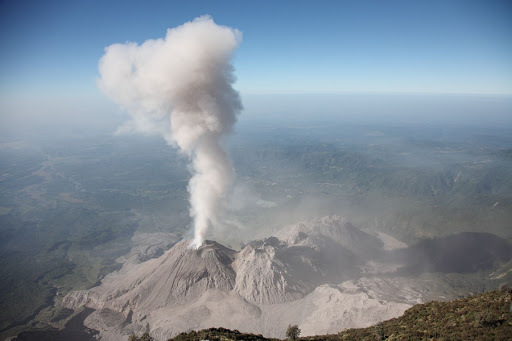
The Santa Maria volcano was inactive for hundreds, if not thousands, of years. That is, until 1902 when it erupted violently due to a series of earthquakes in the Central American region. At least 5000 people were killed in the eruption, but many believe this figure is exaggerated. Over the course of 19 days, the eruption created a 28-kilometer-high column of pyroclastic debris, resulting in 5.5 km3 of pyroclastic debris. For days, the ash from the eruption obscured Guatemala’s sky, spreading all the way to San Francisco. Damages are estimated to be in the millions of dollars.
2. Mt Vesuvius, Italy, 79 AD (VEI5)
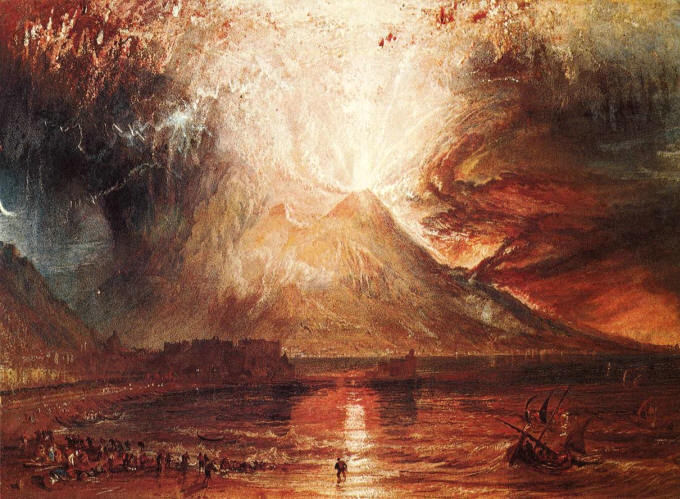
Mt Vesuvius has erupted many times in human history, but the most famous is the terrifying eruption of 79AD. On August 24, Vesuvius erupted, burying the surrounding cities of Pompeii and Herculaneum in ash, mud, and poisonous gases. The eruption claimed the lives of 16,000 people. The cities were not excavated and rediscovered until 1595. The cost of a similar eruption today will be in the billions.
3. Mount Pinatubo, Philippines, 1991 (VEI6)
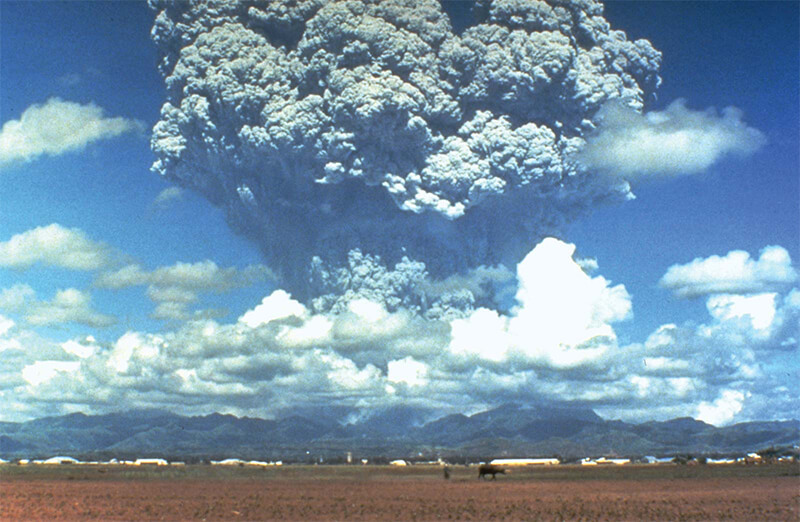
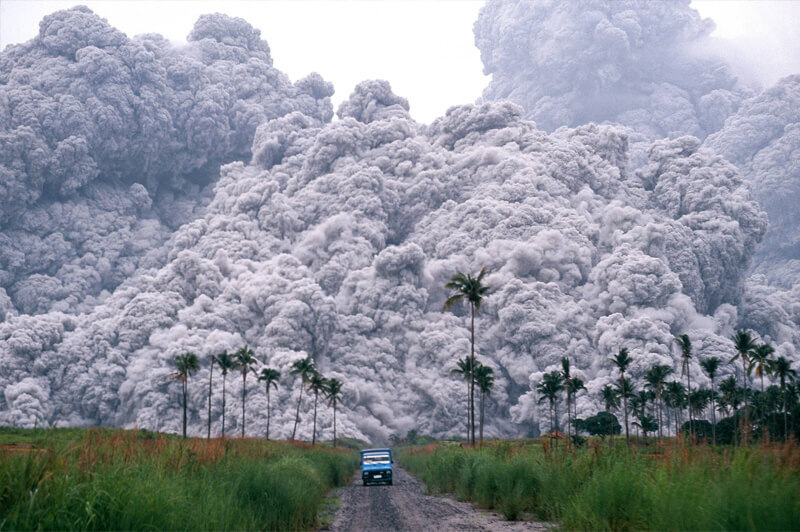
The Mount Pinatubo eruption was the twentieth century’s second-largest volcanic eruption. The volcano erupted on June 15, sending a 35-kilometer-high ash cloud into the sky. The eruption triggered huge pyroclastic flows and expelled nearly 20 million tons of sulfur dioxide into the stratosphere, lowering global temperatures. Despite the fact that only 722 people were killed, the eruption affected over 200,000 people. The cost of the eruption was estimated to be in the range of $200 million.
4. Nevado del Ruiz, Columbia, 1985 (VEI3)
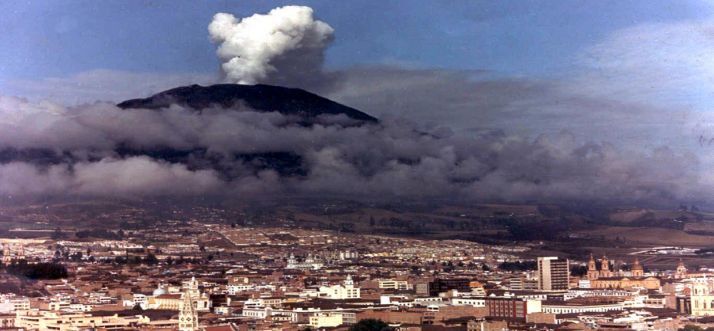
Despite its small scale, the eruption of Nevado del Ruiz had catastrophic consequences. The mudflow that followed the eruption was the most devastating aspect of the event, burying the town of Armero and killing 20,000 people. The most destructive volcanic eruption, according to the International Disaster Database, was Nevado, which cost an estimated $1 billion.
5. Mt Unzen, Japan, 1792 (VEI2)
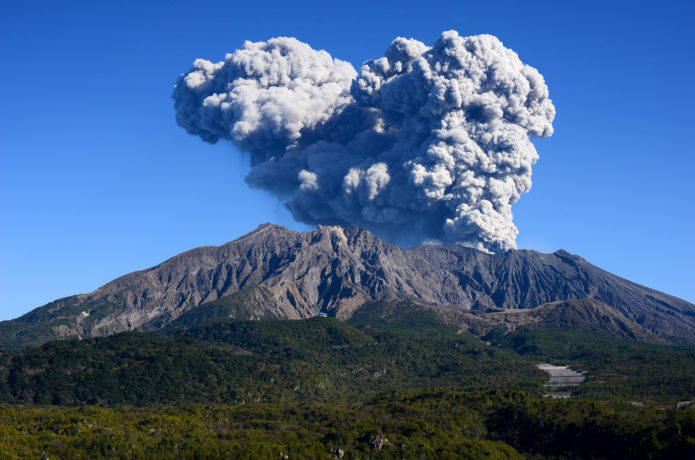
Mt. Unzen’s eruption is still Japan’s deadliest volcanic eruption. The explosion caused the volcano’s dome to collapse, resulting in a huge landslide that buried Shimabara and flowed into the sea, causing a 57-meter-high tsunami. Around 15,000 people were killed in the disaster. Damages to agriculture and fisheries facilities is expected to cost $17.4 billion yen ($150 million).
6. Ilopango, El Salvador, 450AD (VEI6+)
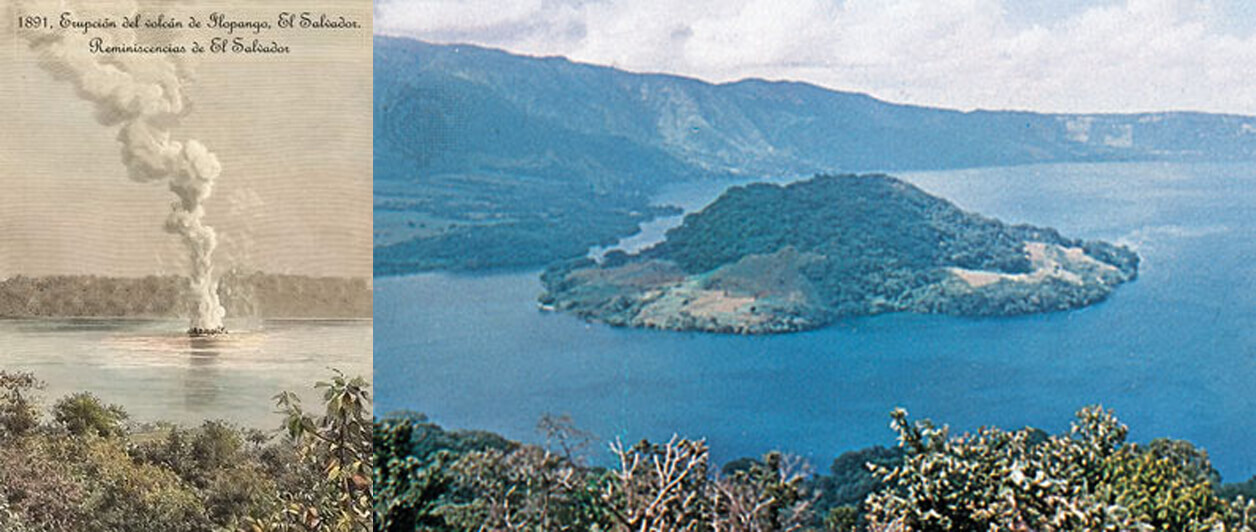
Ilopango’s first eruption, in 450 AD, was the second-largest volcanic eruption in the last 200,000 years. The magnitude of this eruption is thought to have killed many Mayan cities. For more than a year, the skies were filled with ash and dust. It is estimated that up to 100,000 people were killed and over 400,000 were displaced as a result of the eruption. It is believed to have been the cause of the AD 535-536 global cooling, which resulted in crop failures from Rome to China.
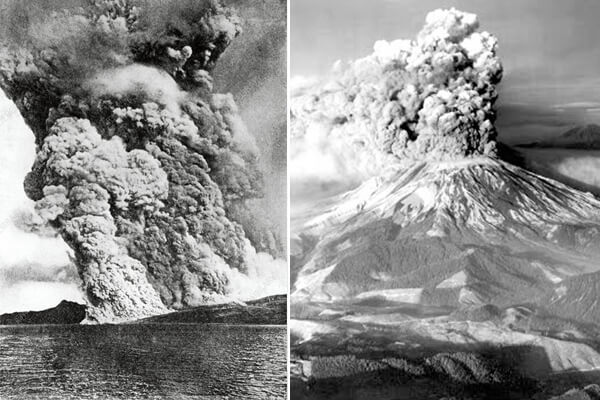
7. Mt Pelee, Caribbean, 1902 (VEI4)
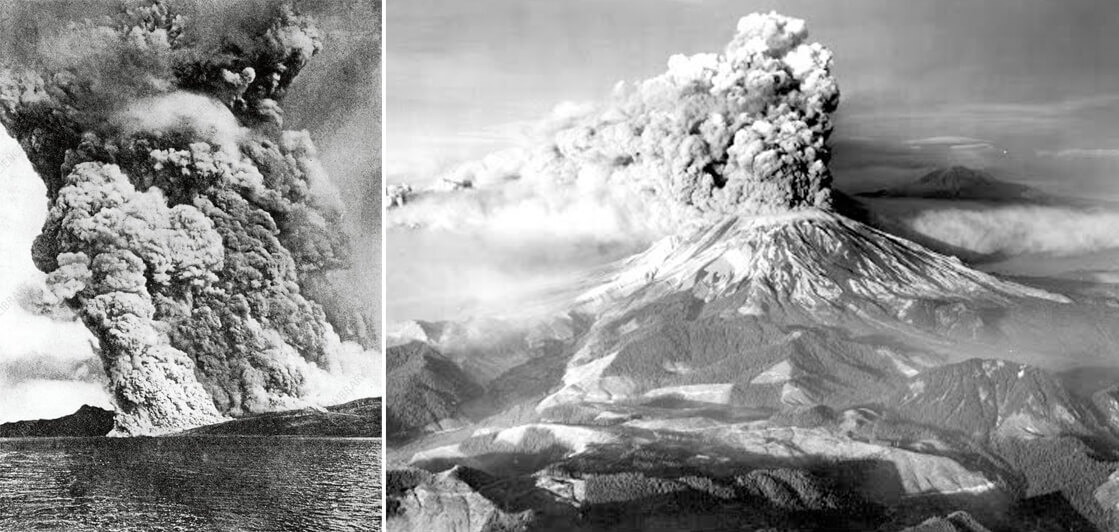
Mt Pelee was believed to be inactive until it erupted in the worst eruption of the twentieth century. Mt Pelee erupted with a blast of hot gas and volcanic rubble on May 8, devastating the entire city of St Pierre. Just two people out of the 28,000 who lived in St. Pierre survived. The eruption was estimated to have cost $50 million.
8. Laki, Iceland, 1783 (VEI6)
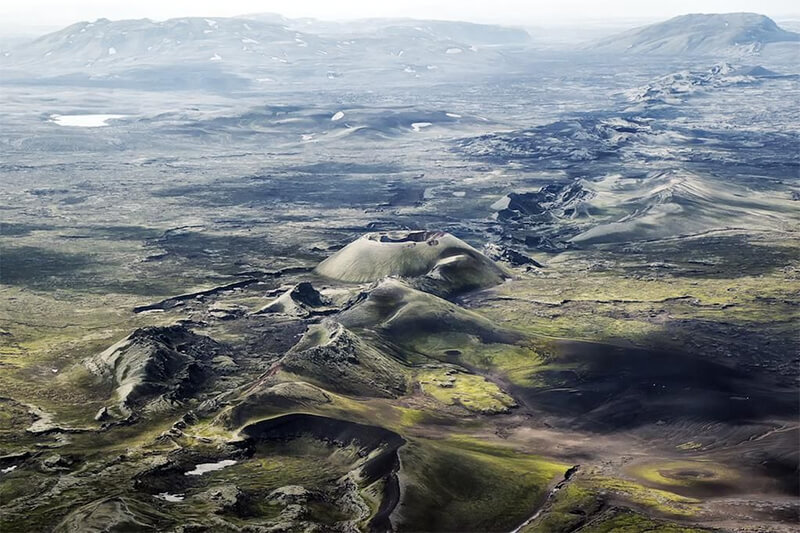
The Laki eruption’s destruction was felt around the world for years after it happened. The eruption at Laki lasted 8 months and ejected 14.7km3 of lava. Toxic gases polluted Iceland’s crops and destroyed 60% of the country’s grazing livestock. The volcano emitted enough sulfur dioxide to trigger acid rain and a decrease in global temperatures. A famine followed the eruption, killing over 10,000 Icelanders, about a quarter of the country’s population at the time. As Laki’s toxic eruption spread south, it killed 23,000 people in the United Kingdom and triggered a famine in Egypt. The European famine triggered by the eruption, according to some environmental historians, may have been a trigger for the French Revolution.
9. Krakatoa, Indonesia, 1883 (VEI 6)
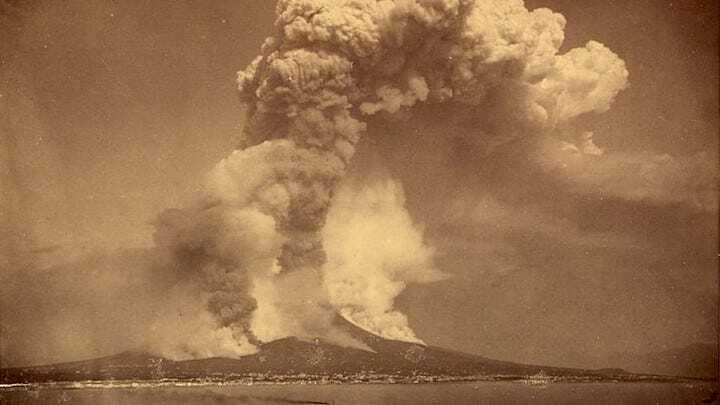
Krakatoa, an Indonesian volcano, erupted in one of the most destructive eruptions in modern human history, destroying the island on which it sits. A series of huge eruptions ripped the volcano’s walls apart on the morning of August 27. The last eruption of Krakatoa was four times more strong than the biggest bomb ever detonated by humans. Its radio waves circled the globe seven times. It triggered a series of tsunamis that ravaged on the area, killing 36,000 people and obliterating entire villages. The cost of the eruption has been projected to be as high as $1.5 billion by others.
10. Mt Tambora, Indonesia, 1815 (VEI 7)
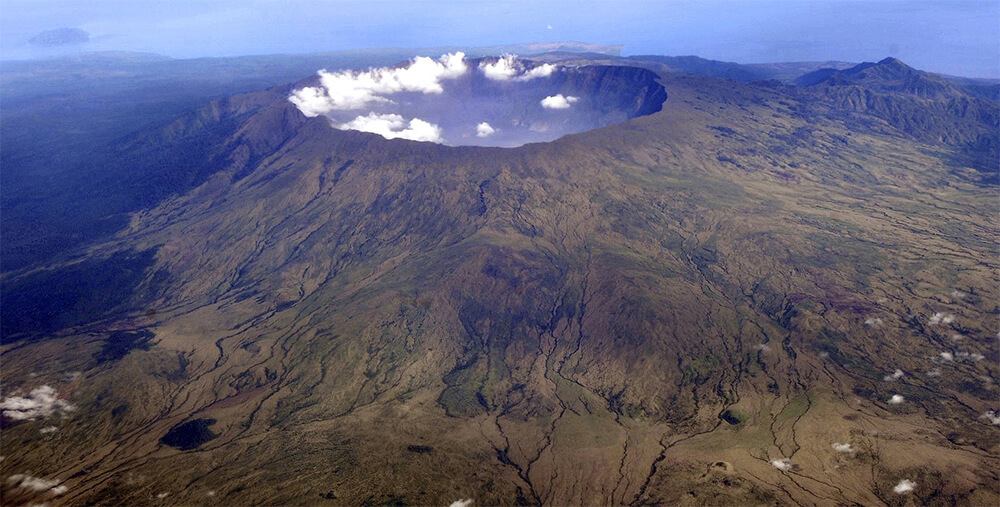
Mt. Tambora is the deadliest volcanic eruption in modern human history, with up to 120,000 people killed. Tambora erupted on April 10, 1815, spewing volcanic ash 40 kilometers into the atmosphere. The eruption was the most strong in 500 years. The intensity of the pyroclastic flow entering the ocean resulted in the formation of a series of massive tsunamis. The planet suffered a significant temperature drop as a result of the massive amount of SO2 released, which resulted in global crop failures. Thousands of Chinese people died of starvation as typhus spread through Europe. The price of grain in Switzerland more than quadrupled in the two years following the blast.

Louis Le Prince Invented the motion picture camera, and then he mysteriously disappeared
Louis Le Prince, the inventor of motion pictures, vanished without a trace in 1890. Thomas Edison quickly claimed the title of "first and sole inventor of cinema," even taking Le Prince's son to court to dispute it. A few years later, the son also dies under mysterious circumstances.

How Cleveland's Balloonfest in 1986 Turned Into a Public Tragedy
In Cleveland, Ohio, United Way broke the world record by deflating nearly 1.5 million balloons as part of a publicity stunt to raise money. The balloon obstructed a US Coast Guard search for two boaters who were subsequently discovered to have drowned, blocked airport runways, and blocked land and waterways.

The Bizarre (And Magical) Duel Between Chung Ling Soo And Ching Ling Foo
Ching Ling Foo and Chung Ling Soo were two magicians from the early 20th century who were bitter rivals. While Ching Ling Foo was genuinely Chinese, Chung Ling Soo was actually a New Yorker named William Robinson.

George Dantzig solved two famous “unsolved” problems in statistics mistakenly as assignment
In 1939, George Dantzig arrived late to his statistics class. On the board were two famous “unsolved” problems in statistics written as an example by his professor. Dantzig mistook the examples for homework assignments. He solved the “unsolved” problems and submitted the homework to his professor a few days later. His solutions earned him a doctorate.

Tunnels Dug by ancient giant sloths, A South American Megafauna
For years, scientists didn’t know what caused mysterious cave networks in South America. In 2010, they learned that the caves were actually tunnels dug by ancient giant sloths

The 1814 London beer flood
In 1814, there was a beer flood in London when a tank containing more than 300,000 gallons ruptured in which 8 people drowned.

Nicholas Winton ‘British Schindler’: Man who rescued 669 Czech children from Nazis
A man named Nicholas Winton saved 669 kids during WWII and lived almost all his life without letting people know.

The Baltic Way: the longest unbroken human chain in history
On August 23, 1989, about 2 million people from Latvia, Estonia, and Lithuania formed a human chain that united all 3 countries to show the world their desire to escape the Soviet Union and the communism that brought only suffering and poverty. This power stretched 600 km.

Top 10 Greatest and shocking Archaeological Discoveries of All Time
While we're all locked at home, there's no better way to escape to another time and place than to learn about amazing archeological sites and discoveries from around the world. Here are the 10 greatest and shocking archaeological discoveries —and don't be shocked if they inspire future trip plans whenever it's safe to do so again.

Charlie Brown and Franz Stigler incident: Enemy became friends
During WWII, a German pilot spotted an American pilot’s crippled plane in the sky. Tailing it, he noticed that gunner was dead, crew injured, and they posed no threat. Instead of destroying the plane, he led it to safety. 40 years later, the two pilots reunited.

Archaeologists Uncover 2,000-Year-Old Amazonian Cities Using Lidar Technology
Deep in the Ecuadorian Amazon, archaeologists have uncovered an ancient network of urban settlements once inhabited by the Upano people about 2,000 years ago. Using cutting-edge lidar technology, these discoveries reveal a highly organized society featuring sophisticated agricultural systems, drainage canals, and extensive road networks. This transformative find challenges long-held assumptions about ancient Amazonian societies and sheds light on a complex civilization thriving in one of the world’s most biodiverse regions.

What Was the Beast of Gévaudan?
Between 1764 and 1767, a mysterious animal called the Beast of Gévaudan terrorized the French village called Gévaudan. It attacked and killed about 100 adults and children. While most believe it was a wolf, some say it may have been a wolf-dog hybrid, hyena or even a lion, but without any genetic evidence, the beast will remain a mystery forever.

New London School Explosion, Deadliest school disaster which killed almost 300 children and teachers
In 1937, a gas leak in the basement at the local school in New London, Texas caused a massive explosion which killed almost 300 children and teachers, the deadliest school disaster in US history. Adolf Hitler even sent his condolences by telegram.

1972 Andes Plane Crash Survivor recall the terrifying Struggles to Stay Alive
On October 13, 1972, a plane carrying a rugby team from Uruguay crashed in the Andes between Chile and Argentina. The survivors were in brutal conditions - high altitude, bitter cold, and the lack of food—and faced the most terrible choice—eating the frozen flesh of their dead friends or starving to death themselves.

The Horrific story of Ariel Castro and the Cleveland abduction
Cleveland abduction victims Gina DeJesus, Michelle Knight, and Amanda Berry were forced to live in Ariel Castro's house of horrors for 10 years. He raped and beat them until they escaped in 2013.

Inside China’s Footbinding Tradition: The Painful Ritual of Lotus Shoes and Bound Feet
In China, Lotus shoes were used to bind women's feet to keep their feet small

Juliane Koepcke: The Teenager Who Fell 10,000 Feet And Trekked The Jungle to survive
In 1971, a high school student was sucked out of an airplane after it was struck by lightning. She fell 10,000 feet to the ground while still strapped to her chair and survived. Only to endure a 9-day trek to the nearest civilization.

The worst blizzard in recorded history: the 1972 Iran blizzard
The deadliest snowstorm ever recorded occurred in Iran in 1972. It lasted for a week, burying areas in 26 feet of snow and killing over 4,000 people, including the entire populations of three villages.

Thomas Baker's heroic act that earned him the "Medal of Honor" was 8 bullets until death
Thomas Baker instructed his team to leave him with a pistol and eight bullets propped up against a tree after he was injured. Later, American troops discovered the now-deceased Baker in the same location, lying next to eight dead Japanese soldiers and carrying an empty pistol.

Will & William Wests: The puzzling situation of two inmates who are identical but not related
These are the mugshots of Will West and William West, and they are not related. They were both sent to Leavenworth Prison at the same time, in 1903, and after some confusion, the staff understood they had two different prisoners with the nearly same name, who looked exactly alike. They are part of the reason fingerprints are now used as identification.

The story of Bill Haast, who lived to be 100 despite his extensive snake venom injections
Bill Haast immunized himself by injecting snake venom into his blood for several years. He holds the Guinness World Record for surviving the most lethal snake bites, having been bitten over 172 times. Bill became known as "Snake Man" around the world and lived for over 100 years.

How 18th Century Women’s Rights Movements Shaped Modern Equality
The 18th century marked a turning point in the quest for women’s rights, as passionate voices challenged centuries of gender inequality and laid the groundwork for modern feminism. From pioneers like Mary Wollstonecraft to revolutionary declarations and early advocacy, this era sparked debates on education, political participation, and social justice that continue to resonate today. Journey through the origins of women’s rights movements and discover how their bold ideas shaped the fight for equality.

Knockers-up: waking up the Industrial Britain's Workers in 1900-1941
Before alarm clocks were invented, there was a profession called a knocker-up, which involved going from client to client and tapping on their windows (or banging on their doors) with long sticks until they were awake. It lasted into the 1920s.

Reason Behind The Suicide Of Christine Chubbuck Live On Air
Actor Rebecca Hall had serious reservations about tackling the macabre story around why Chubbuck killed herself in 1974. So what changed her mind?

The true story of Josephine Myrtle Corbin, the lady born with four legs and two private parts
Josephine Myrtle Corbin, an American sideshow performer born in 1868, had a rare condition known as dipygus, which caused her to have four legs, each smaller inner leg paired with one of her outer legs. Corbin joined the sideshow circuit, captivating audiences as the "Four-Legged Girl from Texas."