

The last thing you’d expect to see nestled in a clearing in an Oregonian forest is a Boeing 727. It’s not always a plane crash that leaves an airplane in the middle of the forest. Campbell converted an airplane into his home, and the interior is quite special. The article was first published on July 5, 2003. Electrical engineer Bruce Campell, 64, has always had a very imaginative vision. He transformed a large plot of land and an old airplane into the most extraordinary house ever. He thinks that even after they are retired, airplanes can still be used in a variety of ways. To build the one-of-a-kind home on Earth, he used his imagination, an old airplane, and a good piece of land.
In contrast to the stereotype of the typical American home, Campbell has chosen a more daring strategy. Rusty Campbell was drawn to this plane’s iconic design and decided to take on the challenge of turning it into a home. A dreamer and an engineer living in a three-engine commercial airplane home tucked away in the dense forest outside of Portland. Campbell thinks that after tidal waves have destroyed homes, retired aircraft can be used as affordable housing and as airtight, floating shelters.
The Campbells’ dreams came true when they had a retired Boeing 727 transformed into a cabin in the woods. They had to remove the plane’s wings in order to transport it. He replaced the wings after the aircraft arrived at its destination.

The coolest trick may be the transparent floor
Every child’s dream house, Campbell’s airplane has plenty of places to climb and crawl. They have to use the original fold-down stairwell from the airplane to get into Bruce Campbell’s Boeing residence. The room is cozy but by no means claustrophobic at 1,066 interior square feet; when configured as a large studio, it feels spacious enough.
The coolest trick may be the transparent floor. The original was torn out and replaced with translucent panels, allowing visitors to see the super structure’s ribs and controlling cables running from the cockpit to the wings and tail. There is a shoe rack with many pairs of slippers for visitors. He prefers people to wear socks and slippers inside the aircraft to keep it clean. He only wears slippers and socks to move inside his house. It’s like a kid’s playground that you can live in. Campbell wanted to live a cost-effective life and paid attention to the most vital component of his aircraft: space.
The transparent floor might be the coolest trick. Visitors can now see the superstructure’s ribs and the control cables that run from the cockpit to the wings and tail thanks to the original’s destruction and replacement with transparent panels. For guests, there is a shoe rack with numerous pairs of slippers. To keep the plane clean, he prefers that passengers enter wearing socks and slippers. He only wears socks and slippers when he is inside his home. You could live in a playground, if you like. In order to live frugally, Campbell focused on the most important aspect of his craft: space.

Original bathrooms back online
He also restored one of the original bathrooms, though it currently only has a temporary shower.
Since the majority of new PVC water pipe is apparently produced using a lead-based catalyst, which, according to what I’ve read, leaves some lead in the polymer, I’d prefer to stay away from it. Although I am aware that the levels are very low, polyethylene seems to me to be a much better option in terms of toxics. The only drawback I can see is that it is not as widely available as PVC. But rather than using the PVC I already have, I want to be patient and try to find some 1′′ or 1.25′′ polyethylene pipe for the new underground water line. To avoid ingesting phthalates, which are an inherent component of soft PVCs and do leach out, I’ll replace any soft PVC as soon as I can locate it and in any case before drinking from it. All of the aircraft’s new internal water pipe will be made of polyethylene.
Bruce is living a simple life inside the plane despite the fact that it has plenty of room. He uses a microwave and toaster to cook and sleeps on a futon. He makes a lot of improvised equipment and primarily consumes cereal and canned food. Two functional restrooms are also on board, but the shower is the coolest feature. Near the plane’s tail is where it is constructed.
Even though Campbell had lofty goals that were almost impossible to realize, he persisted and finished building his ideal house at the age of 65. The placement of the trick doors had him smitten, and he loved the way his plane’s rotating knobs and numerous hatches looked. He was incredibly content to live in his house thanks to these special additions.
He purchased the aircraft with every component in top condition and had not given any thought to flying the vehicle. He made the most of the aircraft’s parts and used it for his own joy as well as the joy of Portland’s bustling community despite the fact that it was completely stationary.

Cost
He paid $100,000 for his plane in 1999, then spent an additional $120,000 to move it from the Hillsboro airport and set it up on his undeveloped land.
Duplicate project again in Japan with a Boeing 747

Campbell also intends to replicate his project using a Boeing 747 in Japan. He intends to buy a used 747 and construct a new house in Japan. He feels that changing the world for people and the environment is the purpose of his life. He gets all fired up when he thinks about recycling planes. He is happy to let curious onlookers and tourists stop by and check out his abode, saying, “My goal is to change humanity’s behavior in this little niche.” Additionally, he plans numerous events throughout the year. Additionally, he planned a concert on the grassy area under the wing of his aircraft.




The story of a boy who claims to be on Mars: Boriska Kipriyanovich
Boriska Kipriyanovich, who lives in Volgograd, Russia, claims he lived on Mars before being resurrected on Earth on a mission to redeem humanity. What we know about him is as follows:

The Astonishing Case of Sanju Bhagat: Living with a Twin Inside Him for 36 Years
Sanju Bhagat, an Indian farmer, lived with an undiagnosed parasitic twin inside his abdomen for 36 years. In 1999, doctors discovered the twin during surgery. This rare condition, fetus in fetu, occurs when a malformed twin is absorbed during pregnancy, surviving within the host sibling's body.


Nevada’s Fly Geyser Is A Surreal Wonder That Looks Like Its On Another Planet
In 1964, an energy company accidentally created Nevada’s Fly Geyser after drilling into a geothermal pocket. Since then, the geyser has been releasing algae-filled scalding water five feet in the air, depositing minerals and forming a cone that sports vibrant hues of green and red.

Roller Coasters were First Invented to Distract People from sin
Roller coasters were invented to distract Americans from sin. In the 1880s, hosiery businessman LaMarcus Thompson didn’t like that Americans were going to places like saloons and brothels and created the first roller coaster on Coney Island to persuade them to go there instead.
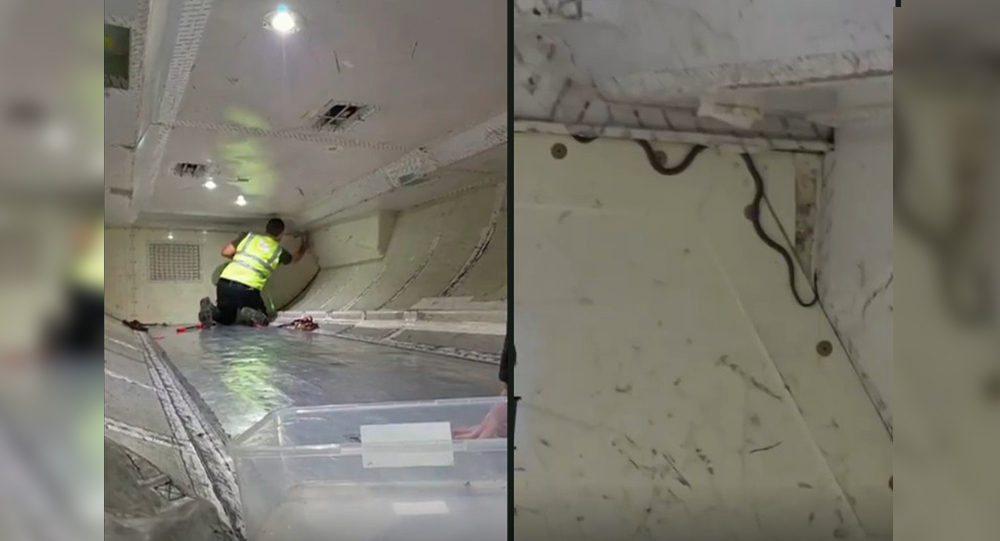
Domestic Flight Delay Caused by Live Snake on Board Leaves Passengers in Shock
A domestic flight was unexpectedly delayed for nearly two hours after a snake was discovered slithering inside the plane’s cargo hold. Thanks to the swift efforts of a professional snake catcher and airline staff, the reptile was safely removed without any harm to passengers, turning a potentially alarming situation into a story of caution and calm.
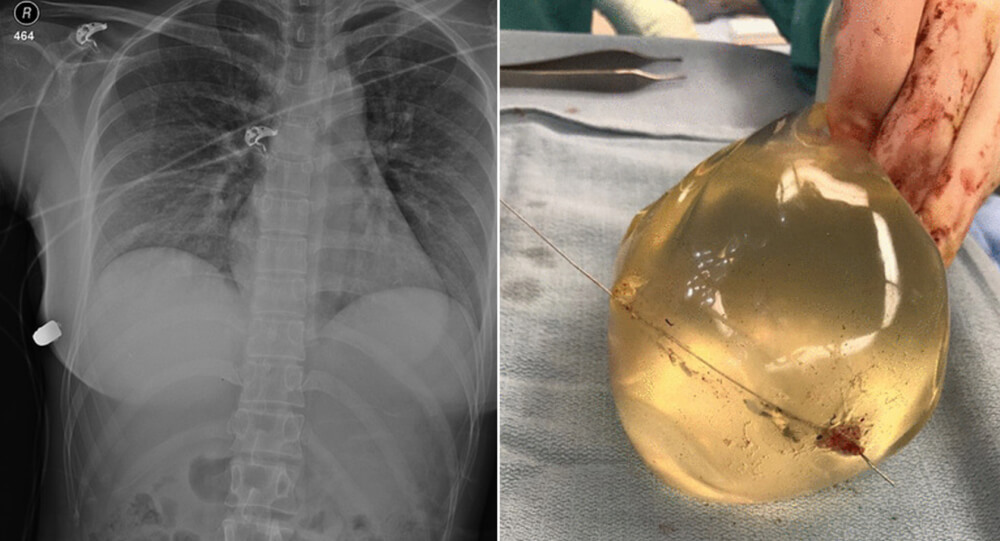
In 2018, a 30-year-old survived a close-range gunshot thanks to silicone implant
In 2018, a 30-year-old woman from Toronto, Canada survived a close-range gunshot thanks to her silicone breast implant. Doctors believe that the implant deflected the bullet away from her vital organs, and her only injury was a fractured rib.
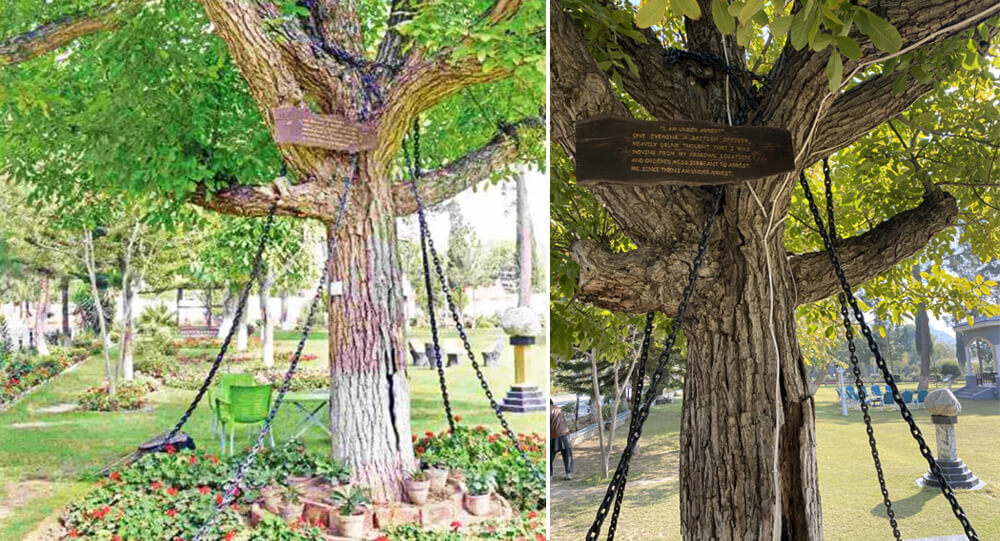
In Pakistan, this banyan tree has been arrested since 1898
In Pakistan, a tree has been arrested and chained since 1898. When a British officer who was drunk assumed it was leaving its place, it was arrested. The tree, which is presently located on the grounds of the Pakistan Army's Landi Kotal cantonment, continues to attract visitors and locals everywhere.

The Story of Tsutomu Yamaguchi: The Man Who Survived Both Atomic Bombs
Tsutomu Yamaguchi’s story is one of astonishing survival and resilience. In August 1945, while on a business trip in Hiroshima, he endured the catastrophic atomic bombing and, unbelievably, survived to return to his home city of Nagasaki—only to face a second atomic attack days later. Officially recognized as the only person to survive both bombings, Yamaguchi’s life is a powerful testament to human courage, hope, and the devastating impact of nuclear warfare.
![Mysterious ghost ship found with mummified captain inside [SOLVED]](https://weeklyrecess.com/wp-content/uploads/2024/07/Solved-Mysterious-ghost-ship-with-mummified-captain-cover.jpg)
Mysterious ghost ship found with mummified captain inside [SOLVED]
German captain had been sailing the world for 20 years. It was unknown when or how he died or how long the ghost ship had been adrift

Preserving Bodies in a Deep Freeze Await Revival
There are currently hundreds of deceased people in the U.S., including baseball legend Ted Williams, whose bodies are frozen in liquid nitrogen in hopes that future technology will be able to revive them.

June and Jennifer Gibbons The silent twin who Only Spoke to Each Other
Identical twins June and Jennifer Gibbons were born on 11 April 1963 at a military hospital in Aden, Yemen where their father worked as part of the Royal Air Force.

San Pedro prison in La Paz, Bolivia: community inside prison
Bolivia’s largest prison has a society within itself and no guards inside the walls. Inmates elect their own leaders, make their own laws, get jobs to pay for their cell’s rent, and can even live with their families.

A man who has been suffering from headaches for nearly six months discovers chopsticks lodged in his brain
When it was discovered that a Vietnamese man with headaches and vision problems had chopsticks lodged in his brain, the doctors were almost as surprised as the man himself.

The true story of Josephine Myrtle Corbin, the lady born with four legs and two private parts
Josephine Myrtle Corbin, an American sideshow performer born in 1868, had a rare condition known as dipygus, which caused her to have four legs, each smaller inner leg paired with one of her outer legs. Corbin joined the sideshow circuit, captivating audiences as the "Four-Legged Girl from Texas."
![[solved] “macaroni mystery”, 500 pounds of pasta dumped in new jersey](https://weeklyrecess.com/wp-content/uploads/2024/05/Macaroni-Mystery-cover.jpg)
[solved] “macaroni mystery”, 500 pounds of pasta dumped in new jersey
In April 2023, Old Bridge, New Jersey, faced a peculiar 'Macaroni Mystery' when 500 pounds of pasta were mysteriously dumped in the woods.
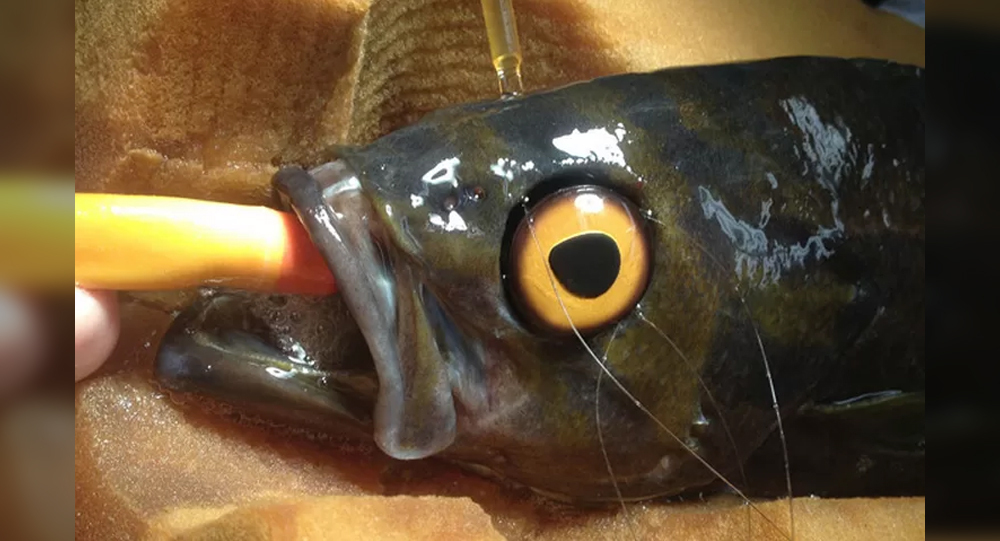
A one-eyed Vancouver fish receives a fake eye so that other fish will not bully him
A fish whose eye was removed due to cataract was bullied by other fish at the Vancouver Aquarium. So the vets fitted the fish with a prosthetic eye to fool the other fishes.

Why Do Spiders Rain From the Sky? The Strange Ballooning Phenomenon
Every now and then, people around the world are amazed—and sometimes disturbed—to see thousands of tiny spiderlings floating down from the sky, seemingly raining on the earth below. This eerie spectacle is the result of a curious and fascinating behavior called ballooning, in which spiders use silk threads as invisible parachutes to catch the wind and fly. Recent scientific discoveries reveal that spiders can even harness Earth’s electric fields to take off without wind, making their aerial journeys feel almost supernatural. This article explores the science, mystery, and wonder behind the ballooning phenomenon.
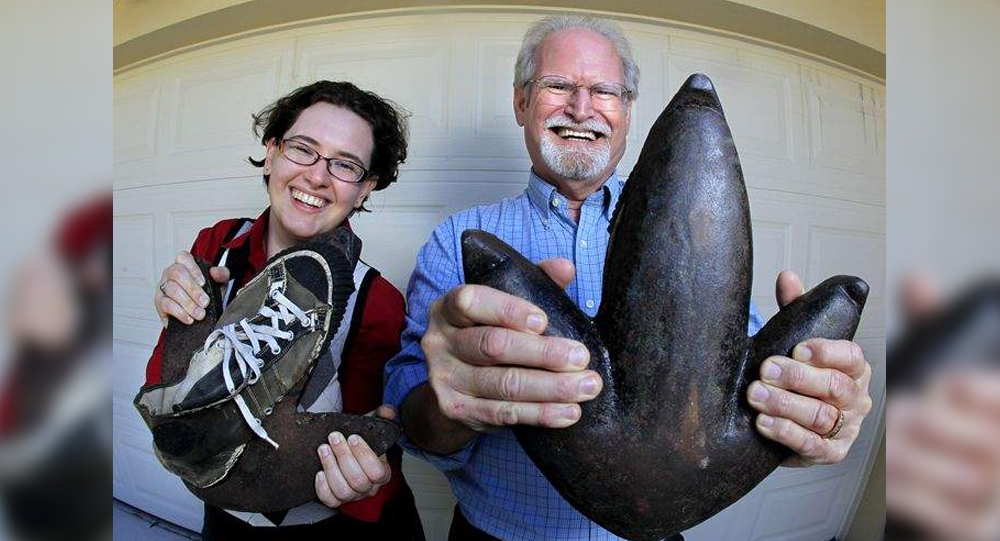
How a Man Fooled Florida with Fake Penguin Tracks for 10 Years
In 1948, Florida’s Clearwater Beach was the stage for one of the longest-running and most peculiar hoaxes in American folklore. Giant three-toed footprints appeared mysteriously in the sand, sparking rumor and fascination about a 15-foot-tall penguin roaming the shores. For a decade, locals and visitors alike speculated and scanned for the elusive creature, never realizing the truth: these tracks were made by a man wearing 30-pound lead shoes designed to imitate an enormous penguin's footprint. This article uncovers the details of this elaborate prank and its lasting legacy in Florida’s cryptic history.

The story of Lionel the Lion-Faced Man, Stephan Bibrowski
Stephen Bibrowski, also known as Lionel the Lion-faced Man, was a well-known sideshow entertainer. His entire body was covered in long hair, giving him the appearance of a lion; this was most likely due to a rare condition known as hypertrichosis. Lionel traveled to the United States in 1901 and began performing with the Barnum and Bailey Circus.
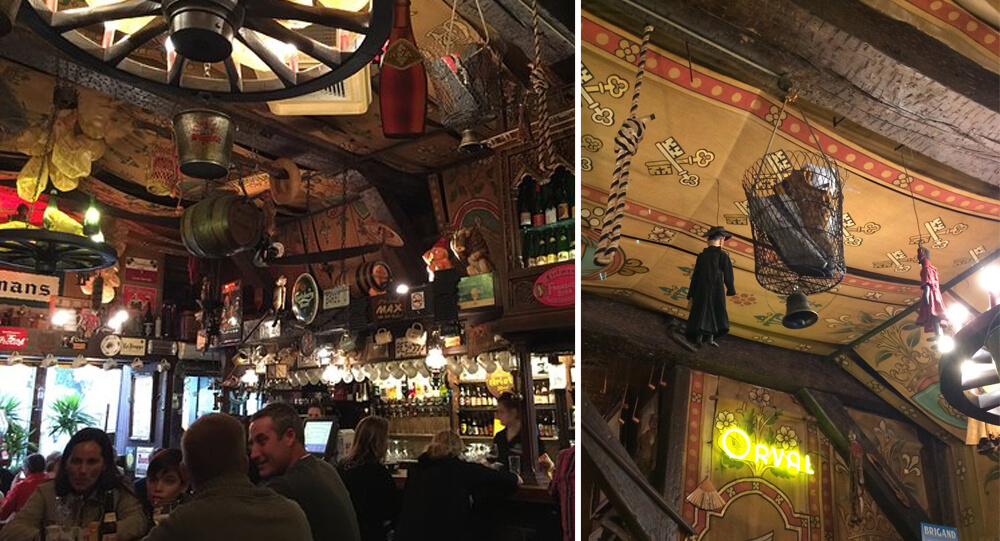
Why This Belgian Bar Makes You Trade Your Shoe for a Beer
To prevent tourists from stealing their beer glasses, some bars in Belgium require people to hand over one of their shoes as a deposit which is then put in a basket and hung from the ceiling. These shoe baskets have also become an attraction.

Max Headroom Incident: America’s Creepiest TV Hack
In 1987 a man hijacked a television station during an episode of Dr. Who and wore a Max Headroom mask and uttered nonsense, and he still hasn’t been caught

The Miracle Baby: Nigerian Couple in the UK Welcomes a Rare Blonde, Blue-Eyed Child
A black, Nigerian couple living in the U.K. gave birth to a white, blonde, blue-eyed baby that they call the "miracle baby."

Sandy Island: The Phantom Island That Fooled Maps and Google Earth for Centuries
Sandy Island, charted since 1774, was long considered a phantom island in the Coral Sea. Despite appearing on maps and Google Earth, it was "undiscovered" by scientists in 2012, revealing only deep ocean instead of land. The island's existence was likely a cartographic error or a misidentified pumice raft.
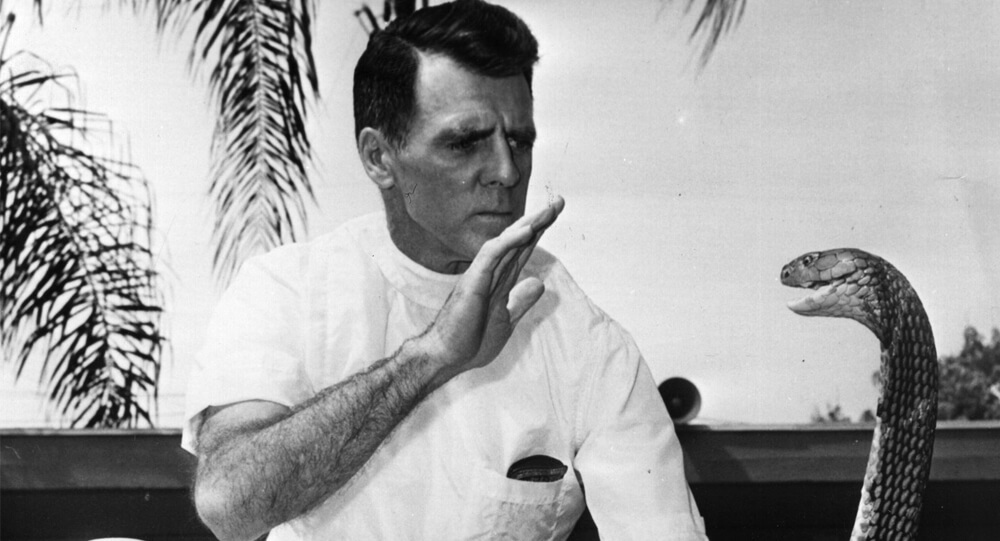
The story of Bill Haast, who lived to be 100 despite his extensive snake venom injections
Bill Haast immunized himself by injecting snake venom into his blood for several years. He holds the Guinness World Record for surviving the most lethal snake bites, having been bitten over 172 times. Bill became known as "Snake Man" around the world and lived for over 100 years.

Khuk Khi Kai: Thailand’s Infamous “Chicken Poop Prison” and Its Gruesome Legacy
Thailand used to have a prison called "Khuk Khi Kai," or "Chicken poop prison." The first floor of the prison contained prisoners, and the second floor was a large chicken coop. The grated floor ensured that prisoners were constantly subjected to chicken poop.