

A rude awakening befell Ann Hodges on November 30, 1954. The 34-year-old was the only person known to have experienced harm following a meteorite strike when she woke up with a start as she was sleeping soundly beneath quilts on the couch in her Alabama home.
At 2:46 p.m., the roughly 8.5-pound, 4.5-billion-year-old extraterrestrial exploded through the roof of her Sylacauga home like a bullet. Her left side was severely bruised as it crashed into her large radio console and bounced off of her body.
“It’s more likely that you’ll be struck by lightning, a hurricane, and a tornado all at once,” astronomer Michael Reynolds of Florida State College told National Geographic. It appears that as the meteorite descended toward Earth, it broke in two. A fragment struck Hodges, while the other fell several miles distant. The National Museum of Natural History of the Smithsonian has the second meteorite in its holdings.


Parts of Alabama, Georgia, and Mississippi saw the meteor light up the sky as it traveled at a speed of about 200 kilometers per hour. The entire meteorite is officially known as Sylacauga for the location where it landed, but is more commonly known as the Hodges Meteorite. Neighbors of Hodges saw “a bright reddish light” crossing the sky “like a roman candle trailing smoke,” while others saw “a fireball, like a gigantic wielding arc.”
Rare meteorites do occur. According to Cari Corrigan, a research geologist at the Natural History Museum at the Smithsonian, “they fall all over the Earth,” and have been falling on the planet since the beginning of time. On November 10, 2019, a bright meteorite, which NASA estimated was as big as a basketball, streaked through the sky near the Gateway Arch in St. Louis. Reports of its bright flare lit up the internet.
The majority of meteorites that people have discovered on Earth are about the size of a golf ball to a fist. When they travel through the planet’s atmosphere, they lose roughly half of their volume. A significant portion of the alien material that hits Earth ends up in the ocean, and it is mostly very small. According to Corrigan, “We get hit by dust all the time.”
Authorities expected to find a crash site because, just before Ann Hodges awoke, many people saw the fireball overhead and thought they had seen an airplane plummeting to earth. Hodges and her mother, who was also in the house, attempted to ascertain what had occurred at the same time.
Because the house was filled with dust, they initially believed the chimney had collapsed or a space heater had ruptured. After spotting the rock on the floor and the bruise on her body, they called the police and fire departments. With the arrival of emergency vehicles, word began to spread that the Hodges house represented ground zero for whatever had happened.
They initially thought the chimney had collapsed or a space heater had burst because the house was covered in dust. They contacted the fire and police departments as soon as they noticed the rock on the floor and the bruise on her body. As emergency vehicles arrived, rumors circulated that the Hodges residence was the epicenter of the incident.
When Eugene Hodges returned home at the end of the workday to find his house surrounded by a crowd of people, he had no idea that his home had been invaded by extraterrestrials. According to Ann Hodges, there was some excitement today at the Associated Press. She was actually admitted to the hospital the next day as a result of her excitement. She told reporters, “I haven’t been able to sleep since I was hit.”

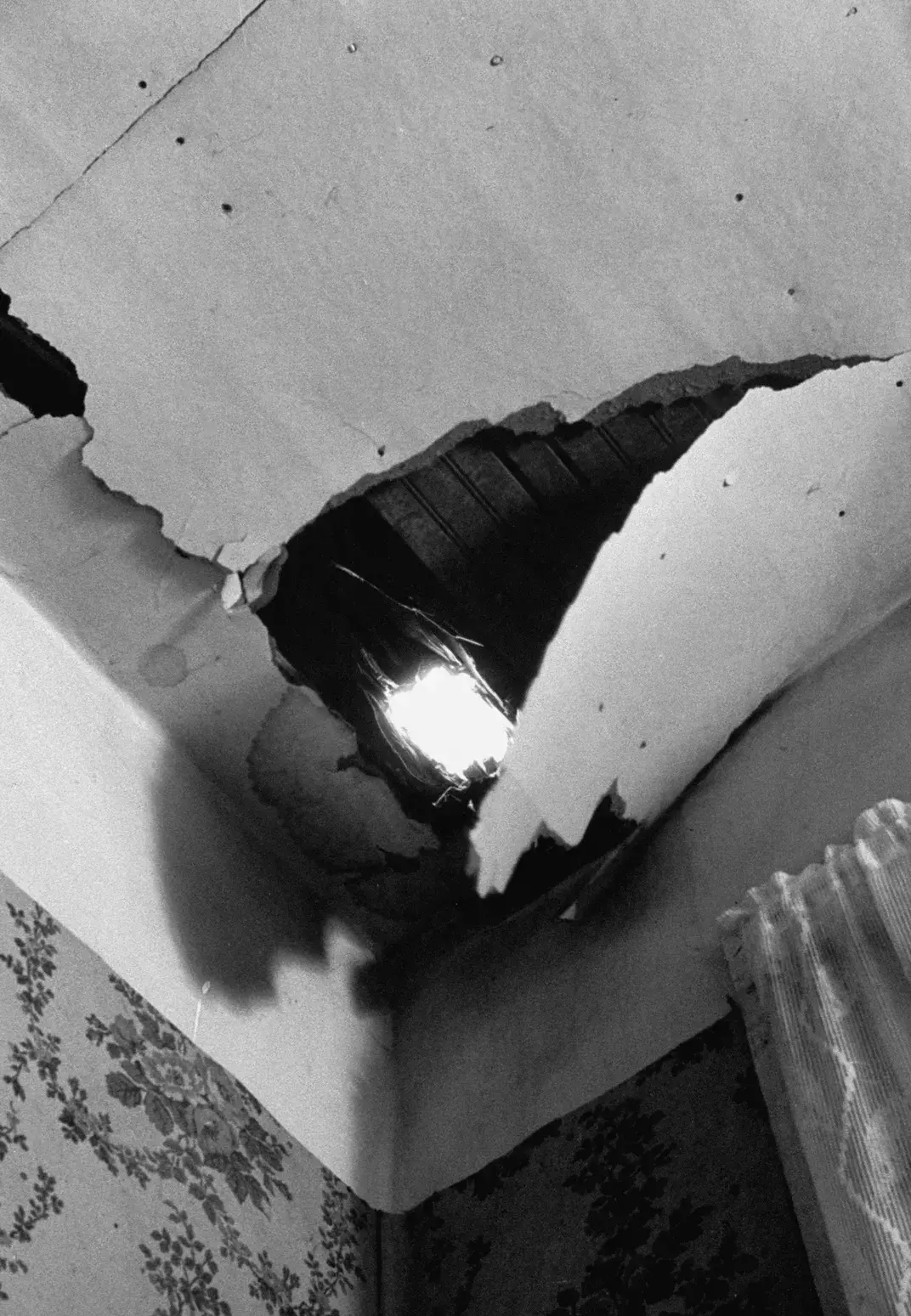
During that period, when Americans were wary of the possibility of nuclear war and suspicious of reports of flying saucers, the Air Force seized the object to confirm that it was, in fact, a meteorite. It was ironically across the street from a drive-in theater called Comet, and officials at Maxwell Air Force Base assured Hodges that it would be returned to his home. It had a neon picture of a comet traveling through space on it.
While identifying the object as a meteorite was not too difficult, figuring out who owned it became more difficult. The landlady, Birdie Guy, believed the meteorite belonged to her because the Hodges rented their house. “I believe God intended it for me,” Ann Hodges remarked, “but the only way she’ll ever get it is by suing.” Ultimately, I felt it!”
In the end, the matter was resolved out-of-court when Guy gave Ann Hodges $500 in exchange for letting her keep the meteorite. The family kept it as a doorstop for a while before giving it to the Alabama Museum of Natural History after Eugene Hodges was unable to find a buyer.
A farmer named Julius Kempis McKinney, who also lived in the Sylacauga area, discovered a fragment of the same meteor a few miles distant. McKinney was operating a mule-drawn wagon in a scene far removed from the impending Space Age when the mules scampered over a black rock that got in the way. After moving the rock aside, he headed back home.
That night, after hearing about Ann Hodges’s experience, he retrieved the rock and took it home, where his children played with it. McKinney asked his postal carrier to connect him with a lawyer to help with the sale of the piece of the meteorite that he had found.
Subsequent reports claimed that he sold for enough money to purchase a house and a car. That meteorite was given to the National Museum of Natural History shortly after that.
Years later, in 2017, a second piece of the same meteor was sold by Christie’s auction house for $7,500, or $728 per gram, at a time when the price of 24 carat gold was only $39.05 per gram. A portion of the rock that McKinney had discovered was called a meteorite, and it was worth far more than its weight in gold. Ten years after a 26-pound meteorite struck a red Chevy Malibu in Peekskill, New York, in 1992, the car’s title and a broken taillight went for $5,000, while the meteorite’s fragments are currently selling for roughly $150 per gram.
Ann Hodges rose to a minor celebrity in the commotion following the meteorite strike. Her picture was featured on the cover of Life magazine on December 13, 1954, along with an article titled “A Big Bruiser From the Sky.” The national spotlight seemed to have caused her health issues, which ultimately led to her marriage dissolving in 1964. At the age of 52, she passed away from renal failure in a nearby assisted living facility.
A cow in Venezuela perished in 1972 after being struck by an extraterrestrial rock, but Hodges is the only person known to have suffered injuries from a meteorite impact. In February 2013, a second meteorite shattered windows and strewn debris, inflicting injuries on over a thousand people in Chelyabinsk, Russia. Another unsubstantiated report from 2016 stated that a bus driver in Natrampalli, India, died as a result of being struck by debris that was ejected when a meteorite struck the earth. Furthermore, none of the numerous claims on social media that someone was hit by a meteorite in the twenty-first century have been verified.
Nevertheless, meteorites are still a popular subject. The study of meteorites, according to Corrigan, who is involved in an effort to collect meteorites from Antarctica, “fits in at the very beginning of natural history.”
According to her, the asteroid belt between Mars and Jupiter is where 99 percent of meteorites originate. About the Sylacauga meteorite, she says, “We think a lot of that material is really similar to the material that the Earth formed from.” This specific meteorite has been identified as a chondrite. This type is thought to be older than 4.5 billion years and has higher iron and nickel contents than other specimens. These rocks are some of the purest and most primitive relics of the early solar system because they have never melted.
Related Topic You Might Find Interesting:
- The beauty and uniqueness of Fukang Meteorite
- Top 6 Largest Meteorites Ever Found on Earth
- Meteorite found in Sahara Desert older than the earth
The knowledge of meteorites dates back to ancient times, even though the Space Age started only 62 years ago. Scientists have discovered human remains at the 2,000-year-old Hopewell Mounds in Ohio that wore meteorite necklaces. According to Corrigan, those Native Americans “knew they were special” when they discovered the meteorites. A portion of the meteorites were transported to the Ohio location from as far away as Kansas.
The history of Earth has been marked by meteorites, and Ann Hodges’s experience is also etched in memory. The Hodges meteorite incident served as the basis for a chapter in author and humorist Fannie Flagg’s 1987 novel Fried Green Tomatoes and the Whistle Stop Café, which was set in Alabama.
The chapter, which was set in 1929, details the story of a meteorite crashing through the roof of a home, striking a radio, and barely missing a human being. The meteorite did not make an appearance in the 1991 film based on the novel.

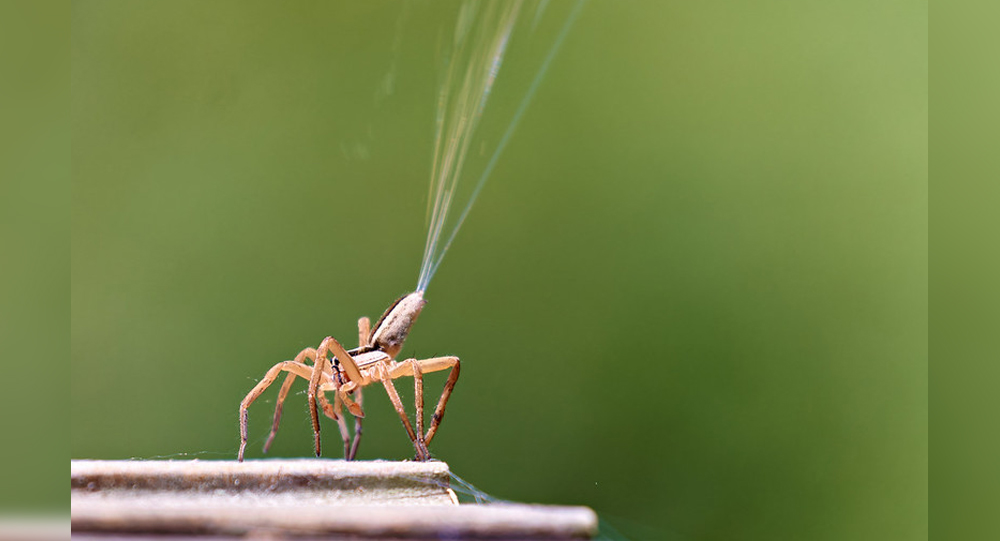
Why Do Spiders Rain From the Sky? The Strange Ballooning Phenomenon
Every now and then, people around the world are amazed—and sometimes disturbed—to see thousands of tiny spiderlings floating down from the sky, seemingly raining on the earth below. This eerie spectacle is the result of a curious and fascinating behavior called ballooning, in which spiders use silk threads as invisible parachutes to catch the wind and fly. Recent scientific discoveries reveal that spiders can even harness Earth’s electric fields to take off without wind, making their aerial journeys feel almost supernatural. This article explores the science, mystery, and wonder behind the ballooning phenomenon.

Brazilian Man with Rare ‘Upside Down’ Condition Becomes Successful Accountant and Speaker
Born in Brazil with the rare and debilitating condition congenital arthrogryposis, which caused his head to be positioned upside down, this man was once written off by doctors who urged his mother to let him starve. Defying grim predictions, he overcame immense challenges to become a successful accountant and a powerful international motivational speaker, inspiring millions worldwide.

Thousands of Rare "Ice Eggs" Blanket Finnish Beach in Spectacular Natural Phenomenon
Thousands of ice balls recently covered a beach in Finland, a rare phenomenon caused by wind and waves sculpting pieces of ice into smooth spheres. These "ice eggs" can vary in size from chicken eggs to soccer balls and have also been spotted in other cold regions globally.

Mill Ends Park, the Smallest Park in the World
Portland, Oregon is home to the tiniest park in the world, a two-foot-diameter circle. Mill End Park is the name of this park.


A one-eyed Vancouver fish receives a fake eye so that other fish will not bully him
A fish whose eye was removed due to cataract was bullied by other fish at the Vancouver Aquarium. So the vets fitted the fish with a prosthetic eye to fool the other fishes.

Vakil Batirshin’s Story: How Radiation Exposure Caused Severe Lymph Node Swelling
This is Vakil Batirshin, a man whose severe swelling from enlarged lymph nodes was reportedly caused by radioactive exposure. His condition highlights the devastating and long-term health effects radiation can inflict on the human body—often surfacing years after initial contact. Cases like his underscore the importance of nuclear safety and medical support.

June and Jennifer Gibbons The silent twin who Only Spoke to Each Other
Identical twins June and Jennifer Gibbons were born on 11 April 1963 at a military hospital in Aden, Yemen where their father worked as part of the Royal Air Force.

Kim Peek: The Real Rain Man Who Memorized 12,000 Books
Kim Peek wasn’t just a man with an extraordinary memory—he was a megasavant whose astonishing ability to recall the contents of over 12,000 books inspired the iconic character Raymond Babbitt in the film Rain Man. Able to read two pages at once, scanning one with each eye, Peek could memorize an entire book in about an hour. Despite his phenomenal talents, he faced developmental challenges and lived a unique life that changed perceptions about human potential and cognitive diversity. This article explores the remarkable story of Kim Peek, his capabilities, and the legacy he left behind.

Nevada’s Fly Geyser Is A Surreal Wonder That Looks Like Its On Another Planet
In 1964, an energy company accidentally created Nevada’s Fly Geyser after drilling into a geothermal pocket. Since then, the geyser has been releasing algae-filled scalding water five feet in the air, depositing minerals and forming a cone that sports vibrant hues of green and red.
![[solved] “macaroni mystery”, 500 pounds of pasta dumped in new jersey](https://weeklyrecess.com/wp-content/uploads/2024/05/Macaroni-Mystery-cover.jpg)
[solved] “macaroni mystery”, 500 pounds of pasta dumped in new jersey
In April 2023, Old Bridge, New Jersey, faced a peculiar 'Macaroni Mystery' when 500 pounds of pasta were mysteriously dumped in the woods.

Max Headroom Incident: America’s Creepiest TV Hack
In 1987 a man hijacked a television station during an episode of Dr. Who and wore a Max Headroom mask and uttered nonsense, and he still hasn’t been caught
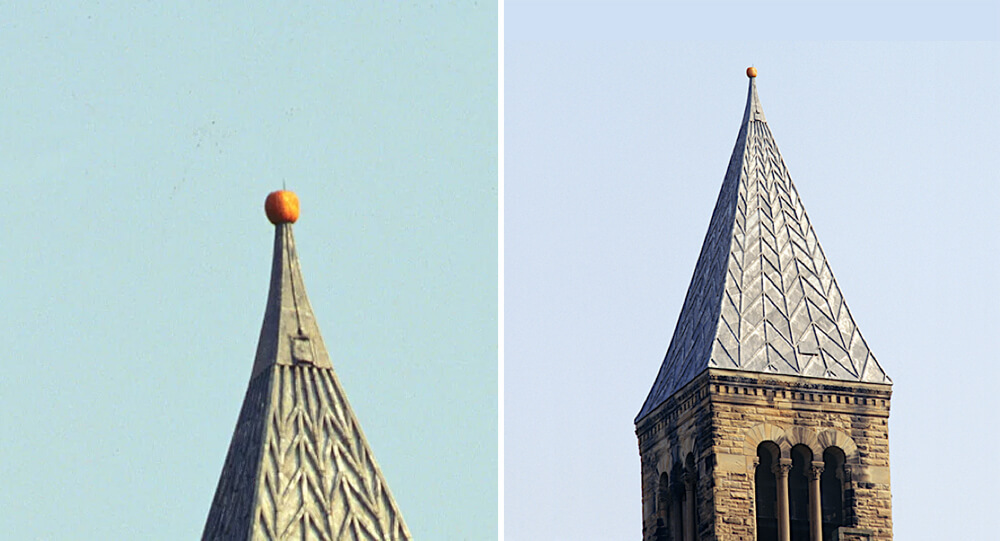
The mysterious Pumpkin impaled on the top of Tower
Twenty Three years ago, somebody impaled a 60-pound pumpkin 170 off the ground on this spire at Cornell University. Nobody knows who did this or how they did it.

Why the Brooklyn Bridge Was Once Crossed by 17 Camels and 21 Elephants
On May 30, 1883, a rumor that the Brooklyn Bridge was going to collapse caused a stampede, which killed at least at twleve people. To prove the bridge was safe, P.T. Barnum led a parade of 21 elephants over it.
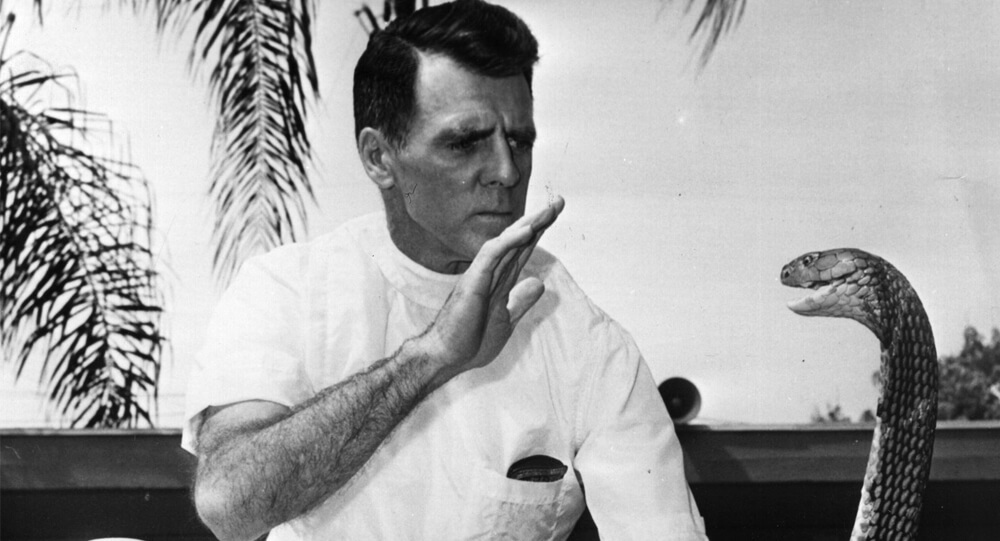
The story of Bill Haast, who lived to be 100 despite his extensive snake venom injections
Bill Haast immunized himself by injecting snake venom into his blood for several years. He holds the Guinness World Record for surviving the most lethal snake bites, having been bitten over 172 times. Bill became known as "Snake Man" around the world and lived for over 100 years.
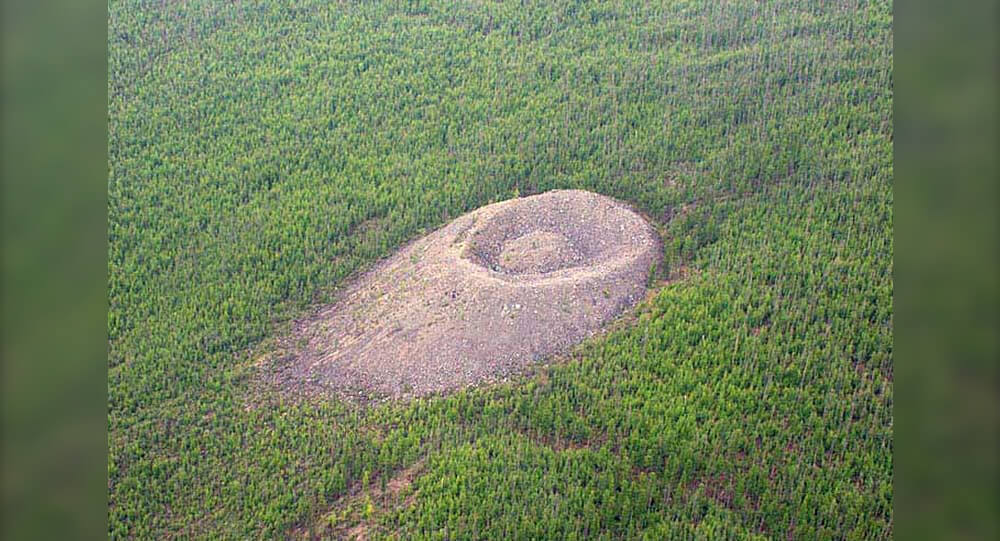
What Caused The Mysterious Patomskiy Crater in Siberia?
Discovered in 1949, the Patomskiy Crater resembles a huge convex cone with a funnel-shaped recess and a rounded hill in the middle, which looks like an eagle’s nest with an egg nestled inside it. The crater’s origin is a mystery that has baffled scientists for decades.

The Bizarre (And Magical) Duel Between Chung Ling Soo And Ching Ling Foo
Ching Ling Foo and Chung Ling Soo were two magicians from the early 20th century who were bitter rivals. While Ching Ling Foo was genuinely Chinese, Chung Ling Soo was actually a New Yorker named William Robinson.

In Pakistan, this banyan tree has been arrested since 1898
In Pakistan, a tree has been arrested and chained since 1898. When a British officer who was drunk assumed it was leaving its place, it was arrested. The tree, which is presently located on the grounds of the Pakistan Army's Landi Kotal cantonment, continues to attract visitors and locals everywhere.

San Pedro prison in La Paz, Bolivia: community inside prison
Bolivia’s largest prison has a society within itself and no guards inside the walls. Inmates elect their own leaders, make their own laws, get jobs to pay for their cell’s rent, and can even live with their families.

Preserving Bodies in a Deep Freeze Await Revival
There are currently hundreds of deceased people in the U.S., including baseball legend Ted Williams, whose bodies are frozen in liquid nitrogen in hopes that future technology will be able to revive them.
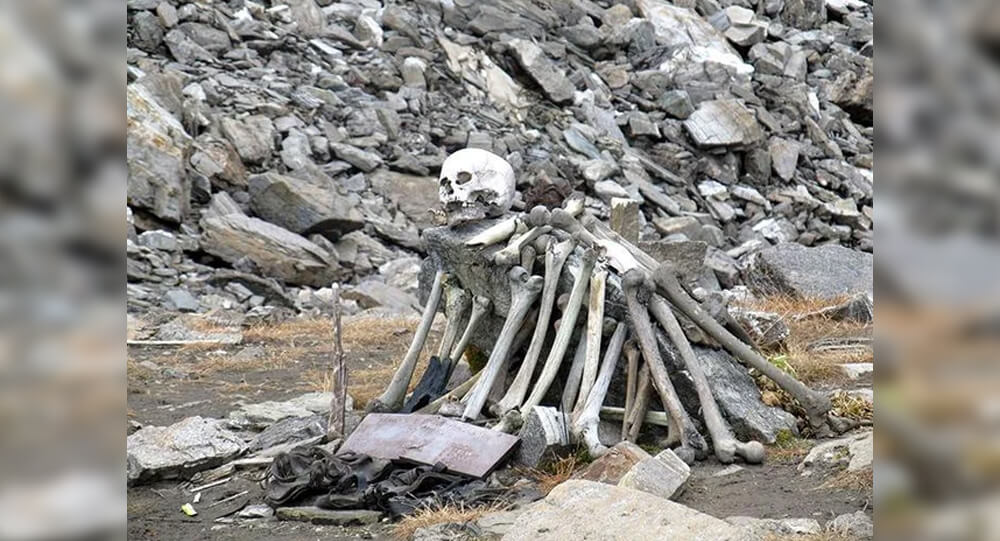
The mystery of India's 'lake of skeletons'
In 1942, a British forest guard in India made an alarming discovery. Some 16,000 feet above sea level, at the bottom of a small valley, was a frozen lake absolutely full of skeletons.
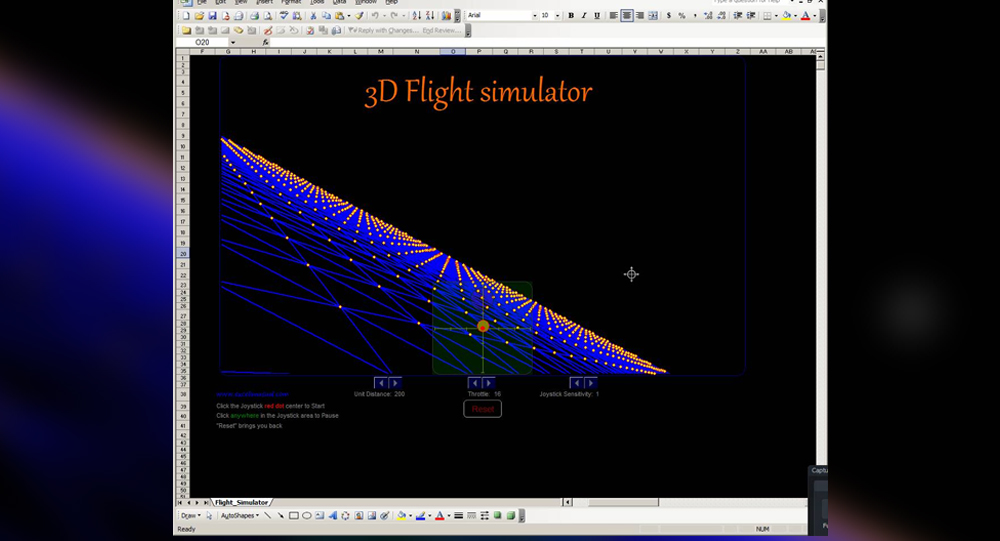
The Story of the Hidden Flight Simulator Game in Microsoft Excel 97
Before smartphones ruled hidden gaming, Microsoft slipped an extraordinary secret into one of its flagship office programs: a fully functional flight simulator game inside Excel 97. This little-known Easter egg captivated users who discovered a way to pilot a plane through the grid-like interface. Explore how this unexpected feature was created, the tech magic behind it, and why it remains a legendary piece of software lore.

This Thai Wedding Tradition Happens 40 Feet Underwater
Each year in Trang, Thailand, dozens of couples participate in an underwater wedding ceremony while scuba diving in full gear. The ritual symbolizes deep love and has become a quirky tourist attraction held around Valentine’s Day.

The Mystery of Canada's Magical Spotted Lake
Lake Khiluk, the world's most mineralized lake, and one of the most mysterious places on Earth. Each of these spots has a distinct chemical content and is said to cure various diseases.

This Yogi Spent 76 Years Without Eating or Drinking Anything and Confirmed by
Prahlad Jani, the starving monk who lived 76 Years without food and water.
![Mysterious ghost ship found with mummified captain inside [SOLVED]](https://weeklyrecess.com/wp-content/uploads/2024/07/Solved-Mysterious-ghost-ship-with-mummified-captain-cover.jpg)
Mysterious ghost ship found with mummified captain inside [SOLVED]
German captain had been sailing the world for 20 years. It was unknown when or how he died or how long the ghost ship had been adrift